Eric Posner considers the growing irrelevance of the International Criminal Court (ICC), especially in light of how it hasn’t gone after Assad:
The countries that signed on were mostly peaceful democracies and poor countries embroiled in endless conflicts that could not be addressed with regular law enforcement. Because the ICC treaty specifically limits ICC involvement to cases where national legal institutions fall short, the ICC focused its attention on the latter group, which unfortunately were mostly African.
In some cases, the African countries invited ICC participation, but in others it was thrust upon them. For example, the Security Council authorized the ICC to investigate Sudan, whose president Omar al-Bashir was indicted for his role in ethnic killings in Darfur. (He has refused to appear for trial.) Even a country like Uganda, which invited ICC participation, later found that as a result it could not offer an amnesty to insurgents in order to establish peace. As the ICC increasingly interfered in their affairs, African countries took the view that the court, in the words of Ugandan President Yoweri Museveni, is now being used by Western powers “to install leaders of their choice in Africa and eliminate the ones they do not like.” Meanwhile, the ICC—with an annual budget of more than $140 million and staff of about 700—has been able to convict only one person (the Congolese warlord Thomas Lubanga) in more than a decade.
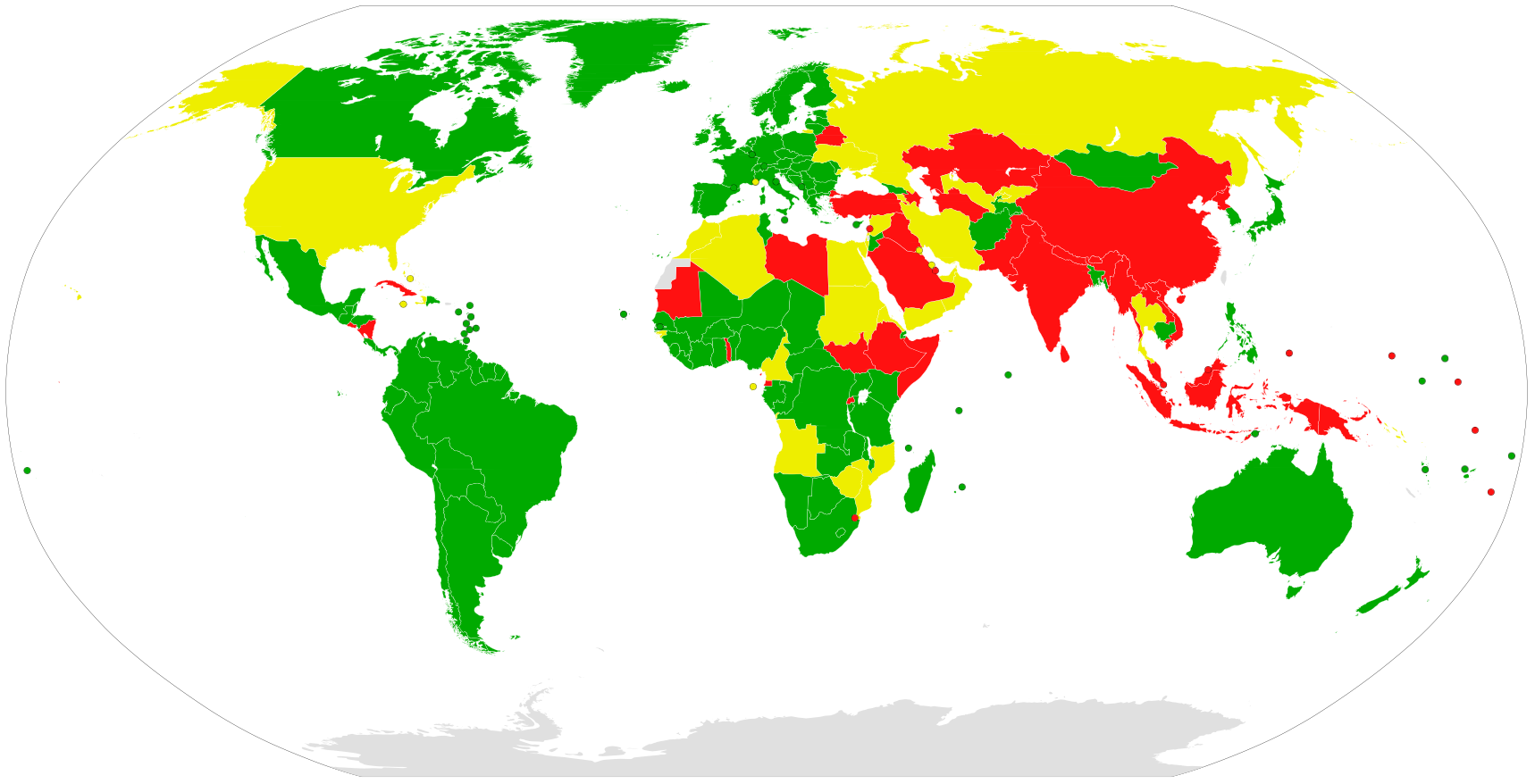
The map seen above, from Wikipedia, shows countries belonging to the ICC (green), countries that have signed but not ratified (yellow), and countries that have not signed (red).
 The Dish
