Nicholas Jeeves explores the old taboo against open-mouthed grins in portrait paintings:
[Smiling] has a large number of discrete cultural and historical significances, few of them in line
with our modern perceptions of it being a physical signal of warmth, enjoyment, or indeed of happiness. By the 17th century in Europe it was a well-established fact that the only people who smiled broadly, in life and in art, were the poor, the lewd, the drunk, the innocent, and the entertainment – some of whom we’ll visit later. Showing the teeth was for the upper classes a more-or-less formal breach of etiquette. St. Jean-Baptiste De La Salle, in The Rules of Christian Decorum and Civility of 1703, wrote:
There are some people who raise their upper lip so high … that their teeth are almost entirely visible. This is entirely contradictory to decorum, which forbids you to allow your teeth to be uncovered, since nature gave us lips to conceal them.
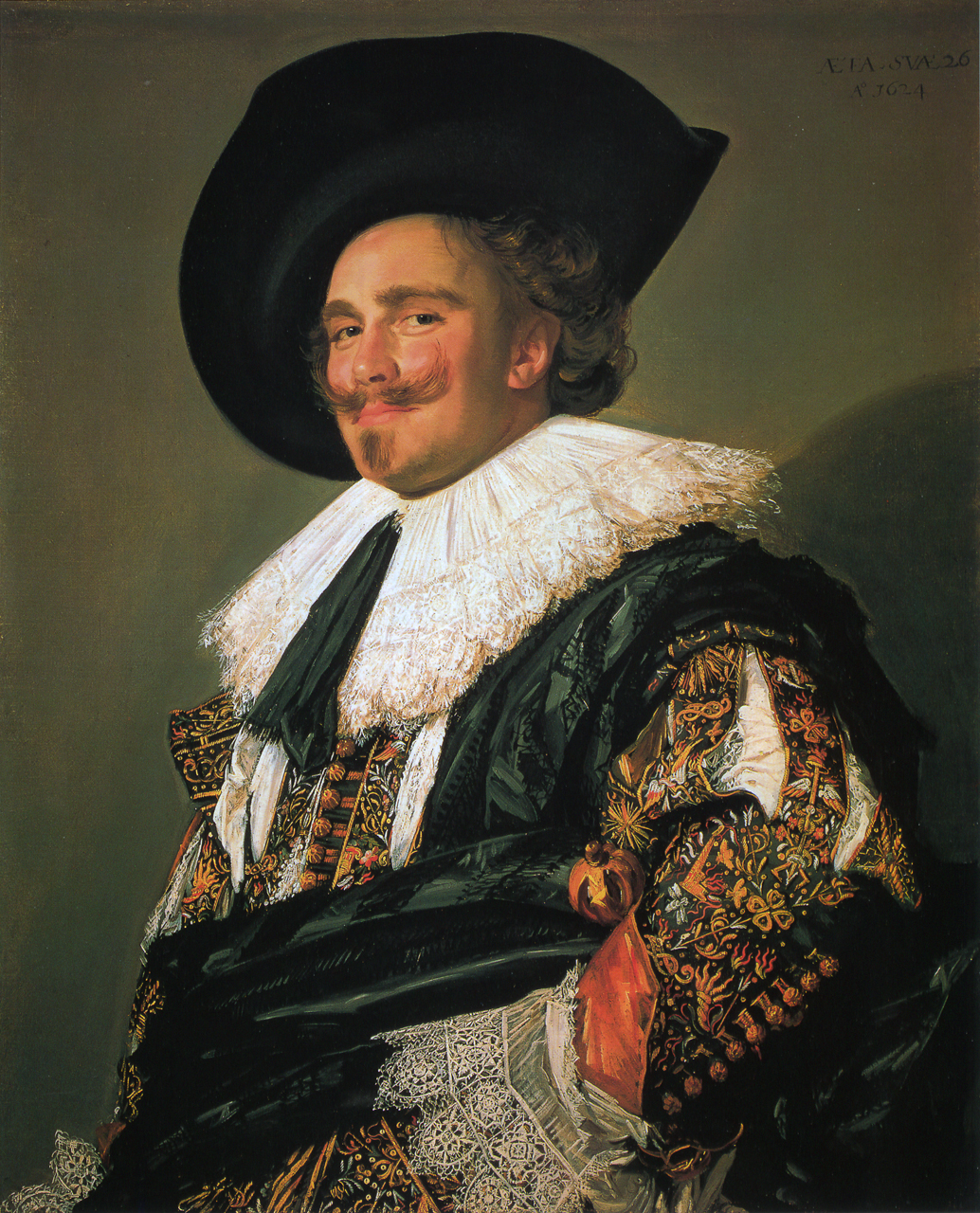
Thus the critical point: Should a painter have persuaded his sitter to smile, and chosen to paint it, it would immediately radicalize the portrait, precisely because it was so unusual and so undesirable. Suddenly the picture would be ‘about’ the open smile, and this is almost never what an artist, or a paying subject, wanted.
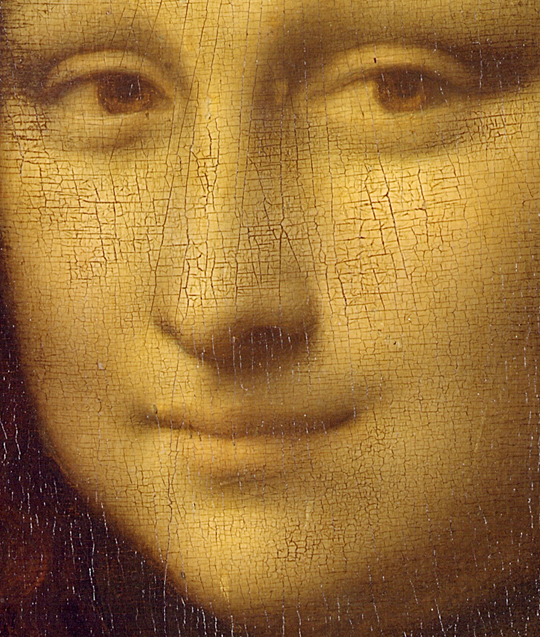
On the most famous smile in the history of art:
Millions of words have been devoted to the Mona Lisa and her smirk – more generously known as her ‘enigmatic smile’ — and so today it’s difficult to write about her without sensing that you’re at the back of a very long and noisy queue that stretches all the way back to 16th century
Florence. But to write about the smile in portraiture without mentioning her is perverse, for the effect of the Mona Lisa has always been in its inherent ability to demand further examination. Leonardo impels us to do this using a combination of skilful sfumato (the effect of blurriness, or smokiness) and his profound understanding of human desire. It is a kind of magic: when you first glimpse her, she appears to be issuing a wanton invitation, so alive is the smile. But when you look again, and the sfumato clears in focus, she seems to have changed her mind about you. This is interactive stuff, and paradoxical: the effect of the painting only occurs in dialogue, yet she is only really there when you’re not really looking. The Mona Lisa is thus, in many ways, designed to frustrate — and frustrate she did.
The hubbub around her smile really got going in the 19th century, when unfettered critical devotion to Renaissance art was at an all-time high. One critic and historian in particular, Jules Michelet, enjoyed, or at least endured, a very personal moment with her. In Volume VII of his Histoire de France (1855) he wrote, ‘This canvas attracts me, calls me, invades me. I go to it in spite of myself, like the bird to the serpent.’ Artfully concealed under the guise of Romantic criticism, this was in fact an expression of the new cult of the Mona Lisa, and over the years historians would attempt to outdo each other with their devotion to her charms.
(Top painting: Frans Hals’ The Laughing Cavalier, 1624)
 The Dish
