Is Driving With A Cell Phone Really That Dangerous? Ctd

Last month we highlighted a study from Carnegie Mellon and the LES suggesting that cell-phone use doesn’t cause more car crashes. Readers pushed back with other findings. Now Kevin Drum digests a new study (pdf) from the University of Utah:

In general, the authors conclude that hands-free talking isn’t worse than talking on a handset, but neither is it any better: “Taken together, the data demonstrate that blog_cell_phone_reaction_timeconversing on a cell phone impaired driving performance and that the distracting effects of cell-phone conversations were equivalent for hand-held and hands-free devices. Compared to single-task conditions, cell-phone drivers’ brake reaction times were slower and they took longer to recover the speed that was lost following braking.”

The problem with cell phones has never been primarily about taking your eyes off the road to dial, or about the dexterity required to hold a handset to your ear. It’s all about cognitive distraction, and the study’s authors report that drivers who do a lot of talking on cell phones don’t get any better at it: “Real-world experience using a cell phone while driving did not make the so-called experts any better at multitasking than the novices.”

Michael O’Hare’s take on the findings:

The danger is in the conversation itself, and to understand the reason, consider driving while (i) listening to the radio as I was (ii) conversing with an adult passenger (iii) transporting a four-year-old (iv) sharing the front seat with a largish dog. Why are the first two not dangerous, and the last two make you tense up just thinking about them?

The radio is not a person, and you subconsciously know that you may miss something if you attend to something in the road ahead, but also that you won’t insult it if you “listen away,” and it won’t suffer, much less indicate unease. The adult passenger can see out the windshield and also catch very subtle changes in your tone of voice or body language. If you stop talking to attend to the car braking up ahead, the passenger knows why instantly, and accommodates, and because you know this, you aren’t anxious about interrupting the conversation.

The dog and the child, in contrast, are completely unaware of what’s coming up on the road or what you need to pay attention to; the former is happy to jump in your lap if it seems like a good idea at any moment, and the child demands attention on her own schedule and at her will.

The Ambivalent Anglican

Brian Miller reviews Roger Scruton’s Our Church: A Personal History of the Church of England. Here he explores the British philosopher’s complicated embrace of his nation’s church:

According to Scruton, “any church must have two dominant duties: to inspire religious sentiment, and also to contain it.” A question that then arises, and one which Scruton himself notes, is whether the Church has proved so successful in the latter that it eliminates the existence of former. To illustrate this problem he points to the examples of John Wesley and John Henry Newman, who he calls the greatest apostles of Christ that the Church of England has produced, yet admits the Church was incapable of containing either of them.

The duty to constrain religion arises from the belief that nothing is more important to civil society than civil peace. Scruton traces this belief to Thomas Hobbes, who concluded that religion could prove a danger to civil peace, and that it therefore must be constrained by civil government. Scruton goes to on to confess that “Like Hobbes I remain attached to the idea of civil government and believe it to be superior in every way to the rule of priests.”

He further confesses that “The English know in their hearts that faith is in large part a human invention.” This view is given legitimacy by the Church’s very history, which, as Scruton points out, was born in controversy and has continued in such through the years.

The Best Of The Dish Today

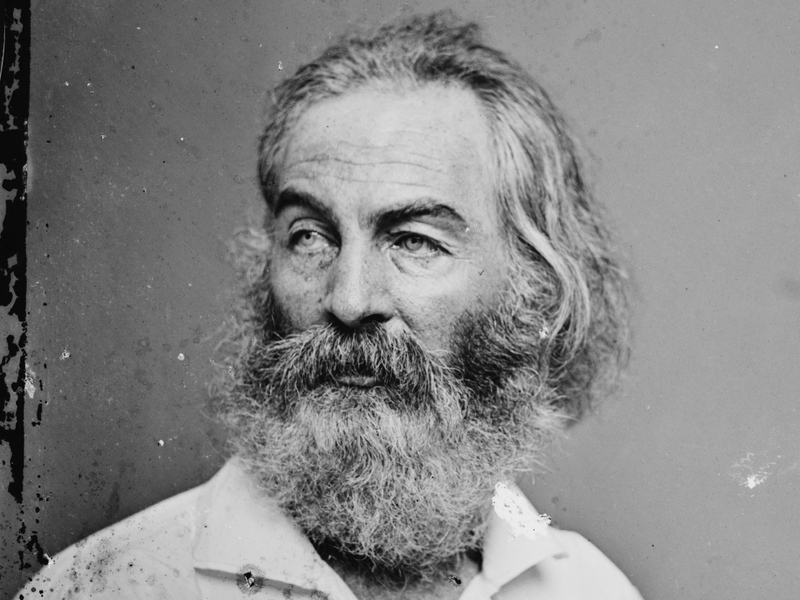
whitman.jpg

“Hello, Daddy,” said Wilde to Whitman, before disappearing off for some alone time. Count me as still grinning.

We focused on the possibility of a legacy-defining opportunity for Obama with Iran. My views here; Trita Parsi’s take here and here.

Why children desperately need more playtime; how the Republicans have done all they can to stymie the recovery; why you need to keep your pot stash out of reach of your dogs – and even more remote if they’re beagles; and the quiet resilience and mastery of Angela Merkel.

Theocon panic!

The most popular post was What Austerity Has Wrought. The Second? My further thoughts last night on this astonishing new Pope.

See you in the morning.

Investing In Disaster

It’s often a smart strategy:

Catastrophe bonds – essentially a gamble on the likelihood of natural disasters – have been the fifth best-performing asset class since the financial crisis, according to research conducted by Deutsche Bank … If you had invested your money at the fall of Lehman Brothers in September 2008, only silver, gold, and high-yield debt from the US and the European Union would have made you more money.

Mike Riggs says catastrophe bonds have done well “because they have practically no relationship to financial markets”:

This doesn’t mean they’re particularly safe … [but] when the entire market can shift after a few comments from Federal Reserve chairman Ben Bernanke, as it did this week – or rests on the health of dubious bets from the financial industry – gambling on the likelihood of a natural disaster doesn’t sound like such a bad idea.

Memorials To Monstrosities

dish_mahnmal

There are two words for “memorial” in German:

A Denkmal is a memorial or monument whose purpose is to remind us of something that has happened or someone who has lived. Denken is the German verb “to think,” so a Denkmal stands as a testament to something on which we have a duty to reflect. Denkmals can be bloated and grand — as in the Soviet Memorial in Berlin or Mount Rushmore in South Dakota — or sombre and respectful — as in the Vietnam Veteran’s Memorial, a black wall engraved with service members’ names, dedicated to honoring those who fought in the war.

A Mahnmal is something subtly different, and we have no readily available English translation. Mahnen means both “to admonish” and “to remind;” it is often paired with the idea of caution or observance, as when one urges someone to take caution or be vigilant. A Mahnmal, then, is something meant both to remind and to warn, it pleads for remembrance not for the purpose of glory but for the purpose of heedful acknowledgment, even shame. A Mahnmal takes the idea of “never again” and gives it shape.

Berlin has an impressive Mahnmal culture. The most famous is the Holocaust-Mahnmal, or the Memorial for the Murdered Jews of Europe, a vast grid of concrete vertical slabs arranged on rising and falling ground.

(Photo of the Holocaust-Mahnmal by Flickr user .tungl)

A New Breed Of Blockbuster

Charles Yu takes note that the controversial videogame Grand Theft Auto V has already crossed a billion dollars in sales, surpassing every movie this year except for Iron Man 3. An important point he makes about the value difference:

It’s not a stretch to think that the people who didn’t go to the movies this summer might have said, ‘you know what, I’m skipping a few and using the cash for a different kind of blockbuster.’ In that case, the most interesting number to keep in mind may be 100 — the approximate number of hours of gameplay that “GTA V” reportedly offers. For those diligent and conscientious enough to explore all the side quests, excursions and games-within-the-game, it provides weeks of entertainment. That makes the $60 retail price a bargain: 100 hours of gameplay at $0.60 an hour. Compare that with the price of admission to a movie, even a two-and-a-half hour megaproduction. The other advantage for video games — driving the usage cost down even further — is that buyers get to keep the game.

Joseph Bernstein finished the game in one 38-hour sitting:

The thing about this game, I’ve realized, is that people are going to see what they want to see in it, because this game quite willingly offers it up to them.

Game-culture torchbearers will see the return to ultraviolence that they want; dads looking for 30 minutes of mirth after putting the kids to bed will find just that; culture warriors looking for a game to pillory will have plenty to work with; games-are-art drumbeaters will find what they need; and the vast majority of people who play this game, people who are looking to be entertained for hours and hours, will certainly not be disappointed. How about me? I found a daring, contradictory, ambitious, huge, flawed, funny, beautiful, sometimes retrograde, and always compelling video game, unafraid to engage with the culture at large. That’s more than I can say for any of its peers. And that’s how I’ll treat it.

Despite its commercial success, Ryan Vogt pans the game as stale and predictable:

Grand Theft Auto has been on a decadelong spree of piling on “features,” hoping you won’t notice how much it’s aged. Looking back, it’s amazing how little evolution the series has experienced. Kidnap someone playing Grand Theft Auto III in 2001, bring him in a time machine to the present day to play GTA V, and the only actual gameplay differences he’ll notice are that now you can fly helicopters and ride motorcycles, and you won’t die when you touch a body of water. That’s pretty much it. And those changes were made in Grand Theft Auto: Vice City, the very next game after III.

What’s The Answer To Online Piracy?

Derek Mead scans a new report:

[E]fforts to simply eradicate piracy by shutting down sites can’t work. The internet moves too quickly, and has unlimited space for infringing sites to hide. This is a very strong admission for an industry-funded report, and one that shows the extrajudicial DNS blocking that SOPA would allow can’t work. Never mind the censorship concerns—killing websites that host infringing material, unwittingly or not, won’t kill piracy. That on its own runs counter to the prevailing refrain in the copyright lobby. But what’s even more surprising is that the report offers an actual solution, as Techdirt adroitly pointed out: If you want to combat piracy, make your content available elsewhere.

Jerry Brito analyzes an MPAA study blaming search engines for enabling mass piracy:

[It’s] not surprising that, according to the report, 58% of all visits to infringing URLs that were “influenced” by a search engine came from queries for either generic or title-based terms, not from the more-clearly suspicious “domain” terms. As the report points out, this “indicat[es] that these consumers did not display an intention of viewing content illegally.”

So the question is, why did these consumers who had no illegal intent end up at infringing sites? Could it be that they did not have a legal alternative to accessing the content they were seeking? That would not excuse their behavior, and it’s the movie industry’s prerogative whether and when to make their content available. Indeed release windows are part of its business model, although a business model seemingly in tension with consumer demand as evidenced by the shrinking theatrical release window. That all said, it’s not clear to me why search engines should be in the business of ensuring other industries’s business models remain unchanged.

How Density Affects Disasters

East Coast Begins To Clean Up And Assess Damage From Hurricane Sandy

Vishaan Chakrabarti argues that urban areas recover from calamities more quickly than suburbs do:

In the aftermath of Sandy, higher-density neighborhoods with centralized infrastructure such as underground power and mass transit generally fared better and recovered more quickly than lower-density areas. It is particularly telling that in the aftermath of Sandy, higher-density neighborhoods – from downtown Brooklyn and Battery Park City up to Harlem – were up and running within a week. By contrast, lower density areas like Staten Island and Breezy Point – with their single-family homes, elevated power lines, timber construction, and auto-dependency – took longer to recover. Dense conditions come with a greater number of redundancies, a fundamental characteristic of resiliency. Most residents of high-density areas don’t rely on a single hospital or one grocery store. Instead, they have a network of them, allowing one or a few to malfunction without creating a system failure.

(Photo: Two days after Hurricane Sandy, New Yorkers crowd into a Chase Bank ATM kiosk one block north of where power has gone out in Manhattan. “This is the modern campfire,” one man said. By Andrew Burton/Getty Images)

Jack Torrance Was Onto Something

Peter Gray details the connection between a decline in playtime and a rise in mental disorders:

It’s not just that we’re seeing disorders that we overlooked before. Clinical questionnaires aimed at assessing anxiety and depression, for example, have been given in unchanged form to normative groups of schoolchildren in the US ever since the 1950s. Analyses of the results reveal a continuous, essentially linear, increase in anxiety and depression in young people over the decades, such that the rates of what today would be diagnosed as generalised anxiety disorder and major depression are five to eight times what they were in the 1950s. Over the same period, the suicide rate for young people aged 15 to 24 has more than doubled, and that for children under age 15 has quadrupled.

The decline in opportunity to play has also been accompanied by a decline in empathy and a rise in narcissism, both of which have been assessed since the late 1970s with standard questionnaires given to normative samples of college students. Empathy refers to the ability and tendency to see from another person’s point of view and experience what that person experiences. Narcissism refers to inflated self-regard, coupled with a lack of concern for others and an inability to connect emotionally with others. A decline of empathy and a rise in narcissism are exactly what we would expect to see in children who have little opportunity to play socially. Children can’t learn these social skills and values in school, because school is an authoritarian, not a democratic setting. School fosters competition, not co-operation; and children there are not free to quit when others fail to respect their needs and wishes.