What Austerity Has Wrought

Austerity Cuts

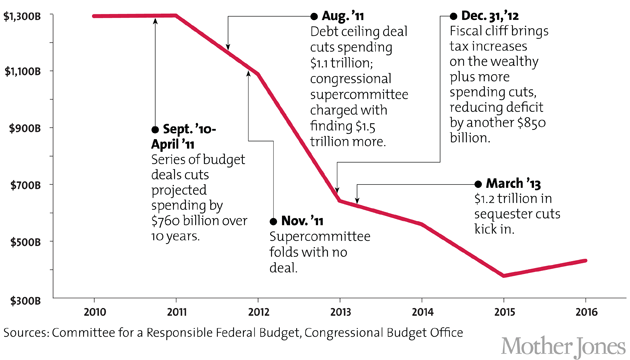
Drum surveys the damage:

So what has austerity cost us in the United States? The full price is hard to calculate, but the Congressional Budget Office figures that sequestration alone has cut GDP growth by about 0.8 percentage points. Since sequestration accounts for less than half of total belt-tightening over the past couple of years, a rough guess suggests that our austerity binge has cut economic growth by something like 2 percentage points—about half the total growth we might normally expect following a recession.

In a follow-up, Drum looks at normal government during recoveries:

Government spending at all levels is far below the level of any other recent recovery. Sixteen quarters after the end of the recession, spending during past recoveries has been 7-15 percent higher than it was at the start. This time it’s 7 percent lower, despite the fact that the 2008-09 recession was the deepest of the bunch. Reagan, Clinton, and Bush all benefited from rising spending during the economic recoveries on their watches. Only Obama has been forced to manage a recovery while government spending has plummeted.

This context is critical to understanding the anemic recovery. To be sure, government debt desperately needs long-term structural reform on entitlements and defense – but slashing spending in the last few years has been as effective here as in Europe. Were it not for the stimulus in 2009, we might be where much of Europe is languishing today. And note too that the GOP is largely responsible, both in state and local government and at the national level. You can think of this is prudence – but without real structural reform, it’s hardly that. I think of it in much simpler terms: sabotage to make Obama first a one-term and now a failed president.

They just hate him much more than they love their country.
“Whitman And Wilde Almost Certainly Had Sex”

That’s the conclusion that Mallory Ortberg draws from reading Neil McKenna’s The Secret Life of Oscar Wilde:

Oscar was suitably humble in the presence of Whitman, greeting him with the words, ‘I have come to you as one with whom I have been acquainted almost from the cradle.’ The contrast between the two poets could not have been more marked. Oscar was young, tall, slender and clean shaven. Whitman was in his early sixties, but looked much older. He was shorter than Oscar and wore a long, bushy white beard. Oscar was highly educated, cultivated and still in his languid Aesthetic phase. Whitman was self-taught, and robustly masculine in manner.

Could his meaning be more clear? “Hello, Daddy,” says the young dandy as he lightly crosses the threshold.

[Publisher John Marshall] Stoddart tactfully left the two poets alone. ‘If you are willing – will excuse me – I will go off for an hour or so – come back again – leaving you together,’ he said. ‘We would be glad to have you stay,’ Whitman replied. ‘But do not feel to come back in an hour. Don’t come for two or three.’ Whitman opened a bottle of elderberry wine and he and Oscar drank it all before Whitman suggested they go upstairs to his ‘den’ on the third floor where, he told Oscar, ‘We could be on ‘thee and thou’ terms.’ …

The next day, Whitman told the Philadelphia Press that the two of them had a “jolly good time” together. Did he get more specific? He did, reader. He did:

One of the first things I said was that I should call him ‘Oscar.’ ‘I like that so much,’ he answered, laying his hand on my knee. He seemed to me like a great big, splendid boy. He is so frank, and outspoken, and manly. I don’t see why such mocking things are written of him.

This is a gift. You do realize that, don’t you? History has reached out to you specifically and given you a gift. The gift is the knowledge that Oscar Wilde once put his hand on Walt Whitman’s knee and then they drank elderberry wine together; the gift is that the next day a reporter turned up and Whitman expounded at length on his big, splendid boy. Let this sink in a moment. This is like finding out Emily Dickinson once secretly stowed away on a ship bound for England and spent a weekend with Jane Austen at a bed and breakfast, doing it. This is like finding out Ernest Hemingway finally let his guard down one night in Spain and let F. Scott Fitzgerald lean across the table and kiss him. This is like finding out Gwendolyn Brooks lost her virginity to Willa Cather.

But Ortberg’s “smoking gun” on the Wilde encounter with Whitman is still to come – here.

Why A Shutdown Would Be Political Suicide

Waldman lists a bunch of reasons that the GOP’s plan to pin the shutdown on Obama won’t work:

Republicans are the ones who hate government, and Democrats are the ones who defend it.

This is the heart of it. After so many decades of Republicans saying that government is evil, trying to slash it in a hundred ways, and more recently saying that they don’t think a shutdown would be all that bad, it will be all but impossible for them to convince people that they’re the ones who want government to stay open. Even if it were true (which it isn’t) they wouldn’t be able to convince people of it. They’re the anti-government party. That’s who they are. They worked very hard to create that image. So the universal default assumption is that when there’s a question of who’s responsible for shutting down the government, Republicans are the ones who are doing it, and persuading people that the opposite is true just isn’t going to happen.

A new CNBC poll finds that a plurality oppose defunding Obamacare and a majority oppose shutting down the government to do so. Ed Morrissey digs into the cross tabs:

[W]hile a majority of Republicans support defunding (51/36), a near-majority oppose a government shutdown over the issue (36/48 for shutdown).  Independents break even more harshly against both, narrowly opposing defunding (40/44) but coming out almost 5:1 against a government shutdown, 14/65.  In fact, the only demographic that favors this strategy, according to CNBC, is the Tea Party demo, which supports a shutdown strategy with a 54% majority.

Learning To Look

dish_evans

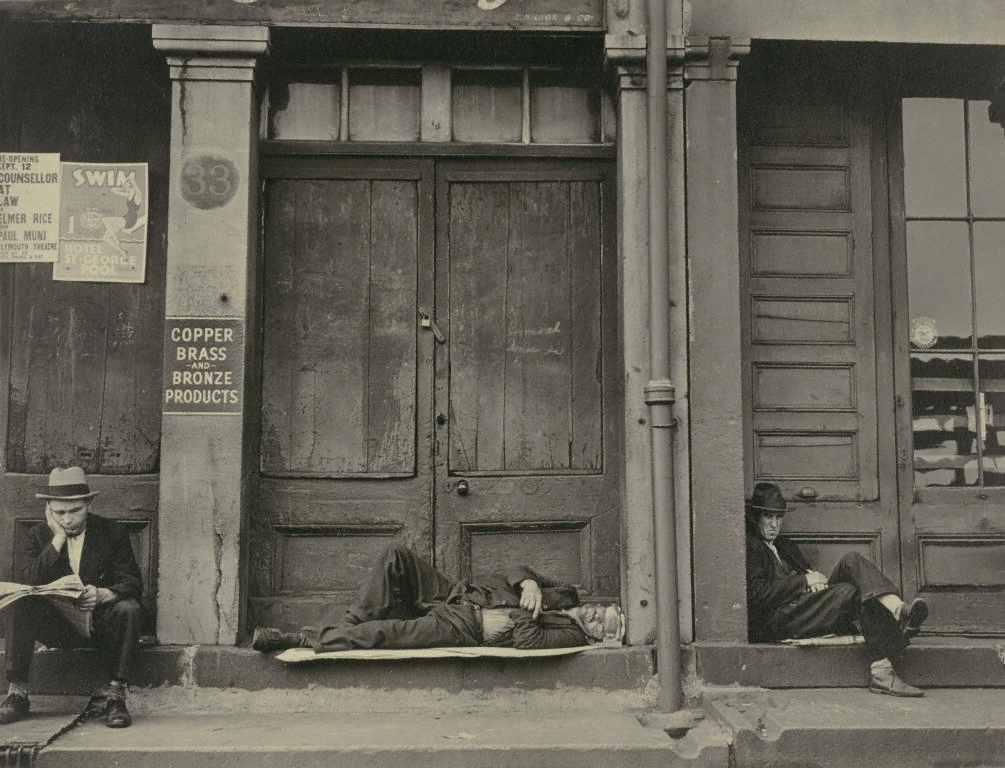
James Polchin reviews “American Photographs,” the Museum of Modern Art’s current exhibition on Walker Evans:

Evans’ vision was shaped in large part by his time in Paris in the late 1920s, where he learned to discard his midwestern prohibitions against sexual and aesthetic pleasures (artists were suspicious figures in the young Evans’ household). But he also learned the pleasures of staring, a behavior his mother held to be deeply impolite. “I remember my first experience as a café sitter in Europe. There is a staring that startles the American,” he related some years later, adding that he gained from that time an ability to “stare and stare at people, shamelessly.” In Paris he perfected his skills at observing that would eventually shape the compositions and framing of his photography. He studied Baudelaire’s ideas about the aesthetic and poetic potential of everyday scenes. He read Flaubert to grasp the melancholic tenor of realism. What Evans learned in Paris was a way of looking from a distance, a voyeurism that was intimate. And this sits at the heart of American Photographs: The pleasure of staring turned into the aura of longing.

(Photo: South Street, New York, 1932, by Walker Evans, courtesy of the Getty Open Content Program)

The Real Peril Of Being In Porn

Heather Smith, who did clerical work in the adult-film industry, quickly realized that performers are under high risk of identity theft:

The Adam Walsh Child Protection Act reporting requirements seem to have done a good job of keeping people under 18 out of the porn industry, but they have done so by compromising the personal information of every person over the age of 18 who has ever worked in porn, or erotic modeling, no matter how briefly. Even as a disaffected contract worker with no background check, I had access to the addresses, Social Security numbers, real names, and unflattering ID photos of every porn actor or actress that I identified. I had this information because the Adam Walsh Child Protection Act demanded that anyone who sold, or resold, pornography, have this information in their records.

As I linked performers to the database, I noticed that a few of them lived not far away from the dot-com office. I could have stopped and knocked on their doors on my way home from work. At the very least, I could have used their information to commit credit card fraud. Very little, [porn actress] Stoya told me, scares her more about her job than these databases: “People ask me if I’m worried about being recognized on the street and attacked by someone in a dark alley. No, I worry about people who are good with computers.”

How Callous Are Today’s Republicans?

In National Review, Henry Olsen admonishes Republicans for voting to cut food stamps:

The conservative war on food stamps is the most baffling political move of the year. Conservatives have suffered for years from the stereotype that they are heartless Scrooge McDucks more concerned with our money than other people’s lives. Yet in this case, conservatives make the taking of food from the mouths of the genuinely hungry a top priority. What gives? And why are conservatives overlooking a far more egregious abuse of taxpayer dollars in the farm bill?

It’s almost as if they want to be seen as the party of hand-outs to the very rich and brutal indifference to the needy poor. Tyler Cowen asks why the GOP is fixated on the program:

It doesn’t make sense to go after food stamps, and you can read the recent GOP push here as a sign of weakness, namely that they, beyond upholding the sequester, are unwilling to tackle the more important and more wasteful targets, including Medicare and also defense spending, not to mention farm subsidies.  Here are a few basic numbers on when food stamps have grown and what has driven that growth.  It has not become a “problem program” in the way that say disability has.

Krugman pinpoints how true fanatics and ideologues never see context. Context, after all, leads to understanding of why food stamps are still so big a program – and if understanding contradicts ideology, the shrunken GOP mind cannot compute:

So here’s the thing about SNAP: it’s one federal program that really has exploded in size in recent years, with the number of beneficiaries rising around 80 percent. Of course, it’s exploded for a very good reason, namely a once-in-three-generations economic crisis, and the program has stayed large because our so-called recovery hasn’t trickled down to the bottom half of the income distribution. But the right doesn’t care about any of that; in food stamps, it gets to see what it wants to see — surging government spending! Millions of takers! And so food stamps become public enemy #2.

Number 1 is, of course, Obamacare, which really does represent a major expansion of the government’s role.

Dylan Matthews finds that the food stamps vote was extremely partisan:

Democrats in districts with barely any food stamp users (such as Henry Waxman, whose district’s SNAP usage rate is a paltry 1.7 percent) all voted against cut, and Republicans in districts with huge numbers of food stamp users (such as Hal Rogers, 29 percent of whose district’s households are on SNAP) almost all voted for them. It’s yet another indication that House members are becoming less and less motivated by parochial interests of their districts and more and more unified on party lines.

Makeup For Men?

Farhad Manjoo makes the case:

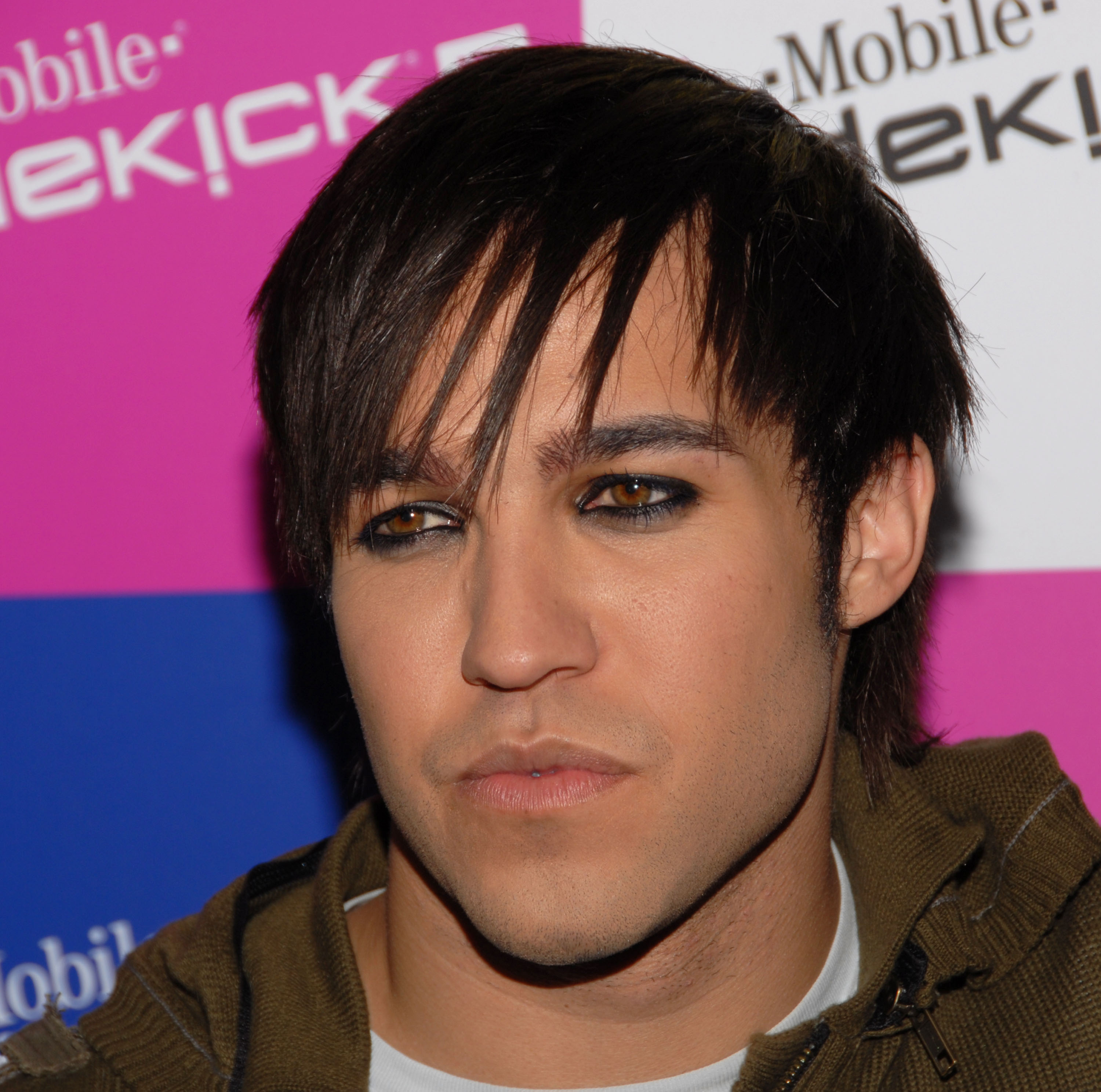
Obviously men should wear makeup. It’s sort of crazy that we don’t, actually. Human beings have T-Mobile SIDEKICK iD Launchbeen adorning themselves since forever; evidence of the application of body paint dates back at least 50,000 years and is taken to be one of the first signs of modern human behavior. For nearly all that time, both men and women indulged in cosmetics. As recently as a few hundred years ago, it was common for upper-class men in Britain and France to wear rouge and powder. It was only around the turn of the 19th century that facial adornment for men began to go out of fashion—though at the same time, other cosmetic enhancements for men, especially hair-care products, took off. This makes little logical sense (though, granted, it’s folly to apply logic to fashion trends). If it’s seen as necessary for a modern man to comb and sculpt his hair, why isn’t he expected to make up his face, too?

Update from a reader:

A man should not be able to wear makeup because it would otherwise interfere with his fabulous beard.

(Photo of Pete Wentz by Mark Sullivan/WireImage via Getty Images)

The Courageous Friends We Are Abandoning

Peter Meijer, an Iraq War veteran, reminds us that the visa program for Iraqis who assisted Americans is about to expire:

If Congress doesn’t act, on October 1 the State Department will dismantle the Special Immigrant Visa (SIV) program for Iraqi refugees. The program was introduced in 2008 as a way to provide special immigration status to some of the tens of thousands of Iraqis who served alongside U.S. forces at great danger to themselves and their families, during our 8 year occupation. Today, 5 years after the original legislation passed, less than a third of the 25,000 allotted visas have been distributed and the charter is set to expire. Will this be just another broken promise to the people of Iraq?

After destroying their country, and achieving nothing but a simmering civil war, it is the very least we should do. Earlier Dish on visas for Iraqis here, here, here, and here.