What The Hell Is Happening In Kenya?

Hostages Held in Westgate Shopping Mall

In what was the largest terrorist attack in Kenya since the 1998 bombing of the American embassy, an estimated 10 to 15 militants stormed an upscale Nairobi mall on Saturday, killing at least 60 and injuring more than 175. The dead include an eminent Ghanian poet, a pregnant radio host, a 29-year-old diplomat, and citizens of at least 10 countries. The Kenyan government claimed control over the mall earlier today, but ongoing gunfire has been reported. Ishaan Tharoor provides background on the group that claimed responsibility for the attack via Twitter:

[Al-Shabaab], whose name means the Youth in Arabic, was once the militant youth wing of a coalition of Islamist forces that held sway in parts of Somalia more than half a decade ago. The country has had no real functional central government for over two decades, and the Islamists, for a time, provided a veneer of security and stability despite the harshness of the Shari’a they sought to impose. That control slipped following a series of offensives spearheaded by the African Union, beginning with an Ethiopian-led invasion in 2006. In early 2012, a video emerged of a top leader of al-Shabaab pledging obedience to Ayman al-Zawahiri, al Qaeda’s head. …

Al-Shabaab fighters had launched a number of minor forays across Somalia’s porous southern border with Kenya, kidnapping tourists and aid workers. By 2011, after al-Shabaab impeded humanitarian aid into southern Somalia during a ghastly drought, the Kenyan government had had enough. It launched a sustained military campaign across the border, eventually dislodging al-Shabaab from its stronghold in the Somali port city of Kismayo in 2012, a defeat from which the group has yet to recover.

Shane Harris sees an emboldened al-Shabaab:

The Westgate mall attack marks an audacious return for al-Shabaab, an al-Qaeda linked group that, as recently as last year, U.S. officials claimed was on the run in the face of an American-backed offensive in Africa. More recently, the Obama administration has expanded a secret war against al-Shabaab in Somalia, ramping up assistance to Somali intelligence agencies. The United States also runs training camps for Ugandan peacekeepers who fight al-Shabaab forces, and at a base in Djibouti houses Predator drones, fighter jets, and nearly 2,000 U.S. troops and military civilians.

But Ken Menkhaus believes the opposite:

Many [security experts] warned that Shabaab’s [previous] reluctance to attack soft targets in Kenya (or elsewhere, including in the US) was contingent on the group’s continued success in Somalia. Were the group to weaken and fragment, it would be more likely to consider high-risk terrorism abroad. Paradoxically, a weakened Shabaab is a greater threat outside Somalia than a stronger Shabaab. … The Westgate attack is the latest sign of the group’s weakness. It was a desperate, high-risk gamble by Shabaab to reverse its prospects.

Joshua Keating also points out how gains against the terrorist group in Somalia seem to have made it more dangerous to other countries:

Shabaab has attacked countries that have participated in military operations in Somalia before, most infamously the attack on World Cup spectators that left 74 dead in Kampala, Uganda in 2010. The group has also been blamed for several attacks in Kenya including the bombing of a Nairobi bus station last year and several grenade attacks on churches. Now that the group’s ability to actually control territory is waning, it seems possible that more of its efforts may be devoted to operations like these. Shabaab may start acting more like a transnational terror group than a rebel army fighting to control land.

Simon Tisdale elaborates on the group’s internal divisions:

Westgate … looks like a chilling statement of intent by Ahmed Abdi Godane, the al-Shabaab leader, who consolidated his power in June in an internal coup. … The apparent decision by Godane and fellow hardliners to again take the fight beyond Somalia’s borders looks like a bid to regain the initiative in the face of these setbacks and disagreements. In addition, the group’s occasional bomb attacks in Mogadishu keep the government on the back foot. The recent decision by the charity Médecins Sans Frontières to pull out of Somalia, due to worsening security, is a perverse vindication of such tactics. And Godane doubtless welcomes the negative impact of Barclays Bank’s decision to close accounts used to send remittances to Somalia.

Meanwhile, Patrick Gathara says the attack brought Kenyans together at a time of political and tribal acrimony:

Kenyans have come together in an impressive show of solidarity. The citizenry has literally responded with blood and treasure. When a call went out for blood donors, local hospitals were inundated and some had to turn people away. This morning, long lines of blood donors snaked across the city. Hospitals at one point were running out of blood bags, but not donors, so high was the turn out. An MPESA account set up for the victims has already raised millions of shillings. All over social media, on the streets and on air, the political bitterness of the last seven months seems to have, at least temporarily, abated.

But Paula Kahumbu cautions that the long-term impact remains to be seen:

The president of Kenya, members of his leadership team and the opposition have jointly called on Kenyans for support, and asked the international community not to issue travel advisories  revealing that tourism is the soft spot of greatest concern. Assessing the impact of the attack on tourism and foreign investments will depend very much on the success of the response by security forces. With things still unfolding as I write, it is far too early to analyze the implications, yet amazingly, Kenya feels stronger.

(Photo: An injured man is treated outside the Westgate shopping mall where hostages have been kept for three days on 23 September, 2013 in Nairobi, Kenya. By Ahmet Erkan Yigitsozlu/Anadolu Agency/Getty Images)
The Theocon Panic

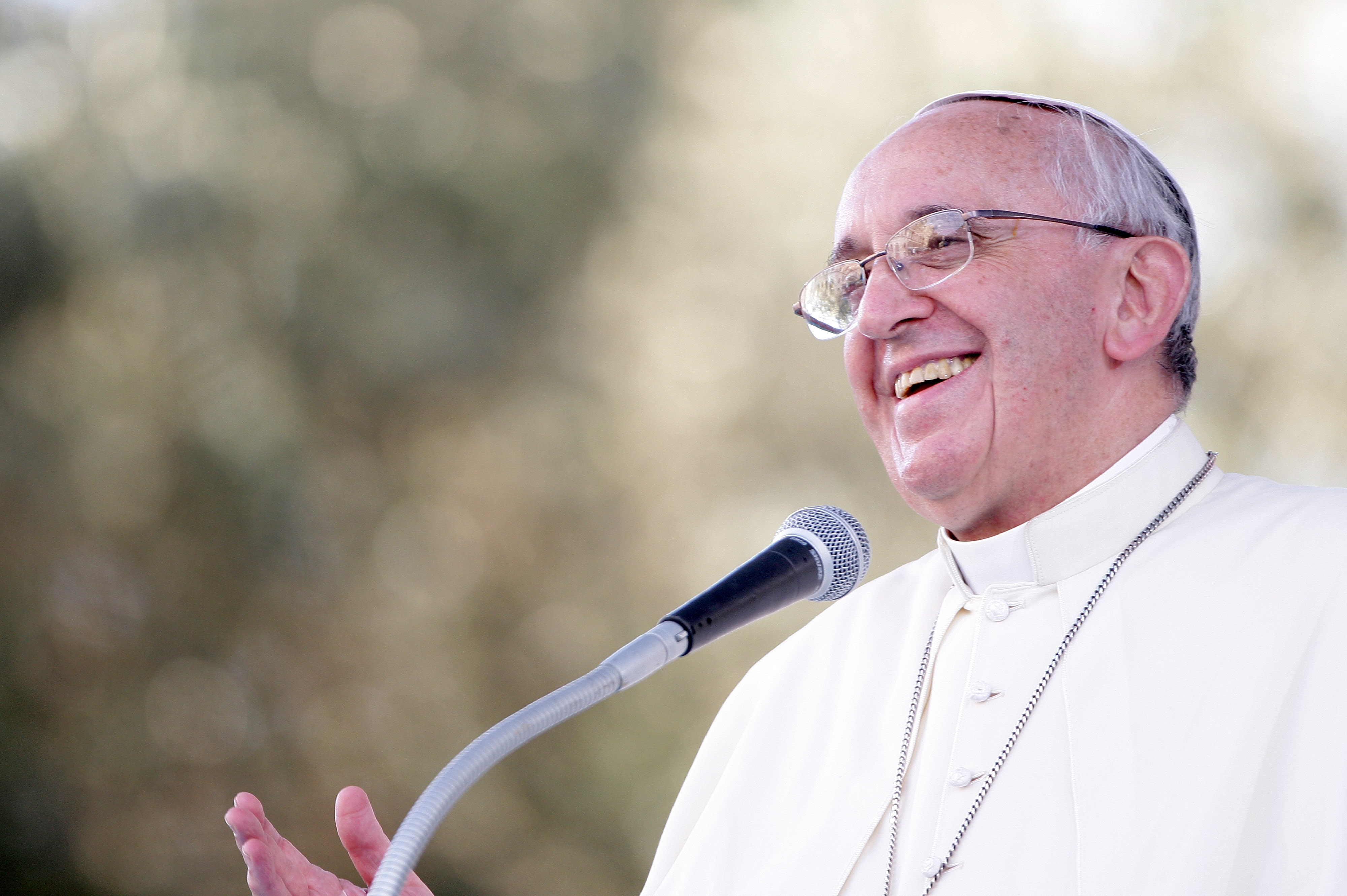
Pope Francis Visits Sardinia

The people in the hierarchy and the hard-right of the American Catholic church have put their best face forward after Pope Francis’ categorical rejection of their entire project. So allow me a big bucket of cold history and fact to show just how over they are.

For the last couple of years, their overwhelming theme has been that basic freedom of Catholic conscience has been denied by a small rule in Obamacare that makes public Catholic institutions, like hospitals and colleges that employ non-Catholics, provide contraception if women want it. The Catholic institutions do not pay for it; there’s a work-around. In the face of this and civil marriage for gay couples, the American hierarchy, backed by rightist Catholic entities such as National Review, launched a veritable crusade. Last summer, the Bishops even launched a Fortnight of Freedom, two weeks in which the hierarchy devoted itself almost entirely to the questions of contraception, homosexuality, marriage and abortion in the context of religious liberty. These themes were deafening and clearly designed to affect the presidential election. So let’s recall Francis’ words of last week:

We cannot insist only on issues related to abortion, gay marriage and the use of contraceptive methods… The dogmatic and moral teachings of the church are not all equivalent. The church’s pastoral ministry cannot be obsessed with the transmission of a disjointed multitude of doctrines to be imposed insistently.

In that context, remember something that wounded me more deeply than any other in recent years, when, in 2009, my own then-archdiocese went to rhetorical war against gay people, using the homeless and sick as pawns:

The Catholic Archdiocese of Washington said Wednesday that it will be unable to continue the social service programs it runs for the District if the city doesn’t change a proposed same-sex marriage law, a threat that could affect tens of thousands of people the church helps with adoption, homelessness and health care.

In the end, the archdiocese, mercifully, relented. But do you not hear the fresh relevance of Francis’ words:

The church sometimes has locked itself up in small things, in small-minded rules?

One of those whose writings have been almost obsessed with abortion, gay marriage and contraception is Kathryn-Jean Lopez. She’s still spinning as if nothing just happened:

As for [Pope Francis], Church teaching on sexual morality is about fruitfulness and surrender. That won’t be understood if catechetical fundamentals aren’t — and none of it will make any sense if Christ’s love isn’t encountered.

But that latter point got lost, did it not, in the recent past as an authoritarian Pope demanded “catechetical fundamentals” on everything all the time, often with more dictatorial fear than Christ’s love. Nothing better illustrated this in recent years than Benedict’s disciplining of America’s off-message nuns – even as orthodox child-rapist priests were routinely allowed to retire in peace. The final report on the nuns was as brutal as it was insensitively delivered:

The assessment accused the sisters of “corporate dissent” on homosexuality and failure to speak out on abortion.

The assessment also castigated LCWR for ties to NETWORK, a Washington-based Catholic lobbying group that supported the Affordable Care Act … Leaving the Holy Office, Franciscan Sister Pat Farrell felt numb. “It was in the press before we had time to brief our members,” she recalled.

Let us again recall Francis’ words. Here he addresses the role of nuns and monks in religious orders and the need for them to speak their conscience, even if they ruffle papal feathers:

In the church, the religious are called to be prophets in particular by demonstrating how Jesus lived on this earth, and to proclaim how the kingdom of God will be in its perfection. A religious must never give up prophecy…Let us think about what so many great saints, monks and religious men and women have done, from St. Anthony the Abbot onward. Being prophets may sometimes imply making waves. I do not know how to put it…. Prophecy makes noise, uproar, some say ‘a mess.’ But in reality, the charism of religious people is like yeast: prophecy announces the spirit of the Gospel.”

And yet Benedict attacked this very charism in favor of top-down papal control of every minute doctrinal issue. On this, how can the theocons ignore the following:

If the Christian is a restorationist, a legalist, if he wants everything clear and safe, then he will find nothing.

To whom do they think the Pope was referring? Who else if not them? Or do they have alternative suggestions?

(Photo: Pope Francis delivers his speech during a meeting with young people on September 22, 2013 in Cagliari, Italy. By Franco Origlia/Getty Images.)

Perfectly Sane Delusions

Rebecca Schwarzlose says a surprising number of mentally healthy people experience them:

Delusions are a common symptom of schizophrenia and were once thought to reflect the poor reasoning abilities of a broken brain. More recently, a growing number of physicians and scientists have opted for a different explanation. According to this model, patients first experience the surprising and mysterious perceptual disturbances that result from their illness. These could be full-blown hallucinations or they could be subtler abnormalities, like the inability to ignore a persistent noise. Patients then adopt delusions in a natural (if misguided) attempt to explain their odd experiences.

An intriguing study from the early 1960s illustrates how rapidly delusions can develop in healthy subjects when expectations and perceptions inexplicably conflict.

The study, run on 20 college students at the University of Copenhagen, involved a version of the trick now known as the rubber hand illusion. Each subject was instructed to trace a straight line while his or her hand was inside a box with a secret mirror. For several trials, the subject watched his or her own hand trace the line correctly. Then the experimenters surreptitiously changed the mirror position so that the subject was now watching someone else’s hand trace the straight line – until the sham hand unexpectedly veered off to the right. All of the subjects experienced the visible (sham) hand as their own and felt that an involuntary movement had sent it off course. After several trials with this misbehaving hand, the subjects offered explanations for the deviation. Some chalked it up to their own fatigue or inattention while others came up with wilder, tech-based explanations:

[F]ive subjects described that they felt something strange and queer outside themselves, which pressed their hand to the right or resisted their free mobility. They suggested that ‘magnets,’ ‘unidentified forces,’ ‘invisible traces under the paper,’ or the like, could be the cause.

In other words, delusions may be a normal reaction to the unexpected and inexplicable. Under strange enough circumstances, anyone might develop them – but some of us are more likely to than others.

Pulling The Plug On Big Coal

On Friday, the EPA proposed tougher emissions standards that new power plants must meet. In the absence of climate change legislation, it’s a BFD. Brad Plumer examines the impact:

The regulations aren’t likely to have a huge impact in the near future — the standard will make it extremely hard to build new coal plants in the United States, but utilities weren’t planning many new coal plants anyway, because natural gas is a cheaper alternative. Still, the rule does have fairly big implications for the energy industry and climate change down the road.

Brian Merchant thinks the proposal means the end of coal power plants:

Essentially, if someone wants to build a new coal plant, in order to make it clean enough to meet these new rules, they’ll have to invest in Carbon Capture and Sequestration (CCS) technology. CCS is a highly experimental (and highly expensive) technology that allows coal plants to pump their emissions underground instead of releasing them into the atmosphere … Unfortunately for the coal companies, but thankfully for pretty much everyone else on the planet, nobody really thinks CCS will work.

Molly Redden believes that this is a watershed moment for climate policy:

What makes these rules truly significant is that they will be the first to ever regulate the carbon-dioxide emissions of power plants, the largest cumulative source of emissions in the American economy. They thus set the stage for the more truly meaningful regulations Obama plans to introduce in his second term, on carbon-dioxide emissions from existing power plants. That makes them natural testing grounds for industry and environmental lobbyists—and for some of the same legal challenges that are expected to beset the draft rules to regulate existing power plants.

Ask Trita Parsi Anything: How To Seize A Deal With Iran

In our first video from the founder and president of the National Iranian American Council, he outlines how he thinks the Obama administration should tackle Iran’s nuclear program:

From his bio:

Trita Parsi is the founder and president of the National Iranian American Council and an expert on US-Iranian relations, Iranian foreign politics, and the geopolitics of the Middle East. He is the author of Treacherous Alliance: The Secret Dealings of Iran, Israel and the United States and ​A Single Roll of the Dice – Obama’s Diplomacy with Iran, and has contributed articles on Middle East affairs to the New York Times, WaPo, Wall Street Journal, and many others. He is also a frequent guest on CNN, PBS’s Newshour, NPR, the BBC and Al Jazeera. You can follow him on Twitter here.

Our full Ask Anything archive is here.

The Un-Thatcher

GERMANY-VOTE-MEDIA

Cameron Abadi calls Angela Merkel, who just won a third term, “the Machiavelli of our day—better, and certainly shrewder, at power politics than any of her peers, including her colleagues in the White House and Kremlin”:

[I]t’s important to note that Merkel’s acquisition of this power is directly related to her low-key style. She hasn’t held press conferences ordering budget cuts in Greece, or pension reforms in France. She’s cut all of her deals in closed-door meetings of the European Council; the bailouts are presented as the consensus of all European leaders, so they can’t be traced back to Merkel individually. In some sense, Merkel has managed to push through her preferred policies, while sending out the leaders of the affected countries to take the fall for them. Angry protesters in Greece and Spain have tried to paint Merkel as a Nazi, but the Hitler moustache doesn’t quite stick; mostly they’ve directed their anger at their own governments. In some sense, Merkel has maximized her power by minimizing the appearance of it.

I’ve long been struck by Merkel’s refusal to be drawn into ideological fights, reluctance to clarify where ambiguity serves her better, and disinclination to bludgeon rather than to coax and trick. But her will should not be under-estimated either. Germany’s foolish or smart approach to the euro-crisis, depending on your point of view, has been resiliently conservative with a small-c. She has neither let the euro collapse nor surrendered to looser economic strictures. The pain has been deep and protracted; Germany’s ascendancy in Europe greater than at any time since the Second World War.

(Photo: Photos of German Chancellor and Christian Democratic Union (CDU) candidate Angela Merkel are seen on the front pages of German newspapers on September 23, 2013 in Berlin, a day after general elections. By Barbara Sax/AFP/Getty Images)

Obama’s Moment Of Truth With Iran

IRAN-POLITICS-EXPERTS-ROWHANI

In what strikes me as another death-knell for neoconservatism, Ken Pollack, a key supporter of the Iraq military intervention, draws the line at Iran. He wants a real deal on nukes or containment – and his arguments are solid (of course, I’ve made them myself for years now). First off, a mere air-strike wouldn’t do much but delay Iran’s nuclear program – which, if Iran were attacked, they would almost certainly re-start with even more vigor and pride than before. Second, a strike would empower all those forces and factions in Iran, like the Revolutionary Guards, that seek deeper and deeper religious conflict. Third, the strikes would not be the end of a conflict, but merely the beginning:

The Iranians almost certainly would retaliate. They might fire missiles at American bases in the Middle East, or persuade allies like Hezbollah and Palestinian Islamic Jihad to fire rockets at Israel. But my biggest fear is that they would embark on a prolonged terrorist campaign against Americans, including attacks on the homeland. The Iranians have said as much, and the United States intelligence community believes that they have expanded their capacity to do so since their failed attempt to kill the Saudi ambassador to the United States in 2011.

You want another wave of Jihadist terrorism in the US? Do what Netanyahu and Kristol want. But Pollack also notes that if the US struck, and Iran retaliated with terror strikes, the conflict would inevitably escalate:

I fear that if we started using force in the belief that we could keep it limited, we would either fail and find ourselves facing an enraged, nuclear Iran, or be dragged into another large-scale, protracted war in the Middle East. Containment is hardly a perfect policy, but I see the costs and risks as more easily mitigated than those of war.

But a serious deal would obviate both bad options, help us out with Afghanistan, empower the Green Movement, and allow us to put more pressure on Greater Israel to return to its proper 1967 borders, with land swaps. Win-win-win – and a way out of our long Middle East entrapment. Fred Kaplan implores the administration to think big:

For years, many have noted that the problems in the Middle East are so intricately related that it would be hard to solve each on its own. Obama may have before him a rare convergence of events, factors, and forces where at least some of those problems can be dealt with simultaneously. He has a remarkable chance to pull the gold ring. Maybe it will prove to be the diplomatic equivalent of the Maltese Falcon, the stuff that dreams are made of. But maybe it could be the real deal. Either way, it’s worth grabbing at the chance.

My feelings entirely. Omid Memarian profiles Rouhani:

Tehran’s former mayor, Gholamhossein Karbashchi, who met with Rouhani both before and after the June election, told the Daily Beast that Rouhani throughout his political life “has tried to control extremism and radicalism among the Iranian political forces.” The three words to best define Rouhani are “disciplined, rational, and convincing,” according to the former mayor who says that Rouhani is meticulous in both form and manner. “He pays serious attention to his clothes and appearance,” says Karbaschi, adding that the president is known for his verbal skills. “Sometimes he defeats his opponent through jokes and humor. He is an intelligent and expert orator, never interrupts anyone, and pays close attention.”

Walt examines the challenges ahead:

The United States and Iran may begin direct discussions and explore lots of options, yet ultimately end up unable to cut a deal. That effort will be complicated by the opposition from hard-liners on both sides, who will look for any opportunity to toss a monkey wrench into the process. So a lot depends on how well you think Obama and Rouhani can control the domestic politics in their respective countries and explain to the relevant stakeholders why a deal would be better for nearly everyone.

My guess is that Rouhani will have an easier time than Obama will, in part because Obama will face potent opposition from Israel, its supporters in the United States, and countries like Saudi Arabia. These actors would rather keep Washington and Tehran at odds forever, and it’s a safe bet that they will do everything they can to run out the clock and thwart this latest attempt to turn a corner in the troubled U.S. relationship with Iran.

Remember Bill Kristol’s outrageous call last week for Israel to strike Iran to pre-empt the US president. Jeffrey Goldberg, on the other hand, thinks Israel can play a constructive role:

Netanyahu’s role is to play bad cop to what I hope will be Obama’s ambivalent cop. One of the dangers of the coming weeks is that the White House will become so excited by the prospect of a resolution to the nuclear issue that it ends up making a bad deal, one that allows Iran to retain at least some capability to manufacture nuclear weapons. Or Iran’s negotiators might find themselves unpleasantly surprised by the extent of the Obama administration’s demands, and ultimately balk.

… Rohani, assuming he’s sincere, doesn’t have much time. The hardliners in the Revolutionary Guard Corps are lying in wait. It would be premature for the U.S. to lift sanctions now, before anything substantive has happened. But it would also be a mistake to be too rigid.

(Photo of Rouhani by Behrouz Mehri/AFP/Getty Images)

Cruz Out Of Control

Sen. Ted Cruz Speaks Before A "Defund Obamacare" Town Hall

I have to say Jason Zengerle’s Cruz profile is both hilarious and horrifying. My favorite douchey detail from the alleged populist:

As a law student at Harvard, he refused to study with anyone who hadn’t been an undergrad at Harvard, Princeton, or Yale. Says Damon Watson, one of Cruz’s law-school roommates: “He said he didn’t want anybody from ‘minor Ivies’ like Penn or Brown.”

Chait is taken aback by the latest gambit of the least self-aware ego-maniac in the Senate:

[T]he new stop-Obamacare plan now entails filibustering the defunders’ own bill. They can do this with just 41 votes in the Senate, if they can get them. But consider how terrible this situation is for the Republicans. If they fail, it will be because a handful of Republicans joined with Democrats to break the filibuster, betraying the defunders. This means the full force of the defund-Obamacare movement – which is itself very well funded by rabid grassroots conservatives eager to save the country from the final socialistic blow of Obamacare — will come down on the handful of Senate Republicans who hold its fate in their hands. The old plan at least let angry conservatives blame Democrats for blocking their goal of defunding Obamacare. Now the defunders can turn their rage against fellow Republicans, creating a fratricidal, revolution-eats-its-own bloodletting.

Got your popcorn yet? This is gonna break bad. The Fix reports, moreover, that, unless “there is a major shift among Republicans in the Senate, Cruz won’t [even] be able to find those 40 votes”:

Does Cruz launch a traditional talking filibuster, a doomed but principled effort to show how strongly he opposes the measure?

If he doesn’t, is he able to convince/cajole a handful of wavering Republican senators to vote against cloture? Can Cruz make enough of a stand in the Senate to stiffen the spines of House Republicans — assuming the legislation, sans defunding Obamacare, is headed their way some time in the next week?

Drum’s assessment:

Unless Reid agrees beforehand to Cruz’s demands, he’s going to filibuster the House bill even though it includes language defunding Obamacare. Can he get most of the Republican caucus in the Senate to go along with this? I doubt it—not in the long run, anyway. Cruz isn’t willing to admit that a Republican filibuster against the House Republicans’ own bill would strike the American public as ridiculous, but it would.

Yes, his sense of the ridiculous seems somewhat tenuous, I’d say. No wonder so many of Cruz’s congressional colleagues hate him:

[R]unning for president (which Cruz would plainly like to do one day) means getting a whole lot of people to like you. Fundraisers, reporters, other politicians who might endorse you, power brokers from the highest party pooh-bah down to every block captain in Des Moines—you’ve got to court them and make them love you so they’ll work their hearts out. Politicians like Bill Clinton and George W. Bush who excel at that personal side of politics have an immense leg up.

It’s one thing to be personally awkward, like Al Gore or Mitt Romney—that makes it harder, but not impossible. But if you’re someone who inspires this kind of venom, that’s another matter entirely.

(Photo: United States Senator Ted Cruz speaks during a town hall meeting hosted by Heritage Action For America at the Hilton Anatole in Dallas on August 20, 2013. By Brandon Wade/Getty Images)

Dogs Getting Into The Brownie Jar

It’s a real danger:

A five-year study found that such poisoning of dogs quadrupled in Colorado after voters there legalized medical weed in 2000. The Oregonian in April reported cases in the Pacific Northwest were on the rise. …

One man, who asked for anonymity to protect his family, said his dog ate an entire batch of his son’s hash brownies. The normally healthy, playful pup began falling over one night. Her eyes were rolling, her breathing was labored and she began drooling uncontrollably, he said. After they rushed her to the emergency pet clinic, the dog’s heart began to shut down. The vet gave her adrenaline and, after three days, she was good as new. “I try to think of it as being funny, but my dog was dying,” he said. “I have no issue with marijuana — I think the laws against it are stupid and it should be regulated like alcohol and tobacco. But people are being less careful with it, and pets are suffering for it.”

Most dogs recover, but some do not. Castillo said one Jack Russell terrier died after ingesting a huge amount of pot even after he vomited up “tons of it.” The Colorado study reported two dogs that died after eating marijuana-laced butter, a particularly dangerous combination.

Previous Dish on how cannabis in certain doses can help dogs here and here. Update from a reader:

Regarding the anonymous man whose dog ate an entire batch of hash brownies: chocolate poisoning is equally dangerous. His dog likely would have had that reaction with or without the pot in those brownies, though it sounds like the pot didn’t help.

America May Be Hazardous To Your Health

The downside of assimilation:

According to a 2002 study in Human Biology, an immigrant’s risk of smoking, obesity, and hypertension grow yearly. A person who immigrated to the U.S. within the last five years has half the risk of an American-born of getting a chronic condition. After living here for more than 15 years, a person is only 24 percent less likely to have a chronic condition. … “The more ‘they’ become like ‘us,’ immigrants and immigrant children fail to maintain their health advantages,” write Samuel Noh and Violet Kaspar, psychiatry professors in Toronto. Research suggests that the causes of decline are diverse—the stress of acculturation and racial discrimination, poverty, or limited health care.