Jennifer Kahn investigates the growing popularity of programs teaching emotional awareness:
So-called noncognitive skills — attributes like self-restraint, persistence and self-awareness — might actually be better predictors of a person’s life trajectory than standard academic measures. A 2011 study using data collected on 17,000 British infants followed over 50 years found that a child’s level of mental well-being correlated strongly with future success. Similar studies have found that kids who develop these skills are not only more likely to do well at work but also to have longer marriages and to suffer less from depression and anxiety. Some evidence even shows that they will be physically healthier. …
Should social-emotional learning prove successful, in other words, it could generate a string of benefits that far exceeds a mere bump in test scores. This prospect has led to some giddiness among researchers. Maurice Elias, a psychology professor at Rutgers University and the director of the Rutgers Social-Emotional Learning Lab, has lauded emotional literacy as “the missing piece” in American education.
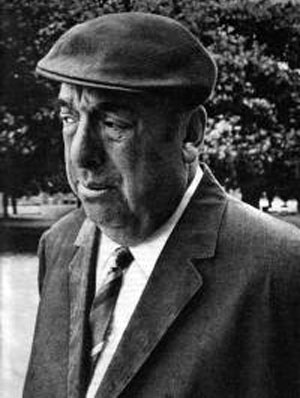
Kenan Malik recognizes the political rise of Pablo Neruda:
Gabriel García Márquez once called Neruda ‘the greatest poet of the 20th century in any language’, though as New York Times Book Review critic Selden Rodman observed after the poet’s death ‘No writer of world renown is perhaps so little known to North Americans’, or indeed to the wider Anglophone world. … Neruda’s friendship with [Spanish poet Federico García] Lorca, and Lorca’s execution by Franco’s nationalists, drew him into the Spanish Civil War (he was at that time in Spain as a consul for the Chilean Government). The civil war, and his involvement, transformed both his poetry and his politics. In 1937 he published from the frontline España en el Corazon (‘Spain in our Hearts’), an angry, polemical collection, very different to Veinte poemas de amor y una canción desesperada. Neruda joined the Communist Party and, on returning to Chile, was elected to the Senate. In 1971, he ran for the presidency on a Communist ticket, though he withdrew his nomination after reaching an accord with Salvador Allende, the socialist candidate. Neruda’s attachment to Stalinism cannot easily be brushed away. But his fierce political commitment, and his extraordinary poetic sensibility, are both to be celebrated.
Previous Dish on Neruda’s poems here and here. Our 115th window contest featured Neruda’s former home in Valparaiso, Chile.
Those who believe in the syndrome say it’s caused by sound waves released when the giant turbine blades collide with the wind—not just the audible whooshing noise, but the rumbling vibrations created by a low-frequency sound, or infrasound. Nonbelievers, including most scientists and doctors, say it doesn’t exist, and the Centers for Disease Control and Prevention do not recognize it as a legitimate syndrome.
So what is causing the health issues?
Large-scale population surveys conducted by scientists in Sweden and the Netherlands have found that stress and sleep disturbances were more likely if the turbines were visible and less likely if the individuals benefitted economically from them. Other studies found that having a bad attitude about the turbines and subjective sensitivity to noise were more likely to lead to annoyance and negative health effects than actual exposure to audible sound or infrasound. (Back in 2007, three years before the Falmouth turbines were even built, a handful of residents expressed concern about the potential for illness after reading about symptoms online, and those health effects were even written up in the local newspaper.) And in recent lab tests, subjects who were told to expect side effects from infrasound ahead of time felt some of those symptoms even when they were exposed to sham infrasound.
Simon Chapman, an Australian professor of public health at the University of Sydney, believes wind-turbine syndrome is just the latest in a series of 21st-century technophobias (think of the well-publicized fears about microwave ovens, cell phones, cell towers, and Wi-Fi). “If wind farms genuinely did pose a problem to people who lived near them, you would expect to see a relationship which was fairly consistent from country to country, wind farm to wind farm,” Chapman says, “and that’s far from the case.” In Australia, the majority of complaints come from just six of the country’s 51 wind farms, according to his research. “The six wind farms where people have been getting sick are the ones where the anti-wind folks have been most active, with high-profile media attention amplifying the word-of-mouth stuff,” he says.
You’d have thought I’d have been able to write some of this before I went to the Pet Shop Boys concert tonight, but we had a Dish meeting and time slipped by. So anyway, I have just left from said concert and am in such a state of ecstatic bliss, I’m going to beg your indulgence and be extremely curt.
Proof it was Assad. Why do we still aid Egypt and Israel, who have not fully joined the Chemical Weapon Convention even Syria is now signing up for? Beard-tugging!
On the creepy and charming old chap profiled above:
Meet 73-year-old Arthur Boyt, notorious resident of remote Bodmin Moor in Cornwall, and connoisseur of cooking and eating roadkill – nothing is too far fetched or fanciful to end up on his plate. In this film we take a trip into Arthur’s universe and learn how to cook a cracking badger casserole, as well as find out how best to prepare polecat meat before cooking.
Money quote from Arthur:
I ate a badger once that someone else had picked up because they wanted its skull. It was blown up like a horse on the western front and it smelt rather horrible. When I cut into it, the flesh was green but nevertheless I persevered and stewed it. It made the house smell like the old fashioned mental hospitals used too, but boy it tasted delicious!
One of my best cocktail party stories recounts the night 25 years ago that my wife hit a deer in Wisconsin (that roadkill could even be a cocktail party topic betrays the fact that I still live in the Upper Midwest).
In Wisconsin, you are allowed to strap a car-harvested deer onto your roof top and bring it home so long as you call the accident into the state patrol and obtain a proper deer tag. The damage to car and carcass was minimal (the car was still drivable, and the blunt force impact didn’t draw blood). It was too late at night to bring the deer straight to the butcher, and it was too warm a night to leave the undressed buck alone until morning. I knew that I needed to gut the deer to avoid the meat spoiling, but (not being a hunter) I didn’t have a clue how to do the job. More importantly, my wife and I were living in a small apartment in downtown Madison, and there was no place where we could even hang the deer (a practice that facilitates the gutting and keeps the dogs away).
A phone call to my father provided a detailed step-by-step; a second call to one of my wife’s former roommates provided the tree. I’ll spare my fellow Dishheads the grizzly details. Suffice to say the job was finished around 4am and the deer was left to hang in the backyard of a rented house just off campus.
But it didn’t hang very long. Unfortunately, the person who said we could borrow the tree forgot to notify his housemates. And the tree was very close to the back of the house, within view of the kitchen windows. So imagine the housemates’ surprise early the next morning when they went to the sink for some coffee pot water, looked out the window, and found themselves face to face with Bambi (with a rope tied around its neck and its tongue sticking out). Did I mention that this housemate was a vegan? Talk about awkward …
P.S. The venison was delicious, especially the bratwurst.
But a member of the New Zealand Meat Industry Association warns:
No – it is NOT OK to eat roadkill. It is potentially dangerous. When an animal is hit by a vehicle, bacteria in the internal organs will probably spill into the muscle (meat). The hide is also likely to be damaged, again, pushing bacteria into the muscle (meat). Some animals have musk glands, which are not going to make eating an enjoyable experience. A lot of wild animals are sick with diseases that are kept under control in domestic livestock (TB in particular). And a lot of wild animals that are killed on the roads are there because they have been poisoned and are dying. In short, roadkill is contaminated and possibly poisonous.
If you repeat bloggers’ comments that it is OK to eat roadkill, could you please, as a public service, also point out that there are real risks.
[It] profiles a very popular experiment at London’s Globe Theatre, the 1994 reconstruction of Shakespeare’s theatrical home. As linguist David Crystal explains, the theater’s purpose has always been to recapture as much as possible the original look and feel of a Shakespearean production—costuming, music, movement, etc. But until recently, the Globe felt that attempting a play in the original pronunciation would alienate audiences. The opposite proved to be true, and people clamored for more. Above, Crystal and his son, actor Ben Crystal, demonstrate to us what certain Shakespearean passages would have sounded like to their first audiences, and in so doing draw out some subtle wordplay that gets lost on modern tongues.
In an interview about his new novel, Dissident Gardens, Jonathan Lethem expresses his ambivalence about historical facts informing fiction:
I don’t really like research in fiction. The results are often leaden. And yet here it was necessary that I build a giant armature of factual situations in my head, a historical diorama to move through, even if I then contradicted it or blew it up at whim. I researched rhetoric and propaganda, as well as dull sociological stuff. I read mediocre novels written from the left, from the ‘30’s to the ‘60’s, to gain a better feel for the emotional texture of those stances through those decades. This wasn’t pleasure reading! I wouldn’t recommend many of the books to anyone, putting apart a handful of vivid memoirs, mostly already favorites …
Of course, in the writing, Dissident Gardens couldn’t bear much of what I’d learned. Novels don’t want to be crammed with factual stuff. I mostly left it aside, including some astonishing truths, which when you first come across them, you think, holy shit, I’ve learned this crazy thing and now I’ll blow people away by revealing this knowledge in the book! But at the juncture where you’d insert such a thing, you flinch, seeing the cost is too high. The facts will intrude — either on the reader’s experience, or my own relationship to the page, to the dream.
A poster 0f German Chancellor and Chairwoman of the German Christian Democrats Angela Merkel is seen behind a drum kit during a CDU election campaign rally in Dresden, Germany. Merkel has a strong lead over her political rivals and the CDU is expected to win federal elections scheduled for September 22. By Carsten Koall/Getty Images.
Reflecting on yesterday’s Navy Yard shooting, Frum asks why the gun industry can’t follow the auto industry’s example:
Gun-rights advocates insist that the U.S. faces a choice between the status quo and the repeal of the Second Amendment and mass confiscation of firearms. That is false. Improved gun safety no more requires a gun ban than improved auto safety demanded the outlawing of cars. Gun design could be regulated to enhance safety. Those who wish to own guns could be required to take safety courses and pass a test. Individuals who are found to store their weapons unsafely could forfeit for a time their ownership rights. Persons convicted of drug offenses or drunk driving could be deprived of gun rights in their sentence, as felons now are deprived of the right to vote in many states. The classes of weapons associated with mass casualty shooting could be more strictly controlled.
It’s not all-or-nothing, not all-one-way or all-the-other way: moderate steps could achieve substantial results. The goal is not to reduce the level of gun violence to zero, any more than it is to stop all auto fatalities. The goal is to enhance safety while upholding legitimate rights. It’s been done before. It can be done again.

 The Dish
