A Poem For Saturday

Dish poetry editor, Alice Quinn, reflects on the recent death of Seamus Heaney, the famed Irish poet we paid tribute with these three poems:

A friend of mine who lives in Ireland sent me a copy of The Irish Times from Saturday, August 31, 2013, the day after Heaney died. This newspaper, physically huge by American standards – it’s 22 inches deep by 14 inches wide – devoted five full pages to his obituary and commentary, with beautiful photographs of him as a schoolboy in 1954, at an anti-apartheid demonstration in 1985, with his family at the Nobel Prize ceremony in 1995, and at his desk at home in Sandymount in 2009. Also included were the covers of 12 of his books published by Faber & Faber. (Here in the U.S. his work is published with great pride by Farrar, Straus & Giroux.)

“What does it take to make a great poet?,” wrote Eileen Battershy, the Times’ literary correspondent. “Heaney made it look easy, because his poetic response was so instinctive, that surefooted balance of formal eloquence and the colloquial… Many artists regard themselves as members of the elect, but Heaney was different. He looked to language as sound and meaning. His was a musician’s engagement; there was an ancient, strongly tribal purity at work.”

The Dish ran poems by him just after the tragic news of his death reached our shores. We join the tide of those who can’t stop reading his poems and reflecting on his beautiful spirit and inspiring way of being.

We will post another round of poems by Heaney over the next few days. “Mid-Term Break,” presented below, is the poem that The Irish Times chose to run the day after his death. It’s an elegy to Heaney’s little brother Christopher, who was killed in a road accident at the age of four while Heaney was on scholarship at St. Columb’s College:

I sat all morning in the college sick bay
Counting bells knelling classes to a close.
At two o’clock our neighbours drove me home.

In the porch I met my father crying—
He had always taken funerals in his stride—
And Big Jim Evans saying it was a hard blow.

The baby cooed and laughed and rocked the pram
When I came in, and I was embarrassed
By old men standing up to shake my hand

And tell me they were ‘sorry for my trouble’.
Whispers informed strangers I was the eldest,
Away at school, as my mother held my hand

In hers and coughed out angry tearless sighs.
At ten o’clock the ambulance arrived
With the corpse, stanched and bandaged by the nurses.

Next morning I went up into the room. Snowdrops
And candles soothed the bedside; I saw him
For the first time in six weeks. Paler now,

Wearing a poppy bruise on his left temple,
He lay in the four-foot box as in his cot.
No gaudy scars, the bumper knocked him clear.

A four-foot box, a foot for every year.

(From Opened Ground: Selected Poems 1966-1996 © 1998 by Seamus Heaney. Used by kind permission of Farrar, Straus & Giroux.)

Does Metal Make You Mellow?

“In my experience, metal isn’t for angry people,” says Leah Sottile:

And that got me thinking: Is it possible that listening to angry music could make people happier? Do hours and years of loud riffs and screeching vocals pummeling your ear drums actually mellow you out?

It’s a theory backed up in a recent study conducted by Maya Tamir and Brett Ford, researchers from The Hebrew University of Jerusalem. In one study, 175 people were asked to participate in role-playing exercises where they had to either confront a person—like a cop interrogating a suspect—or collaborate with someone. But before the role-playing began, the subjects were allowed to choose from a selection of music to aid in evoking the emotions they would need: Anger, happiness, or neutrality. It was up to them to choose what they wanted to hear. “Music is often used as a way to manipulate emotions, I just had people decide how to manipulate their own emotions,” Tamir says. The subjects were also asked questions about their emotional health, happiness, and feelings of social support.

It’s no novel idea that someone might choose to rev themselves up with aggressive music before a engaging in a tough task: A fourth quarter tie-breaker, a tense salary negotiation. And no surprise, the folks who chose angry music had no problem completing their tasks.

(Video: Judas Priest performs in 1982)

The Fifth Amendment Doesn’t Cover Your Fingertips

Marcia Hoffman worries that Apple’s fingerprint-ID iPhone will make it difficult for owners to invoke the right against self-incrimination. Why? Because while people can’t be forced to share information such as PINs, they can be compelled to provide fingerprints:

Take this hypothetical example coined by the Supreme Court: If the police demand that you give them the key to a lockbox that happens to contain incriminating evidence, turning over the key wouldn’t be testimonial if it’s just a physical act that doesn’t reveal anything you know. However, if the police try to force you to divulge the combination to a wall safe, your response would reveal the contents of your mind — and so would implicate the Fifth Amendment. (If you’ve written down the combination on a piece of paper and the police demand that you give it to them, that may be a different story.)

The important feature about PINs and passwords is that they’re generally something we know (unless we forget them, of course). These memory-based authenticators are the type of fact that benefit from strong Fifth Amendment protection should the government try to make us turn them over against our will. Indeed, last year a federal appeals court held that a man could not be forced by the government to decrypt data. But if we move toward authentication systems based solely on physical tokens or biometrics — things we have or things we are, rather than things we remember — the government could demand that we produce them without implicating anything we know. Which would make it less likely that a valid privilege against self-incrimination would apply.

Recent Dish on biometric identification here and here.

Is It “Street Art” If It’s Legal?

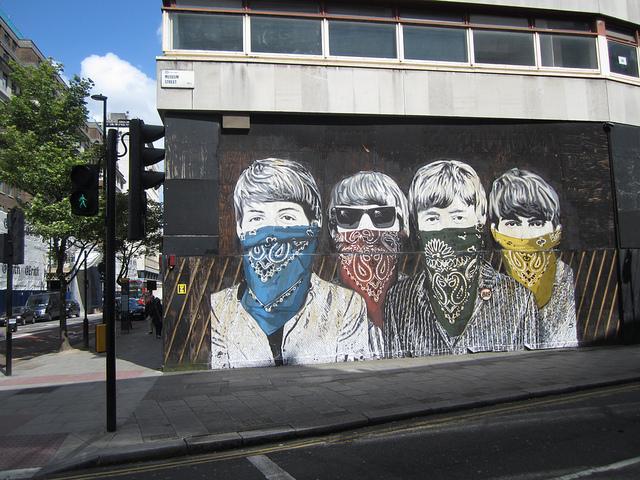
dish_mrbrainwash

RJ Rushmore wonders how online coverage of street art blurs boundaries between “art placed in public space without permission” and perfectly legal “contemporary muralism”:

[I]f you think that “street art” means art placed in public space without permission, it’s pretty clear that street art blogs are not the place to go looking for street art online. But why is that? …

Huge murals captured in the perfect light by professional photographers look great on blogs, regardless of how they look in person. Stickers and wheatpastes captured with an iPhone that look like crap on blogs can stop you in your tracks on the street. And on the street, the work is confronting you, so you’re going to look at it whether it’s Swoon or Mr. Brainwash or someone you’ve never heard of. Online, if you’re like most viewers and see a headline for a blog post along the lines of “Some guy you’ve never heard of who does wheatpastes in a city you’ve never been to,” you’re maybe not so likely to read that post. This may be one reason why street art blogs and general art and culture blogs that cover street art have shifted from covering street art to covering contemporary muralism under the guise of covering street art. …

Or maybe street art just doesn’t mean the same thing that it once did. Maybe mural festivals and the ease of finding legal walls has elevated the genre. Artists can spend days on a mural without worrying about police rather than sneaking around at night and working as quickly as possible. With plentiful legal walls, maybe some artists don’t see the need for working illegally anymore. Can the same goals be achieved at a legal wall as at an illegal spot? I don’t think so, but some may disagree with me.

(Hat tip: Hyperallergic.  Photo of Mr. Brainwash’s work by Flickr user Matt From London)

Enough With The Flashcards

At least according to Ben Orlin, a teacher who wants less memorization in education:

Memorization has enjoyed a surge of defenders recently. They argue that memorization exercises the brain and even fuels deep insights. They say our haste to purge old-school skills-driven teaching from our schools has stranded a generation of students upriver without a paddle. They recommend new apps aiming to make drills fun instead of tedious. Most of all, they complain that rote learning has become taboo, rather than accepted as a healthy part of a balanced scholastic diet.

Certainly, knowledge matters. A head full of facts – even memorized facts – is better than an empty one. But facts enter our heads through many paths – some well-paved, some treacherous.

After pointing to several of those paths, Orlin outlines better ways for “students [to] learn facts, rather than memorize them”:

For example, suppose we’re learning that Maryland fought with the Union during the Civil War. We could invent a mnemonic, like “Maryland starts with ‘marry,’ and a marriage is a union” – cheesy, but fine. Or we could build on other facts. For example, Maryland borders D.C., so if it had seceded, the American capital would have been surrounded by foreign territory. For exactly that reason, Lincoln worked hard to keep Maryland on the side of the North.

What separates memorization from learning is a sense of meaning. When you memorize a fact, it’s arbitrary, interchangeable–it makes no difference to you whether sine of π/2 is one, zero, or a million. But when you learn a fact, it’s bound to others by a web of logic. It could be no other way.

Real Beauty Stays With You

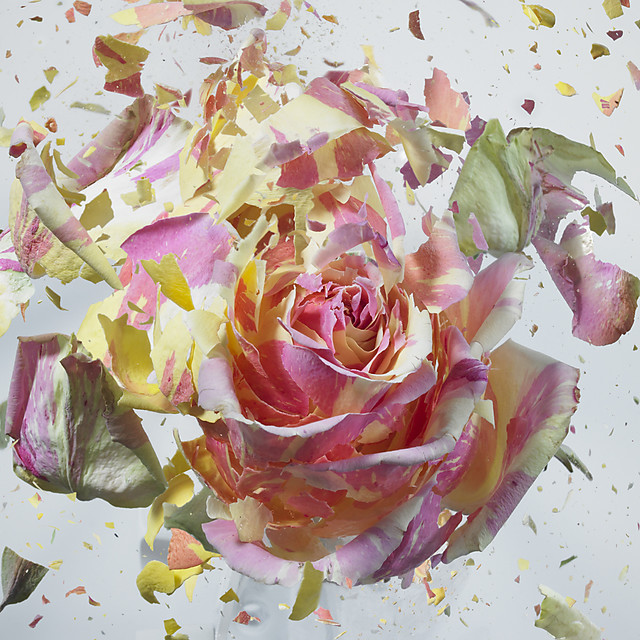
explodingflowers01

Philosopher Kwame Anthony Appiah draws a distinction between the “pretty” and the “beautiful”:

I think Kant was right in that beauty is a word that belongs to sensation. It has to strike the senses, whether it’s the ear or the eye. And I think he was right in that it’s connected to pleasure in the sensory experience and the desire to return to the experience. But what is merely pleasurable is pretty. Beauty has an element of that thing that makes you want to come back, that engages you cognitively. It’s this combination of the power to attract the senses and then its being rewarding to think about the experience that you’re having that makes for real beauty.

(Photo by Martin Klimas. More from his “Rapid Bloom” series here.)

When Talking Is The Best Medicine

Christian Jarrett notes a new meta-analysis that indicates most mental health patients prefer psychotherapy to medication:

Kathryn McHugh and her colleagues identified 34 relevant peer-reviewed studies up to August 2011 involving 90,483 people, in which the participants were asked to indicate a straight preference between psychotherapy or drugs. Half the studies involved patients awaiting treatment, the others involved participants who were asked to indicate their preference if they were diagnosed with a psychiatric disorder. The researchers had hoped to study preferences among patients with a diverse range of diagnoses but they were restricted by the available literature – 65 per cent studies pertained to depression with the remainder mostly involving anxiety disorders.

Overall, 75 per cent of participants stated a preference for psychotherapy over drugs. Stated differently, participants were three times as likely to state that they preferred psychological treatment rather than medication. The preference for therapy remained but was slightly lower (69 per cent) when focusing just on treatment-seeking patients, and when focusing only on studies that looked at depression (70 per cent). Desire for psychotherapy was stronger in studies that involved more women or younger participants.

Just For Kicks

The Mystery of Flying Kicks is a short documentary that explores why, exactly, people toss sneakers over power lines (aka “shoefiti”):

A quick list of claims people make about what it actually means: A sign that someone has lost his virginity, a bullying tactic, a mafia signal to the police, code for where to buy drugs, a mark of gang territory, a tribute to fallen gang members, a graffiti-like practice to mark your street, “total bullshit,” a sign that, in a given neighborhood, “people can do whatever they feel like and there’s no recognition of law or decency,” something done by food-service employees when they graduate to a better job, or a way to get rid of old shoes that are too beat up to give away.

A Disease That Can Spread Through Facebook

Lauren Dimon revisits an apparent outbreak of mass hysteria two years ago, when more than a dozen young women in western New York reported mysterious spasms and tics. After a battery of medical and environmental tests, one high-school student was confirmed to have Tourette’s Syndrome, while the rest, who were classmates, were thought to have unconsciously modeled their illnesses after her. Dimon zeroes in on the only non-student to catch the disease, a 36-year-old woman named Marge who apparently learned of the illness through Facebook:

[Sociologist Robert] Bartholomew said that it’s not unheard of for one or two adults to be affected, but he cannot recall any cases like Marge’s, in which the adults were not intimately involved with the children suffering from the malady. Marge said that she knew about what was going on in town mainly through Facebook postings.

Catching an illness through Facebook sounds wonky. But the contagion of hysteria relies, among many things, upon the unconscious interpretation of what is suggested to us. Fitzsimmons did not even have to be in physical contact with the other girls to “catch” their disease. Marge encapsulates the power of social media to penetrate and trigger actions of the unconscious mind. She marks “a historical shift in terms of the trigger for people being affected and sucked into these cases,” Bartholomew said.

According to Bartholomew, there is “potential for a far greater or global episode, unless we quickly understand how social media is, for the first time, acting as the primary vector or agent of spread for conversion disorder.” He believes that epidemics spread by social media are “inevitable” and that “it’s just a matter of time before we see outbreaks that are not just confined to a single school or factory or even region, but covering a disperse geographical area and causing real social and economic harm.”