The Great White Outdoors, Ctd

Readers continue the discussion over race and class when it comes to camping:

You have to understand it’s not really about cost; it’s also an aversion to sleeping on the ground in the damn woods. My (white) mother grew up well off in a big house with every amenity, and for vacations they drove around in a camper. She thought it was a blast. My (black) father grew up in a very poor household, sharing beds with his brothers and sisters and eating beans from a can. To this day, his idea of a vacation is not a sleeping bag on the ground in a tent, crammed in with his nearest and dearest, fending off bugs. It’s in a nice hotel bed, where people bring you room service and treat you like a king.

I think much of many black people’s aversion to camping stems from that. It’s less about not having the money – there are plenty of middle-class black families that could buy up the camping gear, and we certainly could have afforded it – it’s just that there’s little pleasure in living off the basics when you or your family very recently did just that not for pleasure, but out of necessity.

Add in the racism factor – the reality that until pretty recently, black people actually weren’t even allowed to stay in most nice resorts or hotels – and it makes even more sense why, when they have time and disposable income, they usually don’t pack a rucksack and head into the mountains.

Several more readers speak to those themes:

Long ago, in the early ’70s, my wife and I were leaders at a YMCA summer camp in the Pacific Northwest. We had mixed groups – middle-class suburban kids and lower-income African-American kids.  The camp itself had a swimming pool, dining hall and hot showers.  But for our kids, the big feature was several days of wilderness camping in tents with food cooked over fires and with no running water.  The suburban white kids had already learned that wilderness was cool and they were ready to go.  The lower-income kids, on the other hand, appreciated being in a place with all the comforts they probably didn’t have at home.

Another:

Your post reminded me of a study the California Parks Department did about 10 years ago.  They found that people of color avoided their parks because they were located in rural areas, and they did not feel comfortable or welcomed in the conservative small towns that are often the gateways to the parks.

Another reader:

Your thread reminds me of one of my favorite “Oprah moments”. In 2010, after receiving a letter from an African-American park ranger at Yosemite National Park who said he was concerned by the low number of African-Americans who visit national parks each year, Oprah and her friend Gayle King went on a camping trip to the park to bring attention to the issue and encourage more African American families to enjoy the parks. I’m not sure she changed many minds, but it made for some interesting television – not to see African-Americans camping, but to see the top 1% camping and “roughing it”. There are some video clips on Oprah’s website, including this one of Oprah and Gayle trying to set up their pop-up camper.

Another points to a wonderful place:

A conversation about camping, minorities, and means would be incomplete if you didn’t mention Prince William Forest Park, which is part of the National Park Service, in northern Virginia. We visited this summer – actually on July 4th – on our return trip from visiting family up north. Not sure what to expect, we went to the park because we needed a day in nature and were traveling with our dog, and my wife had discovered that the park was pet-friendly.

What we found was a 15,000-acre oasis with a history of creating open space for those less fortunate. It was originally formed as part of FDR’s Recreational Development Area program, to help make recreational activities accessible to poor, inner-city kids. The Civilian Conservation Corps built cabins and five camps (no whitewashing: the camps were segregated). Social agencies in the D.C. area – such as the nation’s first African-American YMCA – sent kids to summer camp at the park.  Here’s a link to the NPS’s page on the summer camps at the park. From that page, here’s the summation of the historic impact of Prince William Forest Park:

The RDA program left an important social and recreational legacy. The program created new parkland, which was available to all. Less fortunate residents in or near major cities had something similar to national parks, most of which were in the West. The social agencies that rented the cabins had greater opportunity for outreach. The experiences of a summer camp were far beyond the means of many of the children who stayed here. Not only did they get fresh air, but many of the camp programs gave children the opportunity for success later in life. Its legacy continues as visitors continue to use Prince William Forest Park and other former RDAs for their original purpose of recreation.

Importantly, there appears to be a modern opportunity to recapture some of the park’s history of introducing urban kids to the outdoors. The organization NatureBridge has started 3-day residential field science programs for middle school kids at Prince William Forest Park. Check out this link and the [following] video:

How Novelists Networked

dish_reformclub

Jason Diamond provides background on the literary clubs of Victorian England:

The words “Victorian club scene” might lead you to picture the Brontë sisters gyrating wildly against some dandy in a top hat blasting music from behind a steampunk-looking DJ booth, but it was quite the opposite. Gentlemen’s clubs were founded for different types of upper-class and well-connected people, but they generally served the same purpose: for men of high status to chill out and network. People knew what type of person you were by what club you belonged to. They could tell your political affiliation if you were a member of the conservative St. Stephen’s Club, and they knew who you worked for if they saw you entering the East India Club.

Charles Dickens made waves when he left the Garrick Club for the Arts Club in 1863:

As a writer and celebrity, Dickens was one of the few people with the power to give up his membership at such a club, start going to another, and make this new club the destination for other writers and literary hangers-on. … Today we have society types, club promoters, and people Malcolm Gladwell labeled as “connectors.” Dickens was essentially all of those things rolled into one, and also one of the finest writers of his era.

Christopher Tennant compares modern-day clubs here.

(Image of the Reform Club (1841) via Wikimedia Commons)

Company Town 2.0

Why is San Francisco packed with young techies who work elsewhere in the Bay Area? The answer may have to do with “the public transportation provided by corporate shuttle buses from the likes of Apple, Google, Facebook, and others”:

[C]onventional wisdom has it that the routes are a way for companies to respond to the desires of young, hip urbanites who want to experience the frisson of urban life in between their shifts down to soulless suburbia. But when you look at the zoning regulations in Palo Alto, you learn that the tech companies have basically run out of room to build parking lots on their campuses  they can’t grow any further using the model of one parking spot per worker. So it’s logical that the tech companies would need to use shuttles to bring their workers to campus.

And where’s the densest place in the Bay Area, the place where the largest numbers of people can use the smallest numbers of buses? By this logic it’s not the youngsters that have chosen San Francisco to gentrify, but the Facebooks and the Googles who are incidentally causing this kind of development through the simple calculus of where they can house the most workers.

Sentenced To Live In A Shipping Container, Ctd

A reader writes:

Don’t knock Dutch container housing! In the Netherlands, container housing is more prevalent and respected than you might think. And they’re well-executed, like much the Dutch do. I was just back in Amsterdam last month and saw a couple other container buildings they’ve put together. It’s a smart thing to do, since these days there’s an imbalance in container flows – full from Asia, lots of empties back from the West. Or they just stack up, as a drive along the New Jersey meadowlands will confirm for you.

Now, relocating abusive gypsies is a fair point to question, but I wouldn’t automatically associate container housing with degradation.

Another questions the notion that the Roma family was mistreated:

A little trawling around other websites, including some Dutch ones, suggests that this family has been causing serious trouble for at least 13 years.

There have been court cases. Earlier this summer the city installed surveillance cameras in their block just because there had been so many complaints, including of intimidation.

It is really hard to evict a tenant in Amsterdam. The housing association has been trying for years. I think they accused the family of causing structural damage to the building where they lived (not sure about the translation here). The judge finally allowed the eviction on the grounds that the neighbors were afraid of them.

In another picture of their two-container home, you can see a tram stop in the background, probably a five-minute walk away. According to one commenter, an Albert Heijn (major grocery store) is two stops away on this tram – so Mr. Lonis’s mother-in-law is not going to find it hard to do the grocery shopping! While Zeeburgereiland does seem pretty sparsely built at the moment, the Zeeburg area in general is an up-and-coming area of Amsterdam with lots of nice homes, shops, etc. The comment from Geert Wilders is just a loony right-winger stirring up bad feeling. They have not been sent to a concentration camp.

How Important Is Breakfast?

Daniel Engber deflates the pro-breakfast hype:

study published last week in the American Journal of Clinical Nutrition starts with this simple fact—that in spite of all these association studies, no one knows exactly what skipping breakfast might be doing to our bodies. The study goes on to make a disturbing claim: Scholars in this field of inquiry—breakfast science—have been fudging facts and misinterpreting the science. The literature shows signs of research bias.

That doesn’t mean any of the studies described above is fraudulent or dubious. There certainly is a link between skipping meals and getting fat, but Andrew Brown, a nutritionist at the University of Alabama at Birmingham and lead author of the new critique, points out that large surveys of people’s diets and their health are at most suggestive. Lining up several dozen of them in a row doesn’t add much more value to their claims. It could be that my yuppie morning ritual really keeps my BMI in check, perhaps by changing my metabolism or helping to control my appetite. But it’s also possible that my breakfast habits do nothing for me on their own, and that they only correspond to some deeper determinants of health.

The Best Of The Dish Today

Brooklyn-NY-755pm

Apologies for the lateness. Doing the AC360 show, while blogging, and working on the next phase of Dishness makes for a crammed schedule. So here are the posts I’d particularly recommend from today: how state and local governments prolonged the recession; how the top 1 percent is not going away at all; how Monty Python could look as serious drama; the prescient genius of Roger Ailes; and a new investigation into the murder of Matthew Shepard that may prove inconvenient for those who capitalized so eagerly – and simplistically – from his death.

But today we hashed and re-hashed the question of how or whether Obama pulled off the trick of persuading Putin and China to enforce the ban on chemical weapons with respect to Syria. We tussled here and here. And the truth is: we’ll only really know when all the inside details emerge and when the years have given us some better perspective. But I judge a president by his results – and this one, if it holds, is a real advance.

The most popular post of the day remains my post on Obama’s speech last night; followed by the two posts on the meep meep possibility.

I’m gonna crash now; see you in the morning.

Face Of The Day

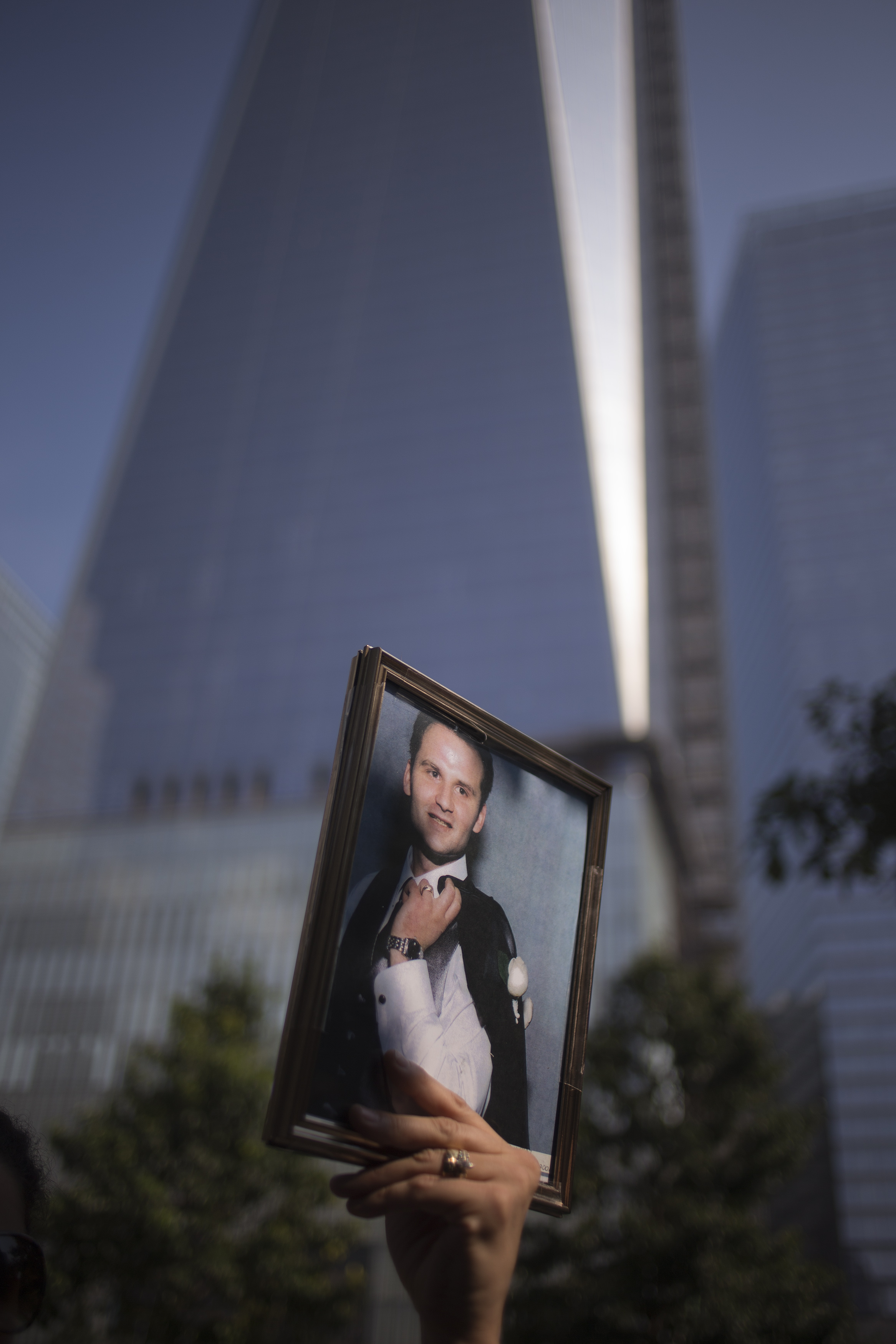
New York Commemorates The 12th Anniversary Of The September 11 Terror Attacks

One World Trade Center (aka the Freedom Tower) is seen in the background as Drana Vukaj holds an image of her brother Simon Dedvukaj during the 9/11 Memorial ceremonies marking the 12th anniversary of the 9/11 attacks. The 2001 attacks resulted in the deaths of nearly 3,000 people after two hijacked planes crashed into the World Trade Center, one into the Pentagon in Arlington, Virginia and one near Shanksville, Pennsylvania. The former location of the Twin Towers has been turned into the National September 11 Memorial and Museum. By Adrees Latif-Pool/Getty Images.

Dead Children As Talking Points, Ctd

Fallows wants officials to “to stop basing appeals for international action on the ‘see the videos of children dying horribly’ theme”:

[T]o mention the suffering of children does not settle political, strategic, or even moral questions. You can argue that the Hiroshima and Nagasaki bombs were historical necessities and even “merciful” in some way, in averting later and much larger numbers of Japanese and American deaths during an invasion. You can argue the reverse. Either way, little children had their flesh roasted as they walked to school or happily played. Their suffering does not answer the “was Truman right?” or the “is deterrence moral?” questions. The suffering of people in New York, Washington, and Pennsylvania 12 years ago today did not answer the “should we invade Iraq?” question. The Syria videos tell us that something horrible happened, not what we should do about it.

Earlier Dish on the subject here.

What Would It Take To End World Hunger?

Screen Shot 2013-09-10 at 6.17.03 PM

Sarah Sloat doubts that new technologies will be enough:

In his “silicon gospel” (as it’s described by the Los Angeles Review of Books), Byron Reese considers agricultural technologies like genetic engineering and automated farms as the way to feed every starving mouth. The idea that increased food production—made possible by new inventions and genetically modified crops—will solve hunger isn’t necessarily a unique one. CropLife America, a U.S. trade association, uses this argument when advocating their clients: Food production capacity is endangered by an ever growing population. So, a faction of the tech world’s solution is as follows: We need more food. And the only way to grow more food is better technology.

Except, no.

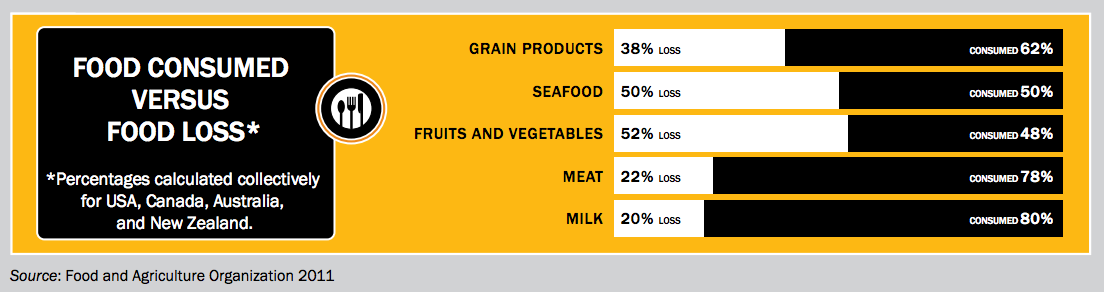
The USDA says that our food waste is equal to 30 or 40 percent of the national food supply. In a 2012 paper, Rebecca Bratspies, of the CUNY School of Law, makes the case that increased food production is not the way to resolve food insecurity. Rather, the problem comes from food distribution. For the past decade, she says, food production has increased faster than population growth. Yet, in the past 35 years, the number of people experiencing food insecurity has nearly doubled: 500 million experienced hunger in 1975; by 2010, it was 925 million. Food production doesn’t alleviate poverty, Bratspies argues; it’s a “social commitment to an equitable distribution of food” that will actually help those suffering.

(Chart: Natural Resources Defense Council)

The End Of The Cover Letter?

Stephen Lurie cites a recent poll showing that “90% of hiring contacts surveyed simply ignored every cover letter sent to them”:

[T]he cover letter is mostly a performance, and some companies are picking up on the act, particularly tech firms that can test specific employee skills. Google, it’s said, often prefers to see the coding already being done by individuals before reaching out to them—skipping the cover letter entirely. Some social media companies now require tweets as proof of competency, not long-form writing. [Companies] that do still require cover letters (in whatever sector), many have simply stopped looking at them. Jobs that don’t deal in formal letter writing—let’s say 95% of them—can find better surrogates elsewhere in samples of a candidate’s work.

Whether it is a writing sample relevant to the industry, a Github repository or other specific tasks, employers and candidates would be better suited to another test. That’s a good sign for us all. Our government, corporations and non-profits will invariably be stronger when they get the best-matched talent available—not just those who’ve mastered an irrelevant art.