Reviewing the late Ronald Dworkin’s posthumously published book, Religion without God, Jonathan Ree details the legal theorist’s idiosyncratic appreciation of statutes protecting religious liberty, such as the First Amendment to the U.S. Constitution and Article 18 of the UN Declaration of Human Rights:
[T]heir real justification, according to Dworkin, has nothing specifically to do with religion: there is no special right to religious freedom, but only what he calls a “general right to ethical independence” – or, to put it differently, a restraint on any government activity based on the assumption that one conception of the good life is superior to another. He admits that it may be hard to decide what this principle implies, but has no doubt that it rules out any attempts to criminalise homosexual acts or early abortions, outlaw same-sex marriage or force schools to teach intelligent design.
Dworkin’s secularist defence of religious freedom is thus not as paradoxical as it might seem: for him, it is no more than specific application of a purely secular right – the right to “ethical independence”. But he puts a double lock on his doctrine with an argument to the effect that, strange as it may sound, religion should not be defined in terms of belief in God, and that secular atheism of the kind he espouses should be treated by the law as a form of religion.
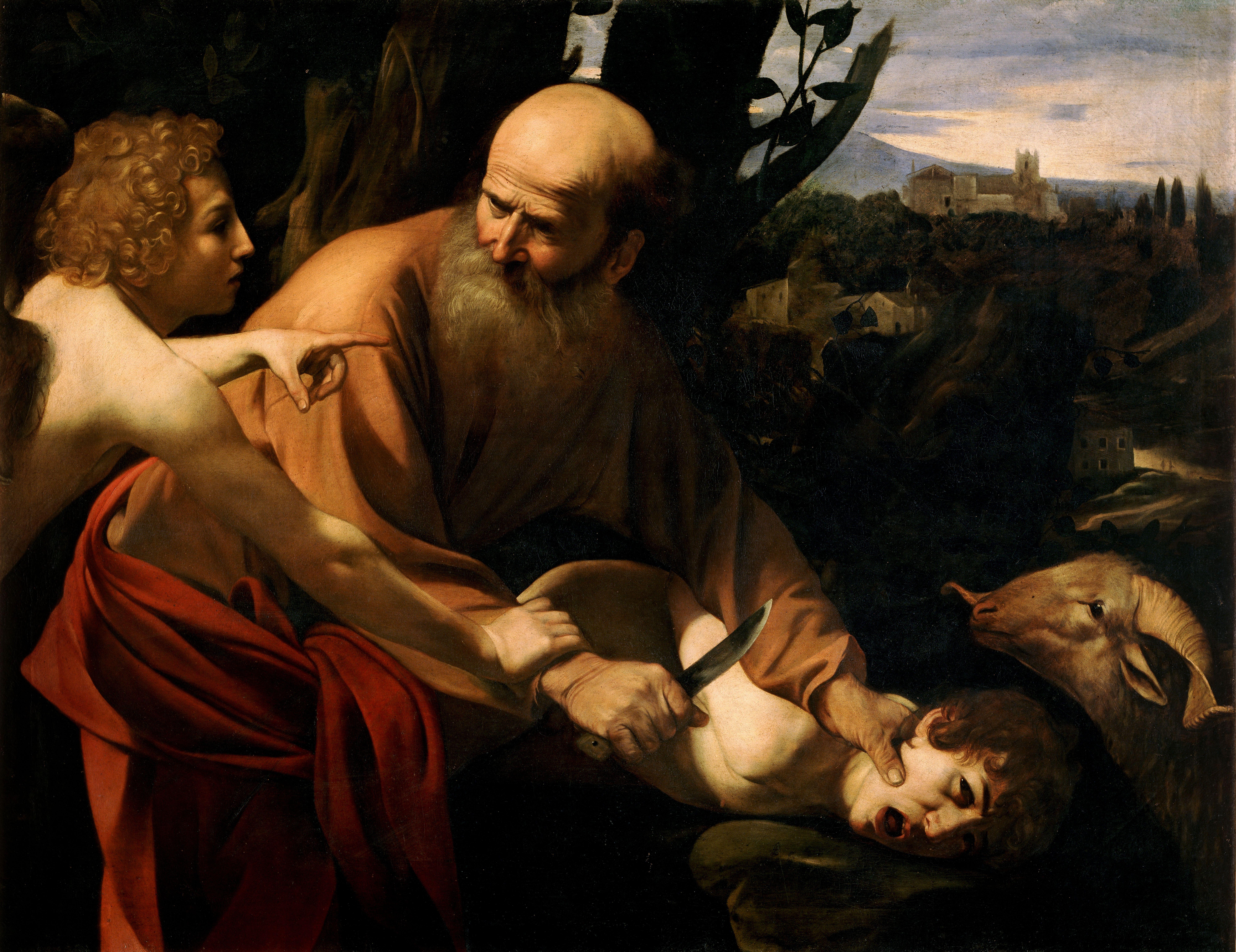
James Goodman, author of the new book, But Where is the Lamb? Imagining the Story of Abraham and Isaac, unpacks “perhaps the most debated 19 lines in the Bible.” How he describes the three great monotheistic faiths’ approach to the story in Genesis of God’s commanding Abraham to kill his son, Isaac, only to offer a reprieve at the last minute:
In antiquity, Jews understood the story as one of obedience, Abraham’s obedience, on account of which the Jewish people received God’s special blessing.
The early Christians, while hardly gainsaying obedience, folded it into faith: Abraham’s faith that God would keep his promise to make Abraham great through Isaac, even if it meant bringing Isaac back from the dead. In Christian minds, Abraham’s faith prefigured their own, Abraham’s willingness to sacrifice his son prefigured God’s sacrifice of Jesus, and Abraham’s actual sacrifice, the lamb, prefigured Jesus, who became the true heir of God’s blessing and promise.
Muslims returned to obedience. Their Abraham was the first to submit to God, the exemplar of the Islamic faith. The great Islamic innovation was to imagine that Ishmael not Isaac was the nearly sacrificed son. Not all Muslims accepted that revision, but its virtue should be obvious: Ishmael was the progenitor of the Arab people. Like the Jews and Christians before them, they wanted God’s blessing running their way.
Why the story continues to fascinate:
One reason is surely that so many Jews, then Christians, and Muslims came to believe that the story recounts an actual event, a foundational event, essential to who they are what they believe. But fascination with the story has not been limited to the believers. That’s because the story is remarkable as a story. In a mere nineteen lines, there is both explicit drama and great mystery. Thoughts, feelings, motives, meanings, even dialog lay between the lines, unexpressed. We know what people do, but not why. We ask questions about the relationship between God and men, parents and children, self and sacrifice, authority and disobedience, fear and love, reason and faith. We answer them with new interpretations and new versions of the story. The story sustains itself by turning readers into writers.
Stanley Hauerwas ponders how we write about God today:
[T]heologians throughout Christian history have rightly thought it never easy to write about God. But the reservation to write about God among current theologians seems to me to be of a different order than the past emphasis on our inability to know God unless God makes himself known to us. Today, we tend to avoid writing about God because we are unsure that the God about whom we might write makes any difference in our lives and, consequently, in the sentences we use to write about our lives. We live lives that would make sense if the God we worship did not exist, so we should not be surprised that our theological writing reflects our lives. …
I think the attempt to reduce Christianity to “the essentials” results in expressions of the faith, a kind of writing, that cannot help but underwrite the sentimentalities of our culture. Thus the wide-spread presumption expressed in inelegant sentences such as “God is love” or “I believe that Jesus is Lord, but that is just my personal opinion.” Such sentences could only be produced when the simple complexity of the narrative that makes us Christians has been left behind.
[Efforts to engineering a glowing tree] has been going on since the mid-1980s, when researchers first successfully transplanted a gene present in fireflies into tobacco plants [seen above]. By now you’d expect to see phosphorescent Marlboros casting an eerie glow in what few dive bars still allow smoking, but progress has been slow.
Things sped up last year after former Bain consultant Antony Evans watched biologist Omri Amirav-Drory give a presentation on the possibilities of using living organisms to produce energy, fuel, plastics, and fertilizers. Evans was inspired by Amirav-Drory’s suggestion that armchair tinkerers, utilizing sophisticated but easy-to-use software and a “biological app store,” might one day assemble the genetic material for producing a “renewable, self-assembled, solar-powered, sustainable street-lamp”—in other words, a bioluminescent oak tree.
Evans and Amirav-Drory launched a wildly successful Kickstarter, but it’s attracted some controversy:
Eventually, around 6,000 of those backers, each of whom pledged at least $40 toward the project, will receive 50 to 100 genetically engineered seeds they can use to grow their own glowing plants. Another 210 backers, who pledged at least $250 apiece, will receive instructions and ingredients that will allow them to conduct further experiments and “transform [their] own plant at home, in [their] lab or at school.” This high-profile effort to democratize bioengineering has not sat well with environmental advocacy organizations such as Friends of the Earth and the ETC Group, which tried to get Kickstarter to remove the Glowing Plant Project from its site and publicly lambasted “the widespread and unregulated distribution of over half a million extreme-bioengineered seeds” to “6,000 random locations across the USA.”
But Evans, at least, appears to maintain a fairly centrist perspective on the prospects of regulating this sector. “Agrobacteria is a plant pest,” he said of the pathogen biologists often use in genetic engineering work, noting that it can transfer DNA between itself and other organisms. “If you were to release your plants and they still had bacterium on them, you could contaminate other people’s plants. That would be a bad thing. That is something that should be regulated. But if we don’t use that agrobacterium, then there’s a much lower risk of causing damage to agriculture.”
Rather, he and his team are attempting to transfer DNA into the seeds via a “gene gun,” a process that “doesn’t constitute a threat of any sort,” according to the Department of Agriculture.
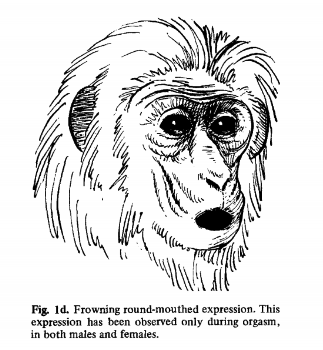
Unlike humans, animals can’t tell us they’re having orgasms, so we can’t truly know what their experience is like. For the most part, we assume that male animals orgasm because there’s an ejaculation–though one can happen without the other, they usually go hand-in-hand. (Or something in hand.) The question of female orgasm is, as usual, more hotly contested, though all female mammals have clitorises. …
The male red-billed buffalo weaver is the only species of bird we know of that exhibits orgasm-like behavior, according to Tim Birkhead, a professor in Sheffield University’s Department of Animal and Plant Sciences. Birkhead spent years trying to observe the birds getting down, culminating in a study published in 2001. The buffalo weaver, a native of sub-Saharan Africa, has a fake penis–it has no sperm duct and doesn’t become erect, but when Birkhead and his colleagues manually stimulated a buffalo weaver’s mock member, the bird had what seemed to be an orgasm. As Birkhead described to me via email, “the bird shudders its wings and clenches its feet as it ejaculates– who knows whether it feels like a human [orgasm], but the external behaviour looks like it.” He says the organ is purely stimulatory, but they’re currently investigating its anatomy further.
James Jorden pans the new opera about the rise and fall of Anna Nicole Smith. He grants that the spectacle “may not be up to much as a work of art, but there’s some very smart craft here”:
As the focus of the piece narrows in on the central character, both text and music take on a deliberate simplicity, with easy, obvious, single-syllable rhymes and Copland-esque folksy melodies trying to communicate in terms Anna might understand. The seductive little waltz song performed by the food in Anna’s oversize refrigerator is a clever touch: Operatic heroes from Tannhäuser to Tom Rakewell fall for sexy close-harmony women’s choruses, so why shouldn’t Anna succumb to the charms of cheeseburgers and gooey pies?
A little later, Anna’s son, Daniel (Nicholas Barasch), overdoses. Silent in life, he emerges from his body bag to croon a hip little pop tune whose lyric is simply a rundown of all the drugs the coroner found in his bloodstream. The grisliest part of the joke is that the kid was so pumped full of chemicals that a second verse is necessary to complete the list.
If the rest of Anna Nicole had risen consistently to the level of wit in these two numbers, it might have been a masterpiece. As the work stands, though, it’s utterly dependent on strong individual performances, and in casting the show New York City Opera mostly succeeded brilliantly.
Opera is not really the supercilious genre its haters think it is, but if it were, this wannabe potboiler would be an egregious example.
There was something deeply distasteful on opening night about a gala audience in Brooklyn chortling at the primitiveness of Texas rustics and their comical drawl. [Composer Mark-Anthony] Turnage has expressed his fear that he unintentionally singled out its protagonist for mockery. He needn’t have worried. The opera paints over its fundamental misogyny by spraying the entire cast with scorn. There’s not a smidgen of tenderness or sympathy for anyone here — not for the unctuous lawyer, the toothless cousin, the doddering billionaire, or the assortment of grunting males, all cheered on by a Schadenfreude Chorus of contempt. Anna’s mother, who tries to act as the opera’s moral center, gets treated as a censorious grotesque.
Mitchell Sunderland slams the show’s viciousness toward Smith, insisting “it’s wrong to dismiss her as a joke or someone who was just floating through life like a Soviet prostitute in a Russian socialist realist novel.” Joe Dziemianowicz, on the other hand, commends the narrative as a seedy Cinderella story:
The two-hour opera is streaked with humor. But it goes deeper as an indictment of fame. Smith, an early reality TV star, is hounded by media and prying eyes. She’s followed by dancers in black unitards with cameras stuck on their heads — “Equus” meets “Mummenschanz.” Hers was a life observed, constantly. But never by Smith herself. She careened from one moment to the next — never even a little in control. Fittingly, Smith’s venomous mother, Virgie (a terrific Susan Bickley, who reprises her role from the London run), almost gets the final say. Her late aria turns her daughter’s story into a cautionary tale.
But fortunately, the creators do Smith right. They give her the last word in a line that’s naughty and nice. And exactly right.
Jesse Bering reminds us that “for the longest time … to be a pervert wasn’t to be a sexual deviant; it was to be an atheist.” Not until the late 1800s did the sexual connotation of “pervert” take hold:
The provenance of the term in [scholar Havelock] Ellis’s work is still a little hard to follow, because he initially uses ‘perverts’ and ‘perversions’ in the sense of sexual deviancy in a book confusingly titled Sexual Inversion (1897). Co-authored with the gay literary critic John Addington Symonds and published after Symonds’s death, the book was a landmark treatise on the psychological basis of homosexuality. In the authors’ view, ‘sexual inversion’ reflected homosexuality as an inside-out form of the standard erotic pattern. That part is easy enough to understand. Where the language of Ellis and Symonds gets tricky, however, is in their broader use of ‘sexual perversions’ to refer to socially prohibited sexual behaviours, of which ‘sexual inversion’ (or homosexuality) was just one. Other classic types of perversions included polygamy, bestiality, and prostitution. The authors adopted this religious language not because they personally believed homosexuality to be abnormal and therefore wrong (quite the opposite, since their naturalistic approach was among the first to identify such behaviours in other animals) but only to note that it was salient among the categories of sexuality frequently depicted as ‘against what is right’ or sinful. Theirs was merely an observation about how gays and lesbians (‘inverts’) were seen by most of society.
After watching [writer-director Nicole] Holofcener’s work, you may find yourself thinking about how frequently characters in movies seem to have been assigned their jobs at random, merely in order to give them something to do. Who can remember what the women in Bridesmaids do when they’re not preparing for the wedding? … The fact that they have credible (if not necessarily gratifying) jobs is by no means the only way in which Holofcener’s men and women seem more like people we know, or might know, than do most of the one-dimensional figures we have grown accustomed to seeing on screen. She’s not afraid to let her characters be at once flawed and appealing, strong and weak, damaged and healthy, generous and self-centered; even the most clear-sighted must cope with disabling blind spots. They seem like human beings, and if they behave heroically, as they often do, theirs is the sort of heroism that enables an ordinary person to get through an ordinary day without needing to defuse a ticking bomb or save their families from a spectacular, special-effects apocalypse.
Gandolfini fits surprisingly well into the universe of Holofcener, a bracingly intelligent and exacting writer-director who’s made just five features in her 17-year career, all of them searching for a sweet spot partway between Hollywood female-centric comedy and audience-repelling art-house eccentricity.
She’s a little bit Eric Rohmer, a little bit Woody Allen (OK, a lot of Woody Allen) and a little bit of second-wave feminist autobiography with an overlay of self-lacerating wit. I’m still inclined to say that her best movie was the merciless 2006 “Friends With Money,” which was disastrously mismarketed as a mainstream comedy, but I won’t argue with those who carry the torch for “Walking and Talking,” her 1996 debut. On first viewing, I conclude that “Enough Said” is irresistible, and demands a second (and third) viewing right away.
Dana Stevens is impressed by the director’s sense of comedic timing:
Holofcener has a trick of ending nearly every scene on a big laugh—a rhythm that some will critique as a sitcom-like tic, though there are often complex dramatic moments embedded in the jokey exchanges. For example, after Eva [Julia Louis-Dreyfus] and Albert [Gandolfini] finally have sex (the run-up to which is both excruciatingly awkward and surprisingly hot), she confesses as they lie naked in bed, “I’m tired of being funny.” “So am I,” he responds. It’s a raw moment of intimacy between two scared but hopeful middle-aged people, and Holofcener just leaves it there for a moment, with admirable delicacy. Then, just as the scene is about to end on a note of tenderness, Eva breaks the mood with a joke: “But you’re not funny.”
That wisecrack works only because the two lovers in Enough Said so clearly value their ability to make each other laugh. The quest to crack up one’s beloved is a crucial aspect of romantic relationships that most movies barely pay lip service to. But Holofcener’s razor-sharp dialogue-–and Gandolfini and Louis-Dreyfus’ loose but perfectly judged delivery—capture the way that banter and teasing can both build trust between lovers and tear it down.
For me, New York is that guy I went out with only briefly and then successfully transitioned into friendship. We were always meant to be platonic. But in the years since I’ve moved away, I’ve learned that “I’m kind of meh on New York” is not a generally accepted point of view. It rivals “I’ve never seen The Goonies” for most controversial fact about me.
It’s always struck me as hilarious that friends who tout their taste in undiscovered music and underground supper clubs were so loyal to the most popular city in America. New York is the prom king. He knows he’s great, and he’s gonna make it really, really hard on you if you decide you want to love him. New York is increasingly a city for people who are already on top, not for those looking to establish themselves. I’ve always been partial to the friendly guy who doesn’t know how hot he really is (Chicago) or the surprisingly intelligent, sexy stoner (Los Angeles) as opposed to the dude who thinks he’s top of the list, king of the hill, A-number-one.
Update from a reader:
Really? Did you even read that puff piece? Somebody in the comments stated that the piece should be retitled, “Why Leaving a Dead End Job and a Stalled College Relationship Was the Smartest Thing I Ever Did, Regardless of City of Residence.”


 The Dish
