“This Is Life And Death For Vivian”

A powerful video on the fight for medical marijuana in New Jersey:

Balko captions:

I’d love to hear Gov. Christie explain how politicians preventing a doctor from prescribing a drug that could not only make the lives of thousands of people more livable, but in some cases could extend lives, is consistent with a limited government political philosophy.

Repetition In Poetry

Rebecca Hazelton believes that an emphasis on anaphora – the deliberate repetition of a word or phrase at the beginning of successive verses – can lead to a better understanding of poetry:

Many of my beginning students enter the classroom with little previous knowledge of poetry, and some are already convinced that poetry is entirely foreign to their experience, possibly old-fashioned, and certainly not reader-friendly. At some point in their education, they’ve been persuaded that poetry operates via some sort of signifying code to which they don’t own the key. Convinced their attempts can’t possibly approach those of “the greats,” they feel defeated before they begin. They complain that they have nothing to write about, that poetry is hard, then dutifully produce the metaphors they feel are expected: hearts, flowers, love. Just like all expected things, these poems offer no surprises.

My more advanced students have other difficulties. They’ve been trained to avoid needless repetition, and have responded to this well-intentioned restriction by forgetting the “needless” part, using little to no repetition at all, producing poems lacking musicality. They’ve also become so focused on the minutia of word choice that they aren’t thinking as much about the overall structure of the work, resulting in poems that are carefully crafted, line by line, to no great consequence.

For beginning students, anaphora can be used to demystify poetry, to encourage concrete details rather than abstractions, to combat “I can’t think of anything else to write about” syndrome, and to encourage bolder experimentation with metaphor. For more advanced students, using anaphora reinforces these skills as well as encourages thinking about the overall structure of a poem and the importance of knowing when too much is enough.

Related Dish on the subject here.

A Gentrification Cycle

dish_citibikes

Eric Peterson considers the role of gentrification in pro-biking campaigns:

[T]he rise in urban biking in the past few years is directly correlated with the return of upper middle class whites to the city, and a direct appeal on the part of municipal governments to attract more of them. While many, such as [New York City Mayor] Bloomberg, have rationalized the implementation of bike infrastructure as a way of supplementing public transit, it’s not hard to find an ulterior motive. As the urban planning blogger Surly Urbanist has argued recently, there is a direct connection between bike infrastructure and gentrification: “Bicycling’s growing popularity over the past decade or so is due to the fact that a preferred demographic has now pushed for it.”

In an interview about his city’s bikeshare program, Minneapolis Mayor R.T. Rybak said his biggest priority for the project was attracting members of the “creative class,” seeing it as an asset in competing for them with cities like Austin and Seattle. Melody Hoffmann, who completed a dissertation on bikes and gentrification, found that multiple bikeshare programs in US cities have, at least initially, avoided low-income and minority neighborhoods. These neighborhoods are, of course, often the same neighborhoods with limited access to public transit.

(Photo by Jon Niola)

Senior Interns

Sophie Quinton highlights the rising number of fellowships exclusively targeting older Americans:

Millions of baby boomers, like [former Wells Fargo executive Nancy] Diao, don’t want or can’t afford to check out of the workforce at age 65. And many are seeking a transition into work that has a social impact. The San Francisco-based Encore.org helps older workers make that transition by pairing them with nonprofits in need of their private-sector expertise for a fellowship year. It’s an arrangement that fits the needs of all participants, and it has broader ramifications: As the population ages, keeping older workers in the workforce could boost the economy, alleviate retirement insecurity, and ease strain on the social-safety net.

This Little Piggy Made A Logical Error

no_true_scotsman

Above is an illustration of the “No True Scotsman” fallacy from Ali Almossawi’s An Illustrated Book of Bad Arguments. How the fallacy works:

A general claim may sometimes be made about a category of things. When faced with evidence challenging that claim, rather than accepting or rejecting the evidence, such an argument counters the challenge by arbitrarily redefining the criteria for membership into that category.

For example, one may posit that programmers are creatures with no social skills. If someone comes along and repudiates that claim by saying, “But John is a programmer, and he is not socially awkward at all”, it may provoke the response, “Yes, but John isn’t a true programmer.” Here, it is not clear what the attributes of a programmer are, nor is the category of programmers as clearly defined as the category of, say, people with blue eyes. The ambiguity allows the stubborn mind to redefine things at will.

You can read the full book here and support it here.

(Hat tip: Paul Kelleher via Austin Frakt)

The STEM Surplus, Ctd

A reader remarks on the glut of degrees in science, technology, engineering and math:

I’ve got a PhD in chemical engineering and I work in early drug discovery. I’m actually doing pretty well. I’m in a specialized field that doesn’t tend to attract folks (I do a lot of math). My wife, however, is a different story. She has a PhD in oncological sciences – a molecular biologist with a speciality in cancer development and treatment. She spent six years getting a PhD, but really the best she can hope for is a $40K/year job as a post doc, which she will most likely have to do for at least four years in order to get a job making about $100-110K/year. By then she will be about 40.

There is no STEM shortage; there is a shortage of people willing to work for what companies want to pay. They get folks here on HB1 visas, and they are essentially treated like indentured servants. Sure they can change companies if: 1) they can get the same “position” and 2) the company will sponsor their visa. This is very difficult, and it gives the companies a lot of leverage, which they use to reduce wages. I have no problem with the HB1s; I think they should come with the same mobility that I’ve had. This would do a lot to remove the leverage companies have, and I’m fine with my wife and I competing with those folks.

You should really read Derek Lowe on the “myth of the STEM shortage.” He’s been covering this for quite a while. Also, check out Robert Cringely on H-1Bs.

More readers sound off:

I work in R&D for a large biotech company, one that would not survive if not for its capable and talented scientists and engineers. There is certainly no dearth of PhD-holders in biotech. That’s not what we need, and the obsession with graduate programs in STEM fields drives me crazy. We need master’s and especially bachelor’s degree candidates who are young and enthusiastic, willing to work long hours and weekends in a lab, on their feet, working with their hands, for a decade (at least), and who will be good at it. More and more, I see that our problem in hiring is not that there aren’t enough well-educated candidates; it’s that there are too many who are either overqualified for the roles that are really needed,or those who think that a PhD entitles them to an office and no grunt work.

Other things that will not fill our hiring gaps: associate’s degree candidates (rightly or wrongly, they are simply not respected or sought-after in an environment full of PhD, MS, and MBA degrees), visa-holders (several biotech firms have begun to restrict their sponsorship of visas and green cards below Director-level positions, which in bonkers), and non-STEM degree recipients (even our supply chain department, which does very little actual science, wants STEM backgrounds in new hires).

Once again, the people doing the educating and the people doing the hiring are not talking to each other enough, which is a whole different conversation.

Another perspective:

The analysis you excerpted from Robert Charette deals with aggregate number of STEM jobs and graduates, and I don’t have the hard data right now to either refute to agree with his conclusions. However, that does not mean that those STEM graduates are well aligned to the STEM jobs or that a macro surplus doesn’t mask micro shortages that might exist.

As you might imagine, STEM graduates are highly specialized, even at the bachelor’s degree level. I have a degree in electrical engineering from Cal Poly Pomona, but that doesn’t mean that when I graduated I would have been qualified for any job that could have been loosely categorized as “electrical engineering”. I would not, for example, have been qualified to work for an electrical power company.  I took one undergraduate class in power engineering, hated it, and got an A- in the one example of a class that my final grade was better than I deserved (there were a few more examples of the opposite, in my humble opinion).  Likewise, I would not have been qualified to take a job as an RF (radio frequency) engineer for, say, a company designing WiFi equipment, nor for a computer engineering position.  I was qualified to work in the semiconductor industry, which I did for 12+ years, or perhaps for a maker of optical fiber and laser equipment.

And that’s just at the entry level for people right out of college.  The specialization takes on greater and greater importance as you advance in your career.  After a few years, I wouldn’t have been qualified to work as a process engineer (responsible for a particular manufacturing process such as lithography or etching) or as a product engineer (responsible for failure analysis and product yield) in the factory I worked at when I started working there.  Companies want their experienced employees who make more to have the training, skills, and knowledge of someone who already works in the field, which I didn’t have.

I would venture to say other engineering disciplines like chemical and mechanical engineering are roughly the same, and it may be even worse for people with straight science degrees, like physics, chemistry, or biology, because you likely need either a master’s or doctorate degree to get employment in your field, and thus more specialization.

The country needs a vast amount of repairs, improvements, and new construction of our infrastructure, things like water and sewer systems, bridges and roads, levees and dams, and the power grid.  For that, we need civil engineers and electrical engineers with a specialization in power.  Not exactly the sexiest fields college students think of when they’re plotting out prospective career paths.  Large numbers of computer programmers with visions of working for Google or Apple don’t help us with this problem.  And I don’t know how many more there are like me, but I felt compelled to leave engineering because the semiconductor sector collapsed in the US, and even if I spoke Chinese, I don’t think I’d be interested in relocating there to work in the new factories to remain in the industry.  I couldn’t even find another job when I worked in the industry because the employers appeared to want people with on-the-job experience with the specific systems they use, not experience with a similar system but not exactly the same.  I’ve been out of engineering for so long, it would be impossible for me to go back to it.

So, yes, it might be the case that there are more overall STEM graduate than jobs, but that doesn’t mean that we have enough of the kinds of STEM graduates that we need and there are actually jobs they could get.

The Best Of The Dish This Weekend

photo

You have to hand it to Richard Ford for his lack of writerly narcissism; and to Jake Jaxson for bringing the spirit of Whitman back to porn and cinematic sexuality. We featured the sublime poetry of Robert Herrick and John Donne, while Bruce Bawer told us how he really feels about Jack Kerouac, and a nun wrote of the liberation of the convent.

And yes: the Pope on an iPhone.

The most popular post? Saving Obama From Himself. Runner up? How Hyperinflation Happens.

I’m blogging from the train from Boston to New York, having said goodbye to the Cape on a glorious summer afternoon.

See you in the morning.

Patience, Mr President. Patience.

RUSSIA-G20-SUMMIT

I have to say I found myself shifting a little – not a lot, but a little – after reading the transcript of the president’s press conference at the end of the G20 Summit. Do yourself a favor and read it. It will disappoint those who still believe the man cannot speak without a Teleprompter, but it’s a deep, nuanced, sober and earnest case for a limited military strike to make sure the world does not simply look away when hundreds of children are gassed by a dictator. That seems to me to be Obama’s strongest point:

My goal is to maintain the international norm on banning chemical weapons.  I want that enforcement to be real.  I want it to be serious.  I want people to understand that gassing innocent people, delivering chemical weapons against children is not something we do.  It’s prohibited in active wars between countries.  We certainly don’t do it against kids.  And we’ve got to stand up for that principle.

Yes, we’ve got to. And none of us are happy with this kind of atrocity being allowed to stand. But the point is: even with Obama’s proposed strike, it would still stand. If the war is restricted to a few strikes as a symbolic act, it may degrade Assad’s ability to use those weapons in the future. But he’d still have them; and he could still use them. Using them after an attack would prove the intervention essentially toothless, and even give Assad the anti-American victim card to play. Obama addresses the point explicitly here:

Is it possible that Assad doubles down in the face of our action and uses chemical weapons more widely?  I suppose anything is possible, but it wouldn’t be wise.  I think at that point, mobilizing the international community would be easier, not harder.  I think it would be pretty hard for the U.N. Security Council at that point to continue to resist the requirement for action, and we would gladly join with an international coalition to make sure that it stops.

There‘s the weak link in the logic. He seems to think it would be crazy for Assad to continue using those weapons. But Assad is a crazy motherfucker with everything to lose. Of course, he could try again as an act of defiance. But he may be less predisposed to do that if we don’t launch a war, but fence him in. And if Obama wants to take a stand against Assad’s breaking of a long-held international norm with respect to using chemical weapons, then he has already. He came close at one point to bragging of it:

Frankly, if we weren’t talking about the need for an international response right now, this wouldn’t be what everybody would be asking about.  There would be some resolutions that were being proffered in the United Nations and the usual hocus-pocus, but the world and the country would have moved on. So trying to impart a sense of urgency about this — why we can’t have an environment in which over time people start thinking we can get away with chemical weapons use — it’s a hard sell, but it’s something I believe in.

And by using the G-20 Summit to insist that this breach of core human morality and decency not be ignored, Obama has already done a lot of what a military strike would do to protect this norm, without any of the bad consequences of intervening in the Syrian civil war. The world is intently watching – and Putin and Iran would be increasingly embarrassed if their client were to use these weapons again.

Another major incident and Russia would be using up a lot of capital to protect the murderous Alawite. Ditto Iran, whose more moderate elements are clearly sending a message that here is perhaps some smidgen of a basis to talk to the Americans again.

The good news is that there was unanimity at the G20 that chemical weapons were indeed used; the forthcoming UN Report will doubtless underline the core facts; and there is also a clear consensus that the use of chemical weapons is anathema. This entire debate has helped buttress these international norms even as Assad has breached them.

Why is that not enough for now? Why does reinforcing this breach of norms have to be executed militarily? Why cannot we have some kind of probation period for Assad, as the world watches more closely? If Assad were to use those weapons again, in Obama’s own words, that would make “mobilizing the international community … easier, not harder.” But it would be harder if America had muddied the waters by previously entering the civil war while there was no international consensus.

In other words, there is a sweet spot here that we could yet reach – a reinforcement of the norm, a gathering of evidence at the UN, a probation period for Assad, and the US guiding the rest of the world to keep on life-support this norm against using chemical weapons. Military action would be deferred and predicated on a clear violation in the future by Assad or, indeed, his opponents, if they get their hands on the stuff. The achievement of threatening to strike was getting the entire international community to wake up and pay attention.

Patience, in other words, is not the same as doing nothing. Sometimes, it is the only way to do something in a way that actually works.

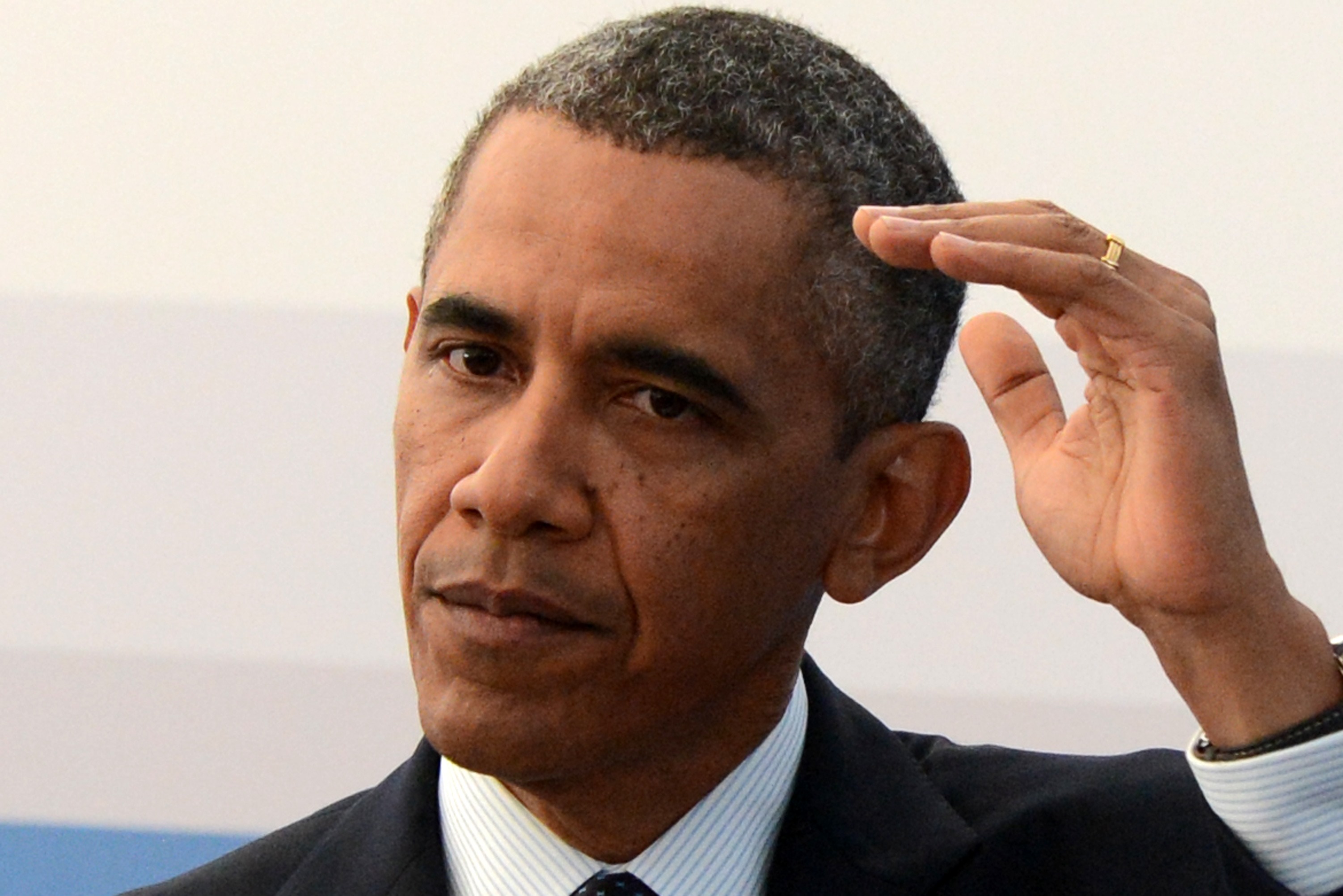
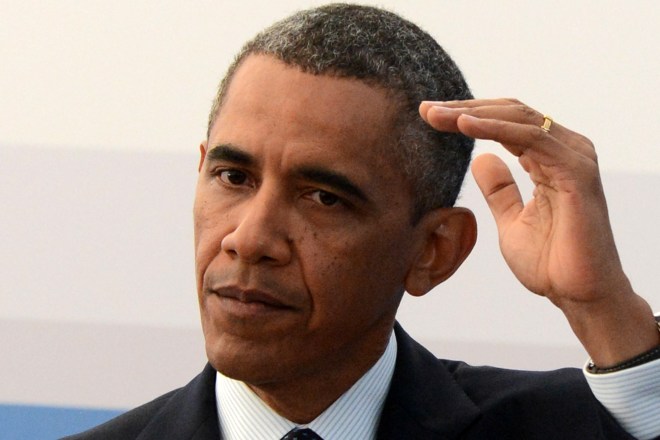
(Photo: US President Barack Obama gestures during a press conference in Saint Petersburg on September 6, 2013 on the sideline of the G20 summit. By Kirill Kudryavtsev/AFP/Getty.)


The Plight Of Gay Seniors

Gabriel Arana highlights it:

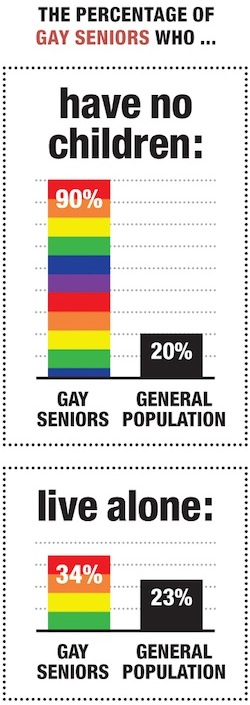
Despite the stereotype of the affluent gay, more LGBT seniors live in poverty than their Gay Seniorsstraight counterparts. Half reach retirement with only $10,000 in the bank. They are far less likely than younger gays to be partnered or married. They’re more likely to be childless and estranged from their birth families, leaving them to weather the challenges of retirement alone. Even those with long-term partners are at a disadvantage, despite recent legal breakthroughs. In June, the Supreme Court struck down the Defense of Marriage Act, putting some gay couples on equal legal footing with straight couples for the first time, but that’s little help to older gay couples who have missed out on decades’ worth of tax and insurance breaks.

All those factors leave queer seniors with fewer retirement options than their straight counterparts. Without the social support or financial means to ensure independence, they often become separated from their gay communities and “families of choice.” Whether they rely on home-care workers or move into assisted-living facilities paid for by Medicaid, they often encounter staff and residents who are not comfortable with gay people. Fearful of mistreatment, many feel compelled to go back into the closet-—particularly painful for members of the generation that invented the politics of coming out.

The Journalistic Ethics Of The WSJ Op-Ed Page, Ctd

They were snookered by a lobbyist for the Syrian rebels. The admirable “Clarification“:

In addition to her role at the Institute for the Study of War, Ms. O’Bagy is affiliated with the Syrian Emergency Task Force, a nonprofit operating as a 501(c)(3) pending IRS approval that subcontracts with the U.S. and British governments to provide aid to the Syrian opposition.