The Best Of The Dish Today

Syria, Syria, Syria. And six posts worth reading.

My rant from last night; the joke on the Hill; why did Assad do it; Washington vs the American people (and the Brits); and Obama’s internal conflict.

If that has made you feel as nauseated as it did me, you may need a little Southern weed, or a pint of Guinness or a trip to the beach. Late this afternoon, I did the latter up here at the end of America. It was a day with all the visual intensity of fall and all the warmth and gold of summer. It was so beautiful it strained the eyes and filled the lungs.

The most popular post was “That Sickening Feeling“. The second most read was “Washington vs the American People.”

I have to say that photo of John Kerry is haunting me. What on earth has become of his face?

Know hope. And see you in the morning.

Talking To A God You Don’t Believe In

A WaPo profile outing Sigfriend Gold as a nonbeliever who finds solace in prayer drew the ire of fellow atheists. Gold defends his place among the godless:

To the charge of not being an atheist, I reply that, while I do pray to a figment of my imagination that I sometimes call God, I completely reject supernatural explanations for why things happen in the world and in my life. I use purely psychological explanations to understand the effects I notice as a result of my prayers.

I would ask those who want to boot me out of the atheist camp to explain what qualifications are needed beyond a rejection of the supernatural. Is there some code of mental conduct for atheists that I have managed to violate? Could I be reinstated as an atheist by admitting that I’m not really praying?

Atheist blogger Herb Silverman on the electronic pages of the Washington Post says, “Atheist prayers sound a lot like what I would call focusing or meditating, which some also view as a transcendent or spiritual experience.” My daily regimen includes 30 to 45 of meditation in addition to prayer, so when I claim to be praying it’s not because I just don’t know the difference.

Meditation involves various forms of relaxing or focusing the mind, focusing at times on the breath, physical sensations, thoughts, sounds, etc. Insofar as mental speech arises in meditation, it arises as a phenomenon to be observed, not as an intentional activity.

Prayer, on the other hand, is intentional speech, silent or aloud, addressing a benevolent listener who is not physically present. Recitation or chanting of mantras or repeated prayers form a gray area between meditation or prayer, but outside this gray area, the two are clearly distinguished by the active use of speech, not by belief in the entity addressed when speech is used.

Hemant Mehta shrugs:

It’s easy to mock Gold, but let’s give him some credit. He admits he’s talking to an imaginary friend. He acknowledges that he’s just succumbing to a powerful placebo effect (while knowing it’s a placebo). That’s more than any religious person has ever done.

Previous Dish on atheists who pray here.

Sex Ed With Donald Duck

Family Planning is a short Walt Disney cartoon from 1967:

Dan Colman provides background:

Eventually translated into 25 languages, the film avoids anything sexually explicit. The family planning advice is vague at best and, perversely but not surprisingly, only male characters get a real voice in the production. But lest you think that Disney was breaking any real ground here, let me remind you of its more daring foray into sex-ed films two decades prior. That’s when it produced The Story of Menstruation (1946)a more substantive film shown to 105 million students across the US.

The Story of Menstruation is after the jump:

What Poems Are For

Meena Alexander plumbs the meaning of poetry, which tries to render into words “what is deeply felt and is essentially unsayable”:

The poem is an invention that exists in spite of history. Most of the forces in our ordinary lives as we live them now conspire against the making of a poem. There might be some space for the published poem, but not for its creation: no ritualized space is given where one is allowed to sit and brood, although universities can give you a modicum of that.

In a time of violence, the task of poetry is in some way to reconcile us to our world and to allow us a measure of tenderness and grace with which to exist. I believe this very deeply, and I see it as an effort to enter into the complications of the moment, even if they are violent; but through that, in some measure, poetry’s task is to reconcile us to the world—not to accept it at face value or to assent to things that are wrong, but to reconcile one in a larger sense, to return us in love, the province of the imagination, to the scope of our mortal lives.

The View From Your Burn

IMG_5084

A reader writes:

Sorry you didn’t make this year’s Burning Man.  It was outstanding in a number of ways: amazing art (especially this year’s crop of art cars), benign weather, the whimsy that ensures that Burners never take themselves too seriously – everything that makes a great burn.  Typical of Burner whimsy was a small site showing the history of transportation in Black Rock City, with hilarious commentary on the fictional days of Burning Man’s “early” years stretching back to the 1800s.  Did you know there was once a Black Rock underground, which had to be abandoned because so many Burners chose to stay in the cool, dustless comfort of the subway stations rather than coming to the surface to enjoy the event?

On the down side, Burning Man was more crowded then ever, although the effect was mainly evident in bike congestion on major arteries such as the Esplanade and long lines trying to visit the building housing the Man. We’re now trying to morph back from our Playa egos of Perky and Lashes to the default world reality of Alan and Judie.  We returned to increased tension in the Middle East and the approaching statute of limitations on wrong-doing resulting in the economic crisis.  We’re forced to start caring about such mundanities again, and we don’t particularly want to.

I urge you to find your way to Black Rock City in the near future so you can experience this wondrous event before it devolves into something more commercial and less freeing.

I created a blog a few years ago to encourage people 50 and over to attend Burning Man.  You might want to check out the series of reasons that my wife and I have for attending regularly at this later stage of our lives.  The frankly erotic atmosphere is certainly one of the benefits, because sex is a life force that has the capacity to keep us young.  The annual burn renews our physical relationship, our commitment to our marriage (of nearly 47 years), and our deep love for each other.  But it also provides us with a set of youthful Burner friends from whom we gain energy and with whom we share whatever wisdom we have acquired over our nearly 70 years of living.

It’s easy not to go.  It’s tough to get ready.  But it’s worth the trip at least once in your life.

I will go. But seriously: Perky and Lashes? Not so much.

(Photo by another reader, who captions: “View from The Man – 8/31/13, 12:00, Black Rock City, NV”, just prior to the wooden man going up in flames.)

The Beginnings Of The Beach Resort

Reviewing The Beach: The History of Paradise on Earth, Adee Braun describes how “long before the beach was a theater of bodies stuffed into tiny suits, exposing as much skin as possible to the sun, beach-going was often a strictly medical undertaking”:

In modern Europe, only peasants sought refuge from the heat in the cool seawater. And so the beach remained mostly empty until the English looked around and began to consider the medicinal potential of their chilly national shoreline. Eighteenth century British high society suffered from a mess of maladies. Fevers, digestive complaints, melancholia, nervous tics, tremors, and even stupidity were the epidemics of the day. The pressures of urban life, pollution, and the general deterioration of society were obviously to blame. Enlightenment physicians began to consider new remedies for old ailments spurred by the new emphasis on science and experimentation.

Their new wonder drug was… water. Cold sea water, specifically.

Beginning in the late 16th century, English physicians endorsed the healing effects of cold water for everything from heat stroke to melancholy. It was believed that a brisk shock of cold water stimulated the entire body, promoting the circulation of humors and even contracting tumors. … By the mid-18th century a standard therapy was developed, which resembled waterboarding far more than a spa treatment. It involved dunking society ladies in the freezing sea repeatedly until the twin effects of cold and suffocation caused terror and panic (read: revitalization). The frightened patient would then be hoisted from the water in her soaking flannel smock, revived with vigorous back rubs and feet warmers, and deposited on dry land for a cup of tea. The adrenaline from the shock of cold was thought to have soothing effects on the body, calming anxiety and restoring the body-soul balance. The patient would repeat her regimen every morning for the next several weeks of her therapeutic seaside sojourn. The men got to take their therapy naked.

It wasn’t enough to nearly drown in the sea to relieve your stresses and ailments; you had to drink it too.

Your Heartbeat As Your Password

Natasha Loma introduces the Nymi:

The wristband relies on authenticating identity by matching the overall shape of the user’s heartwave (captured via an electrocardiogram sensor). Unlike other biotech authentication methods — like fingerprint scanning and iris-/facial-recognition tech — the system doesn’t require the user to authenticate every time they want to unlock something. Because it’s a wearable device, the system sustains authentication so long as the wearer keeps the wristband on.

Dan Goodin worries about security:

Alas, there’s not enough information available about the Nymi’s inner workings to know if it is truly groundbreaking or another dose of the kind of snake oil that’s all too common in the security circuit.

Karl Martin, CEO of the Nymi creator Bionym, said the device hasn’t yet undergone a formal security audit. That means even he can’t say just how impervious it is to the kinds of sophisticated attacks that would inevitably target a universal sign-on gizmo, although he gave some high-level details that are encouraging. That said, there are several classes of hacks that might be used to compromise the security assurances of the device.

Francie Diep has other questions:

When I asked independent researchers if they had any concerns about Nymi, the one thing they brought up was that it’s not clear how accurate the wristband will be at identifying users. Bionym worked with the University of Toronto to test Nymi’s ECG-IDing accuracy in more than 1,000 people, Martin says. They’ve found Nymi is comparable to fingerprint recognition and more accurate than facial recognition. They will test its accuracy further this fall.

However, such results aren’t published yet in the peer-reviewed literature. What has been published indicates it’s “premature” to say an ECG identification scheme can compare to fingerprints and facial recognition, says Kevin Bowyer, the chair of the computer science department at the University of Notre Dame.

Where Iran Really Is Revolutionary

In an interview about the risks of human overpopulation, Alan Weisman, author of The World Without Us, argues that Iran, of all places, has developed “the most successful family-planning program in the history of the planet.” How they did it?

[T]he present ayatollah, Khamenei, issued a fatwa saying there was nothing in the Qur’an against having an operation if you felt that you had enough children that you could take care of. Everything from condoms through pills, injections, tubal ligations, vasectomies, IUDs—everything was free, and everything was available in the farthest reaches of the country.

I interviewed this wonderful woman, an OB/GYN who was part of this, right after the plan was implemented, ten years after the Iranian Revolution, in the late ’80s. She was going on horseback into these little villages to help perform vasectomies and tubal ligations. As the country grew more prosperous, her transportation changed to four-wheel-drive trucks and even helicopters. Everyone was guaranteed contraception if they wanted it.

The only thing that was obligatory in Iran was premarital counseling, which is actually a very nice idea. I recommend it to everybody who’s contemplating getting married. The Quakers do it in our country, and, for six months before a couple gets married, they attend classes. In Iran, you could go to a mosque, or you could just go to a health center. They would talk about things to get you prepared for getting married, including what it costs to have a child, to raise a child, to educate a child.

People got the message really well. They were told, “Have as many children as you want to have, as you think you can take care of.” Most Iranians continue to choose to have either one or two.

A few months ago, Narges Bajoghli reported that sanctions have made birth control harder to come by in the country:

For years, there has been a plethora of birth control pills and other contraceptives easily available and extremely affordable in Iran, a country that boosts one of the most successful family planning programs in the world. It is only in the aftermath of cumulative American-led sanctions against Iran’s banking and financial sectors that most of these options have disappeared from pharmacies. Up until two months ago, pharmacists told me, there were simply no foreign made birth control pills available at all. Many doctors are wary of prescribing the Iranian-made pills because sanctions have made access to the raw materials required to produce them nearly impossible, making many of these drugs unreliable.

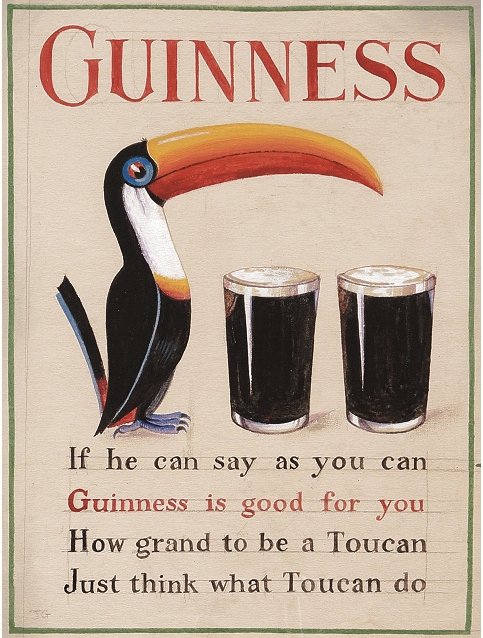
The Art Of Beer

Ben Marks profiles artist John Gilroy, whose oil paintings were the basis of Guinness’ advertising campaigns in the mid-20th century:

“Within the Guinness archives itself,” [brewing expert David] Hughes says of the materials kept at the company’s Dublin headquarters, “they’ve got lots of advertising art, dish_guinness watercolors, and sketches of workups towards the final version of the posters. But they never had a single oil painting. Until the paintings started turning up in the United States, where Guinness memorabilia is quite collectible, it wasn’t fully understood that the posters were based on oils. All of the canvases will be in collections within a year,” Hughes adds. For would-be Gilroy collectors, that means the clock is ticking.

As it turns out, Gilroy’s entire artistic process was a prelude to the oils. “The first thing he’d usually do was a pencil sketch,” says Hughes. “Then he’d paint a watercolor over the top of the pencil sketch to get the color balance right. Once that was settled and all the approvals were in, he’d sit down and paint the oil. The proof version that went to Guinness for approval, it seems, was always an oil painting.”

Based on what we know of John Gilroy’s work as an artist, that makes sense. For almost half a century, Gilroy was regarded not only as one of England’s premier commercial illustrators, but also as one of its best portraitists. “He painted the Queen three times,” says Hughes, “Lord Mountbatten about four times. In 1942, he did a pencil-and-crayon sketch of Churchill in a London bunker.” According to Hughes, Churchill gave that portrait to Russian leader Joseph Stalin at the Yalta Conference with Franklin Delano Roosevelt, which may mean that somewhere in the bowels of the Kremlin, there’s a portrait of Winnie by the same guy who made a living drawing cartoons of flying toucans balancing pints of Guinness on their beaks.

(Image via Collectors Weekly)

Making It Harder To Adopt

Emily Matchar profiles the growing “anti-adoption movement,” a group fighting for “transparency and a much higher degree of ethical oversight, legal and otherwise”:

They run message boards with names like “First Mother Forum” and “Pound Pup Legacy,” full of tales of bitterly regretted adoptions. They hold retreats for birthmothers and adoptees. They’ve formed several grassroots activist organizations, including Parents for Ethical Adoption ReformOrigins-USA, and Concerned United Birthparents. Some call themselves adoption reformers. Others prefer terms such as “adoption truth advocate.” A few will come straight out and say they’re anti-adoption.

They want, among other things, a ban on adoption agencies offering monetary support to pregnant women. They want to see laws put in place guaranteeing that “open” adoptions (where birthparents have some level of contact with their children) stay open. They want women to have more time after birth to decide whether to terminate their parental rights. These activists have become increasingly loud of late, holding prominent rallies, organizing online, and winning several recent legislative victories.

Previous Dish on the political criticism of the adoption industry here.