The “video” — which seems to be a cross between video and stop-motion photography — was possible because of the jump in low-light capabilities that cameras have experienced over the past several years. Combine those advances with some “tools and techniques” that the production company is keeping close to the vest for now, and you get real-time video of the Milky Way.
In an interview, philosopher and Immortality author Stephen Cave discusses ways to manage a fear of death:
Thinking less about yourself, more about other people and other causes, so your own death doesn’t seem as important to you, because these other causes and people will live on. Those other things will help you come to terms with death.
Bertrand Russell wrote about this. He lived to be 97. A man who lived this incredibly rich life, incredibly engaged, a philosopher, a writer. His life clearly had a lot of meaning for him. But also writing then already as a very old man about this, he wrote, ‘fear of death is not a noble thing, and the best way to deal with it is to break down the walls of the self, to emerge your ideas into the great stream of humanity.’ Care more about other things, and less about yourself, and your own death will seem less important. There are ways to combine a meaningful life without being afraid of it ending.
Various Buddhist traditions have excellent strategies for dealing with this. The Buddhist tradition realizes that the fear is so deep within us that we have to remind ourselves every day. I once heard that Dalai Lama wakes up at 4 am and meditates for 3 hours on the fact he’s going to die. It’s part of the Buddhist tradition to contemplate one’s mortality. Doing that will help give you the right focus. Help you decide what’s important and not important, to help you live with meaning but without fear.
While it is still a serious house I suppose, I can’t resist mentioning the Jamme Masjid mosque on Brick Lane in the Spitalfields neighborhood of London. The building started life as a French Huguenot chapel in 1742, changed to Methodist in the early 1800s, became the Spitalfields Great Synagogue in 1898, and finally a mosque in the 1980s. I believe it is still the only place in the Western world to be used as a house of worship by all three major monotheistic religions. It seems, to me, to be a lovely thing that it’s still a holy house after 270 years, no matter who prays there now.
Another points to less serious ones:
There is a church converted into an apartment building just off campus where I went to university, in a neighborhood consisting mostly of student housing. It always made me uncomfortable whenever I walked by – mainly, I suppose, because of the guilt that my behavior in my own college apartment was so far out of accordance with the Christian religion I claimed to follow:
The Netherlands seems to be a hotbed for church building conversions; the strangest one I saw was a baby clothing shop in a church in a small city north of Amsterdam. Finally, we stumbled across a bar in Edinburgh with a reputation for wild parties; “The World Famous Frankenstein” is located in an old church. It makes for an interesting space, but it’s just tough to get comfortable drinking beer in the light of a stained-glass window:
Another reader:
You would be remiss to pass over the famous, or rather infamous, disco called The Monastery that operated in Seattle in the ’70s and ’80s in an abandoned church. It was still legally a church, but ran as an all ages, mostly gay night club. The various abuses eventually led to Seattle’s draconian Teen Dance Ordinance.
Another:
I’m really surprised nobody has yet mentioned Mister Smalls Funhouse, a former Roman Catholic church in the Pittsburgh area (map/streetview here) According to their site:
Mr Small’s Funhouse merges together what is becoming Pittsburgh’s new Industry Standard: A state-of-the-art Theatre, two full service Recording Studios, Skate Park, our backstage Rock Hostel for Artist housing, and unique In-House Talent Buying and Production Departments.
I’ve not gone to that many concerts, but this has been my favorite venue by far. For one thing, it’s a neat old building, and for another, being a former church, and having the band playing from the former chancel, the acoustics are pretty fantastic. They Might Be Giants plays there every time they come through eastern Pennsylvania, which is what brought me to the theatre. In fact, as part of their Venue Songs project back in 2005, they wrote and performed one for Mister Smalls:
Another:
You are not allowed to have a thread about churches turned into other things without mentioning the fantastic bar/cafe known as Freud, in the heart of Andrew’s own beloved Oxford!
Another:
No mention of the former Episcopal Church of the Holy Communion is complete without a reference to the Steve Taylor song “This Disco Used to Be A Cute Cathedral” from his 1985 album “On The Fritz.” The song is about the transformation of the former church into the Limelight club. Taylor was a non-traditional musician in the Christian music subculture. His music was often sarcastic, his lyrics clever and witty, and his focus was often hypocrisy within the institutional church. Taylor’s next release was a live album titled … wait for it … “Limelight.”
Last but one of the very best:
Now that the thread has sparked many examples, I thought I would address the original blogger’s comments about his feelings about these places. As someone who has lived in a former church for nearly a decade, I can say definitively that a former church is not “just a pile of stones.” And I also would claim that these spaces should not be torn down.
Our house was a Methodist/Episcopalian church, built in 1889 during the short-lived boomperiod in our town. A lovely but impractical (read: drafty) carpenter’s Gothic, it eventually was sold by the parishioners in 1960 to an antiques dealer, and the parish moved into a new building down the road. With that, the church swiftly changed from being a sober house of worship to a rooming house that was best known for its wild Halloween parties (with rumored stop-bys by the Jefferson Airplane, Taj Majal, the Merry Pranksters, and more) and informal rental agreements and living spaces.
When we bought the building in 2000, it was on its last legs due to decades of neglected infrastructure, funky hippie carpentry, and full of both weird and wonderful shit left by previous renters and owners. My boyfriend set out to restore the church to its original glory (including rebuilding the tower, which had rotted from the hot tub that had been installed at the base of the tower with no ventilation) as well as turn it into a private home. Since we moved in in late 2004, we have tried to honor the building’s full history: we still host epic Halloween parties, we have hosted house concerts by musicians coming through the area, we have provided sanctuary for friends and strangers who have needed a place to live. And last fall we got married in our living room, which is the virtually unchanged sanctuary of the original church.
Every single day we see people slowing down their cars or stopping on the sidewalk to take pictures. Every adult and child who comes inside is blown away by the feeling that the space gives them. We often meet people who tell us stories of going to Sunday school here – or, conversely, dropping acid and swinging from the chandeliers at some raging ’60s party. No one feels creeped out or unwelcome here. What we do experience is the space calling us “feed” it with community: the church comes alive and positively buzzes as people fill it. Singers love to sing in here; sound engineers compare the acoustics to Carnegie Hall.
But the biggest confirmation that we did a good thing by reclaiming this building rather than tear it down came from the group of former parishioners who visited for the first time since 1960. They had all moved away, and had been very concerned about what might have happened to the church that they grew up in, got married in. Seeing their relief and delight when we showed them the place (despite the skeletons in radiation suits hanging in the sanctuary in preparation for our Repo Man-themed Halloween party the next day) was very gratifying to us. We also learned so much more about the building’s church history that day, and we will continue to pass those stories forward.
Garret Johnson thinks so. He argues that reflection and humility “are two virtues that dystopian fiction, as a rule, argues are vital and necessary for any free, humane society” and that “also happen to be at the very core of Christian thought.” How he sees the former virtue at play in Ray Bradbury’s Fahrenheit 451:
More than just a novel about “censorship”—as the cover usually claims—Fahrenheit 451 is a picture of how private citizens’ lack of will to reflect, on anything, leads to censorship. And not just censorship of reading material, but a soul-crippling censorship of thought. Monolithic government-control has been achieved through the means of a thoroughly entertained populace. It’s a world where TV and sports and bite-sized snippets of inconsequential news have become the center of all culture and society. And reflection, thought, has become a pesky, bothersome thing that just gets in the way of all that. Reflection causes only sorrow, those in charge say. And so, for the good of society, books—which induce reflection far more than most things—are illegal.
Although Fictionalism privileges the secular imagination, it is not antithetical to religion. Some among the religious accept fictions as sources of revelation and endorse an “as if” attitude as the way to apprehend them. J.R.R. Tolkien and C.S. Lewis, for example, had an ingenious strategy for addressing the widespread contemporary understanding of the Bible as a cultural rather than a revealed text. In advancing what Tolkien called “Mythopoeia,” the two tried to reverse the secular tide by defining fiction as theological. Fictions (like The Lord of the Rings or the “Narnia” series) were useful myths inspired by God — with the exception of Christianity, which itself was both mythic and true. Fundamentalists can also be enraptured with fiction as religious touchstone, which partly explains the extraordinary success of the “Left Behind” series of novels and video games.
Palmer was raised as a Catholic, but as an adult rejected doctrinaire belief and practice in favor of a no-less-spiritual, Fictionalist orientation to life: he venerated the imagination and the sense of wonder it engendered.
The cool that came off sheets just off the line
Made me think the damp must still be in them
But when I took my corners of the linen
And pulled against her, first straight down the hem
And then diagonally, then flapped and shook
The fabric like a sail in a cross-wind,
They made a dried-out undulating thwack.
So we’d stretch and fold and end up hand to hand
For a split second as if nothing had happened
For nothing had that had not always happened
Beforehand, day by day, just touch and go,
Coming close again by holding back
In moves where I was x and she was o
Inscribed in sheets she’d sewn from ripped-out flour sacks.
Rob Goodman takes stock of what he terms “apocalyptic narcissism”:
We flatter ourselves when we imagine a world incapable of lasting without us in it—a world that, having ceased to exist, cannot forget us, discard us, or pave over our graves. Even if the earth no longer sits at the center of creation, we can persuade ourselves that our life spans sit at the center of time, that our age and no other is history’s fulcrum. “We live in the most interesting times in human history … the days of fulfillment,” writes the Rev. E.W. Jackson, Republican candidate for lieutenant governor of Virginia, in words that could have also come from the mouth of Saint Paul or Shabbetai Zevi or Hal Lindsey or any other visionary unable to accept the hard truth of the apocalyptic lottery: We’re virtually guaranteed to witness the end of nothing except our lives, and the present, far from fulfilling anything, is mainly distinguished by being the one piece of time with us in it.
His broader point:
[M]uch of our literature of collapse suggests that the future will fear exactly what we fear, only in exaggerated form. In this way, our anxieties are exalted. Yesterday’s fears were foolish—but today’s are existential. And today’s threats are revealed to be not some problems, but the problems. Dystopias can satisfy the typological urge to invest our own slice of history with ultimate meaning: We look back from an imagined future to discover that we are correct in our fears, that our problems are special because they will be the ones to destroy us.
Nat Case articulates how he reconciles being both an atheist and a committed Quaker:
If you are really going to be part of a community, just showing up for the main meal is not enough: you need to help cook and clean up. So it has been with me and the Quakers: I’m concerned with how my community works, and so I’ve served on committees (Quakerism is all about committees). There’s pastoral care to accomplish, a building to maintain, First-Day School (Quakerese for Sunday School) to organise. And there’s the matter of how we as a religious community will bring our witness into the world.
Perhaps this language sounds odd coming from a non-theist, but as I hope I’ve shown, I’m not a non-theist first. I’ve been involved in prison visiting, and have been struck at the variety of religious attitudes among volunteers: some for whom the visiting is in itself ministry, and others for whom it’s simply social action towards justice (the programme grew out of visiting conscientious objectors in the Vietnam era). The point is: theological differences are not necessarily an issue when there’s work to be done.
But the committees I’ve been in have also had a curious sense of unease too, a sense of something missing, and I’ve now been on three committees that were specifically charged with addressing aspects of a sense of malaise and communal disconnect. The openness of liberal religion resonates strongly with me. It means I do have a place, and not just in the closet or as a hypocrite. But I wonder if my presence, and the presence of atheists and skeptics such as me, is part of the problem.
People need focus. There’s a reason why the American mythologist Joseph Campbell chose the hero’s journey as his fundamental myth: we don’t give out faith and loyalty to an idea nearly as readily as we give it to a hero, a person. And so a God whom we understand not as a vague notion or spirit, but as a living presence, with voice and face and will and command — this is what I think most people want in a visceral way. In some ways, it’s what we need.
And I do not believe such a God exists in our universe.
Ted Olson surveys the fraught history of beards in the Christian church:
You’re more likely to see a beard in the pulpit today than at any time since the 1800s. But beards—especially among clergy—were once serious, symbolic matters. They separated East from West during the Great Schism, priests from laity during the Middle Ages, and Protestants from Catholics during the Reformation. Some church leaders required them; others banned them. To medieval theologians, they represented both holiness and sin. But historian Giles Constable says that rules on beards sound more forceful than they really were. Clergy (especially powerful ones) were likely to follow fashion in their day, too.
One episode from the many he highlights, from the early 1000s:
Full beards come briefly back into style, but fall out of style by mid-century. This leads some older mid-century church leaders, nostalgic for beards, to associate shaving with immodesty. As one abbot wrote in 1043, the empire in Germany was besieged by “the shameful custom of the vulgar French … in the cutting of beards, in the shortening and deforming of clothing, execrable to modest eyes, and many other novelties.” Half a century later, writers associated immodesty with beards, not shaving. One English Benedictine monk wrote, “Now almost all our fellow countrymen are crazy and wear little beards, openly proclaiming by such a token that they revel in filthy lusts like stinking goats.”
(Portrait of Thomas Cranmer, the Archbishop of Canterbury and a key figure in the Protestant Reformation whose beard symbolized his break with the clean-shaven Roman Catholic clergy, via Wikimedia Commons)
[T]he natural conclusion we might draw from this—and I myself jumped to it—is that the sciences, enjoying the highest prestige in their long history, have become the true authority. Religions are desperate to corroborate their findings with the true Authority. The man in the saffron shawl, the man in the black cassock all look to the man in the white coat. This is why they appropriate the jargon and discoveries of science, drawing analogies whenever they can: As they once cited scripture, now they cite scientific studies.
He goes on to note the seemingly endless capacity of religions to repurpose powerful symbols and disciplines:
[R]eligions have always been syncretic, incorporating whatever they find authoritative and attractive; this is why Krishna dies of an arrow to the heel, like Achilles, and slays snakes in his cradle, like Hercules; why the story of Christ mirrored that of several killed-and-resurrected fertility gods both in the Near East and Europe, and why “Christmas” falls on the birthday of Mithras; why Mohammed, the Arab, inserted himself into a line of Jewish prophets as (note this well) the last and most authoritative one.


 church swiftly changed from being a sober house of worship to a rooming house that was best known for its wild Halloween parties (with rumored stop-bys by the Jefferson Airplane, Taj Majal, the Merry Pranksters, and more) and informal rental agreements and living spaces.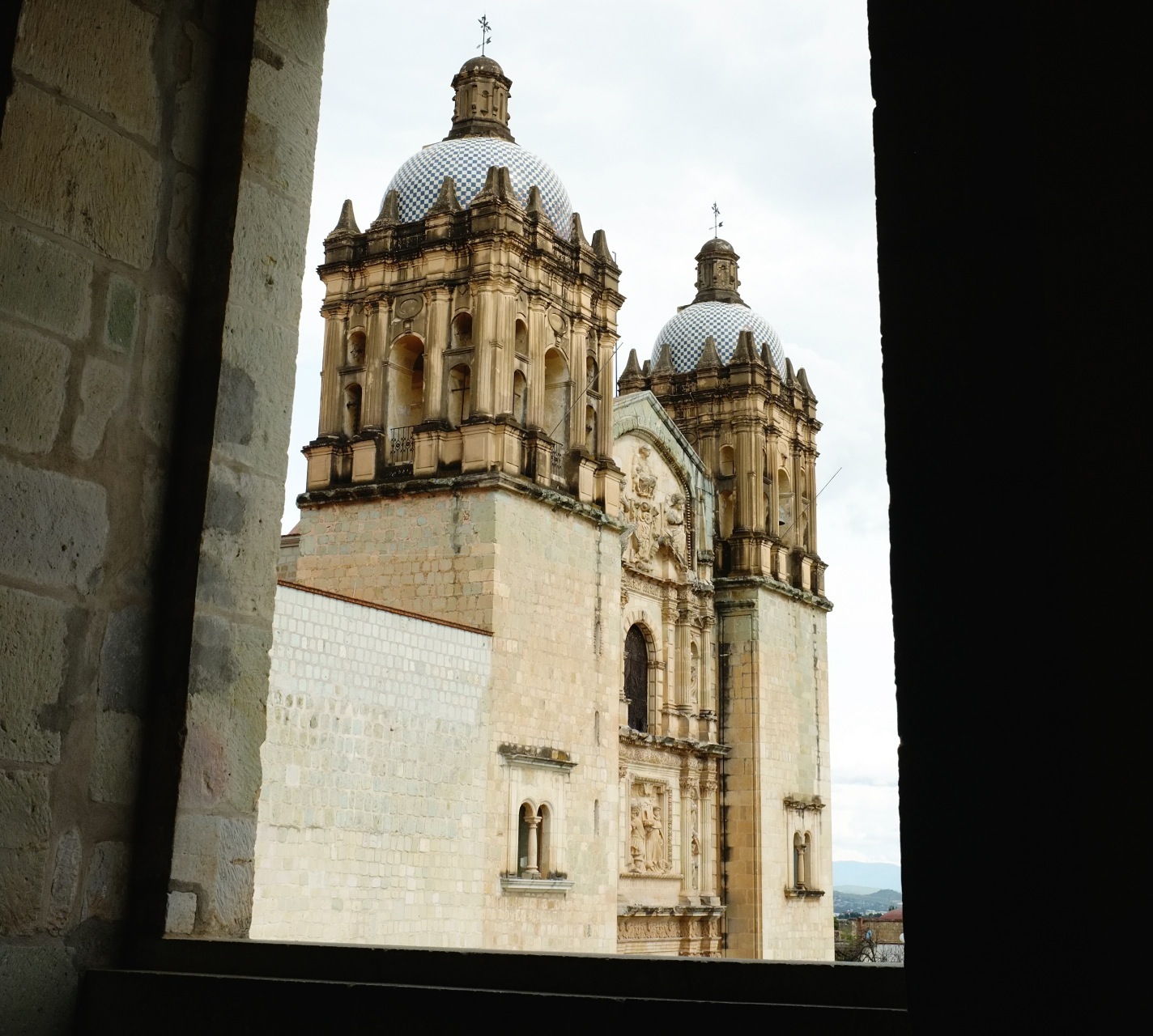

 The Dish
