Jelani Cobb outlines the GOP’s “Dixiecrat problem”:
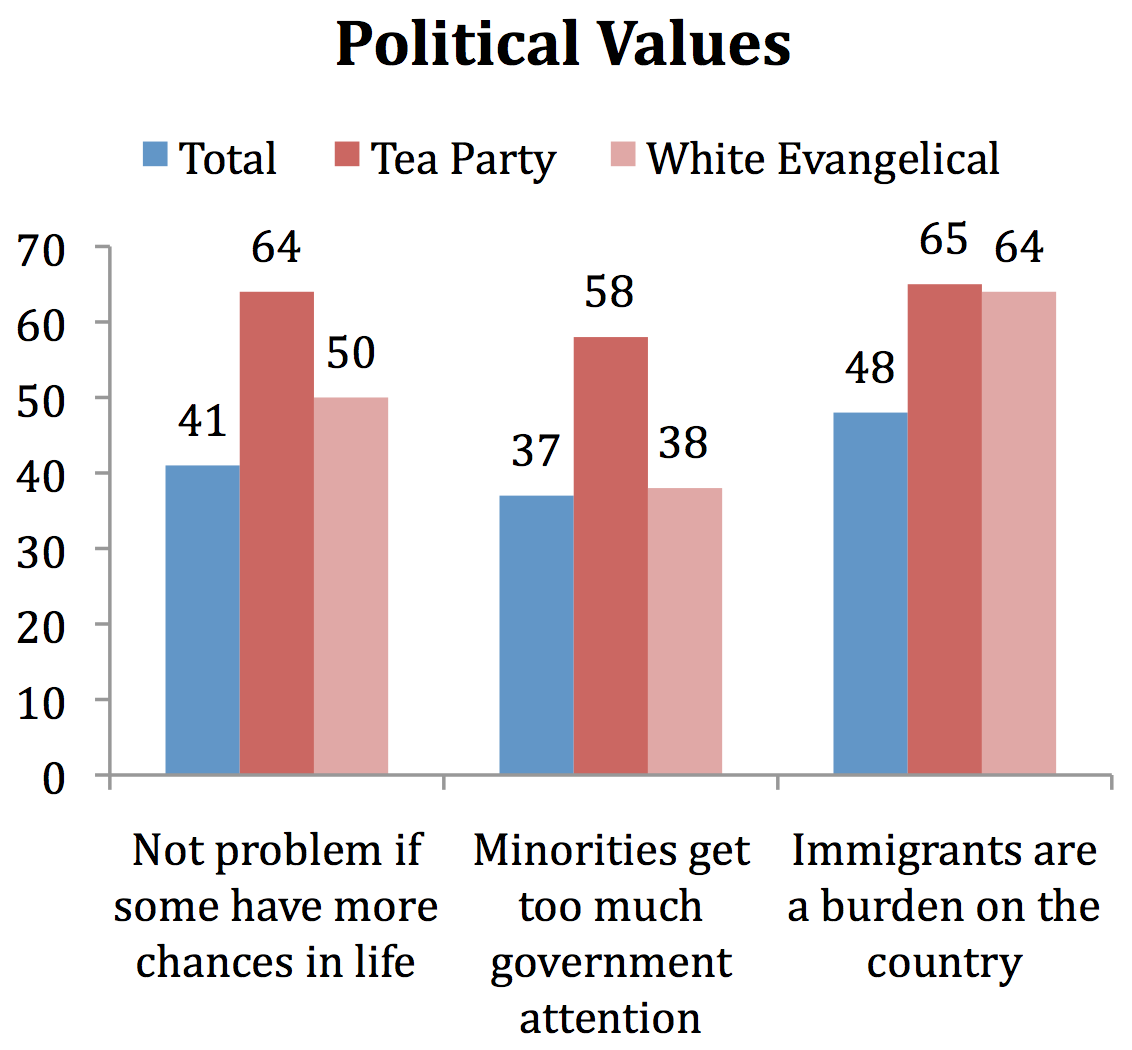
Today’s Republican Party, like the Democrats six decades ago, has had to come to terms with a demographic shift—one in which Hispanic voters are a crucial new element. We would be naïve to believe that the opposition to comprehensive immigration reform that features so prominently in current Tea Party politics is incidental to its appeal. (A 2010 survey of Tea Party supporters conducted by the Public Religion Research Institute found that fifty-eight per cent believed the government “paid too much attention to the problems of blacks and minorities”; sixty-four percent said immigrants were “a burden” on the country.) The Tea Party–inspired eruptions that have recurred throughout Obama’s Presidency represent something more complicated than a reactionary backlash to the sight of a black President; they are a product of the way he so tidily represents the disparate strands of social history that brought us to this impasse. The problem isn’t that there’s a black President; it’s that the country has changed in ways that made Obama’s election possible.
 The Dish