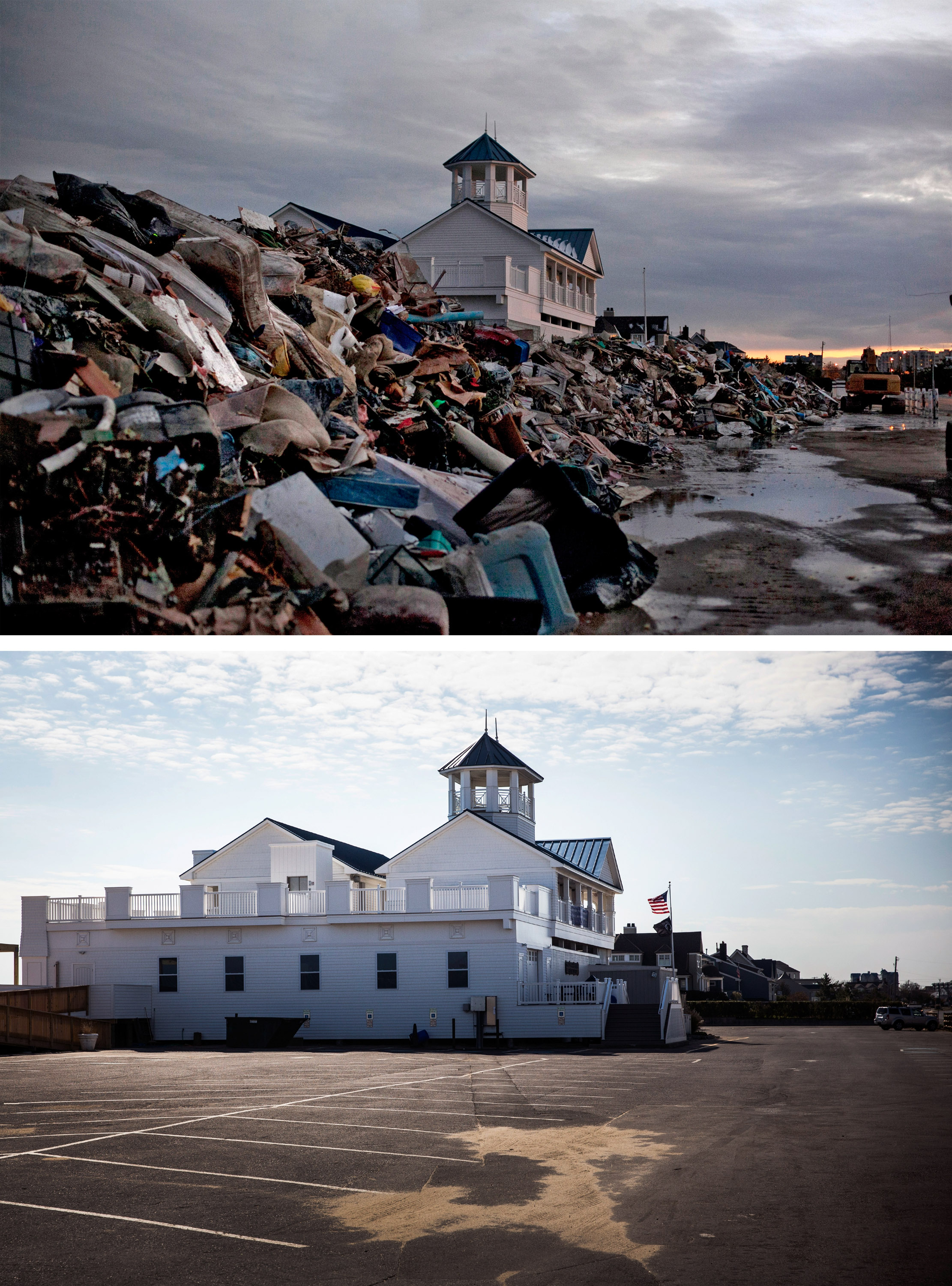
David Wachsmuth sizes up the success of Sandy relief on the anniversary of the superstorm:
New Jersey alone has 565 municipalities representing a population only slightly larger than the single municipality of New York City. This fragmentation can be a real problem in the face of a major disaster like Hurricane Sandy. Storms don’t respect jurisdictional boundaries, after all, and they likewise challenge us to coordinate disaster response on a regional scale. Unfortunately, there was little successful inter-jurisdictional coordination in the aftermath of Hurricane Sandy. … In New York and New Jersey, the most agile, adaptive disaster response generally didn’t come from local and state governments, but from grassroots response networks like Occupy Sandy. One important thing that differentiated Occupy Sandy from governments is that it wasn’t constrained by jurisdictional boundaries. As such, it could simply devote its resources where need was greatest. If governments are unable to work effectively across jurisdictions, they should partner with informal actors who can.
(Top photo: The Monmouth Beach pavilion is surrounded by debris caused by Superstorm Sandy on November 8, 2012 in Monmouth, New Jersey. Sandy made landfall on October 29, 2012 near Brigantine, New Jersey and cost the country an estimated $65 billion. By Allison Joyce/Getty Images. Bottom photo: The Monmouth Beach pavilion is shown on October 22, 2013. By Andrew Burton/Getty Images)
 The Dish