Mailer’s Multitudes

Ptown features prominently in this 1966 documentary on Norman Mailer:

Abby Margulies suggests that two new books on the legendary writer, the biography Norman Mailer: A Double Life and the essay collection Mind of an Outlaw, “offer insight into why Mailer, more than any other literary figure of his era, has been so mythologized, reviled, and revered”:

Mailer had a temper and was fast to throw a punch or quip a snide remark, often at the expense of his reputation. He is famous for stabbing his second wife, Adele Morales; addressing the feminists in his audience at the University of California, Berkeley, as “obedient little bitches” before going on to suggest that “a little bit of rape is good for a man’s soul”; and assaulting Gore Vidal at a party. As Mailer once wrote about himself: “To be the center of any situation was, he sometimes thought, the real marrow of his bone—better to expire as a devil in the fire than an angel in the wings.”

Norman Kingsley Mailer, the author of more than 40 books, encompassing fiction, journalism, poetry, essays, and interview collections, was a prolific and brilliant writer, but he is nearly as well known for his charisma and instigative prodding, his mayoral candidacy and threatened presidential run, his love of boxing, his insatiable promiscuity, and his penchant for settling scores with a firm head-butt. These competing facets of his personality—at once his greatest asset and his hopeless Achilles heel—created fantastic and inspired friction in all aspects of his life.

Biographer J. Michael Lennon, Mailer’s close friend and “extended family member”, explains why he frames his aforementioned book in terms of a “double life”:

Mailer believed that we all have two complete personalities in our psyche, and this was manifested in his own oppositions: family man-philanderer, activist-observer, leftist-conservative, rationalist-transcendentalist – the list goes on. But I wouldn’t describe Mailer as a private man. He was always mining his experience for his books, and always seeking more. His curiosity was huge. He did keep certain early experiences secret, but not many. He said he used them as “crystals,” and shined a light through them to illumine later experiences. Most of these were from his childhood and adolescence. He called experience “the church of one’s acquired knowledge.” For him, the best experiences were unforeseen, experiences that hit you like a brick tossed over a fence.

Richard Brody is fascinated by Mailer’s early life and wonders why the writer never channeled it into his work:

The grandson of a rabbi who struggled in business, the son of a picaresque bookkeeper and an adoring mother, he was a brilliant student and precocious writer. He was also something of a spoiled and fearful child—by his own account, a “physical coward.” Why did Mailer not want to write about the Brooklyn of his youth? Did he hesitate to reveal stories about his parents? (His father, a compulsive gambler, was often in debt, on the edge of legal trouble, and frequently unemployed.) Did he not want to write about his days of sheltered timidity? Was there some other aspect of his early years that he found unspeakable? Was he sparing his family—or himself? Or did he simply look at his background and find it wanting?

Paul J. Gallagher’s take on the above documentary:

It contains what was good and bad about Mailer—an overweening need to push his ordinary ideas (today’s word Norman is “totalitarianism”), with those occasional sparks of brilliance. It can be summed up by the know-it-all-booze-in-one-hand-Mailer versus Norman-being-a-father-and-husband, who is willing to admit he sometimes doesn’t know the answer. … There’s a truth in John Updike’s observation that Mailer had once the potential to be the greatest American writer of the twentieth century—if only he hadn’t squandered his talent on a desire to being a respected public figure. Writers write, they don’t run for office, or make unwatchable movies, or compensate for their own insecurity by turning everything into a fistfight.


Previous Dish on Mailer here, here, and here.

The View From Your Window Contest

vfyw_10-19

You have until noon on Tuesday to guess it. City and/or state first, then country. Please put the location in the subject heading, along with any description within the email. If no one guesses the exact location, proximity counts.  Be sure to email entries to contest@andrewsullivan.com. Winner gets a free The View From Your Window book or two free gift subscriptions to the Dish. Have at it.

Datamining The Classics, Ctd

In the growing field of “digital humanities,” researchers apply the datamining capabilities of computers to the history of literature. Dana Mackenzie addresses “perhaps the most frequently heard refrain in the criticisms of digital humanities: Where’s the beef? Where are the great insights?”:

Supporters argue that the digital humanities have produced new insights, but that the constellations of meaning it generates are not the kinds of insights humanists are used to. For example, when Ted Underwood, an English professor at the University of Illinois, topic-modeled 4,275 books written between 1700 and 1900, he noticed that changes in literature happen more gradually than we give them credit for.

For the first hundred years of that period, for example, the proportion of “old” Anglo-Saxon words in use declined. But over the century that followed, literature trifurcated. In poetry, the use of “old” words increased markedly. In fiction, “old” words also became more popular, but less dramatically. In nonfiction, however, the frequency of “old” words remained unchanged from the previous century. The data reflected a complex set of historical processes—the emergence of fiction and poetry that self-consciously broke from classical themes and instead treated the experiences of common people.

Such a change had often been attributed to the romantic school, but the data showed it playing out over a much longer period of time and continuing long after the romantics were supposedly passé. “Our vocabulary is all schools, movements, periods, cultural turns,” Underwood says. “If you have a trend that lasts a century or more, it’s really hard to grapple with.”

Digital humanities technologies can help us see gradual changes, whether in literature or elsewhere. Humans have difficulty comprehending change that happens on the time scale of a human life, or longer. If Underwood’s hypothesis is correct, we need computers to help fill in our blind spot. Topic modeling does not overturn or replace our previous ways of seeing; it enhances them. “It is not a substitute for human reading, but a prosthetic extension of our capacity,” says Johanna Drucker, a professor of information studies at UCLA.

Previous Dish on the digital humanities here and here.

A Poem For Saturday

dark waters

Dish poetry editor Alice Quinn writes in about this weekend’s poems:

Frank Bidart, the author of seven previous and highly regarded collections of poems and the co-editor of the monumental edition of The Collected Poems of Robert Lowell, has just published a new book of poems, Metaphysical Dog, nominated this week for the National Book Award. His work has a visceral power and gravitas that summons up George Herbert’s poems addressed to God (“Now I am here, what thou wilt do with me/ None of my books will show.”)

In an interview from 1999, he addressed the nature of his artistic values, saying “There has come to be astonishing sophistication in producing an armored self on paper—in a way that makes the poems that were ‘armored’ twenty years ago look positively candid and naïve. And I think it’s a trap…Frost says, quoting Horace, ‘No tears in the writer, no tears in the reader.’…The fact is, you cannot get through life without putting your life on the line! There’s no other, no ‘safe’ way to live.”

Today and over the weekend, we’ll feature poems from his arresting and very moving new book, beginning with “Against Rage”:

He had not been denied the world. Terrible
scenes that he clung to because they taught him

the world will at last be buried with him.
As well as the exhilarations. Now,

he thinks each new one will be the last one.
The last new page. The last sex. Each human

being’s story, he tells nobody, is a boat
cutting through the night. As starless blackness

approaches, the soul reverses itself, in
the eerie acceptance of finitude.

(From Metaphysical Dog by Frank Bidart © 2013 by Frank Bidart. Used by permission of Farrar, Straus and Giroux, LLC. Photo by Janos Csongor Kerekes)

The Most Dangerous Border Crossings

Dish alum Gwynn Guilford contends that Europe’s current immigration policy “will almost certainly result in more dead bodies in the Mediterranean”:

Frontex, the border patrol agency the EU created in 2005, budgeted a combined €20.9 million patrolling land borders in 2011 and 2012—more than it did from 2006 to 2010 combined. Those moves have pushed migrants to travel more and more by sea instead. Traveling by sea is more dangerous, which is why tighter land borders have “increased the vulnerability of migrants, their reliance on smuggling and caused the deaths of an estimated number of at least 17,000 people over the past two decades,” as Oxford professor Hein de Hass argues.

Recent Dish on the Lampedusa tragedy here and here.

Face Of The Day

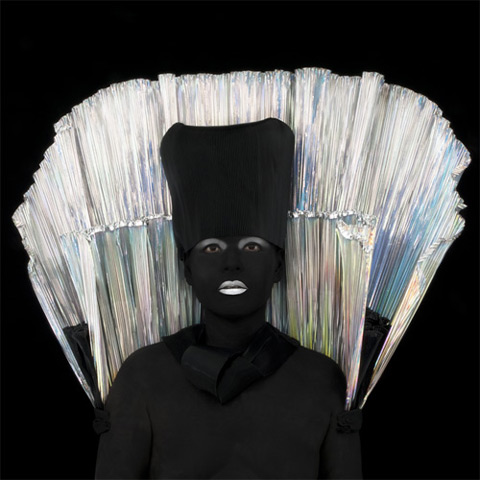
dish_67

Jenna Garrett captions:

Photographer Kimiko Yoshida sheds her skin and trappings of identity through her bizarre, disarming body of work. PAINTING. SELF-PORTRAIT, 2007-2010 directs our gaze in one thousand places, finally rendering the viewer unable to distinguish the artist from the whole. PAINTING. SELF-PORTRAIT is the anti-portrait, a refusal be known and a declaration that it is impossible to be understood.

In speaking of her “monochrome” images, the artist herself is the one who dissolves into the background, the bright colors and bizarre clothing purposely taking center stage in ways both familiar and uneasy. Repurposing a number of materials, Yoshida often improperly wears European couture and appropriates titles of Western fine art. From Warhol to Picasso, the artist has reference without recreation.

(Photo: 67 Painting (Elizabeth I by Nicholas Hilliard). Self-Portrait, 2010, by Kimiko Yoshida)

Using Your Psychological Profile As A Password

Online security measures might start incorporating a kind of Rorschach test:

The new approach is straightforward and relies on a user answering a number of questions when he or she first signs up for access to a website. It begins by generating a set of simple inkblot pictures by randomly positioning different coloured ink spots in a small area of the screen. As part of the signup process, the user is asked to write a short phrase that describes each of these pictures. When the users return to access the site with a password, they are also shown the inkblot patterns and the set phrases that describe them. Their task is then to allocate the correct phrase to each pattern. [Jeremiah Blocki and others at Carnegie Mellon University] call their new test a GOTCHA (Generating panOptic Turing Tests to Tell Computers and Humans Apart).

Meghan Neal thinks through the ramifications:

Inkblots are a popular with password gurus for a couple reasons. One, visual images are generally easier for people to remember than numbers. Two, recognizing patterns and associating them with intuited phrases is something machines aren’t able to do—not yet, at least. The human mind, on the other hand, “can easily imagine semantically meaningful objects in each image,” the study states.

Thus, hackers would need to be able to think like a human to crack the code, and would be forced to use actual humans to wage an attack. At the least, it would make password cracking much more cumbersome and expensive, researchers suggest.

The downside to Rorschach-style puzzles is that there’s no guaranteeing you’re going to interpreted a pattern the same way twice.

Masculinity In Rockwell

Deborah Solomon remarks that “although [Norman] Rockwell is often described as a portrayer of the nuclear family, this is a misconception”:

Of his 322 covers for the Saturday Evening Post, only three portray a conventional family of dish_rockwellparents and two or more children (Going and Coming, 1947; Walking to Church, 1953; and Easter Morning, 1959). Rockwell culled the majority of his figures from an imaginary assembly of boys and fathers and grandfathers who convene in places where women seldom intrude. Boyishness is presented in his work as a desirable quality, even in girls. Rockwell’s female figures tend to break from traditional gender roles and assume masculine guises. Typically, a redheaded girl with a black eye sits in the hall outside the principal’s office, grinning despite the reprimand awaiting her.

Although he married three times and raised a family, Rockwell acknowledged that he didn’t pine for women. They made him feel imperiled. He preferred the nearly constant companionship of men whom he perceived as physically strong. He sought out friends who went fishing in the wilderness and trekked up mountains, men with mud on their shoes, daredevils who were not prim and careful the way he was.

(Image: Shiner illustration © SEPS. Used by courtesy of Curtis Licensing)

Kennedy The Conservative?

The Dish recently noted the right-wing distaste for JFK during his presidency, but Ira Stoll insists that “Kennedy was a conservative by the standards of both his time and today”:

Liberals claim that Kennedy’s tax cuts were somehow different from Reagan’s and Bush’s, and it is true that Kennedy was cutting the rates from higher levels (though loopholes and deductions meant that few actually paid the statutory high rates). But the arguments Kennedy rejected in pursuing his tax cuts sound awfully familiar to the arguments used by liberals today. The Harvard economist John Kenneth Galbraith, from his perch as ambassador to India, opposed tax cuts and advised increasing government spending instead. Kennedy told him to shut up. Senator Albert Gore Sr. called the Kennedy tax cut a bonanza for “fat cats.” Kennedy, frustrated, privately denounced Gore as a “son of a bitch.”

Even Kennedy’s signature initiatives, the Peace Corps and the effort to send a man to the moon, are best understood as Cold War efforts to best the Soviet Union in the frontiers of the developing world and of space. As Kennedy said in one tape-recorded meeting about the NASA budget: “Everything that we do really ought to be tied into getting onto the moon and ahead of the Russians … Otherwise we shouldn’t be spending this kind of money, because I’m not that interested in space.”