Yes We Cannabis

Drug Harms

The Economist is debating legalization. From Ethan Nadelmann’s closing argument in favor of it:

Legalisation may … result in more adults using marijuana, but the negative consequences of any increase in use are likely to be modest given its relative safetycompared with most other psychoactive plants and substancesLegal regulation offers the promise of safer use, with consumers able to purchase their marijuana from licensed outlets and to know the type and potency of their purchases—and to have peace of mind that such purchases will be free from contamination. Legalisation will also accelerate the transition from smoking marijuana in joints and pipes to consuming it in edible and vaporised forms, with significant health benefits for heavy consumers.

Hundreds of millions of people worldwide use marijuana not just “for fun” but because they find it useful for many of the same reasons that people drink alcohol or take pharmaceutical drugs. It’s akin to the beer, glass of wine, or cocktail at the end of the work day, or the prescribed drug to alleviate depression or anxiety, or the sleeping pill, or the aid to sexual function and pleasure. A decade ago, a subsidiary of The Lancet, Britain’s leading medical journal, speculated whether marijuana might soon emerge as the “aspirin of the 21st century“, providing a wide array of medical benefits at low cost to diverse populations. That prediction appears ever more prescient as scientists employed by both universities and pharmaceutical companies explore marijuana’s potential.

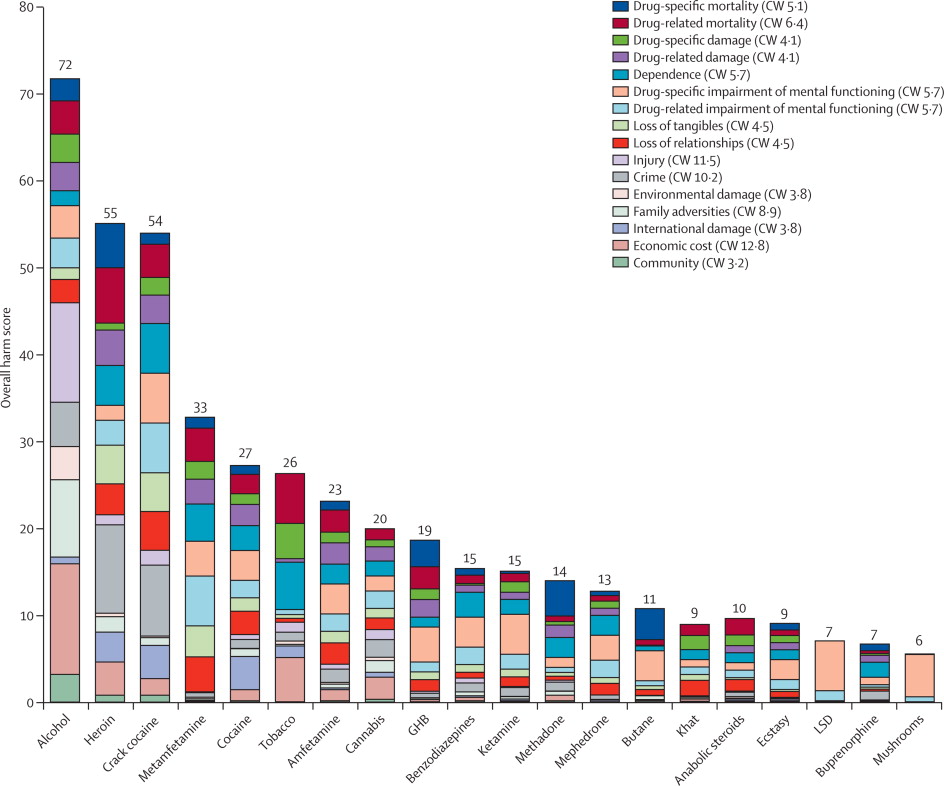
Mark Perry digs up the above chart illustrating the relative harms of various drugs. You will note the drug-specific mortality of marijuana: zero. Notice also how relatively safe steroids and mushrooms are. This debate is all but over.

Perry also flags a fascinating 2010 interview with neuropsychopharmacologist David Nutt about the dangers of various drugs, seen below:
The Shutdown’s Smallest Victims

Wistar_rat

Lab animals:

The government shutdown is likely to mean an early death for thousands of mice used in research on diseases such as diabetes, cancer and Alzheimer’s. Federal research centers including the National Institutes of Health will have to kill some mice to avoid overcrowding, researchers say. Others will die because it is impossible to maintain certain lines of genetically altered mice without constant monitoring by scientists. And most federal scientists have been banned from their own labs since Oct. 1.

Fallows isn’t pleased:

Under shutdown rules, the animals still get food and water and are kept alive. But because most researchers are forbidden to work with them, the crucial moments for tests and measurements may pass; experimental conditions may change; and in other ways projects that had been months or years in preparing may be interrupted or completely ruined.

Yes, I realize that lab animals’ situation is precarious in the best of circumstances. But their lives and deaths have more purpose as part of biomedical discovery than in their current pointless captivity.

A government scientist, interviewed anonymously in Wired, reports that euthanasia is inevitable:

It’s not a matter of feeding the animals and cleaning their cages. These animals used for research are used in intricate experiments, involving treatments and collection of data performed by hundreds of individual scientists with each project. An animal caretaker can’t continue that.

Given that, you can imagine what has to happen. You cannot maintain colonies for no reason. It’s very expensive — and if they’re useless for research, what are you going to do? And mice and rats breed like crazy. An exponential expansion of the population that will rapidly fill all the cages. Every lab I know already works to maximum capacity. You can’t leave animals for somebody to feed and water.

The researcher adds:

We only take the life of an animal if it’s justified to provide new insight that will lead to basic understandings in science, or new treatments in human disease. We understand and appreciate that. We don’t do it lightly. We do it deliberately. There’s a difference between using an animal to obtain knowledge of human disease, and just having to engage in a mercy killing for no outcome, and with an enormous loss to science and to resources. It’s a waste of money, a waste of time, a waste of people, a waste of animals.

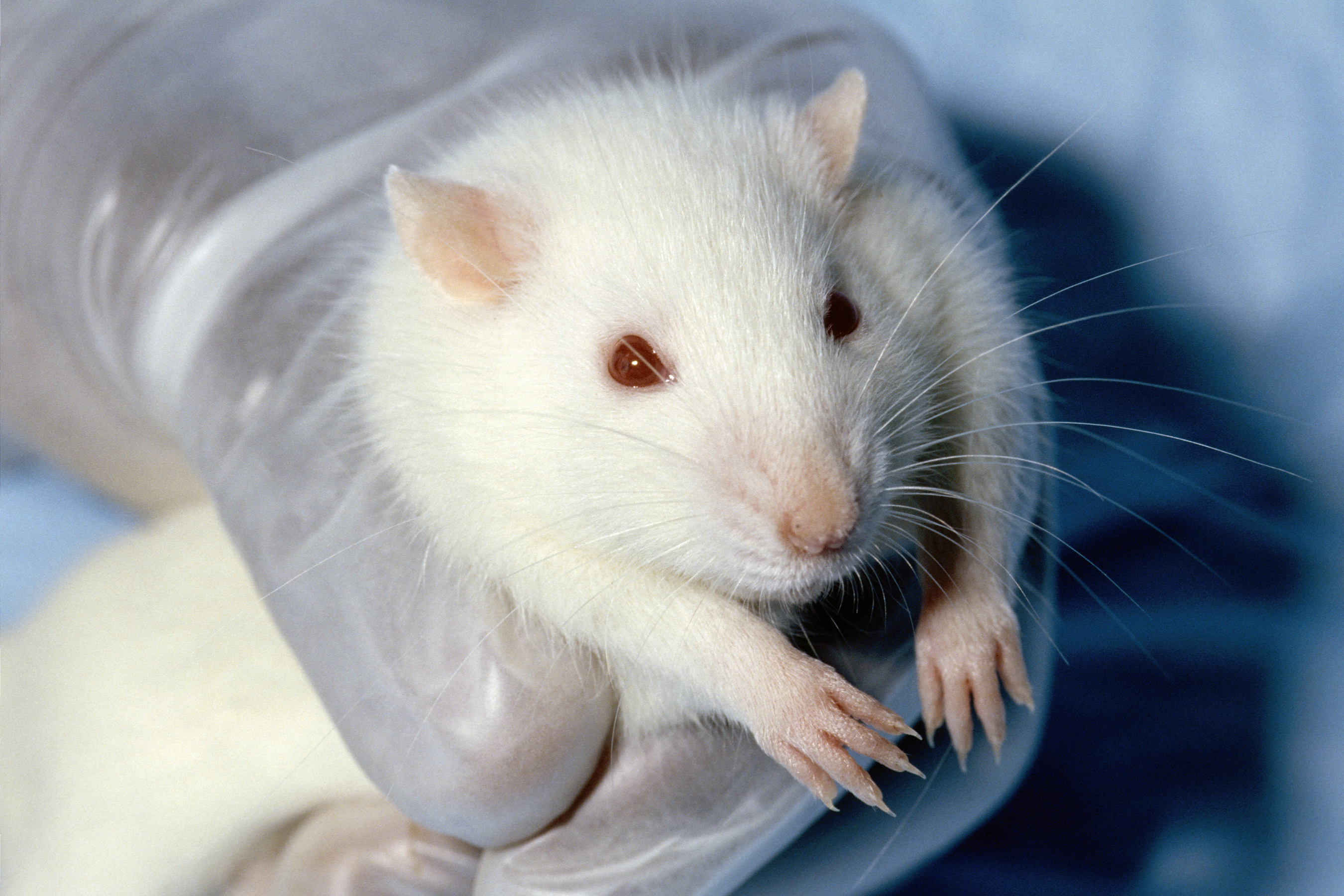
(Photo: Janet Stephens/National Cancer Institute)

The Christian Martyrs You’ve Never Heard Of

John L. Allen, Jr. argues that “the world is witnessing the rise of an entire new generation of Christian martyrs.” He believes we don’t pay much attention to suffering of these Christians because, in some cases, we don’t recognize the religious backdrop to atrocities:

Discussion is sometimes limited by an overly narrow conception of what constitutes ‘religious violence’. If a female catechist is killed in the Democratic Republic of Congo, for instance, because she’s persuading young people to stay out of militias and criminal gangs, one might say that’s a tragedy but not martyrdom, because her assailants weren’t driven by hatred of the Christian faith. Yet the crucial point isn’t just what was in the mind of her killers, but what was in the heart of that catechist, who knowingly put her life on the line to serve the gospel. To make her attackers’ motives the only test, rather than her own, is to distort reality.

The Rape Double-Standard

Akiba Solomon is disturbed by a recent profile of Chris Brown, which notes in passing that the performer “lost his virginity” at age 8 to a teenaged girl:

The fact that Brown doesn’t seem to know that he was assaulted doesn’t come as a surprise. It took the FBI 85 years to change the exclusionary definition of forcible rape from “the carnal knowledge of a female, forcibly and against her will” to a male-inclusive one. (“The penetration, no matter how slight, of the vagina or anus with any body part or object, or oral penetration by a sex organ of another person, without the consent of the victim.”) … This culture whispers in our ears that men and boys can’t really be raped by women or girls. To admit to such a violation would suggest femaleness or weakness, which is the worst thing you can be in this sick ecosystem. The bottom line here is that Chris Brown was sexually assaulted as a child – legally and practically speaking. We wish that wasn’t the case. If Chris Brown had been a girl, it’s unlikely that the Guardian or we would publish this information without more comment about the admission.

Face Of The Day

INDIA-RELIGION-HINDU-FESTIVAL

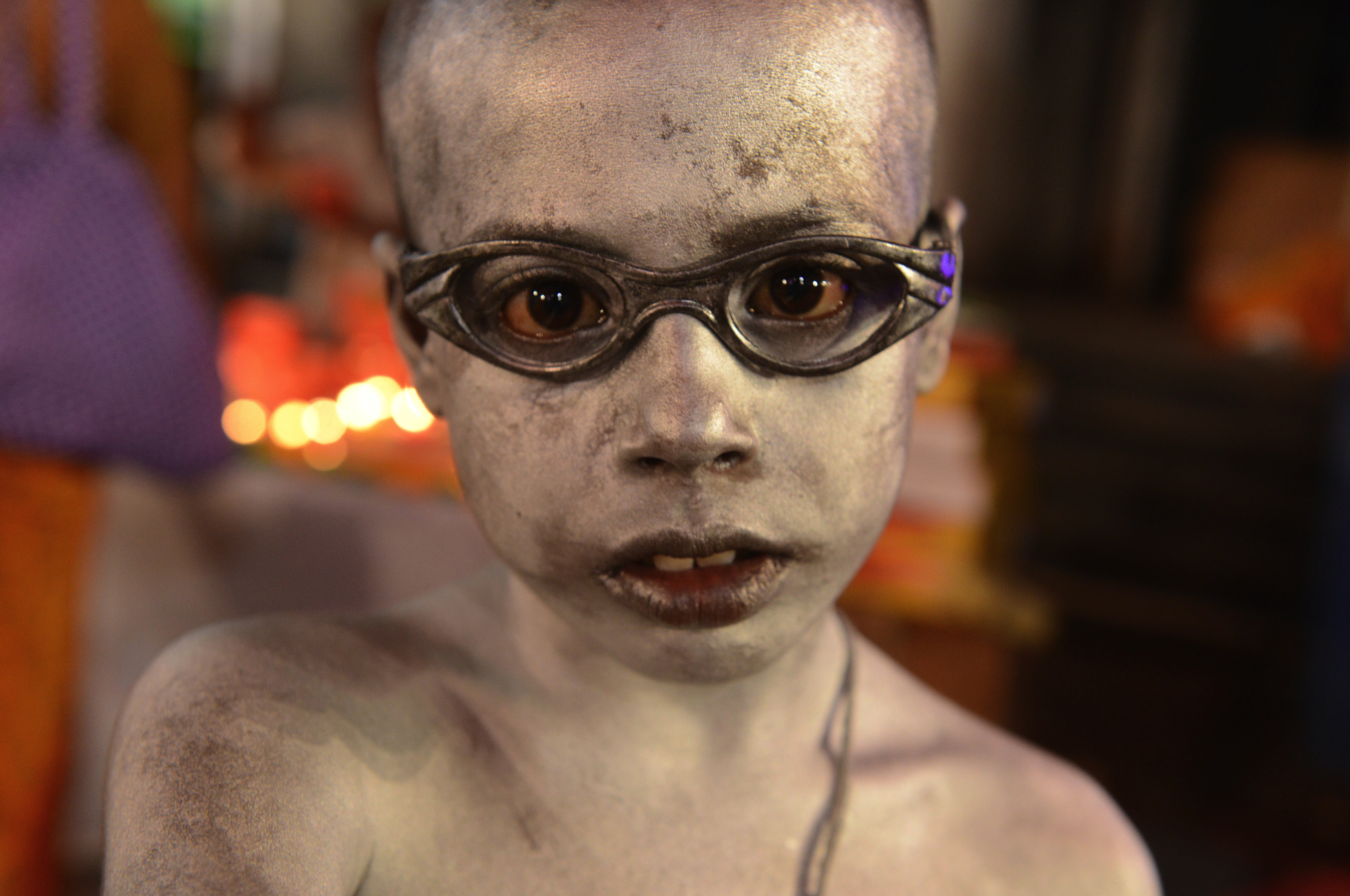
A thirteen-year-old Indian boy, Raju, is dressed as Mahatma Gandhi as he begs for alms from devotees during the Navratri (nine nights) festival outside a temple in Hyderabad on October 11, 2013. Navaratri is a vibrant nine-night festival worship of the Mother Goddess Durga. By Noah Seelam/AFP/Getty Images.

A Catholicism Against War And Shopping

Amid fresh discussion over the nature of Catholicism sparked by the new Pope, Adam Gopnik spots a chance to revive appreciation for J.F. Powers, a Catholic author who “accepted the necessity of the divine institution, without unduly sanctifying its officials”:

The [new] collection of letters reveals that he spent the war years as a conscientious objector, and as a sympathizer with the Detachers—a Catholic movement, never officially approved, but apparently tolerated, that insisted that American materialism and militarism were both evils to be avoided at all costs by good Catholics. The idea of an American Catholicism whose central purpose was to stop the national-security state and the supermarket—in those days, supermarkets were seen as Wal-Mart is now—is alien to us, and Powers’s immersion in the often self-defeating politics of left-Catholic activism, with its glamorized poverty, is fascinating to follow from letter to letter.

A Deal That K Street Would Love

Walter Russell Mead notes that “one possible ACA-related compromise continues to get play in the media: the repeal of the medical device tax”:

As the shutdown as dragged on, a repeal emerged as both something that the GOP could claim as a victory as well as something that the Democrats could live with. And although the debt limit conversation is now shifting away from Obamacare toward other deals, the industry is still pushing hard for repeal.

Cohn pulls back the curtain on the lobbying effort to get the tax repealed:

[R]epealing the device tax would look like a favor to a special interest. And, notwithstanding arguments for or against the tax, appearances in this case are probably correct.

It’s highly unlikely that Senate bill got 72 votes because so many lawmakers, including about half the Democratic caucus, are worked up about the device tax on principle. No, the most likely explanation is that the device industry has a ton of influence, particularly in states where they have large operations. Among those who have endorsed repeal (though not explicitly as part of a debt ceiling or shutdown negotiation) are two liberal icons in the Senate, Al Franken and Elizabeth Warren. Both say they oppose the tax on the merits. Both also represent states with influential device makers. Medtronic, the nation’s fourth largest device maker, is in Minneapolis. Boston Scientific and Coviden, the eighth and ninth largest, have U.S. headquarters in Massachusetts. My colleague Alec MacGillis wrote about Warren and the device industry a year ago—it’s worth a read if you want to understand what’s going on behind the scenes in Congress right now. Or you can just consider the fact that senator-turned-lobbyist Evan Bayh has adopted device tax repeal as one of his causes. That’s usually a pretty good clue about how much special interest money is behind a campaign.