Should Obama raise the debt ceiling himself, Humphreys expects that the GOP House would attempt to impeach the president and that impeachment proceedings would blow up in the GOP’s face:
[I]f the Tea Partiers impeach President Obama, it will be hard to persuade anyone not suffering from epistemic closure that two Democratic Presidents in a row just happened to deserve impeachment. The public’s attention and attributions would shift to the radicals in the Republican ranks: Why have these people impeached every Democratic President elected in the last 20 years?
… Presidential impeachment would thus, like everything else the Tea Party is currently doing, be popular in their echo chamber but help convince the rest of the country that they are a dangerous and irresponsible force in U.S. politics. It’s not therefore something that Obama should fear. Indeed, he might even welcome it.
Eric Posner reviews the ways Obama could justify unilaterally raising the debt ceiling. Perhaps the most promising option:
[T]he president can declare an emergency and justify borrowing by citing reasons of state. What exactly he should say is a political, not legal, matter. The declaration could be garlanded with quotations from the founders, or festooned with solemn appeals to the examples of Lincoln and FDR who also acted unilaterally in the face of crisis. The president could invoke his “inherent” executive powers under Article II of the Constitution (which vests the president with mostly undefined “executive” powers); he could even cite the 14th Amendment or offer a strained interpretation of the relevant statutes or don whatever other leaves his lawyers pluck from the potted fig trees kept at the ready in the White House Counsel’s office.
But whatever he says, the reality and the implication will be that the law has run out and he is acting in the common good because Congress has plunged the nation into a crisis.
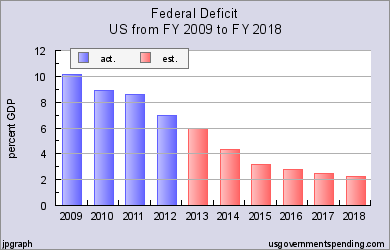
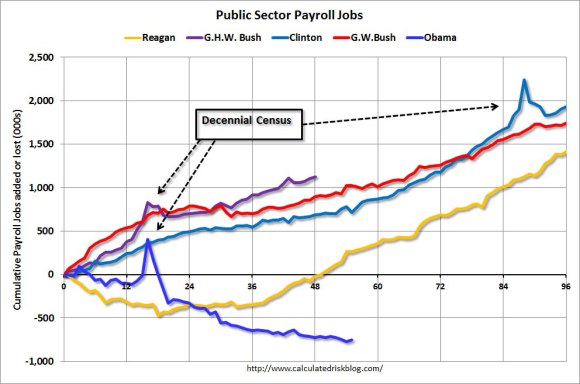
What does the GOP want? It’s a question I keep asking myself. They say they want to kill Obamacare because it is allegedly killing jobs. But in order to do that, they are threatening a default that would wipe out more jobs than the collapse of Lehman. They say they want to reduce the deficit, but the deficit has been falling extremely fast these past few years – in part because of the sequester they got out of their last hostage-taking event in 2011. Government spending has already been pummeled in this recovery – far more so than in past recoveries.
They say they want to reverse what they see as the end of American freedom because of the dawn of public subsidies for private insurance policies, based on a Heritage Foundation idea and implemented by their last presidential nominee in his home state. Okay, so how about running a campaign for Congress and presidency that explicitly promises to repeal Obamacare entirely? Oh, yes, they already did that and lost. How about upping the ante and making it explicit in the campaign that this is the very last chance to end Obamacare and save America? Oh, yeah, I forgot. They did that too. So what do they want? I’m not sure they even know.
My best guess is that since they failed to make Obama a one-term president, they now intend to do what has become their custom with second-term Democratic presidents: impeach him. How to do it? Risk blowing up the entire global economy, bet on Obama caving at the end by some kind of dubious executive action, and then prosecute him for it. And what would that do exactly? It would not end Obamacare. But it would throw us instantly into both a Second Great Depression and a severe constitutional crisis.
I simply do not see here any actual constructive strategy to help the country recover from the worst recession in decades. I see absolutely no strategy to deal with what everyone agrees is a deeply dysfunctional and grotesquely inefficient healthcare system. I see no viable way to bring down the long-term debt, because such a goal can only be achieved in our system with compromises from both parties, and the GOP is offering nothing that only the Democrats want. That’s why this is such a serious crisis, because the key driver of it has no real idea what it wants to do except destroy a re-elected president.
This is a function of many factors the Dish has covered for years – the intellectual bankruptcy of conservatism under George W Bush; the rise of fundamentalist thinking in religion, economics and politics; the cultural marooning of the white rural poor; the substitution of a political party with a media-industrial complex that simply wants conflict for ratings and money; the collapse of anything that might be called a conservative intelligentsia able to converse with a liberal intelligentsia on common, empirical grounds; the cowardice of Republican elites in the face of their know-nothing wing, epitomized most brutally by John McCain’s selection of a delusional crazy person as his vice-presidential candidate in 2008; and the recourse to purism of an almost absurdist variety on the right – see Mark Levin’s influential view that the entire Constitution needs to be made over.
The GOP vacuum – for what else can we call such a nihilist temper tantrum? – was best encapsulated for me by a story in yesterday’s NYT. It featured a district gerry-mandered for Palinism, one that seems very reminiscent of the Greenberg-Carville focus groups cited here. This is where my heart sank:
Mr. Tripcony, the surveyor, said he underwent heart surgery not long ago without health insurance, “a bad blow.” He has been making payments against the cost. He had heard of the online marketplace for insurance that opened on Oct. 1 under the Affordable Care Act.
“I just don’t trust it,” said Mr. Tripcony, who has an equal distrust of President Obama. “I don’t like him, and I don’t feel comfortable with anything he’s got to do with.”
Mr. Tripcony said he had a better idea for a system to provide health care at a fair price. “I think it should be the same for everybody,” he said. “One big company, whether owned by the government or private.” Informed that he had described the single-payer system that Mr. Obama abandoned when Republican critics called it socialized medicine, he said, “Yeah, I know, it’s crazy.”
He said he might eventually seek health insurance under the new system. “In a couple of months, when they get the Web sites working, I may do it.”
Mr Tripcony is doing us a favor. He is telling us the truth. This crisis has almost nothing to do with actual policy – as you can see from a base Republican’s rational support for a single-payer healthcare system and willingness to get Obamacare insurance. There is nothing to the current Republican strategy but blind, irrational hatred for a re-elected president: “I don’t like him, and I don’t feel comfortable with anything he’s got to do with.” Somehow, this “feeling” must be granted some “relief”, or they will bring down the world economy. But any relief granted on these terms would simply pave the way for more economic terrorism and blackmail in the future, which would mean an end to our system of government.
The GOP have driven themselves into a tight, airless corner of ideological purity and self-destruction. The trouble is: their own self-destruction means ours as well. And the world’s.
The Senate CR funds the government in the coming weeks at a level of $988 billion. The Democrats wanted $1.058 billion. But they passed a bill at Republican levels. Senate Majority Leader Harry Reid said late last week: “My caucus really didn’t like that. We took a real hit…So that’s one of the largest compromises since I’ve been in Congress.”
Now why did they pass a bill at the GOP’s preferred levels? Because, Reid said late last week, he had assurances from Boehner that the House speaker wouldn’t attach demands to the Senate CR if Reid brought it in at $988 billion. So this whole thing started with a significant Democratic compromise. But once the Republicans decided that they were going to use both the shutdown and the debt ceiling to try to defund and/or delay Obamacare, they couldn’t even vote for a bill that gave them a major fiscal victory. That’s how dug in and crazy they are.
I am, generally speaking, a pox-on-both-houses kind of guy, but I have trouble seeing it that way this time.
It was the House Republicans, after all, who attached these conditions to the continuing resolution, thus putting the President in an impossible situation—one in which he either lets the government shut down or both gives up a signature domestic initiative and, along the way, makes clear the presidency’s vulnerability to the most grotesque types of brinksmanship and extortion. No president worth his salt would negotiate under these circumstances—and the responsibility for the situation is thus not even between the parties. One side, and only one, created this crisis.
Republicans are not in a position to repeal or even amend the law by constitutionally authorized means, because repeal or amendment would require a majority vote in both houses of Congress (actually a two-thirds vote in both houses, for given a lesser majority Obama could veto a repeal or amendment without fear of being overridden). The intention, which is contrary to the structure of the federal legislative process ordained by the Constitution, is to coerce Congress to repeal (or by amendments to defang) Obamacare by threatening to precipitate an economic crisis by refusing to vote for an increase in the debt ceiling. If the tactic succeeded, it would mean that a minority in Congress had succeeded in amending a federal statute.
What I’m hearing: There will be a “mechanism” for revenue-neutral tax reform, ushered by Ryan and Michigan’s Dave Camp, that will encourage deeper congressional talks in the coming year. There will be entitlement-reform proposals, most likely chained CPI and means testing Medicare; there will also be some health-care provisions, such as a repeal of the medical-device tax, which has bipartisan support in both chambers. Boehner, sources say, is expected to go as far as he can with his offer. Anything too small will earn conservative ire; anything too big will turn off Democrats.
They still don’t get it, do they?
Look: I favor a more aggressive long-term look at, say, means-testing Medicare and chained CPI. I do not believe the debt is a burden now – it may well be a vital asset for a bit – but I do think getting it down is a top priority for the future. But that kind of big future debt compromise cannot and must not be linked to a threat to blow up the global economy.
Pass a clean CR, get rid of the entire debt ceiling process, and then negotiate a Grand Bargain. Such a Grand Bargain would require a give from both sides. There’s no way Democrats should agree to tax reform without more revenue, for example. That was key to the 1986 reform. As for the lesser items being demanded, like the medical device tax, under normal circumstances, you might think of it as a trade-off worth being part of the negotiations. But, as Drum notes, these are not normal circumstances:
A month ago, Democrats might have shrugged over the device tax. Today, they know perfectly well what it would mean to let it go.
It means that when the debt ceiling deadline comes up, there will be yet another demand. When the 6-week CR is up, there will be yet another. If and when appropriations bills are passed, there will be yet another. We’ve already seen the list. There simply won’t be any end to the hostage taking. As their price for not blowing up the country, there will be an unending succession of short-term CRs and short-term debt limit extensions used as leverage for picking apart Obamacare—and everything else Democrats care about—piece by piece.
First, a sing-along recap of the series, with spoilers galore:
Second, a display of Dish-readers’ erudition. One writes:
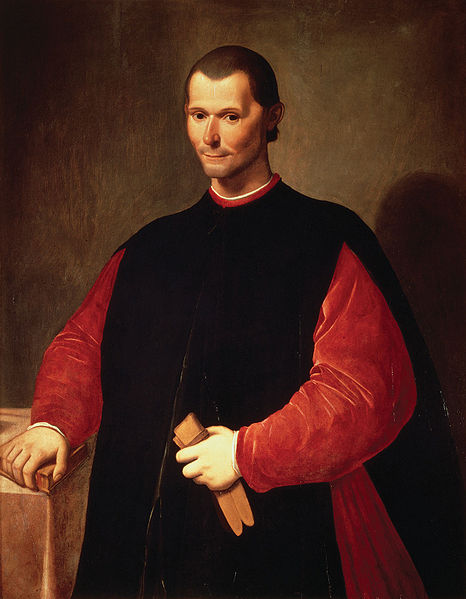
As a fan of Breaking Badand someone who teaches a seminar that is partially devoted to The Prince, I have to disagree with your characterization of Old Nick. First of all, you say that Machiavelli would have approved of Walt’s empire building. I have to disagree. We have to remember that, above all else, The Prince was an exercise in statecraft. The prince was justified in doing all manner of evil so long as he was doing it in the service of the higher good of serving the state. It is certainly true that Machiavelli appreciated leaders who imposed their will with style and flair. But would he have smiled upon the creation of a criminal enterprise designed just to make Walt rich? I think not.
You also quote Machiavelli’s line about a leader needing to be “altogether bad.” But this is not Machiavelli’s desire – it is something that a leader may have to embrace from time to time if it makes him more powerful. But, again, this power is only useful if it leads to a better and stronger state. Remember that Machiavelli deplored the division that plagued the city states of Italy. Also, this “altogether bad” attitude is more similar to Mike’s endorsement of full measures. And, indeed, this is true. It’s like when you break up with somebody and keep stringing it out. Or if you’re a boss who is reluctant to fire a bad employee. You’ve already made the decision to do the thing – you just have to do it.
Your biggest indictment of Machiavelli is the notion that his philosophy begets unhappiness. You say “which is why, for me, Machiavelli’s great flaw is that the life of such a brutally powerful figure, ruling by force and fraud, is a mug’s game. Isn’t the consequence of his proud immorality a never-ending insecurity?” To this, I would note again that Machiavelli’s advice is for a prince – and Italian princes of that era were constantly being overthrown and killed. The prince does not follow Machiavelli’s advice to be happy; he follows it to be secure. If he truly does follow these teachings, he will be secure enough to not have to constantly worry about assassination – and most importantly, his people are free to live their lives without fear and they may achieve happiness. Virtu may be cold comfort, but it is what is needed to protect life. This is not Saddam Hussein.
Is Machiavelli an apologist for ruthless actions? Let us remember that he is constantly imploring the reader to view the world as it is, not as we wish it to be. He notes: “He who abandons what is done for what ought to be done, will rather learn to bring about his own ruin than his preservation. A man who wishes to make a profession of goodness in everything must necessarily come to grief among so many who are not good.”
I’m grateful for my reader’s more conventional reading of Machiavelli. My own is darker and doubtless influenced by my old professor, Harvey C. Mansfield at Harvard. I understand and appreciate the view of Machiavelli as a defender of city states in an age of violence and instability, but there is a relish to his writing about evil that perhaps requires someone saturated in Thomist thought to appreciate its full radicalism and its resilient impact on Western civilization, for good and ill. Another reader:
If you only know Machiavelli’s The Prince, a work designed for autocrats newly made, then virtu only makes sense in the context of being a ruthless bastard and Machiavelli is the chief advocate of ruthless bastardy.
However, if you look at the great body of Machiavelli’s work –especially his Discourses on Livy– one sees that the idea of virtu is not just about ruthlessness, it is the ideal of the good citizenworking with bravery, strength and ambition in the interests of the state, following the Roman republican tradition – and most certainly not following or derived from the Christian religious tradition or its ideal of the good man. The difference, between good citizen and good man, is important.
Agreed. I studied almost all of Machiavelli and taught him. What interests me is the worldliness of the achievement and honor. This was Machiavelli’s challenge to Christianity. Another reader:
Your analogy between Walter White and Machiavelli is flawed in one critical way: for all of his growing megalomania, Walt was never interested in being the guyin charge. He just wants to be the absolute best at what he does, and cheerfully gives over responsibility for the business side of things to a succession of partners – Jesse, Tuco, Gus, Mike, Lydia – and despite the massive amount of money he ends up making, it’s really on the business side of things that the power lies. No, what matters to Walt is being the absolute best bloody meth cook in the known world, and, more significantly, reaping the respect and admiration of his colleagues and those out in the drug and law enforcement world who know him only as “Heisenberg.” He feeds off the admiration, indeed demands it, making his prospective new partners “say my name” and risking everything when he suggests to Hank that Gale probably wasn’t Heisenberg, simply because he could not stand having someone else earn the respect he believes is his alone.
Another:
I’m also a long-time fan of Breaking Bad and appreciate a fellow fan who sees the obvious allegory of Walter White’s post-battle Richard III climax (“my kingdom for a horse”), tied all together with the pathos of Treasure of the Sierra Madre (“show us your badges!”) and Ozymandias rolling his own “legless trunk” through the desert. But your post does a disservice to Machiavelli, Vince Gilligan’s script, and the concept of Christian salvation. You conclude:
Machiavelli’s great flaw is that the life of such a brutally powerful figure, ruling by force and fraud, is a mug’s game. Isn’t the consequence of his proud immorality a never-ending insecurity? … You call that happiness?
The radical objective of Machiavellian virtu was not earthly happiness, but immortal glory, which, as Leo Strauss puts it, “liberates men from the desire for petty things – comfort, riches and honors – as well as from fear of death.” Machiavelli undermines the ethereal promise of immortality offered through Christian virtue with the substantive possibility of immortal fame achieved with Machiavellian virtu.
This is Breaking Bad‘s story to the end: Walter vanquishes everyone, achieves all his objectives including his own death, knowing that he has secured his ultimate Machiavellian objective of eternal glory. Not surprisingly, this is also Vince Gilligan’s hope for Breaking Bad‘s legacy:
You want your work to be remembered. You want it to outlive you. My favourite show ever was The Twilight Zone and I think about Rod Serling, [who] started that show 54 years ago this year. It long outlived him – he passed away in 1975 – but there are kids who haven’t been born yet who will know the phrase ‘the twilight zone’, and hopefully will be watching those wonderful episodes. I can’t say that’s what will happen [with Breaking Bad], but you wanna have that kind of immortality through your work. That would be wonderful. I’d feel very blessed.
I’d say that both Walter White and Vince Gilligan have achieved their immortality.
That’s how Chait aptly describes the situation in Washington right now:
The standoff embroiling Washington represents far more than the specifics of the demands on the table, or even the prospect of economic calamity. It is an incipient constitutional crisis. Obama foolishly set the precedent in 2011 that he would let Congress jack him up for a debt-ceiling hike. He now has to crush the practice completely, lest it become ritualized. Obama not only must refuse to trade concessions for a debt-ceiling hike; he has to make it clear that he will endure default before he submits to ransom. To pay a ransom now, even a tiny one, would ensure an endless succession of debt-ceiling ransoms until, eventually, the two sides fail to agree on the correct size of the ransom and default follows.
This is a domestic Cuban Missile Crisis. A single blunder could have unalterable consequences: If Obama buckles his no-ransom stance, the debt-ceiling-hostage genie will be out of the bottle. If Republicans believe he is bluffing, or accept his position but obstinately refuse it, or try to lift the debt ceiling and simply botch the vote count, a second Great Recession could ensue.
I’m afraid I agree. And the causes are deeper than can be overcome by a man of Boehner’s limited skills.
Shaj Mathew considers the work of renowned Syrian poet Adunis and its connection to the nation’s ongoing bloodbath:
Although Adunis, who has lived in exile in Paris since the 1980s, may not be inclined to opine further on this conflict, his oeuvre contains a rich array of political poetry for those dissatisfied with his current silence. In particular, his 1963 poem “The Homeland,” translated into English by M.M. Badawi in the 1971 Journal of Arabic Literature, seems particularly apposite today. Throughout the poem, Adunis variously describes his homeland as a father, a stone, a house, a child, faces, and the streets: “all of these are my homeland, not Damascus,” Adunis writes.
At its core, “The Homeland” is a lament for Syrians and an acknowledgement of their sufferings, one that sadly still rings true some fifty years after its initial publication. “To the father who died, green as a cloud/ With a sail on his face, I bow,” Adunis writes. These lines, with their wonderful simile, “green as a cloud,” capture the wartime fates of so many who died too young, with so much potential lost, the direction of their lives halted. An acidly sarcastic parenthetical aside—“(in our land we all pray and clean shoes)”—briefly interrupts the poem’s elegiac tone and warns against orientalist stereotypes. But Adunis waxes melancholic again in the poem’s final lines as he attempts to preserve the “dust” of a former home, his memories of hardship.
Meanwhile, a new wave of raw, vulnerable poetry is pouring out of the warn-torn nation:
Rather than relying on metaphors and allegorical images, these new poems rely on literal, visceral descriptions, with a newfound emphasis on a united Syrian identity instead of religious symbols. For instance, a poem she translated by Najat Abdul Samad, called “When I am overcome by weakness”, reads:
“I bandage my heart with the determination of that boy / they hit with an electric stick on his only kidney until he urinated blood. / Yet he returned and walked in the next demonstration… / I bandage it with the outcry: ‘Death and not humiliation.’”
Another by Youssef Bou Yihea titled “I am a Syrian”, declares: “My sect is the scent of my homeland, the soil after the rain, and my Syria is my only religion.”
“A lot of poetry and beautiful lyrics are rising up from the ashes in Syria,” says expatriate Syrian writer Ghias al-Jundi, who is responsible for PEN International’s research on attacks against free expression in the Middle East. “There is a cultural side to the revolution, and it’s brilliant.”
Emily Greenhouse studies the “Reich Bride Schools,” designed to prepare women for their role in Hitler’s empire:
To train women within their lesser sphere, a villa was erected in 1937 on Schwanenwerder Island, on Berlin’s Wannsee Lake. In this pretend model household, young women—many of them teen-agers—would live in groups of twenty, spending six weeks, “preferably two months before their wedding day, to recuperate spiritually and physically, to forget the daily worries associated with their previous professions, to find the way and to feel the joy for their new lives as wives.” Scholtz-Klink further barred any woman with Jewish or gypsy heritage, physical disability, or mental illness from taking part. The course cost a hundred and thirty-five reichsmarks (six hundred and twenty-five dollars, in today’s cash), and covered everything from shopping and cooking to gardening and cocktail conversation, from home decorating to boot, dagger, and uniform scrubbing.
But expertise in craftsmanship and the culinary arts was not the essence of the school; it existed to drill Nazi dogma into “sustainers of the race,” those women who, under the Law for the Encouragement of Marriage, would be effectively bribed to produce babies. … The course also entailed a commitment to Nazi doctrine until death, and a placement of faith in the Führer over religious faith: marriages had to be neo-pagan rituals officiated by party members, not in a church ordained by a cleric. Children had to be raised to worship not Jesus, but Hitler.
Alex Ross laments the dismal representation of female conductors in the world of concert music:
The problem is not that there is any lack of female conductors—the journalist and blogger Jessica Duchen has drawn up a list of nearly a hundred of them—but that there is “one heck of a glass ceiling regarding where they work,” as Duchen says. …
In 2008, in a column about [female conductor Marin] Alsop, I wrote, “The problem isn’t that misogyny runs rampant in the music world; it’s that the classical business is temperamentally resistant to novelty, whether in the form of female conductors, American conductors, younger conductors, new music, post-1900 concert dress, or concert-hall color schemes that aren’t corporate beige.” I was naïve about the degree to which male-chauvinist attitudes persist. Shortly before Alsop’s Last Night appearance, the young Russian-born conductor Vasily Petrenko, who leads the Royal Liverpool Philharmonic and the Oslo Philharmonic, declared that orchestras “react better” to male conductors and that “a sweet girl on the podium can make one’s thoughts drift towards something else.”
Ross translates an interview with conductor Yuri Temirkanov, music director of the St. Petersburg Philharmonic:
Q.: In your opinion, could a woman conduct?
A.: In my view, no.
Q.: Why not?!
A.: I don’t know if it’s God’s will, or nature’s, that women give birth and men do not. That’s something that no one takes offense at. But if you say that a women can’t conduct, then everyone’s offended. As Marx said, in response to the question “What’s your favorite virtue in a woman?”—“Weakness.” And this is correct. The important thing is, a woman should be beautiful, likable, attractive. Musicians will look at her and be distracted from the music!
Q.: Why? There are women in the orchestra; people indifferent to a women’s charms. Besides, how many times would you be enraptured by appearances? After all, it’s something you tire of, and switch to the heart of the question. Statistically, of course, there are women conductors.
A.: Yes, they do exist.
Q.: Nevertheless, you maintain that these are less than women, or less than conductors.
A.: No, simply that in my opinion, it’s counter to nature.
Q.: And what is it in the conductor’s profession that runs counter to a woman’s nature? That’s counter to the essence of the conductor’s profession?
A.: The essence of the conductor’s profession is strength. The essence of a woman is weakness.
(Video: A 2007 interview with Marin Alsop, the first female conductor of a major American orchestra)
The International Programme on the State of the Ocean (IPSO) has released a new report that indicates the ocean’s “role as Earth’s ‘buffer’ is seriously compromised”:
A “deadly trio” of warming, deoxygenation and increased acidification combined, the report found, are posing an even greater threat to the oceans than they would alone.
While the carbon absorbed from the atmosphere promotes increased warming and acidification, pollution from sewage and fertilizer is creating algae blooms that decrease the oceans’ levels of oxygen. The report found that overfishing, too, threatens marine life.
The acidification, specifically, is “unprecedented in the Earth’s known history,” says the report, which found that the oceans are more acidic now than they’ve been for the past 300 million years. And carbon is being released into the ocean at a rate 10 times more quickly than the last time there was a major collapse of ocean species, 55 million years ago. As a result, the authors write, they have reason to believe that “the next mass extinction may have already begun.”
While we already knew some elements of this report—that oceans are acidic, that temperatures are rising, that dead zones are becoming more common—the power of IPSO’s research is that it shows to what degree acidity, warming, and deoxygenation are effecting the ocean. Its bleak conclusions mirror those from the IPCC report of last week. If this indeed represents the current condition of our oceans, then we need to recalibrate our perspectives and realize that “the future of humanity and the future of the ocean are intertwined.”
 poor; the substitution of a political party with a media-industrial complex that simply wants conflict for ratings and money; the collapse of anything that might be called a conservative intelligentsia able to converse with a liberal intelligentsia on common, empirical grounds; the cowardice of Republican elites in the face of their know-nothing wing, epitomized most brutally by John McCain’s selection of a delusional crazy person as his vice-presidential candidate in 2008; and the recourse to purism of an almost absurdist variety on the right – see Mark Levin’s influential view that the entire Constitution needs to be made over.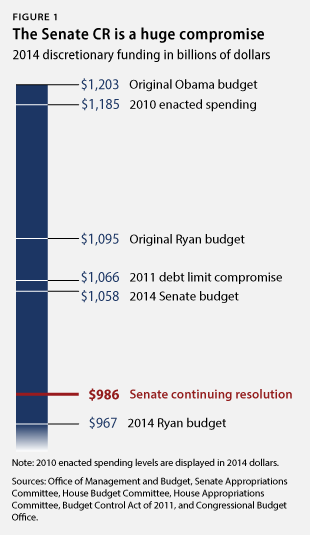
 The Dish