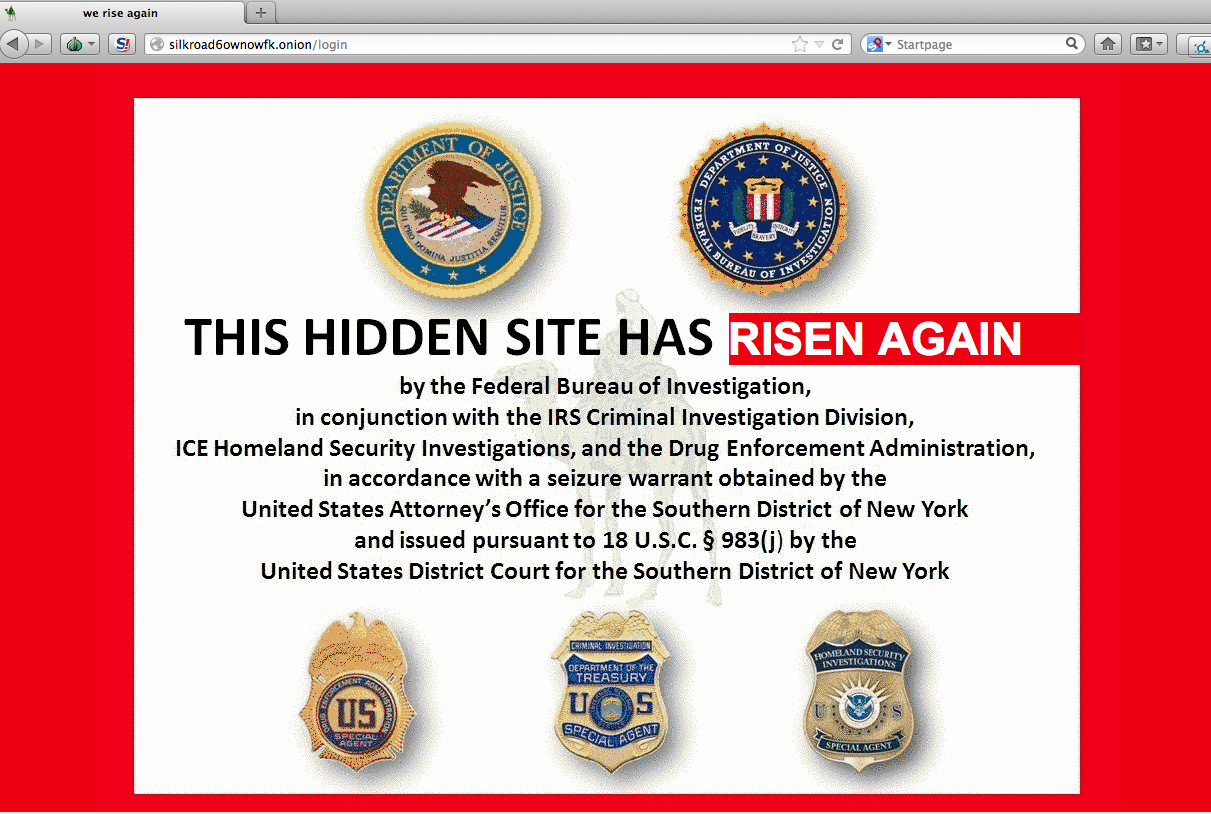
Silk Road went back online yesterday. Sean Vitka believes the government will find it more difficult shutting it down the second time around:
While the Department of Justice had less motivation to go after Silk Road before the Bitcoin boom, it did take the DOJ over two years to shut down the site. It’s going to be harder to shut down these new bazaar kingpins, largely because they’re armed with the knowledge of everything Ross Ulbricht allegedly did wrong from an operational security standpoint.
And so Silk Road 2.0 is interesting not only as a resurrection story, but because it’s the embodiment of a question that will linger for some time: What was the net effect of shutting down Silk Road?
Very little, argues Joseph Cox:
These deep web marketplaces follow the same process – shut one down and the community simply migrates, or other new sites spring up within a matter of days. As such, there’s a danger to shutting them down in the first place. When there’s a regulated – albeit still illegal – retailer to buy your narcotics from, you can check ratings and reviews and have a good idea that the stuff you’re getting has a high purity level, meaning the drug is both more effective and far less likely to kill you.
When that disappears, you’re forced to either buy on the street – leaving yourself open to product that’s full of cutting agents and other nasty stuff – or move your custom to a new site. And unless that new site comes with positive, reliable reviews, you might be putting more than just your money on the line.
The online community of drug users that has sprung up around these sites is also a useful legacy of the original Silk Road. If people are going to carry on taking heroin, cocaine, LSD and whatever else they can get their hands on regardless of what law enforcement agencies do to stop them, doesn’t it make sense to have a resource where people can learn how to use those substances safely?
 The Dish