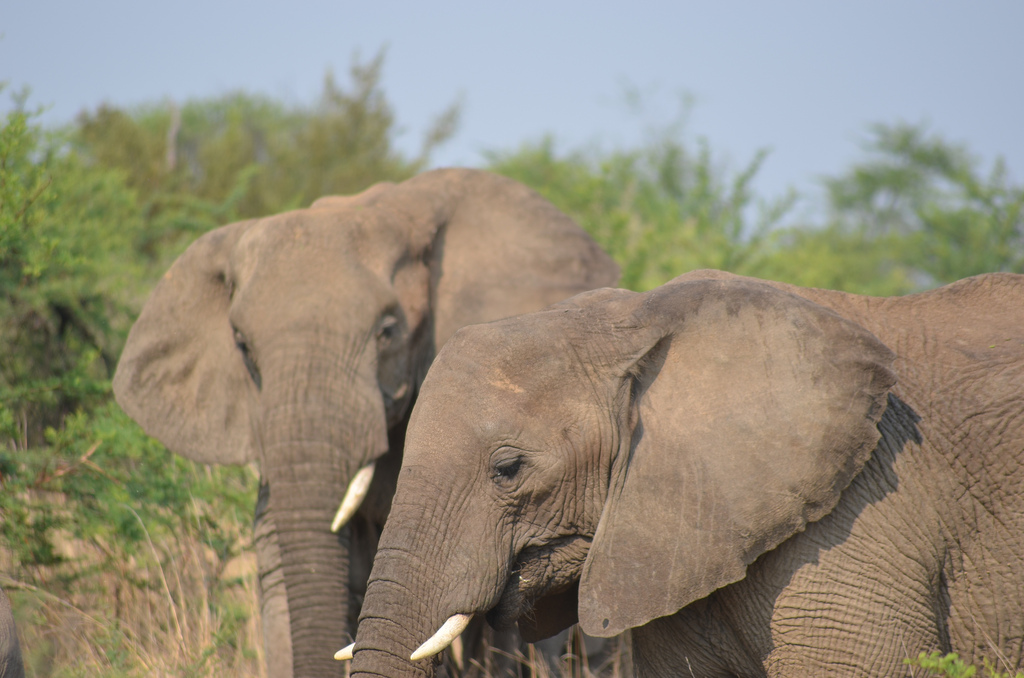
Childhood trauma scars elephants, not just people:
African elephants that have lived through the trauma of a cull – or selected killing of their kin –may look normal enough to the casual observer, but socially they are a mess. That’s the conclusion of a new study, the first to show that human activities can disrupt the social skills of large-brained mammals that live in complex societies for decades. The finding, experts say, has implications for conservation management, which often solely focuses on the number of animals in a population, and may extend to chimpanzees, dolphins, whales, and other species.
Wildlife officials often used culling as a conservation tool in South Africa from the 1960s to the 1990s. (It is still reserved as a management tool there.) At the time, wildlife managers worried that if there were too many elephants in a fenced reserve, like the famed Kruger National Park, the behemoths would ultimately destroy the habitat, eating or trampling all the vegetation and uprooting the trees. During a cull, a helicopter pilot herds an elephant family into a tight bunch. Professional hunters on the ground then shoot the animals as quickly as possible. Only young elephants ranging from about 4 to 10 years old are saved. Park officials typically shipped them to other parks that lacked elephants or had smaller populations to increase the herds, because elephants are popular with tourists.
Scientists have known since the late 1990s that many of these elephants were psychologically affected by their experiences during the culling. Other studies have described these effects as akin to post-traumatic stress disorder. For instance, the orphaned male elephants at Pilanesberg and another reserve made headlines for attacking and killing 107 rhinoceroses over a 10-year period, something that elephants had never been reported to do. … Because the Pilanesberg elephants grew up without the social knowledge of their original families, they will likely never properly respond to social threats and may even pass on their inappropriate behaviors to the next generation, the team concludes in the current issue of Frontiers in Zoology.
(Photo: Elephants at South Africa’s Pilanesberg National Park. By Robert Nyman)
 The Dish