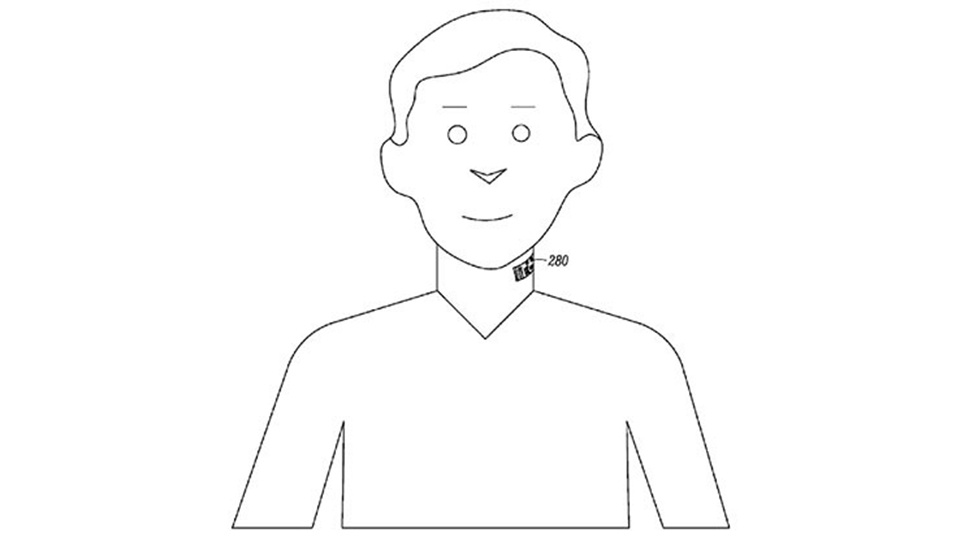
A futuristic project from Google is in the works: electronic skin tattoos. Last week, Google’s Motorola Mobility applied for a patent that would link the tattoos with mobile devices:
The patent, titled “Coupling an Electronic Skin Tattoo to a Mobile Communication Device,” explains that the device would sit on the user’s neck and serve as a supplemental phone microphone. With its close proximity to a user’s mouth, the tattoo would cut down calls’ background noise and produce clearer audio. Equipped with a transceiver, the device would allow for wireless communication with a paired mobile device; this means voice commands on your phone would get even easier, without the need to press a “talk” button before speaking.
The tattoo can also be used as a lie-detector test. The patent says the device will have a “galvanic skin response detector to detect skin resistance of a user” and explains that a user who is nervous or telling a lie might have a different skin-related response than someone who is confident and telling the truth. … The oddest part of the patent: The word “remove” doesn’t show up at all in the document.
Jim Edwards clarifies: “The tattoo isn’t permanent — it’s applied to a sticky substance on the skin.” Derek Mead surveys reaction to the idea:
At TechCrunch, Chris Velazco writes that “before you start freaking out at the mental visual of a tattoo artist weaving electronic components into your neck flesh, know that Motorola has a history of playing fast and loose with its interpretation of the word ‘tattoo.'” Alexis Madrigal called it Google’s “creepiest patent yet.” Steve Dent at Engadget huffs, “Okay, where to start with this one?”
We’re collectively at a strange point in our relationship with technology: Many of us have come to rely on gadgets so much that we’re simply not the same without them, and yet we also don’t admit we have such a techno-dependence. The integration of man and machine is a central tenet of futurism, and yet as folks like Kevin Warwick have argued, the tight integration of technology into our daily lives means we’re already there.
Jason Bittel is skeptical about the lie detector component:
By detecting skin resistance (read: sweat), Google’s skin tattoo may be able to determine whether its wearer is “nervous or engaging in speaking falsehoods.” Since I can’t imagine why the Sam Hill someone would opt to wear such incriminating technology, I think we have to assume the tattoo would either be applied clandestinely or against the wearer’s will. Let’s not even get into the dubious quality of truth-telling based on “skin resistance” alone. … One thing’s for sure, this is unlikely to help Google’s ongoing issues with privacy and consumer trust.
(Image from Google’s patent application)
 The Dish