Charles Kenny’s advice on how best to help the Philippines:
Donor agencies and humanitarian organizations should tell individuals who want to help that they should send cash—not food, clothes, or other supplies. Wherever possible, those organizations should give cash, too. As quickly as possible, donors should move away from a model based on financing nonprofit and contractor provision of services and instead deliver aid through local government authorities.
Victims are far better placed than foreign aid bureaucrats to decide how best to spend resources to recover from the impact of the typhoon. Cash-transfer programs were tried in Haiti and became a significant part of the relief effort after Pakistan’s 2010 floods. Thanks to advances in biometric identification and electronic payments, it’s cheap and easy to ensure that cash transfers reach victims, and the risk of fraud or misallocation is low. Cash transfers are faster and more effective, and they require less overhead than large-scale relief projects—which should be limited to restoring infrastructure and public services.
Aid worker Jessica Alexander, who echoes Kenny on the importance of cash charity, describes the debacles that come from donating clothes and other random items:
I was there after the [2004 South Asian] tsunami and saw what happened to these clothes: Heaps of them were left lying on the side of the road. Cattle began picking at them and getting sick. Civil servants had to divert their limited time to eliminating the unwanted clothes. Sri Lankans and Indonesians found it degrading to be shipped people’s hand-me-downs. I remember a local colleague sighed as we passed the heaps of clothing on the sides of the road and said “I know people mean well, but we’re not beggars.” Boxes filled with Santa costumes, 4-inch high heels, and cocktail dresses landed in tsunami-affected areas. In some places, open tubes of Neosporin, Preparation H, and Viagra showed up. The aid community has coined a term for these items that get shipped from people’s closets and medicine cabinets as SWEDOW: Stuff We Don’t Want.
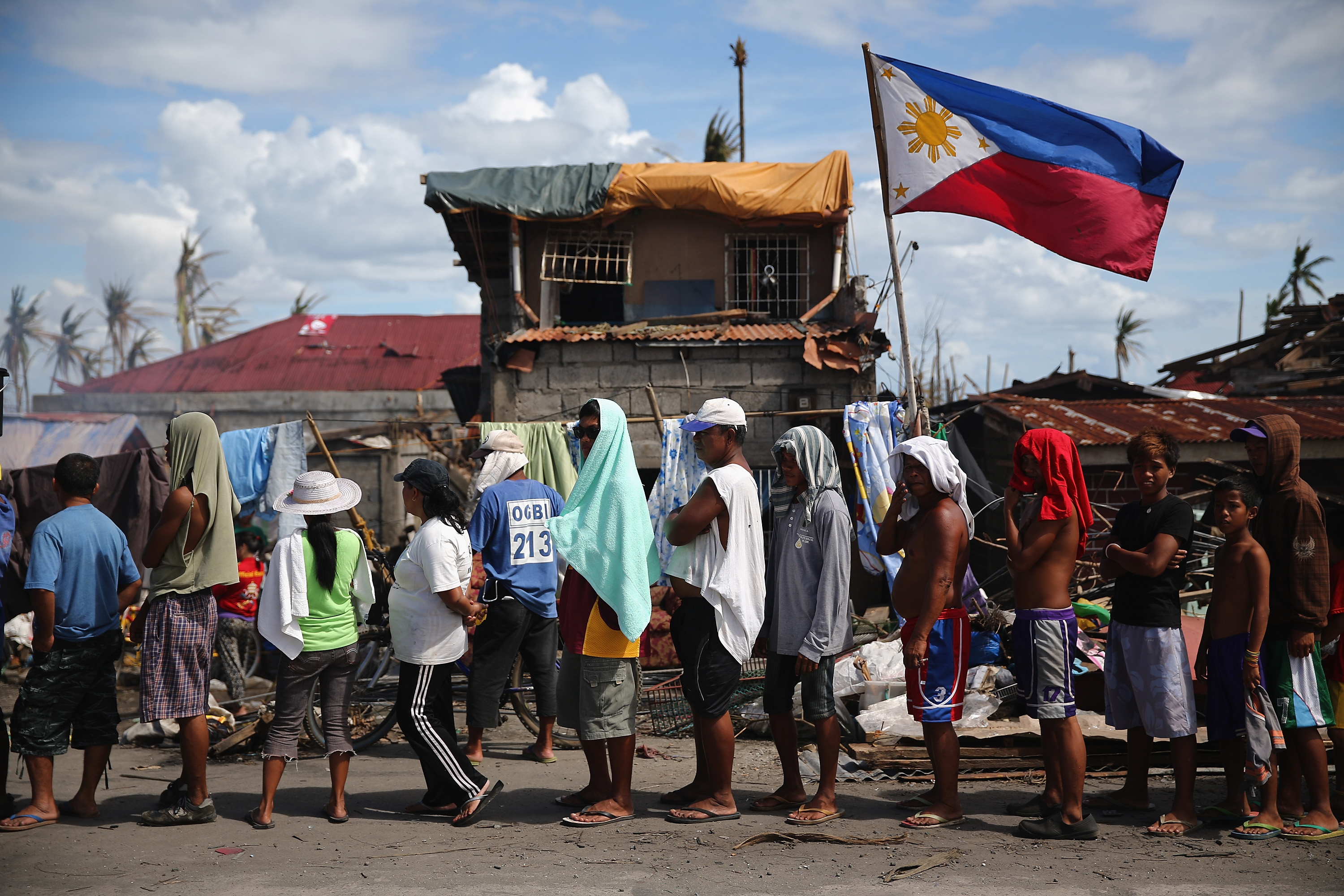
(Photo: People queue for aid in Tananau, Leyte, Philippines on November 19, 2013. Typhoon Haiyan, which ripped through Philippines over a week ago, has left thousands dead and hundreds of thousands homeless. Countries all over the world have pledged relief aid to help support those affected by the typhoon however damage to the airport and roads have made moving the aid into the most affected areas very difficult. By Dan Kitwood/Getty Images)
 The Dish