Gracy Olmstead has been following our thread:
When the Dish picked up [Ariel Levy’s story of miscarriage, readers] responded with an outpouring of comments describing the grief and pain of miscarriage. This bursting forth has opened a door, shedding new light on a previously unseen grief. Melissa Lafsky Wall explained the reaction Monday in her piece “Giving Voice to the Silent Sorrow”:
The grieving that follows a miscarriage is similar to other types of loss, but different too. You’re mourning a life that could have been, the decades of lost possibility. In a weepy attempt to explain it to my husband, I said the following: It’s like a close member of your family just died and you had a major medical problem all at the same time. And you’re not supposed to tell anyone.
I never heard of the “silent sorrow” until a few months later. Learning that a phrase existed for women who’ve miscarried made me even sadder. Its presence means that there are untold armies of women marching grimly through life, carrying their silent sorrow like a wound patched up with duct tape, and no one even knows what they’re suffering. Pain will always accompany losing a pregnancy. But silence — that part is optional.
Olmstead goes on to share the story of a mother she interviewed who lost three children to miscarriage.
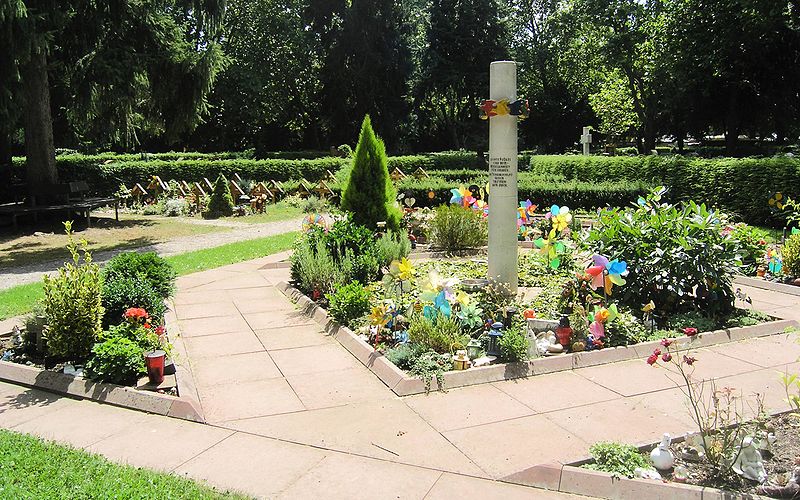
(Photo from Wiki: “Babies’ graves on Karlsruhe main cemetery. In the foreground a common burial field for miscarried children, in the background graves of children who were stillborn or have died soon after their birth.”)
 The Dish
