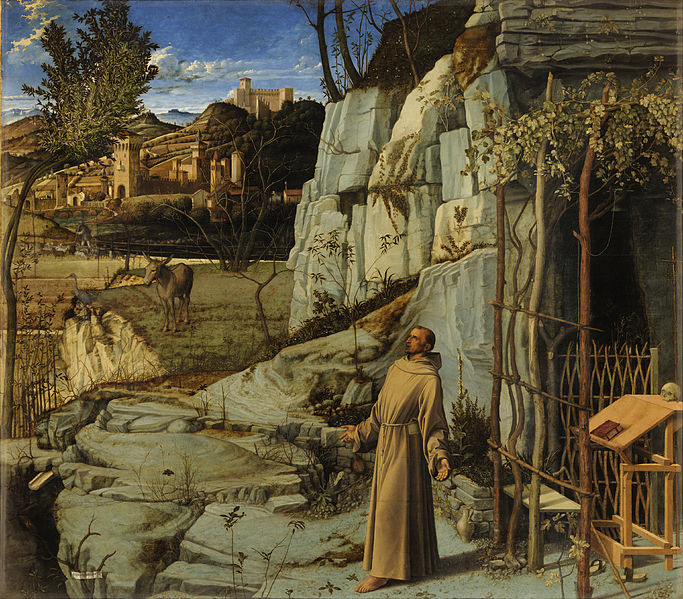
In his new book, Art as Therapy, reviewed by Joshua Rothman, Alain de Botton argues that museums “have embraced as their guiding paradigm the discipline of art history,” focusing on arranging pieces by period or artist, rather than emphasizing “what actually makes art interesting”:
Most people, [de Botton] thinks, care only a little about who commissioned what. When a visit to a museum succeeds, it usually isn’t because the visitor has learned facts about art but because she’s found one or two works that resonate in a private way. And, yet, museums do very little to foster these kinds of personal connections; if anything, they suggest that our approach to art should be impersonal and academic. “The claims I’m making for art,” de Botton said, “are simply the claims that we naturally make around music or around poetry. We’re much more relaxed around those art forms. We’re willing to ask, ‘How could this find a place in my heart?’”
On a stroll with Rothman through the Frick, de Botton offered practical examples of what he means:
Museums, de Botton believes, would be more energetic, unpredictable, and useful places if curators thought less like professors and more like therapists.
Instead of being organized by period—“British eighteenth-century painting,” say—galleries could be organized around human-scale themes, like marriage, aging, and work. Rather than providing art-historical trivia, wall text might address personal questions: How do I stop envying my friends? How can I be more patient? Where can I find more beauty in my life? …
The word “therapy”—a “big, simple, vulgar word”—is meant, de Botton said, to be taken broadly. It can be therapeutic to acknowledge “the ugly, the complicated,” or to be reminded of one’s neglected, inner possibilities. Contemplating Bellini’s “St. Francis in the Desert,” what struck de Botton wasn’t Francis’s story, per se, but Bellini’s attention to detail—a dirty hare amongst the rocks, a perfect little town in the distance, the Saint’s toes. “This picture can make us feel guilty, and a bit sad, about how we’ve neglected close observation,” he said. “We rush through experience. We’re on our phones. But that’s also why it’s moving. My theory is that many of the things that move us are things we long for but find hard to do.” (In a video from 2010, the Frick’s former curator, Colin Bailey, offered an alternate, but still de Bottonian, reaction: “The picture gives us comfort because it seems so restful, so joyous, so joyful.”)
(Image of Saint Francis in the Desert by Giovanni Bellinni, 1480, via Wikimedia Commons)
 The Dish
