Inspired To Be Ill

Molly Fischer describes Kelsey Osgood’s new book, How to Disappear Completely, as “an anorexia memoir that’s largely a critique of anorexia memoirs”:

In her telling, anorexia’s competitive mentality makes hearing anyone else’s story an invigorating opportunity for comparison. … And, alleges Osgood, the storytellers themselves tend to be complicit in this competitive fervor: They’re “getting something out of it,” she writes. Even for recovering anorexics, “the narrative toward rock bottom is more often than not a ‘war story’ told to impress the listener.” So [memoirist Marya] Hornbacher writes, “Line up four apples and think about how you’d feel after a few days of eating that and nothing else” with what sounds a lot like pride. “I can function fine on an apple a day,” writes Emma Woolf — whose 2012 memoir is, in fact, called An Apple a Day. You wouldn’t be mistaken to detect something like bragging in their confessions.

“Anorexia is often the sufferer’s loud declaration that he or she is different from other people,” Osgood explains. “It’s what makes me special is a sentence that can be found in almost any firsthand testimonial about an eating disorder.” Her astute move is to read that sense of specialness as a defining characteristic of the anorexic mind-set. One early therapist calls Osgood a “mild case,” and her response is a defiant determination to become severe. “To label an anorexic ‘not that bad’ is to call him or her ‘normal,’ which is to say not sick at all, which is to say fat,” she explains.

In an essay, Osgood considers ways to combat eating disorders:

I believe that so many young women want to be anorexic because our society has communicated not the horrible consequences of eating disorders, but what might seem to be the benefits of them, namely, that they make you skinny and special.

We need to change the vocabulary we use and the tone we invoke when we discuss anorexia, refusing to employ it as shorthand for “fragile and interesting.” We also need to staunchly refuse to include what could be interpreted as prescriptive materials in narrative accounts, namely daily calorie intake, exercise routines and lowest weights of active anorexics. Finally, we need to give more attention to studying the efficacy of home-based treatment programs like the Maudsley method, which trains parents and family members to oversee the care of anorexics, so that sufferers don’t wind up in an endless cycle of hospitalizations. It’s important that we begin to examine all these factors of suggestion and reinforcement and intervene with girls who are experimenting with disordered eating. If we don’t, they can easily end up like I once was: sick, miserable and desperate to recover from an illness that I once wanted so badly.

Amanda Marcotte zooms out:

Osgood’s essay raises for me the larger problem with the assumption that scolding young people is an effective way to discourage negative behavior. We may think we’re saying, “If you make these choices, scary things will happen to you,” but what younger audiences often hear is, “These choices are daring and rebellious—even romantic.” Need proof? Kids brought up in sex-negative religions have sex on average at younger ages than kids who get more sex-positive messages. One possible reason is that teaching that sex is the forbidden fruit tempts teenagers to get swept up in the moment, whereas sex-positive kids have a more nuanced understanding that allows them to plan their sexual debut carefully. Anti-drug education programs often end up leading kids to believe that all the cool kids use drugs. Research shows that anti-bullying programs, because they detail bullying behavior, often end up teaching kids how to be better bullies. Fat-shaming causes people to eat more, possibly because of stress, and gain weight.


“A Self-Driving Car Will Save Your Life”

Those are the confident words of Anthony Levandowski, one of the engineers profiled in a New Yorker piece on driverless cars:

For Levandowski, the stakes first became clear three years ago. His fiancée, Stefanie Olsen, was nine months pregnant at the time. One afternoon, she had just crossed the Golden Gate Bridge on her way to visit a friend in Marin County when the car ahead of her abruptly stopped. Olsen slammed on her brakes and skidded to a halt, but the driver behind her wasn’t so quick. He collided into her Prius at more than thirty miles an hour, pile-driving it into the car ahead. “It was like a tin can,” Olsen told me. “The car was totalled and I was accordioned in there.” Thanks to her seat belt, she escaped unharmed, as did her baby. But when Alex was born he had a small patch of white hair on the back of his head.

“That accident never should have happened,” Levandowski told me. If the car behind Olsen had been self-driving, it would have seen the obstruction three cars ahead. It would have calculated the distance to impact, scanned the neighboring lanes, realized it was boxed in, and hit the brakes, all within a tenth of a second. The Google car drives more defensively than people do: it tailgates five times less, rarely coming within two seconds of the car ahead. Under the circumstances, Levandowski says, our fear of driverless cars is increasingly irrational. “Once you make the car better than the driver, it’s almost irresponsible to have him there,” he says. “Every year that we delay this, more people die.”

Dan Hill is far more skeptical about the driverless car movement:

The real way to prevent accidents would be to have fewer cars on the road, not just the same number with different control systems. But is the car industry really going to suggest that? Self-driving cars may move traffic a little more efficiently, but the laws of induced demand suggest that the supply of cars might also increase to counter any such benefits.

Previous Dish on driverless cars here.

Music To Mourn By

A recording of the Boston Symphony Orchestra’s live reaction (and audience reaction) to JFK’s assassination:

James Inverne captions:

As can be heard from the broadcast, after the radio announcer’s introduction to the first scheduled work, a suite from Rimsky-Korsakov’s opera Le coq d’or, Leinsdorf emerged and spoke just 53 words, his voice sounding a bit odd, as if taking care to clearly and a little unnaturally project every word. He falters slightly only once, in his second sentence. “Ladies and gentlemen, we have a press report over the wireless. We hope that it is unconfirmed, but we have to doubt it. That the president of the United States has been the victim of an assassination. We will play the funeral march from Beethoven’s Third Symphony.”

Gasps and screams of shock can be heard after the statement of JFK’s death, and after the change of programme is announced there is a general panicked hubbub that takes its time to subside. Then, as the orchestra begins its funeral dirge more slowly than is usual, every note throbbing with pain, there is only a numbed quiet as the news, the awful reality, sinks in.

Alyssa adds:

It’s a remarkable moment, one in which the audience reacts, but the music provides space for those who stayed to reflect on the dreadful news they’ve just heard. Sometimes, culture is directly engaged with politics. And sometimes culture dramatically removed from our political context can help us come to terms with a dreadful political reality.

Doctor Who? Ctd

A reader writes:

Following up on your question, “Are you excited as I am about the 50th Anniversary episode of Doctor Who?” I just felt like writing in and saying that I’d match your excitement with mine any day. It is what Joe Biden would call a BFD. I’ve been devouring every spoilerific release and every fan theory like it’s a newly-discovered passage from the Dead Sea Scrolls.

It helps that, unlike the last time there was an anniversary, the show is unquestionably fantastic television. It portrays a Britain at ease with its modern cultural identity and talks up to its audience. Its twists and turns receive media coverage almost on a par with major political developments. Its uncloseted fanbase is loud and proud, and for a whole country the cultural icons it has created are universally recognisable. For me, the core of the show is regeneration: the idea that one man can have thirteen selves who, despite their vast differences in personality and appearance, retain the same soul over time. And of course, as Craig Ferguson said, it’s about the triumph of intellect and romance over brute force and cynicism.

By the way, I hope you have been able to catch An Adventure in Space and Time, Mark Gatiss’ drama about the creation of the show in 1963. I watched it last night and I’m afraid my eyes were quite soggy towards the end. It’s not only a wonderful show; it’s an institution and an old friend.

A scene from An Adventure in Space and Time is below, along with several other reader reflections on the anniversary:

Another superfan writes:

I’m baking Dalek cookies and trying to decide what juice goes in a Sonic Screwdriver. And the past year I’ve been catching up with classic Who episodes. When I was in high school, the Baker episodes were on endless repeat on PDS here in Chicago, but I almost never saw anything else.

But even after reviewing them, I’m not surprised you featured a Tom Baker clip. The three men who came before him all did some terrific work (one of Troughton’s good episodes having just been rediscovered), but they were basically playing the Doctor as a clever human Trickster character – the smartest guy on the block who’s always a couple of moves ahead of you. They all told you they were alien (and Pertwee had the costume), but Baker was the first to really ACT alien – to react in ways that confounded his human foils (as in the scene you posted), as they looked on with this confused look on their face (“What is wrong with hims? That’s not how a human being behaves!”) unsure how to respond to waht they’re seeing. Sadly, Peter Davison couldn’t pull that trick off, and it all unwound after that.

Another dissents:

I am trying to keep my temper here, but your Doctor Who? post is so off base it’s making me furious.  If I didn’t know you had grown up with the old series – and I am not questioning your honesty on this point – I would think you’d never watched it.

First off, your statement that the 4th Doctor is “querulous, curious, funny, and yet also all-powerful.”  None of the first six Doctors were all-powerful or even close to it, Tom Baker being no exception.  Just about every 4th Doctor episode ends with him in some sort of life-endangering peril, and the whole dramatic impact of these scenes is their ability to get the audience to suspend its disbelief and really worry that the Doctor might die.  You seem to have a special affection for the Sarah Jane Smith character, and yet you’ve forgotten the many occasions on which she had to save the Doctor’s life.  Here’s a very incomplete list of the numerous times she bailed his sorry Time Lord ass out of trouble:

  • Robot – Prevents the title robot from crushing the Doctor’s head with its foot after it’s knocked him unconscious.
  • The Android Invasion – Frees the Doctor when he’s tied to a bomb and rescues him from the Kraals’ duplication machine.
  • The Seeds of Doom – Saves the Doctor from being ripped to shreds in Harrison Chase’s fertilizer machine.

The Doctor didn’t become “all-powerful” until a knucklehead script-editor named Andrew Cartmel decided to turn the character into a left-wing superhero in an attempt to use the original series as a propaganda machine against Margaret Thatcher in its final years.  (Seriously, Mr. Cartmel has proudly gone on record about this.)  This was taken several steps further after the show was ressurrected – by fans of the original series, many of whom considered the Cartmel years the very apex of classic Who due to its political content – and now the Doctor is basically a god.  As a result, the new series lacks tension.  We know the Doctor and his companions are going to be fine, because he knows absolutely everything and is basically Superman on steroids.

Second, your statement “The Dr. never kills, unless by accident.”  Another far from complete list of the 4th Doctor deliberately killing his opponents – or worse:

  • Terror of the Zygons – Locks the Zygons in their space ship and then blows it up.
  • Pyramids of Mars – Locks the character Sutekh in a trap he’ll be stuck in for the rest of his life and mocks him by asking him how long he thinks he’ll live.
  • The Brain of Morbius – Kills a mad scientist named Solon by pumping poison gas into his laboratory.
  • The Invasion of Time – Shoots a Sontaran with a demat gun.

The Doctor, while essentially a moral character, was never meant to be perfect or a role model; the first Doctor could be a downright anti-hero for crying out loud, willing to sell out everyone except his grand daughter to save his skin.  The Doctor started out as a mysterious and eccentric, but vulnerable and dignified, scientist and explorer and has become an all-powerful superhero with as much dignity as Pee-Wee Herman.  If you prefer an “all-powerful” and never violent Doctor fine, but don’t justify this squishy and bland version of the series and its title character by retroactively applying its flaws to its predecessor.

Another:

I thought of sending this last week when I took the picture, but there is no window pane in the photo.  Today’s post on the Doctor changed my mind. Last week, I’m in a meeting at work when the TARDIS flew by:

photo-36

One more:

I started watching Doctor Who while in college in the mid-’80s. It aired on Friday nights on Iowa public television. At that time they mostly re-aired Tom Baker episodes. As you know, back then the show was a serial, with the story broken up into 4-6 half hour episodes; missing an episode would be like skipping half an hour in the middle of a movie. One Friday afternoon I drank way too many pints in my favorite bar before getting in the car to drive to a friend’s house for dinner and Who. I never made it because I was (very appropriately) pulled over for DWI and ended up spending the night in the county jail. Fortunately, booking was done before the 7:00 airing, and I somehow convinced the other five women in the cellblock to watch Doctor Who on our shared T.V.

I stopped watching after college. When the series re-started in 2005, I had no interest, but my geeky husband and kids loved it. One day in 2010, my daughter was watching “The Time of Angels” in the same room as me. I immediately became ridiculously hooked, and have since watched and re-watched all of the new Who episodes. I love them all, but Matt Smith’s Doctor is my favorite, and it will be a sad Christmas seeing him regenerate.

But before that, we have the big 50th anniversary episode tomorrow! No doubt it will be fantastic. We’re watching it at home on Saturday, and then will see it in 3-D at the theatre on Monday. Allons-y!

Should Bikers Be Forced To Wear A Helmet? Ctd

A reader writes:

Here’s a great way to get across the idea that helmets are safer while doing some good at the same time. Many states (even Texas) have separate motorcycle licenses where you need to take a written and/or behind-the-wheel (er, handlebars) test. Each motorcycle license should have “ORGAN DONOR: YES” printed on the back – for everyone, no ifs ands or buts.  If you’re a safe rider, chances are it may never apply.  But if you ride without a helmet and end up with massive head injuries, at least when your family pulls you off life-support what’s left of you below the neck can can help someone live who’s not such a fricking idiot.

Another notes:

States that permit helmet-less motorcycle rides produce more organ donors. One study estimates that every helmet-less motorcycle death saves 1/3 of a person on organ transplant lists. Natural selection at its best!

Previous Dish on helmets here, here, and here.

Face Of The Day

Fort Worth Commemorates 50th Anniversary Of Assassination Of John F. Kennedy

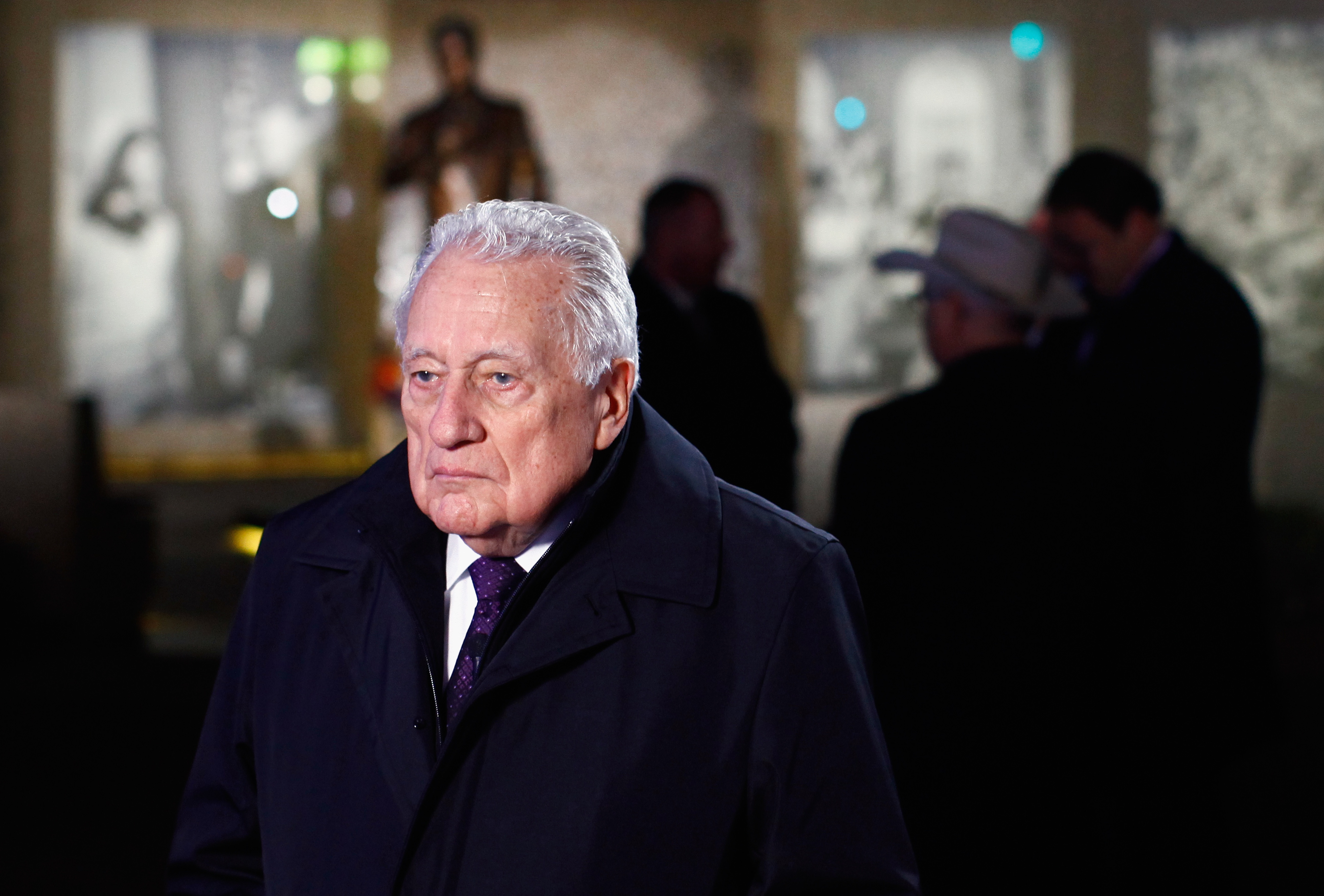
Former U.S. Secret Service Agent Clint Hill, who was assigned to First Lady Jacqueline Kennedy and was in the presidential motorcade during the assassination of U.S. President Kennedy, stands outside the JFK Tribute in Fort Worth, Texas on November 22, 2013. People visited the JFK Tribute on the 50th anniversary of the assassination of Kennedy as he rode in a motorcade through Dealey Plaza in Dallas. By Tom Pennington/Getty Images.

The End Of Airplane Mode?

Yesterday, the FCC announced it is considering allowing in-flight cell-phone use. Nora Caplan-Bricker is opposed:

Reading, thinking, sleeping… It’s hard to do these things effectively when there’s some teenager next to you, whining to her parents on the phone in a tone you’d think only dogs could hear, or some guy hunched toward the window, having what’s clearly a tense conversation with his wife. But the hardest thing of all is to read/think/sleep when you yourself are on the phone, or are rotating between Twitter and email, pulling the page down with your thumb—refresh, refresh, refresh. When the FCC started toying with cell phones on planes, my first thought wasn’t dread at how my neighbors might ruin my flight, but at how I might squander my own chance to, however briefly, unplug. Now that the FCC is telling us that a single text message dispatched to one’s mother will probably not cause the entire 250,000 pound aircraft to veer off-course, that myth reveals itself to be the best kind of nanny state-ism, a benevolent lie that bought us time away from our self-inflicted constant connectedness. Sure, I could still leave my phone turned off at the bottom of my bag for the duration of my next six-hour flight to Los Angeles, but if my day-to-day efforts not to look at it every few seconds are any indication, I won’t. The last time I read uninterrupted for two hours, I was definitely on a plane.

A Poem For Friday

roadside

“Roadside Grave: Winter, Mass” by Franz Wright:

In the white is a name.
In the three worlds
it stands.  Wind
sounds, a world of one
color.
Name spoken,
once,
across a darkening field;
name being stitched,
very small, in white thread
in white cloth.

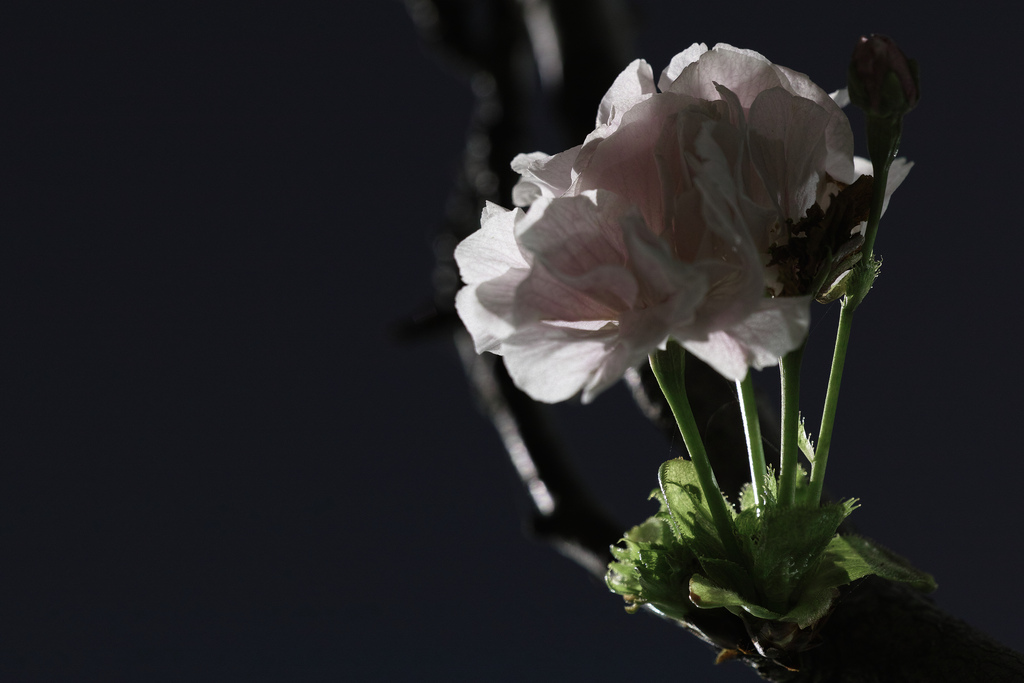
(From F/poems © 2013 by Franz Wright. Reprinted by kind permission of Alfred A. Knopf. Photo by Flickr user halfrain)