
Central Park, New York, 7.30 am
Central Park, New York, 7.30 am
A reader writes:
There’s a big error in your Mike Allen post. You said he wrote the 1st piece (#3) and that the Chamber of Commerce wrote the 2nd piece (#4). The original article indicates you have it backwards (which matters because #3 is more egregious).
My bad. The prose is so similar I confused them. So would any casual reader.
A few experts weigh in regarding the amount of code that’s been written for the ACA site:
Over many years of research, programmer productivity in lines of code has been observed to range from 3,200 lines per year for small projects, down to just 1,600 lines per year for very large projects. Using the typical numbers for large projects, 500 million lines of code would require 312,500 man-years of programming effort. If true, that would involve the participation of just about all programmers in the US for a full year, and at an average $100K in salary and benefits, an investment of an amount approaching the entire defense budget!
Besides – with regard to your notion of “sheer scale” – you should understand the ACA pretty well right now. What exactly would account for that scale in the exchange website? It should be intuitively clear that Healthcare.gov is far less complex than the entirety of the code and utilities associated with Windows Server, for example, which public sources say involves about 50 million lines of code.
The story is different but in some ways even more embarrassing; the Healthcare.gov web site is a project of moderate scale and complexity. If it really were such a monster, the failure could be excused – but given the modest scale of the actual project, screwing it up so badly is inexcusable!
Another:
Just about every developer who reads you (and I’m guessing it’s a lot) is hitting his head against his keyboard right now. That “500 million” number is pure bullshit from someone who doesn’t understand our craft.
First off, judging any piece of software by lines of code written is scoffed at in our profession for a many reasons, not the least of which being it’s impossible to agree on what really counts as “a line of code”. But let’s play along: The old rule of thumb states that the average programmer really only contributes about 10 lines per day in the long run (as programming is so much more than typing code). But it’s an old rule of thumb, and our tools have gotten much better, so I’d argue many programmers these days can bang out several dozens line of code. I’m willing to be more generous still and allow the Healthcare.gov programmers some 100 lines of code per day per developer.
I have no idea how many programmers were employed at any one time, but I’d eat my hat if even approaches 100 developers simultaneously hammering out code (a few dozen is more likely). Still, let’s be super crazy and say it’s 1000 programmers each writing 100 lines of code each and every day. It would take this impossible egghead army 5,000 days to author one-half-billion lines of code. That’s nearly 14 years, weekends included, of the largest software team this world has ever seen writing code much faster than is generally accepted as possible.
How many lines of code is in Healthcare.gov? Who knows. But to some dipshit who couldn’t write “Hello World” in Java, I suppose 500,000,000 is a big enough number to pull from your ass. That’s the only way that number came about. For my money, the real story here is just how shrill and ridiculous the debate over Obamacare has become.
Another:
I am a software engineer who has worked on both sides of the commercial/government contractor fence. I’d like to stress that I speak for myself, not for my employer.
Source Lines of Code (SLOCs) is a controversial and convoluted metric for evaluating software complexity. The Wikipedia entry gives a good overview of the difficulty of getting non-coders on the same page over the size and scope of a project. Given the stated number is five hundred million lines, I find it unlikely that a qualified engineer did a manual analysis. The quickest and easiest method, not to mention the one that would produce the most jaw-dropping numbers, is to run all source files through a line-counting program (wc -l).
In addition, government specifications and rules inflate the count artificially and produce hurdles that the other commercial projects Healthcare.gov is being compared to would not need to face.
The rules can place shackles on what third party tools can be used for the purposes of development and efficiency. Freely available code libraries such as numpy, matplotlib, or jquery can allow those familiar with them to perform complicated tasks and analysis in a handful of lines. However, unless those tools and libraries have gone through an approval process, the developers working on these projects must re-implement problems that have been solved countless times over, and therefore run into the same pitfalls that existing tools ran into and fixed decades ago.
Also, the strict coding guidelines adopted by some projects make individual files seem longer than they actually are. This can be caused by variable or function naming conventions (citizen.numChildren() versuscurrent_user.get_number_of_children()) and allowed/forbidden acronym lists (IRS.query() versusInternalRevenueService.query()), paired with outdated rules on number of characters allowed per line (Eighty? One hundred and sixty?). Required copyright, code ownership, authorship, clearance notifications, and version change lists prepended to each file can easily add over a hundred lines of non-functional text to files that a software engineer would simply collapse (ignore), but the uninitiated or politically motivated would count towards the total scope of the project.
Developers tend to be split on the necessity of these seemingly superficial limitations. No one likes having to waste time clearing syntax checker warnings about a line of code being 81 characters long, or needing extra white space between two function parameters. However, being handed an unreadable mess with variables named as though during a national vowel shortage is devastating to developer morale. With government projects passing between multiple subcontractors and development groups, code readability is important.
Software engineering has few metrics that would be both meaningful and fit in an easily understood soundbyte. What is coming out is not helpful. What would be helpful? Release the requirements and the source code. Sanitized of sensitive information and personally identifiable information, an army of interested software engineers from both sides would be able to evaluate the project, provide real analysis, and start working on ways to make sure taxpayer funds are more effectively used.
Eric Posner is against them:
Advocates argue that climate change negotiations, currently being held in Warsaw, should aim for a climate treaty that forces the climate wrongdoers to pay the climate victims. This would mean countries like Bangladesh, the Philippines, and Kenya getting money from countries like the United States so that they don’t alone bear the cost of a global carbon dioxide overload that they did little to cause. It sounds great—but such an approach would doom the prospects of a climate treaty, and the argument for it doesn’t add up.
The heart of his argument:
The issue here is that most emissions in the United States took place before the 1990s, when few Americans knew about, or understood, the dangers of climate change.
Even since then, it is difficult to argue that Americans act in a blameworthy fashion by heating their homes and firing up their laptops, which is what everyone does albeit usually to lesser (as well as varying) degrees. We might blame ourselves for failing to elect governments that unilaterally cut emissions, but our governments have justifiably held out for other countries like China to agree to do their share. After all, unilateral emission cuts will do little to solve the problem.
One of the most challenging features of the climate change problem is the time lag between emission and harm. It was our ancestors who emitted much of the stock of greenhouse gases, and most of the harm they caused will not take place until additional decades have passed. If a climate treaty compelled monetary transfers from historic wrongdoers to victim countries today, these transfers would be to people who have not been harmed from people who have not harmed them.
Relatedly, Lex Berko passes along the above video:
By translating some of the [Intergovernmental Panel on Climate Change’s] major conclusions into a glossy video visualization, it helps those more visually-inclined learners—or just anyone who enjoys a well-made clip—get a grasp on exactly what sorts of threats our planet might be facing as a result of anthropogenic activities. Sometimes, text only goes so far.
Previous Dish on the debate here.
At Walmart’s two new DC stores, 38 people applied for every one job spot. Daniel Gross is unsurprised:
[The D.C. area’s seeming prosperity and dropping unemployment rate] hides a reality in this economy. The labor market is actually several labor markets in one. And some of those markets are doing quite poorly, even in booming areas with comparatively tight labor markets. We know, for example, that in October the unemployment rate for people with bachelor’s degrees (or more) was 3.8 percent, while the unemployment rate for those whose highest level of education was completing high school was 7.3 percent, and the rate for those who hadn’t completed high school was 10.9 percent. Put another way, people who haven’t completed high school are nearly three times more likely to be out of work than those who have completed college. And people who haven’t attended college are twice as likely to be out of work as those who have completed college. Among African-Americans, the unemployment rate is 13.2 percent, while the unemployment rate for whites is 6.2 percent.
Slack in the labor market—and the continuing weakness of unions—makes it very difficult for all but the most skilled workers to negotiate higher wages. And the intense competition for positions at the lower rungs of the labor market mean companies can have their pick of candidates while offering comparatively low wages. It’s good for Walmart that the company is finally making inroads into Washington. Perhaps the new stores will help boost the chain’s stagnant domestic sales. It’s good for the 600 new hires to have jobs at a stable company. And there’s more where that came from. Walmart said it hopes to open three more stores in D.C. in coming years, which will employ another 900 people. But the fact that the chances of getting a job at Walmart are far lower than the chances of getting into Georgetown Law School highlights a continuing problem.
Peter Gordon reviews Carlos Fraenkel’s Philosophical Religions, a tour of medieval and early modern thinkers’ attempt to square rational inquiry with divine revelation:
The guiding thought of Fraenkel’s study is that what may strike us as an unforgivably elitist distinction, between philosophers and non-philosophers, actually went along with a universalistic acknowledgment that diverse religious traditions share a common core. For it is precisely the social distinction between philosophers and non-philosophers that permitted philosophers to claim that, despite variations in literal content, religion bears an invariant allegorical truth—the insight that God and Reason are one. Plato, for example, believed that the laws of Crete and the laws of Sparta were essentially the same: variations in appearances could be explained by the philosopher as due to the influence of historical and cultural context. It was therefore possible for Plato, in Fraenkel’s assessment, to endorse both contextual pluralism (about variations in religious representations and practices) and universalism (about the inner meaning of religion itself).
The tenth-century Islamic philosopher Al-Fārābī—known in Muslim circles as the “second teacher,” following only Aristotle in his importance—appears in Fraenkel’s account as one of the greatest medieval exemplars of philosophical religion. Adopting the now-standard distinction between literal and allegorical senses of Scripture, Al-Fārābī applied that distinction even to the idea of God as a “king,” which he interpreted as a means of explaining God’s “ontological rank.” Following Plato, Al-Fārābī also endorsed a certain kind of contextual religious pluralism that allowed for the possibility of more than one virtuous religion. “But what is best known often varies among nations,” he explained. “Hence these things are expressed for each nation in parables other than those used for another nation. Therefore it is possible that virtuous nations and virtuous cities exist whose religions differ, although they all have as their goal one and the same happiness.”
(Image of Al-Farabi via Wikimedia Commons)
Laura Miller ponders the attraction of long novels:
Much of the special appeal of a good long novel is rooted in the imaginative dynamics of reading fiction — assuming, that is, that you’re reading for the particular form of pleasure I’m celebrating here. The moment a reader turns to the first page of any novel, an intricate dance begins. “Do I believe this?” might be the first thing the reader asks. “Do I care?” is surely, then, the second. A character and a conflict are the most reliable way to lure the reader further into the story, but a setting, if skillfully evoked, can do the job, too: David Copperfield’s cold stepfather, Jane Eyre’s stifled pride, the glittering ballrooms of Tolstoy’s Russia, the threat posed to Middle-earth. Gradually, the words on the page stop being words on the page and seem to enter our minds as wholly formed sights and sounds and feelings.
It takes a while to become so invested, and it often doesn’t happen at all. Getting there is work, like pulling a sled up a hill, but when (and if) you crest the top, it’s a splendid ride from there.
The problem with a short story is that even if the author does manage to seduce you into believing in her fictional mirage, it’s over almost as soon as you take a seat on the sled. A long novel promises an extended tour, and the ratio of ramp-up to glide is much lower. Of course, most novels can’t get you to the crest of the hill in the first place; you climb and climb and it never stops feeling like work, until you finally turn around and trudge home. Plenty of long novels have this problem, and when they fail, there is nothing worse. Few readings have been as torturous as my own personal slog through Thomas Pynchon’s “Against the Day,” for example.
Richard Lea traces the “longer is better” idea back to Aristotle, who wrote “the greater the length, the more beautiful will the piece be by reason of its size”:
You might quibble with his reasoning – perhaps all he needs to appreciate a wider range of beauty are the changes of perspective provided by, say, a microscope and a helicopter – or maybe you’re unwilling to suppose a novel can be “embraced by the memory” as easily as a play, but let’s suppose for a moment Aristotle’s argument applies straightforwardly to a form which was invented two millennia after his death. Is he seriously suggesting, all things being equal, that Don Quixote’s thousand-odd pages makes it simply better than Death in Venice’s measly 72? Perhaps Cervantes’s melons are a little too different from Mann’s pears for any thing in such a comparison to ever be really equal, but do A Farewell to Arms’s 300-plus pages see off The Old Man and the Sea, barely a third the length? Does Moby-Dick (600 or so) monster Billy Budd (less than 100), does Gravity’s Rainbow (more than 900) destroy the comparitively minute The Crying of Lot 49? I’m the first to acknowledge the special pleasures of long-form fiction, but isn’t this kind of aesthetic bean counting a little one-dimensional?
It’s not hard to find writers who resist this kind of logic. For George Saunders “A novel is just a story that hasn’t yet discovered a way to be brief,” while Borges seems to suggest Aristotle’s argument actually favours the short story, arguing that short fiction has the advantage because it “can be taken in at a single glance”. For the novelist Ian McEwan – who made the 2007 Booker prize shortlist with his 166-page “full length novel”, On Chesil Beach – the novella is “the perfect form of prose fiction … the beautiful daughter of a rambling, bloated ill-shaven giant”.
A reader flags the nauseating report seen above:
You think “grease thieves” are bad in the U.S., you won’t believe what happens in China, where there’s an entire “Gutter Oil Industry”.
Another video from a reader:
As usual, the Simpsons got there years ago:
The second volume of Mark Twain’s Autobiography – the entirety of which was delayed from publication for 100 years – reveals a man with a serious mean streak:
[T]here’s no doubt that Twain says certain things in this book that he couldn’t have said while still alive, including calling Jesus a fraud, the afterlife a sham, God a sadistic madman, and Christianity “bad, bloody, merciless, money-grabbing and predatory.” But Twain’s distaste for religion was an open secret among those who knew him, and the atheism in this volume won’t astonish anyone familiar who is with his work.
The hundred-year ban seems less about protecting Twain’s reputation than about sparing the feelings of the many people whom he attacks in his autobiography. The list is long. He has total recall of past slights, as well as an undiminished stream of vitriol for those whom he feels disrespected or deceived him. But he wants to make sure that his victims—and their wives and children—are dead before he dismembers them as cruelly as necessary. He feels a special hatred for publishers, especially Charles L. Webster, the nephew-in-law who headed Twain’s ill-fated publishing venture—“one of the most assful persons I have ever met.” “The times when he had an opportunity to be an ass and failed to take advantage of it were so few that, in a monarchy, they would have entitled him to a decoration.”
Sorry for the late posting. Dish, AC360 and life.
Four posts worth revisiting: the latest installment in a gripping reader thread on miscarriage; how the ACA can still work; the pioneering of “sponsored content” by “Pay for Playbook’s” Mike Allen; and some clips from my conversation with Mikey Piro, on his war and the scars it has left behind.
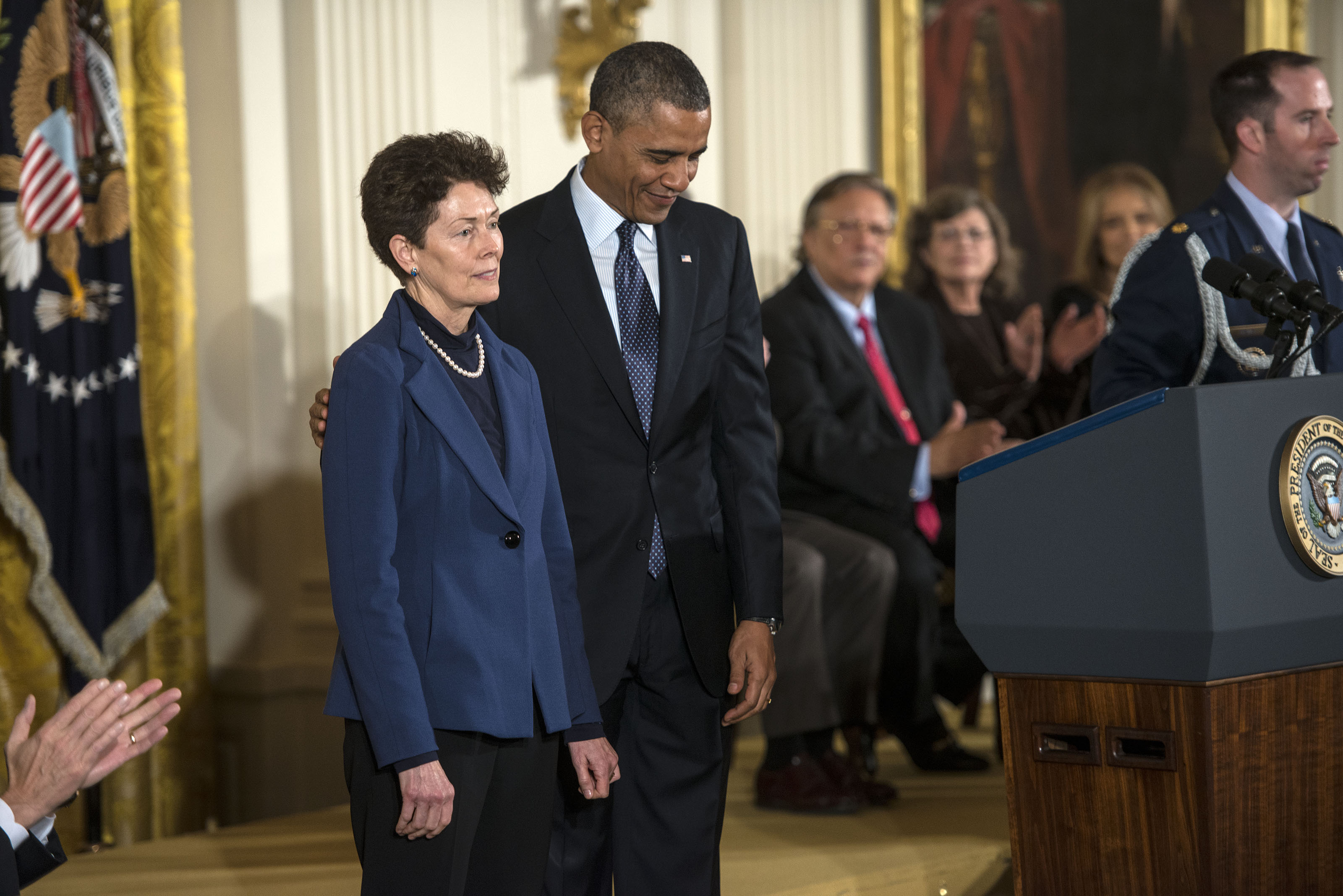
Just a word on president Obama’s decision to give the Presidential Medal of Freedom posthumously to Bayard Rustin and Sally Ride. Their life-partners were at the White House to receive the award. This president is a good man; recognizing these two American icons and celebrating those who loved them is something I for one won’t forget. Sally Ride’s partner said the following:
I wish Sally was around because, since she passed away about 14 months ago, our country has changed in very big ways. For me, personally, I just feel like I can breathe better, look people in the eye a little straighter. It just feels good to be honest and who you are, and I think that would have been wonderful for Sally, too. Sally always was herself, but, you know, not being completely out there with who you are affects some part of you affects some part of you in some way, and I just think it would have been very wonderful for her, too.
The most popular posts were my these two on the paradoxes of healthcare: why does socialism end up being so much more efficient than capitalism?
See you in the morning.
(Photo: Tam O’Shaughnessy accepts the 2013 Presidential Medal of Freedom on behalf of her late life partner, Sally Ride in the East Room of the White House on November 20, 2013. By Leigh Vogel/WireImage.)

 The Dish
