The Worst Days Of Obama’s Presidency

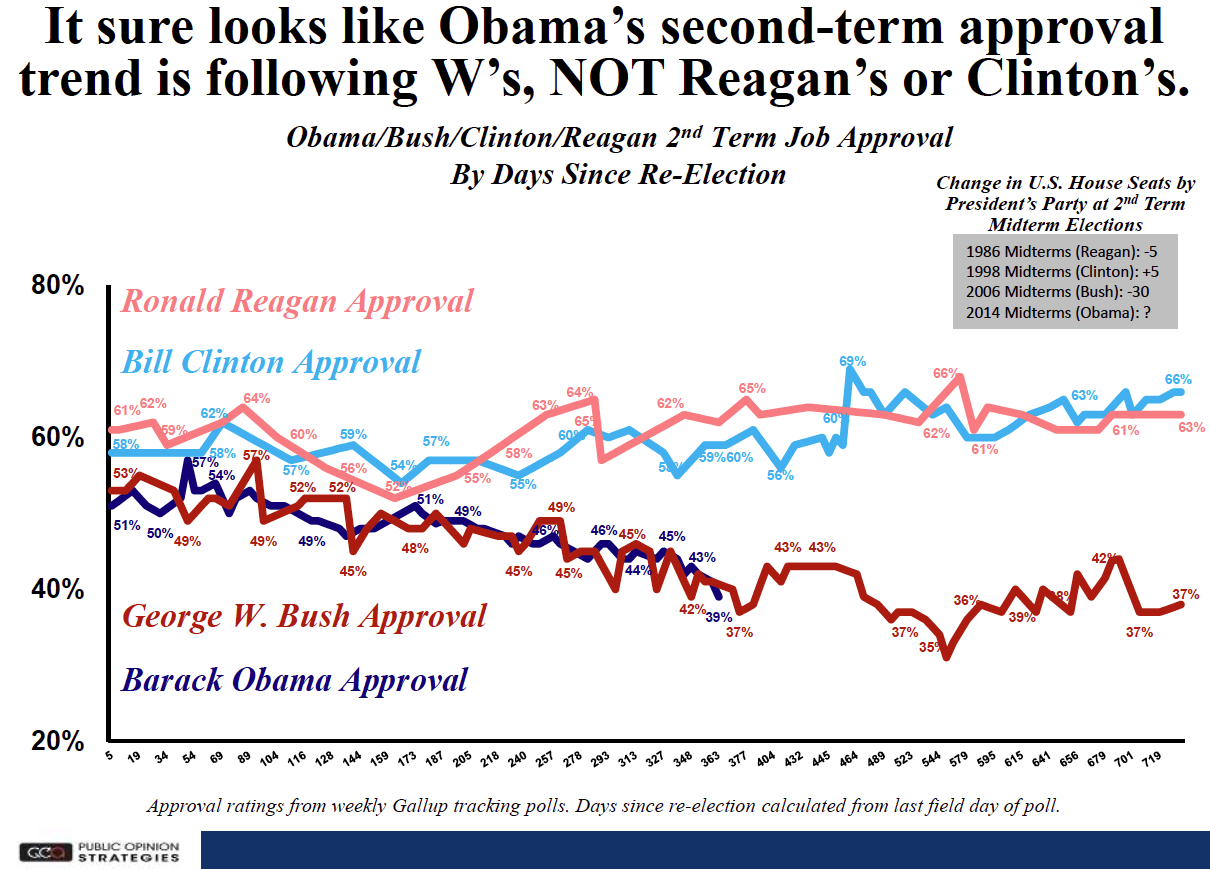
The Fix passes along a depressing chart “from Robert Blizzard, a Republican pollster at Public Opinion Strategies, that details the arc of presidential approval in second terms”:
Obama Chart

Ezra assesses the situation:

Politically and substantively, this is a low for the administration. “Things suck right now,” says one Senate Democratic aide. “They suck unbelievably much, considering where we were six weeks ago.”

The question is whether it’s rock bottom. Perhaps soon HealthCare.gov will improve, congressional Democrats will relax, and the narrative will shift to “comeback” mode. In that world, it’s even plausible that Republicans could underperform in 2014 and decide to take another look at immigration reform before their standing with Hispanics dooms them in 2016, too.

It’s also possible, however, that the Web site will continue to fail, the Obama administration’s agenda will continue to flounder, and the damage will simply mount, leading to a disastrous 2014 for Democrats and an early end for the White House’s second-term ambitions.

Given how volatile our politics is right now – remember the conventional wisdom only six weeks ago? – I wouldn’t jump to conclusions. Except this one: a president can survive a judgment of incompetence in a critical area – like the website clusterfuck. And a president can survive being exposed as a focus-grouped liar on a political promise. But both at once? That could be a fatal combination. And Obama really has no one to blame but himself.

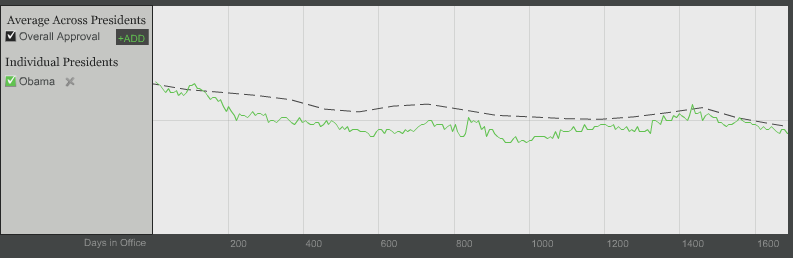
This does not mean an indictment of an entire presidency, or even the sign of a failed presidency. In their second terms, Clinton and Reagan were both exposed as liars – in the Lewinsky mess and the more serious Iran-Contra arms-for-hostages scandal. They were deeply wounded by both dramas, but were retroactively deemed successful nonetheless. The average approval ratings for all presidents (via Gallup) makes Obama look typical at this point, not an outlier, and actually more approved than he has been for much of his presidency:
Screen Shot 2013-11-14 at 11.57.04 AM

I’m not saying this isn’t his worst crisis yet. It is. He may get pummeled some more in the polls. But if the ACA avoids a death spiral, if the GOP overplays its hand or is exposed as having nothing to propose to fix or replace the ACA, if the media shifts from pile-on to come-back mode, then things shift a little. I stick with my recent judgment: if Obama hangs in for stronger economic growth next year, if the ACA eventually works out, and if he can get to a breakthrough on Iran – so near, yet still so vulnerable – then he remains a transformational president.

He is beleaguered on both fronts – but that is partly because he is attempting two hugely ambitious and history-changing projects. We’ll see now, perhaps more than at any point in his presidency, if he has the mettle to endure. And that’s what this is about right now: endurance, and a battle of wills.
Divorce Equality

With Hawaii this week becoming the 15th state to win marriage equality, a reader looks to a new problem:

I am a subscriber but haven’t been keeping up daily like I used to, so I don’t know if you’ve covered this already but I thought you might find this story interesting. It’s about the fact that same-sex couples that get married out of state and return to a state where same sex marriage is banned cannot get divorced. I know that the fight to be able to begin these marriages is still paramount, but I thought the inability to terminate them (without moving out of state) is very interesting. I am a domestic violence victim’s advocate in Missouri and have run into this problem now several times with victims of abuse wanting to divorce their abusive same-sex partners but cannot.

Previous Dish on gay divorce here.

The Luxury Of Hating Poo

It means we don’t have to worry about predators:

What is really interesting is that domesticated rodents, such as mice and rats bred for laboratory use or for the pet trade, do avoid faeces [as opposed to wild rodents, which prefer poo]. As wild reindeer and primates also avoid faeces, domestication isn’t the key, so what is it? [The University of Edinburgh’s Patrick] Walsh and colleagues believe that for their wild mice, the presence of faeces from other mice at a potential nesting location or near food suggests safety from predators. When the wrong move could land you between the teeth of a bigger animal, perhaps the risk of infection from faecal matter is the lesser of two concerns. Laboratory animals, pets, and livestock are generally at a much lower risk from predators than their wild counterparts, so they can be more selective in their foraging and nesting behaviours. Every animal, the researchers argue, must calculate the trade-off between dodging parasites and surviving another day.

When Art Is An Evil Temptress

A reader asked Rod Dreher for his thoughts on a “theology of engagement with rock and rock culture,” prompting these ruminations on the ethics of art:

[W]hen I listen to the Rolling Stones sing in “Sister Morphine” about the desperate haze of drug addiction, I don’t take it as a recommendation to inject morphine, or to introduce myself to “sweet cousin cocaine,” but rather as a darkly potent representation of the power of drug addiction to consume a life — something that Keith Richards knew about. Similarly with the Velvet Underground’s “Heroin.” Neither are moralizing songs; they just describe the experience, and draw a kind of beauty from the bleakness. …

The danger here is that you might also come to sympathize with the sentiment, seduced by aesthetics, and thereby be corrupted. There is no way around this risk, not with real art. It is also possible that genuine art that embodies and communicates the Good could “corrupt” a soul, and lead them toward goodness and light. That’s what the art of the Chartres cathedral did for me. So, when I consider what my “theology” of engaging with rock music might be, or ought to be, I consider that to encounter true art always involves the possibility of conversion, one way or another.

Millman responds by riffing on a 2010 interview Jay-Z did with the Wall Street Journal:

WSJ: What would you change about hip-hop if you could?

Jay-Z: We have to find our way back to true emotion. This is going to sound so sappy, but love is the only thing that stands the test of time. “The Miseducation of Lauryn Hill ” was all about love. Andre 3000, “The Love Below.” Even NWA, at its core, that was about love for a neighborhood.

We’re chasing a lot of sounds now, but I’m not hearing anyone’s real voice. The emotion of where you are in your life.

“The emotion of where you are in your life” – that isn’t always love, and may not always stand the test of time, but it’s something we, as a species, are not very good at living in. If great art enables us to do that, connecting us more deeply to ourselves by connecting us to somebody else who has connected deeply to him- or herself, then I’m for it. And if we can’t make moral sense of that experience, well, sometimes it’s hard to make moral sense of life. But we can’t escape that problem by not living.

Straight Out Of Dickens, Ctd

A reader writes:

While there is no question that that vaccination denial has negative consequences on public health, there seems to be evidence that, in the case of whooping cough, the current trend isn’t driven primarily by the Jenny McCarthys of the world (though vaccination denial certainly makes the situation worse than it otherwise would be). It appears as if the primary culprit is a change in the vaccine designed to decrease harmful side effects. See here and here for reporting on this issue by Tara Haelle.

From the latter link:

I understand what [Julia Ioffe is] trying to do: she wants to use her experience with a vaccine-preventable disease to convey the irresponsibility of not vaccinating. And with almost any other vaccine-preventable disease covered by immunizations on the CDC recommended schedule, she would have a pretty good case. But not with pertussis. …

In 1997, a new vaccine called the DTaP (diphtheria, tetanus, acellular pertussis) replaced the previous DTP (diphtheria, tetanus, whole-cell pertussis). The DTP was highly reactive, causing a higher percentage of children to experience high fevers resulting in seizures. Although “febrile seizures,” as they’re known, don’t cause long-term neurological or developmental damage, they are frightening, and it’s understandable that parents and clinicians would seek a vaccine that didn’t cause them as frequently. The DTaP delivered that more attractive safety profile, with a vaccine made from pieces of the pertussis bacterium rather than the whole cell. The problem – though it wasn’t identified until pretty recently – is that the DTaP just isn’t as good as the DTP in preventing pertussis over the long haul, as I’ve written about in detail in Scientific American. In fact, rather than lasting about 10 years or longer, as the DTP did, the DTaP’s immunity may wane in as little as three to six years.

Previous input from readers here.

True Moderates Are Rare

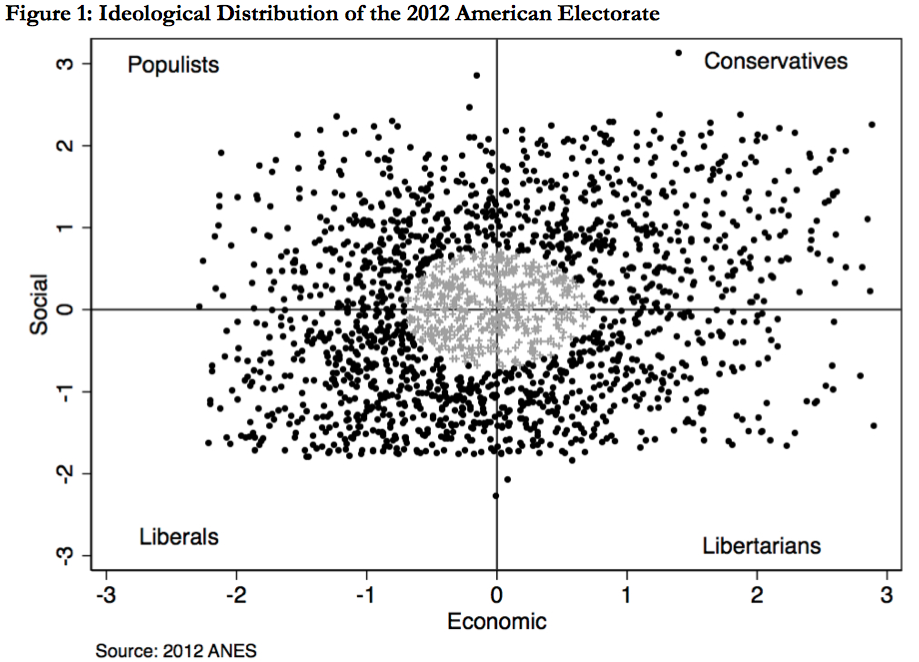
A chart from a new paper (pdf), “Why American Political Parties Can’t Get Beyond the Left-Right Divide”:

Ideological Distribution

Seth Masket uses it to explain why moderatism has a small constituency:

As the circle in the center of the graph shows, there are some people who are moderate on both dimensions, but quite a few people are moderate on one dimension but extreme on another. That is, there are some people who are pretty non-committal about economic issues but feel very strongly about their social views.

How does a moderate political party rise to power with the help of moderate voters when so-called moderate voters are actually quite extreme on one dimension? It’s hard. If you don’t really care about changing abortion laws, that might make you appealing to social moderates, but many of those same people feel that taxes should either be much higher or much lower. You take the wrong stance, and you’ve just alienated half of them. Conversely, someone who’s moderate on economic issues might feel very passionate about their civil liberties.

It’s not impossible to be a true moderate on all the major issues of the day, but such people are rare, and the candidate that professes such beliefs will alienate more people than she wins over. In other words, the radical center never rises because, to a large extent, it doesn’t exist.

The Bloated Bureaucracy Of Private Contracting

A reader writes:

The email from the government contractor is so right on it’s sickening. In an effort to reduce the size of government, Republicans – and some Democrats, but can we all agree that the thrust of the PRIVATIZE EVERYTHING argument comes from the Rs? – have us paying twice as much for the same work, and often the work is totally unnecessary. In many cases, the government actually hires contractors to supervise other contractors – this is insanity. Much like the disturbing loop of Hill staffers who work for a few years then move on to become high-paid lobbyists, government workers who move on to become contractors are just doing what makes the most sense for them, but their goals then change to become what is best for the company they now work for, not the government program or taxpayers.

Similarly, agencies are now hiring managers not for their ability and expertise in the field, but for their perceived ability to deal with contractors. Or the opposite happens and agencies have situations like the Federal Protective Service where (among many, many other problems) law enforcement officers are acting as contracting officer technical representatives and spending hours each day conducting contract guard paperwork checks instead of responding to incident calls and patrolling federal facilities. The Government Accountability Office has done tons of reports on the problems of contracts at specific agencies and the federal contracting world in general. All of this is even more scary when you consider that a single contract can be worth more than $5 billion per year, in the case of a contract issued for support services in Iraq and Afghanistan.

Another reader:

IT is what the government and its contractors do worst. Remember the shock of discovering, post 9/11, that the FBI didn’t have a functioning computer system? The kinds of things your reader highlights are exactly why. Not sure if that ever got settled. The biggest shock in the unfolding NSA revelations is that it apparently has capable hardware and software systems.

Of course nothing will happen to improve federal contracting and oversight because the corporations with these contracts are filled with revolving-door politicians, and they employ the usual army of lobbyists. Ironically, Congress has no one to blame but itself for the mess.

Another:

That person with the epic rant was speaking the truth. I also work for a government contractor and find the process very frustrating, to say the least. The ranter is absolutely right about the many flaws in the process.

Our clients are not in the defense industry and our budgets are much smaller than what the “big guys” see. But the waste is still appalling, most often because of poor management by the government officials. They never, NEVER, approach a project as a business would: with clear goals, established benchmarks and metrics, firm deadlines and a willingness to take steps to either meet those goals, benchmarks and deadlines or to make the necessary corrections if they aren’t met.

Contractors almost never get fired and government staff never do. In most cases, they aren’t screwing up because they’re evil, they just don’t have the mindset of “we need to get this to market now, make sure it meets the needs of the audience, and then fix it if it doesn’t.” I think because in most cases the project in question is designed to “do good” that provides them in their minds with a built-in excuse: so we’re behind schedule and over budget and this isn’t exactly doing what it was supposed to do, it’s helping some people.” So that’s good enough.

What really startles me is how many contracts are awarded because one employee at a mid-management level thinks it’s a good idea. It may well be but in many cases, they leave or no one else shares their interest, so money is spent and nothing is done, or projects wither on the vine for years.

I happen to believe in a large, active government because I believe that if the government doesn’t do it, the private sector will not pick up the slack and the country will suffer. But I hate to see our money wasted, especially as we focus on the deficit and debt. Forget the debate over small vs. large government, the real debate should focus on what steps would our leaders take to make sure the government operates efficiently and effectively.

Now, back to work for me.

Compensation For Climate Change?

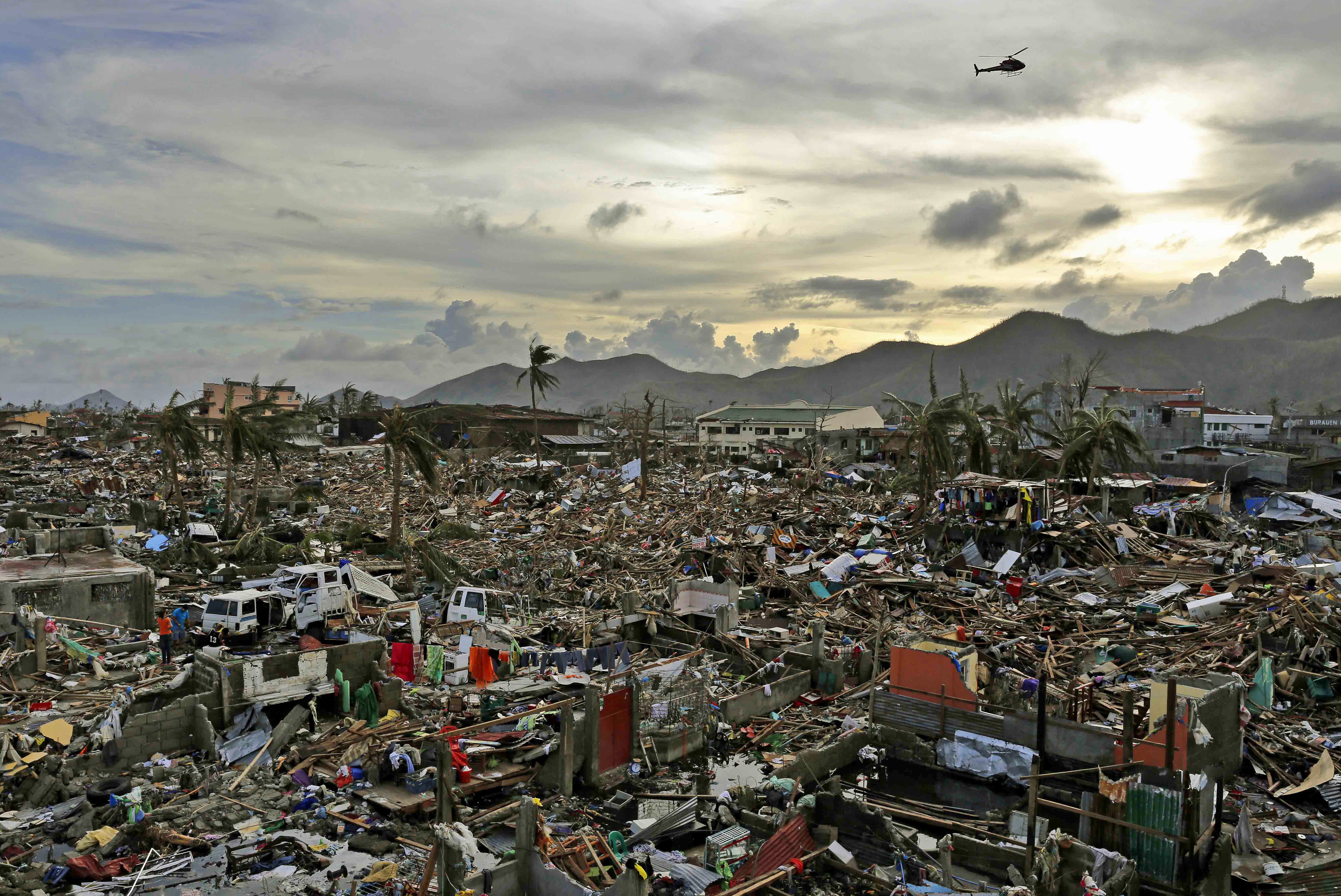
Humanitarian Efforts Continue Following Devastating Super Typhoon

Annie Lowrey contends that “the poorer the country, the harder it might be for it to respond to a changing climate”:

Let’s take the example of a typhoon. Before a storm hits, building sturdy, secure houses and ensuring that a population has a plan for evacuation are critical to preserving life and property. Right after a storm, highways, search-and-rescue teams, helicopters, tractors, firefighters, hospitals and surgeons become critical for doing the same. Afterward, insurance, savings and a well-financed government response become necessary for rebuilding lives and cities. When it comes to such disasters, money matters.

Naderev Saño, the Philippines’ delegate to the UN climate change talks and a native of hard-hit Tacloban, fought back tears Monday as he urged the UN to take action. He added that, even if rich countries radically cut their emissions, “we would still have locked-in climate change and would still need to address the issue of loss and damage.” That’s not what the US wants to hear:

An official US briefing document obtained by the Guardian reveals that the country is worried the UN negotiations, currently under way in Warsaw, will “focus increasingly on blame and liability” and poor nations will be “seeking redress for climate damages from sea level rise, droughts, powerful storms and other adverse impacts.”

(Photo: A neighborhood in the Philippine city of Tacloban is destroyed in the aftermath of Typhoon Haiyan. By Kevin Frayer/Getty Images)

The Reality Of Serious Weight Loss, Ctd

Readers continue the thread:

One of your readers mentioned that he/she is “excellent at losing weight, but terrible at sustaining the loss” and attributes it to being unable to maintain razor sharp focus. I think it’s important to point out that this phenomenon is more physiological than mental. Tara Parker-Pope wrote a fantastic article about this in the New York Times called “The Fat Trap.” It should be read by everyone who wonders why people lose a lot of weight and gain it all back.

To summarize, in order to maintain your newer, thinner body, you have to be far more disciplined than a person of the same size who was never fat. Not only does your resting metabolic rate (the number of calories you burn if you lie in bed all day) decrease, your body becomes more efficient during exercise (formal or informal). As a result, compared to a person who has always been thin, you have to do about 2500 calories worth of extra exercise to maintain your weight. That’s the equivalent of running 5 miles every week day. No wonder 97% of people who lose a significant amount of weight gain it back within five years.

Another:

As a physician I am dismayed by one of your readers quotes “I am healthy despite my weight”.  That’s the equivalent of saying I’m healthy despite my heart disease or I’m healthy despite my colon cancer.

I agree that there is a problem with how this society views fitness/beauty. Six packs and stick figures are not attainable healthy for the most part. The problem is we use the mirror as our tool for judging weight loss. Being overweight or obese lowers our self esteem and weight loss improves it. If you are lucky enough to be one of the few people who doesn’t hitch their self-esteem to their outward appearance, then congratulations. Unfortunately this does not help you or the very real health consequences of being overweight, or worse, obese.  I could list all the things, but it would take forever. There is not a single thing that being overweight/obese does not effect. In my opinion it is the single biggest roadblock to excellent medical care. We certainly don’t all have to be skinny, and we’d do better to try and separate the superficial from our feelings of self worth. But we as a society need to realize that obesity is a disease that will shorten your life.

Another:

I am a 32-year-old male. This past January while lounging around at 285 pounds I decided to make a change. I started to track my eating and doing a lot of cardio activity. Today I am down 65 pounds and everyone is amazed at my weight loss. What I see is different and was illustrated on Saturday morning when my wife commented on all my extra belly skin, I was defensive and told her it’s fat, because in my mind I have not changed in the ways I thought I would change. Losing 65 pounds is great and my doctor really loves it, but in the mirror I still feel like I weigh 285 pounds.

Another:

Those who have written in about the sagging skin resulting from their extreme weight loss should look into and seriously consider surgical removal and reconstruction surgery.  There should not be any shame attached to doing so, but only consideration of the risks and pain involved. Obesity can damage joints and arteries – we all see repairing those as necessary and attach no shame. The skin is another organ. It should not be seen as vanity to seek to repair it if it has been damaged.  If it can be repaired through surgery to give those who have lost the weight better mobility, comfort, and self-image, it is just as legitimate as a hip or knee replacement, in my opinion.

The Best Of The Dish Today

Autumn Colours At Kew Gardens

If you’re as depressed as I am by the roll-out of the ACA, you probably don’t want to read more about it. But this post is really helpful in understanding whether the push for a new law to allow people to keep their basic plans can work or not. My sense is it cannot. Once this thing is picked apart, it will unravel. The law is already reeling from its malfunctioning website; allowing escape clauses for people with sub-standard insurance at lower prices would almost certainly push it toward the much-dreaded death-cycle.

So here are a few items that are not about this nightmare: the decline of teenage sex; the necessary contradictions of a conservative in politics; the synthesis of Pope Francis and his promise for a less fractious church; and the tripod dog club, of which I am soon to become a fully-fledged member.

I’m also riveted by our new thread on the reality of serious weight loss – today’s focus being on the impact on sex. Where else would you read about that?

The most popular post of the day was Julia Ioffe’s righteous screed against vaccine denialists – including liberals. Second up was my take on Richard Cohen’s infelicitous inter-racial phraseology. TNC remains a must-read on that.

Bonus cheer-you-up Dishness: wet bears.

See you in the morning.

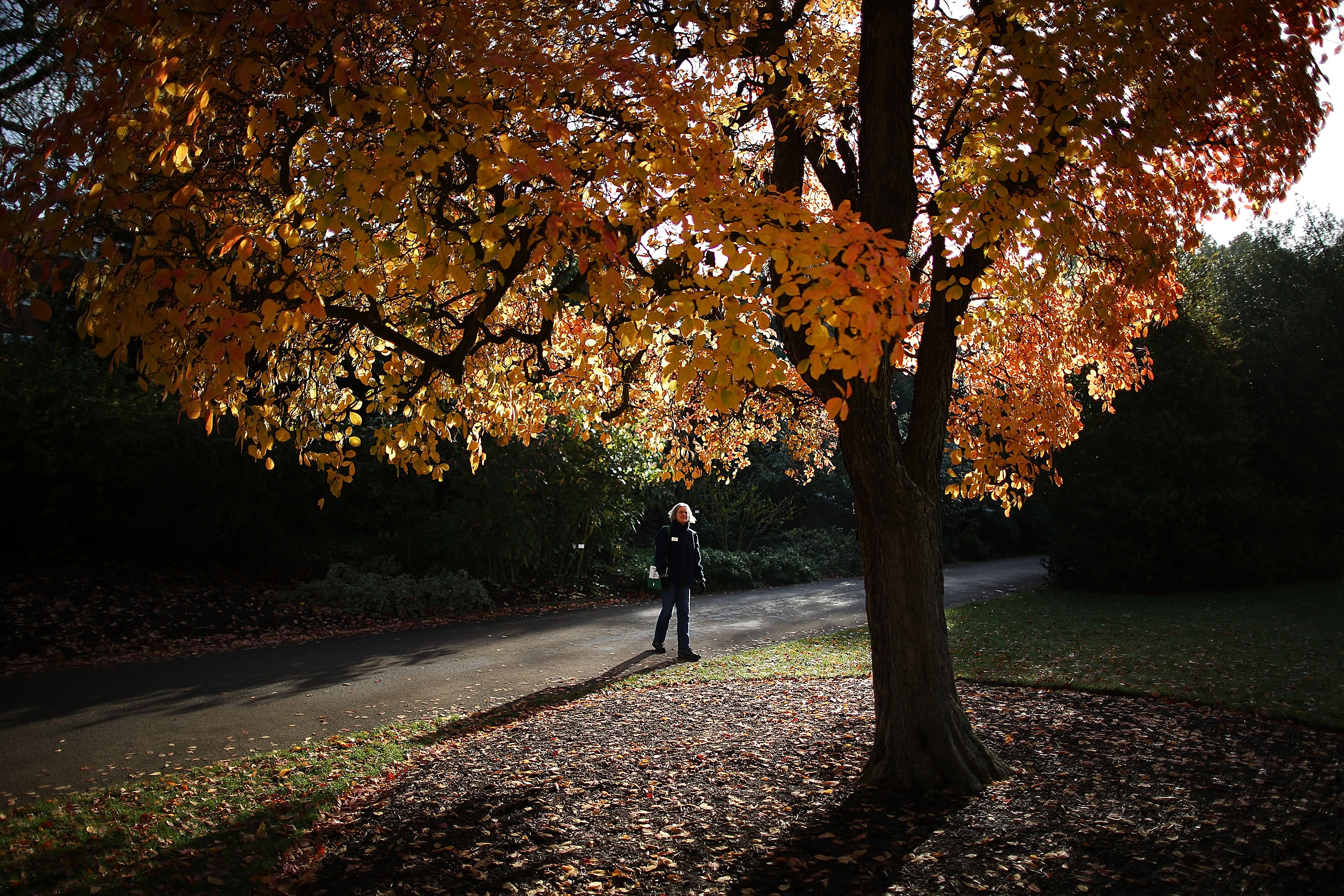
(Photo: A woman looks up at a colorful tree in the Royal Botanic Gardens, Kew on November 13, 2013 in London, England. Autumn’s colours are showing later in the season this year due to a record cold spring. By Peter Macdiarmid/Getty Images.)