Is Amazon Good For Books?

Felix Salmon suspects so:

[T]here’s an argument that Amazon has saved the publishing industry from going the way of the record labels — that it’s made buying e-books so easy that the number of free pirated versions out there is still tiny.

He thinks we confuse the decline of books with the decline of bookstores:

[A] world where you’d see a Barnes & Noble in every shopping mall, where you’d see these monster bookstores by the side of every urban highway, was a world which was constantly reminding you of how many books there are, and of how popular those books are. After all, those bookstores were kept in business by a steady stream of book lovers coming in to buy books. In their own way, B&N stores were just as good an advertisement for books in general as were the small booksellers they replaced.

So while there are just as many media-based book discussions as there always were — book reviews, book excerpts, talk shows, radio interviews, that kind of thing — the real-world reminders of the book industry as a whole have definitely shrunk.

The Best Of The Dish Today

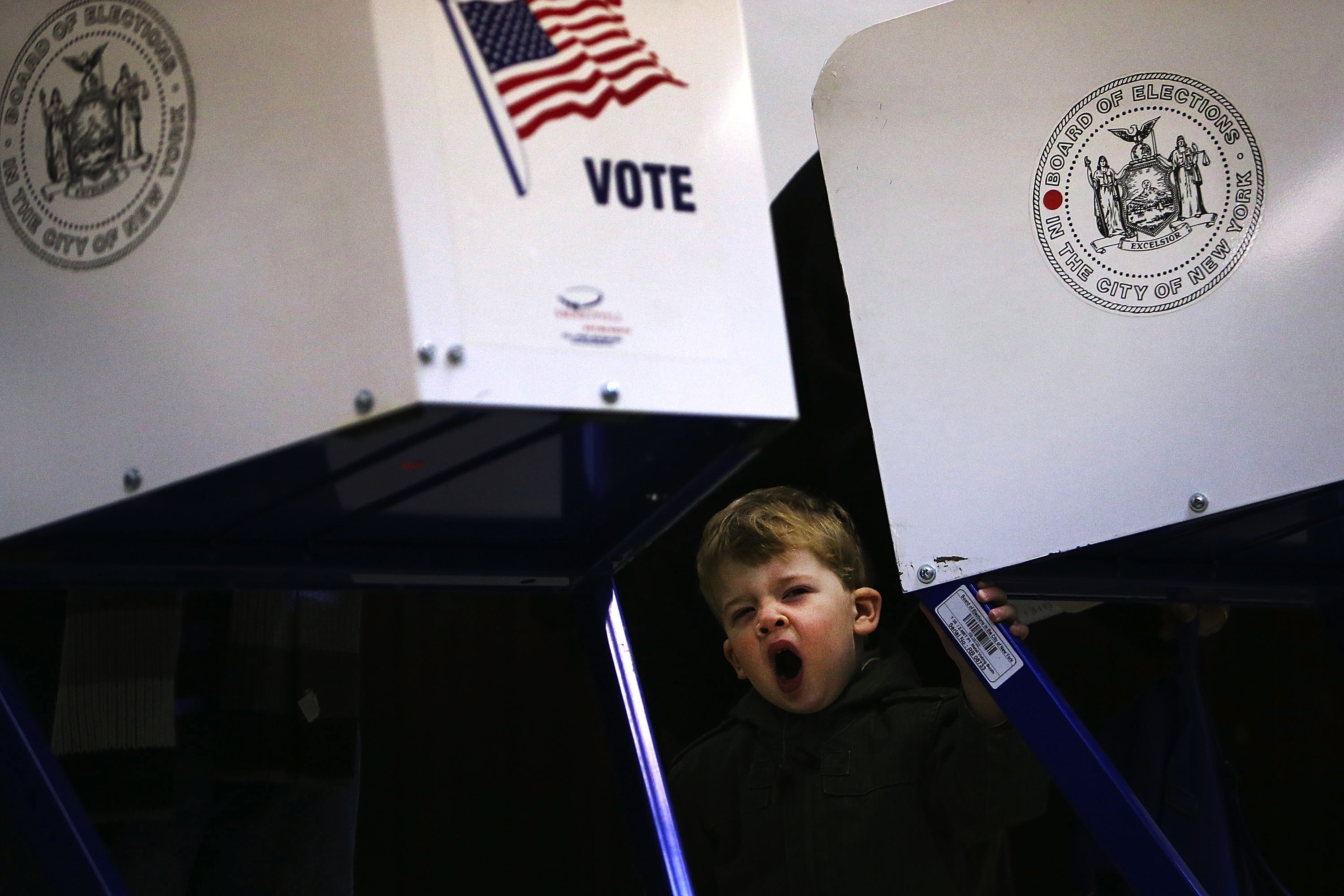
Chicago's Gay Community Celebrates Passing Of Same-Sex Marriage Law In Illinois

It was an epic night for Chris Christie and his acceptance speech was quite obviously an announcement speech for the presidency. I think he’s a very potent candidate in large part because of his pugnacity, anti-Washington cred, and GOP establishment money. But man was that speech big on self-regard. Almost every sentence was a me, I, me, I, my, I, I. Obama has similar levels of self-esteem but he hides it better in public. I’m not sure Christie will wear well. But he’s easily the most impressive potential candidate they’ve got.

As for Virginia, Cuccinelli’s relatively strong showing suggests to me that the Tea Party is far from dead, and that the prospect of the poor getting health insurance still energizes them enormously. And tonight, I have to say, the respect I had for Ron Paul was obliterated by the following inflammatory rhetoric:

Jefferson obviously was a clear leader on the principle of nullification. I’ve been working on the assumption that nullification is going to come. It’s going to be a de facto nullification. It’s ugly, but pretty soon things are going to get so bad that we’re just going to ignore the feds and live our own lives in our own states.

That’s loaded Confederate rhetoric, and when combined with this statement – “The Second Amendment was not there so you could shoot rabbits. Right now today, we have a great threat to our liberties internally” – it crosses the line to promoting sedition. I’m done with him.

Today, we explored the Christie model, his national appeal, and why the press loves him.

My personal faves: this Tuesday cry (and you will); this tortured signature; the extreme fundamentalism of Ted Cruz’s dad and surrogate; and the actual reality of the poor getting health insurance they can afford for the first time.

The most popular post? Blumenthal vs Alterman. Today’s update on that brouhaha is here. Next up? The Reality of the Affordable Care Act.

Sorry for the late post – got caught in a high school reunion and then on AC360 Later. See you in the morning. And congrats to everyone in Illinois – have a Jäger shot or two for me at Side Track, will you? I know you’re still drinking …

(Photo: Fernando Mojica and Drew Freeman raise a toast with other patrons at the Side Track bar in celebration of the Illinois General Assembly’s approval of a gay marriage bill in Chicago, Illinois on November 5, 2013. The governor has said he will sign the bill, which will make Illinois the 15th state to legalize same-sex unions. By Scott Olson/Getty Images.)

Those Eyes

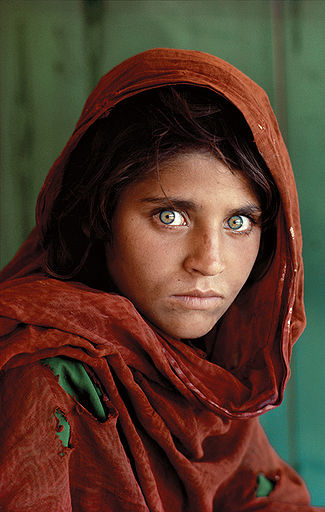
Steve McCurry’s portrait of Sharbat Gula, the “Afghan Girl”, electrified the cover of National Geographic in June 1985. He recently spoke to The Economist about the indelible image:

Why did you think Sharbat Gula, the “Afghan Girl”, was so special? Did you have any dish_sharbatgula idea that the photograph would become so iconic?

I knew it was a powerful image. I knew that she had a powerful presence. She was very striking. I knew all that, but I never dreamed it would be on the cover of the magazine, much less become an icon of the [Soviet] war in Afghanistan or Afghan refugees. The power of the picture has to do with her eyes and the ambiguity of her expression. There are a lot of emotions in that picture; on the one hand she seems a bit traumatised, but there’s a real sense of dignity and fortitude and perseverance. She’s a beautiful little girl, but there is also dirt on her face and her clothes are torn, yet she holds a direct gaze at the camera.

How was your reunion 17 years later?

It was extraordinary. It was astonishing that she and her husband agreed to meet with us, which was really unusual in that culture. We were thrilled that she was still alive, that she had a good life, that we were able to finally give back to her and help her. I think she was a bit bewildered by the whole thing initially. She didn’t understand that her picture has been published all over the world. But in time she learned—we provided her with a television so she could see the documentary [“Search For the Afghan Girl” (2003)].

We keep in touch with her every month—myself, National Geographic, my sister plays a very important role in maintaining this relationship and assisting her with all sorts, whether it’s medical assistance, education, housing or anything we can do. We’ve helped to buy her a home that she’s able to have ownership of. It’s been great to help her. I believe that this has made her life better.

McCurry has a new book out, Untold – The Stories Behind the Photographs, and you can follow his latest work here. Below is the documentary of McCurry and Gula’s reunion, “Search For the Afghan Girl”:

The documentary continues here. Photo used with permission.

Custom-Made Kids, Ctd

A reader writes:

Thanks for posting on preimplantation genetic diagnosis (PGD). I’d like to offer my perspective as both someone who enjoys thinking about the social implications of technology (graduate degree in Technology & Policy, big Kurt Vonnegut fan), and as a parent who has used this technology. I have actually pondered for many years about the morality of choosing the sex of a child, or screening for diseases, or tailoring a child’s appearance and traits. The problem of course is that there is a slippery slope at work (which the Gattaca clip you posted makes very clear), and it seemed to me that it was not our place to play god. Not being a religious man, I tended to think of this more in terms of the risks to humanity from deliberately reducing the biodiversity of the gene pool, and what that might mean for the ability of the human race to evolve in response to changes in their environment.

Enter reality.

My wife is a carrier for X-linked retinitis pigmentosa, a more or less untreatable degenerative eye disease caused by a mutation on the X chromosome. Her father and her uncle both began to lose their eyesight at age three, and were legally blind by early adulthood. When we had our son three years, ago, we knew that my wife was an obligate carrier of the mutation and that our son had a 50% chance of inheriting the disease from her.

We began taking him to an ophthalmologist to monitor his eyesight. I can hardly express how painful it was to watch our little boy discovering the world and know that there was an even chance that he would soon be losing his sight. We soon learned that there are genetic tests for the two most common mutations that cause X-linked RP, and we proceeded to have my wife, her uncle, and our son tested. I recall getting the phone call from the geneticist with the good news and how I cried with relief when we learned that our son had tested negative for the mutation. Not only had we dispatched with the sword of Damocles, we could now forego many costly visits to the ophthalmologist for ongoing monitoring.

At the same time, we were having trouble conceiving our second child. We visited a fertility clinic, and in the process heard about PGD. At that point, all of the old hypotheticals, thought experiments, and moralistic navel-gazing went out the window. For us, it was a no-brainer. Since we were undergoing IVF anyway, we were more than happy to pay the extra few thousand dollars to ensure that our child would not suffer from this disease. We did not want him to deal with what his grandfather and great-uncle had dealt with, and we did not want to go through the stressful ophthalmologist visits again.

At the same time, we knew that by default we would also have the opportunity to choose the sex of our child. This gave us more pause, especially when considering that we might have to choose between an unaffected male and a carrier female. We wanted a girl, and while a carrier female would never be affected by the disease herself, like her mother she would have a 50% chance of passing the mutation on to her children. (In the end, we were spared this choice: all of the embryos for which they could get a clear PGD result were female.)

None of this obviates the moral questions in play here. I just mean to point out that as with so many contentious issues, where you stand depends on where you sit, and what seems mildly unsettling for society in the abstract can be a godsend for an individual family.

The Aftershocks Of Gezi Park

Steven A. Cook reports on a recent surge of xenophobia and media crackdowns within Turkey, as the government continues to lash out against coverage of the summer protests:

[I]n the last six months, something has changed. Turkish political discourse is darker and the attacks on foreign observers of Turkish politics have become relentless. During the Gezi Park protests, the thuggish mayor of Ankara, Melih Gokcek, accused a BBC reporter of Turkish origin of being a traitor because she was reporting on the brutal crackdown on demonstrators in his city. Recently, a Dutch journalist named Bram Vermeulen, was informed that his press card was not renewed and that he would not be permitted back into Turkey after his current visa expires, apparently in revenge for his reporting on Turkey’s recent tumult. The Gezi Park protests represent an important point of departure for the AKP [ruling Justice and Development Party] establishments and its supporters.

Rather than a cause for introspection about why so many Turks—though not a majority by any means—are angry at their government, the ruling party and Prime Minister Recep Tayyip Erdogan cynically framed the narrative in a way that places blame for Turkey’s political turbulence on outsiders seeking to bring the country to its knees. The fact that they have been successful speaks to the continuing trauma of the post-WWI period when foreigners—the British, Greeks, French, and Italians—did actually seek to carve up Anatolia. As a result, a depressingly large number of Turks blamed CNN, the BBC, the “interest rate lobby,” “Zionists,” the American Enterprise Institute, and Michael Rubin for the events surrounding Gezi.

Previous Dish on the Turkish upheaval here.

One Way To Live A Little

In a recent address at the first annual conference of the pro-life student group Choose Life at Yale, Tristyn Bloom suggested that “the reason people continue to defend abortion is because, essentially, of existential terror: fear of what will happen when something unexpected, uninvited, unplanned bursts into our lives demanding action”:

We often hear that a problem with young people today is that we are irresponsible. We don’t have a sense of duty. We don’t have a sense of order. We’re immature. I think that the problem is actually the opposite. I think that we are pathologically terrified of risk and I think that we have this enslavement to our own ideas of respectability, our own ideas of our life plan, our commitments, our existing duties such that something as radically changing as a new life doesn’t fit in with those existing duties. To accept that life would be the irresponsible choice, and that’s the framework from which a lot of people are operating. They see themselves as accepting consequences, as responsible. They have a semblance of a moral framework and we can’t ignore that just because it’s completely the opposite of our own. And this isn’t just about whether or not you accept a child. I think that we are so enslaved to a plan, and a routine, and a vision of our lives, we can’t embrace the unsettledness, openness, flexibility, and folly it takes to have an actually pro-life culture in every instance.

Josh W., a Catholic blogger, expands on Bloom’s point:

[U]tilitarianism … has come to define propriety and social mores, at least to a certain extent… . Actions have costs, benefits and risks, and the ethical choice is one which takes that into account. Having lots of of kids, for instance, is frowned upon because it is seen as being both personally and socially irresponsible.

But this is also a vision of life that becomes progressively divorced from meaning. It’s the sort of “healthy” ho-hum bourgeoisie existence that Friedrich Nietzche had a panic over. And this is why I have a sympathy for counter-cultural sorts, weirdos and the like, even if they’re doing something I’d consider stupid or evil; because there is an acknowledgement of the enervating and sterile aspect of modernity and a desire for spontaneity. That is what makes the beatniks and hippies fascinating, because they correctly recognized the meaninglessness of the world they grew up in and reacted against it. They went for the wrong medicine and ironically wound up having bits and pieces of their own ethos assimilated back into the mainstream, but they had some awareness.

Dreher adds questions to the debate:

I hadn’t thought of the pro-life issue this way — that a culture of life can’t take root in a culture that is terrified of making a single mistake that would ostensibly ruin one’s life.

On the other hand, it can’t be denied that having a baby out of wedlock really does, in most cases, have a significant impact on the economic prospects of their mothers. What is the difference? A middle-class support system? What?

Update from a reader:

Jesus H. Christ, talk about an ivory tower. “The reason people continue to defend abortion is because, essentially, of existential terror… We can’t embrace the unsettledness, openness, flexibility, and folly it takes to have an actually pro-life culture in every instance.”

If I were just a bit more spontaneous, I’d agree that it’s the role of the state to force a person to keep something unwanted inside them! Gosh! I need to live a little! Thanks, Ms Bloom!

Pro-choice can be pro-life. Repeat that over and over, because it’s true. Pro-choice simply means that when it’s not me affected, I cannot make the decision.

Childhood Is Increasingly Precious

This embed is invalid


Katy Waldman ponders what effects increased life expectancy is having on the idea of childhood and what to anticipate “for kids when adults are living to 120 and beyond”:

Besides the likelihood that they will have lots of potential caretakers (or at least endure a borderline inhumane number of cheek pinches at Thanksgiving), they may be seen as even more rare and precious. Society will skew older. The years before puberty will represent an ever-smaller proportion of the overall lifespan. We can speculate that, for a certain income bracket, the cult of childhood will become yet cultier, the cocoons at once softer and more anxiously woven. …

But who even counts (or will count) as a “kid”?

And what happens to the limbo period between childhood and adulthood, dependence and autonomy, when time approaches the status of a renewable resource? “There’s always been a tension in American history between absolute chronological age and maturation,” says Susan A. Miller, a professor of childhood studies at Rutgers. “Age has historically been far less relevant than what someone is able to accomplish.” In the 18th century, she continues, a boy who developed quickly, growing strong and tall, was considered ready for a man’s work. A century later, before industrialization took hold, it was not uncommon for 17-year-olds to graduate from Harvard, to go west, to edit city newspapers. Now, that haziness around age versus competence seems to be going in the other direction. Modern young people are testing the limits not of how swiftly they can plunge into adulthood, but of how long they can delay it.