Multi-Tongued Tots

Prospero’s R.L.G. surveys research on children raised as bilingual or multilingual:

Many parents once believed that a second language was a bad idea, as it would interfere with developing the first and more important one. But such beliefs are woefully out of date today. Some studies (such as this one) seem to show that bilinguals have smaller vocabularies in each language (at early stages) than monolinguals do. But other studies (such as this one) find no vocabulary shortfall in either language. In any case, the influence of mono- or bilingualism on vocabulary size is later overtaken by the importance of education, socio-economic status, reading and writing habits. In short, there is little evidence that raising a child bilingual will hurt their primary language.

The benefits, by contrast, are both strong and long-lasting. Bilingual children as young as seven months outperform monolinguals at tasks requiring “executive function”: prioritising and planning complex tasks and switching mental gears. This is probably because monitoring the use of two languages is itself an exercise in executive function. Such studies control for socio-economic status, and in fact the same beneficial effects have been shown in bilingual children of poor families. Finally, the effects appear to be lifelong: bilinguals have later onset of Alzheimer’s disease, on average, than do monolinguals.

Previous Dish on Tim Doner, the 17-year-old boy who can speak 20 languages, here. A video profile of 12-year-old Wendy Vo, who can speak 11 languages, is seen above.

New Frontiers In Propaganda, Ctd

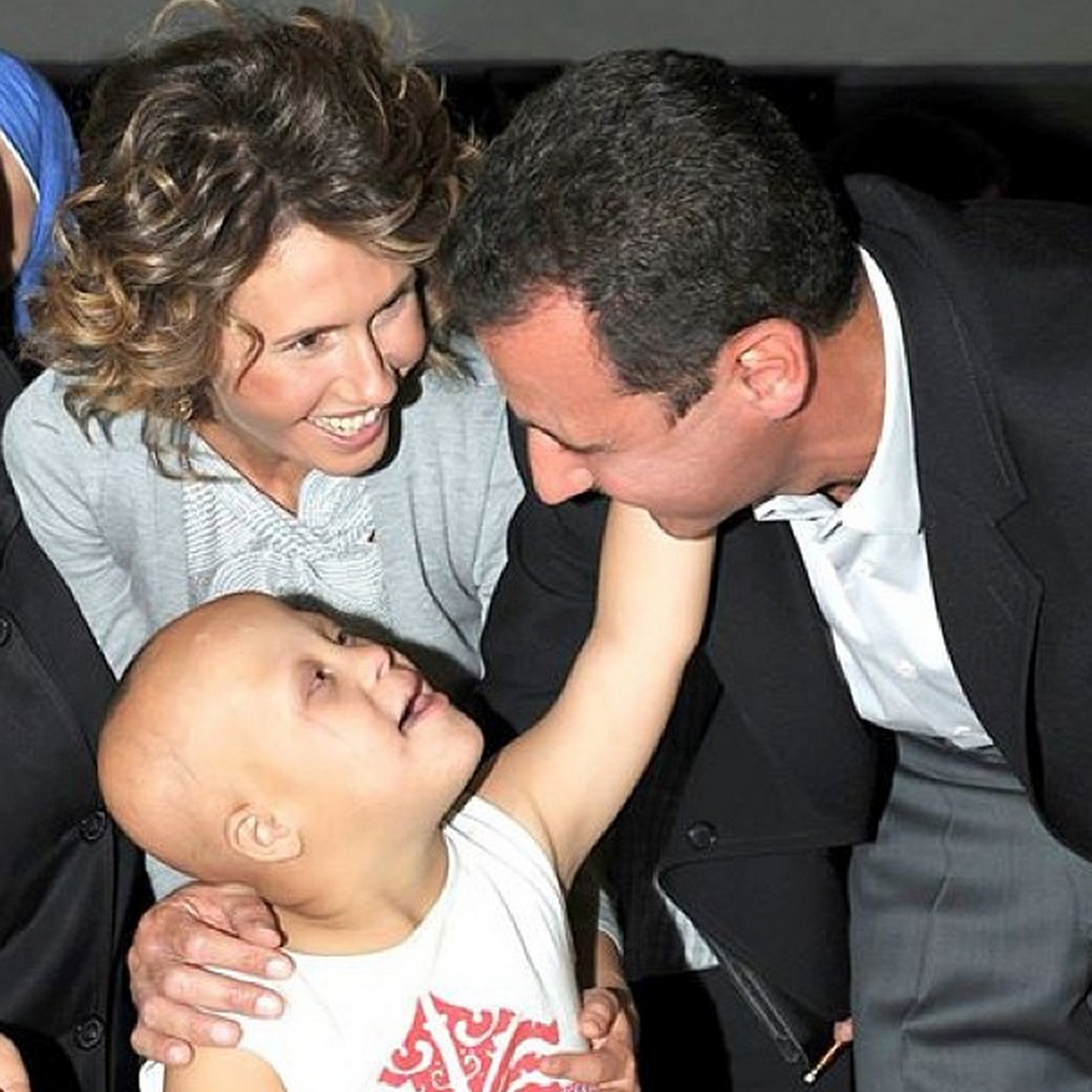
Emily Greenhouse adds a little reporting to the story of Assad’s Instagram account:

What does a social-media company do when a user known to be attacking civilians is blasting out Screen Shot 2013-11-04 at 7.01.50 PMfeel-good content? I posed this question to Instagram about Assad’s user stream. Alison Schumer, who works on the company’s policy and communications team, told me that she cannot comment on specific accounts, even if the account is a global public figure. But she explained that, generally speaking, if a user created content that promoted violence, Instagram would remove it and possibly disable the user. Schumer stressed the importance of the context of the image in making those calls—a caption might make an image threatening, for instance—but also said that “context” is generally limited to content on the site. What matters, then, is that the picture Assad puts up depicts his wife assisting a disabled child—the caption on that one translates as “In order for the people with special needs to give and create, they must be directed out of the space of pity, charity and compassion The First Lady Asma al Assad #syria#Asma#Assad#handicapped”—rather than whether he is promoting a violent regime. Perhaps if he began to post videos of gassed children, Instagram would take down the account.

Meanwhile:

Groups that support Assad, notably the Syrian Electronic Army, have hacked the Web sites and social-media presences of various news organizations, including the New York Times and the Washington Postflooding their Web sites and Twitter accounts with pro-Assad messages. [Last] week, the group targeted Organizing for America, a project of President Obama’s, by taking over its Twitter account and posting links to its own content, including a video “showing the truth about Syria.” Two and a half years ago, Syrian officials began to demand citizens’ Facebook passwords, sometimes to post conspicuously pro-regime content.

Caption for the above photo, uploaded to Assad’s Instagram on October 31:

من إحدى الزيارات السابقة للسيد الرئيس بشار الأسد والسيدة عقيلتة لذوي الإحتياجات الخاصة. #سورية#بشار#أسماء# a visit by the President and the First Lady to the people with special needs. #syria#Bashar#AssadFollow

Resetting Uncle Sam’s Clocks

Allison Schrager wants the US to simplify its time zones:

This year, Americans on Eastern Standard Time should set their clocks back one hour (like normal), Americans on Central and Rocky Mountain time do nothing, and Americans on Pacific time should set their clocks forward one hour. After that we won’t change our clocks again—no more daylight saving. This will result in just two time zones for the continental United States. The east and west coasts will only be one hour apart. Anyone who lives on one coast and does business with the other can imagine the uncountable benefits of living in a two-time-zone nation (excluding Alaska and Hawaii).

She notes that our time zone system dates back to 1883 and was originally intended to make business easier for the telegraph and railroad industries:

Why stick with a system designed for commerce in 1883? In reality, America already functions on fewer than four time zones. I spent the last three years commuting between New York and Austin, living on both Eastern and Central time. I found that in Austin, everyone did things at the same times they do them in New York, despite the difference in time zone. People got to work at 8 am instead of 9 am, restaurants were packed at 6 pm instead of 7 pm, and even the TV schedule was an hour earlier. But for the last three years I lived in a state of constant confusion, I rarely knew the time and was perpetually an hour late or early. And for what purpose? If everyone functions an hour earlier anyway, in part to coordinate with other parts of the country, the different time zones lose meaning and are reduced to an arbitrary inconvenience. Research based on time use surveys found American’s schedules are determined by television more than daylight.  That suggests in effect, Americans already live on two time zones.

The Upside Of Short-Term Memory Loss

It can help you finish a marathon:

The caption for the charming animated video:

When Gweneviere Mann, a San Francisco native living in New York, lost her short-term memory following surgery to remove a brain tumor, she was forced to navigate life in a new way. Every day brought new puzzles: Where was she? Who was the person talking to her? With the support of her boyfriend, Yasir Salem, she found she could tackle the challenges her condition threw her way —and a few more.

Previous Dish on Henry Molaison, the most famous case of permanent memory loss, here and here.

Intern Loans On Top Of Student Loans?

Arguing that “unpaid internships provide access only to students from wealthy families,” economist Edward Glaeser suggests making new loans available to low-income interns:

[I]t’s unrealistic to think individual private businesses will provide new skills to temporary, not-yet-qualified workers simply out of public benevolence. Throughout much of Western history, young apprentices paid to learn – either explicitly with cash or implicitly by working for little pay. … One solution might be to expand federal student loan programs to cover students taking unpaid internships, whether or not they receive college credit for them, or even recent graduates. I would set a high bar for making internships eligible for such loans, by requiring official certification of their educational quality. With a loan program in place, more widespread unpaid internships could help move young Americans toward permanent employment. Internships provide a pathway towards employment that should be encouraged – not penalized.

Jordan Weissman counters, “If you’re a broke 23-year-old, the concept of taking out debt for an unpaid internship probably sounds something like the two-headed hell-hound of your financial nightmares”:

I can sort of see how this line of thinking would develop. If you really, truly believe a dearth of skills, rather than a slow economy, is the problem hampering college graduates in today’s job market, you might see internships as a tonic. After all, Germany and other European countries run very successful apprenticeship programs that prepare young adults for careers (though those apprenticeships are paid). And if you believe the only downside to unpaid internships are the class issues, then student loans might sound like an elegant solution. We are just talking about more education. What’s so wrong with financing it?  Plenty.

To start, I’m not sure how someone can look at the state of student debt, all $1 trillion of it and change, then decide the government needs to make a whole new class of loans. Nor is it really apparent that skills are the great problem holding back BA’s, given the cyclical nature of their employment woes. Glaeser also glosses over the lack of evidence that unpaid internships regularly lead to work. … In the end, Glaeser is essentially asking government to subsidize entry level employment at for-profit companies who have realized that many young people don’t have to be paid for their work. Because that’s what internships are: work.

Which is why Dish Publishing LLC provides both pay and health insurance to our interns; good work deserves compensation. And we don’t want to cut off working-class candidates who couldn’t afford the internship otherwise. Why close ourselves off from a large segment of talent?

Update from a reader:

I wanted to write and let you know that a fairly common form of student loans for internships already exists, albeit only while you are still enrolled. I know because I had to take out a loan to afford clerking unpaid for the Orleans Public Defenders a few years ago. It’s a very desirable internship for those that are interested in public interest law (and highly recommended), an opportunity I immediately accepted.

In law school, even at a public university, I already had a lot of debt, including some from under-grad (also at a public school, in-state), so I had very little disposable income, certainly not enough to pay for rent on my lease where I went to school and also for a place in New Orleans, not to mention moving, living expenses, etc. So I took my law school’s internship class for credit over the summer while working at the clerkship. This allowed me to qualify for several thousand dollars in cost-of-living student loans to work unpaid at the public defenders office.

The loans on their own didn’t bother me so much because unlike a lot of unpaid corporate internships this was a really desirable cause, at least to me (no, I don’t mean advancing my resume), and they genuinely did not have resources to pay us. However, the class I took, like most internship credit classes, was not really educational in any meaningful way. It consisted of keeping a journal of my activities and writing a few essays about what I was learning, time I felt could have been better spent serving indigent clients/ working. In addition to the thousands in loans I took out for living expenses, I also paid several thousand dollars for this “class.” In other words, I pretty much paid the university to work for free, but I wouldn’t have qualified for the loans I needed to live unless I took the lightweight class. I would have much rather spent that money on a substantive class, not paying for an unpaid internship.

By the way, you paying your interns, and the reasons why, definitely pushed me over the edge into [tinypass_offer text=”subscribing”] very early on. I’m an avid reader of news, almost exclusively online, and this is the first and only content I’ve paid for to date (should I feel bad…?).

Animating Thought

Michel Gondry’s latest film project, Is the Man Who Is Tall Happy?captures a conversation he had with Noam Chomsky:

[W]hile it really is just a conversation between Gondry and Chomsky, the ever-innovative visual stylist found ways to make that particularly compelling. The key word is “animated,” as the ideas presented by Chomsky–who’s known for big ideas–get depicted in bright colors, in a loose, doodling style on-screen. When Chomsky talks about the way humans learn, we don’t stare at his face, we watch as the metaphor he uses comes to life.

It’s a clever, and visually interesting, way to capture Chomsky–whose speaking voice is, to put it plainly, kind of like the audio equivalent to a glass of warm milk–as the fascinating thinker he is. We should expect nothing less from Gondry.

Why Our Brains Are So Big

Emily Esfahani Smith explains:

Brain size generally increases with body size across the animal kingdom. Elephants have huge brains while mice have tiny ones. But humans are the great exception to this rule. Given the size of our bodies, our brains should be much smaller—but they are by far the largest in the animal kingdom relative to our body size. The question is why. Scientists have debated this question for a long time, but the research of anthropologist Robin Dunbar is fairly conclusive on this point. Dunbar has found that the strongest predictor of a species’ brain size—specifically, the size of its neocortex, the outermost layer—is the size of its social group. We have big brains in order to socialize.

This helps explain why socialization is so strongly connected to our happiness:

When economists put a price tag on our relationships, we get a concrete sense of just how valuable our social connections are—and how devastating it is when they are broken. If you volunteer at least once a week, the increase to your happiness is like moving from a yearly income of $20,000 to $75,000. If you have a friend that you see on most days, it’s like earning $100,000 more each year. Simply seeing your neighbors on a regular basis gets you $60,000 a year more. On the other hand, when you break a critical social tie—here, in the case of getting divorced—it’s like suffering a $90,000 per year decrease in your income.