Virginia Hughes marvels at a new paper that compares how 46 species – including humans – grow old:
For folks (myself included) who tend to have a people-centric view of biology, the paper is a crazy, fun ride. Sure, some species are like us, with fertility waning and mortality skyrocketing over time. But lots of species show different patterns – bizarrely different. Some organisms are the opposite of humans, becoming more likely to reproduce and less likely to die with each passing year. Others show a spike in both fertility and mortality in old age. Still others show no change in fertility or mortality over their entire lifespan.
That diversity will be surprising to most people who work on human demography. “We’re a bit myopic. We think everything must behave in the same way that we do,” says Jones, an assistant professor of biology at the University of Southern Denmark. “But if you go and speak to someone who works on fish or crocodiles, you’d find that they probably wouldn’t be that surprised.
What the new study didn’t find, notably, is an association between lifespan and aging.
It turns out that some species with pronounced aging (meaning those with mortality rates that increase sharply over time) live a long time, whereas others don’t. Same goes for the species that don’t age at all. Oarweed, for example, has a near-constant level of mortality over its life and lives about eight years. In contrast, Hydra, a microscopic freshwater animal, has constant mortality and lives a whopping 1,400 years.
This is a problem for the classical theories of aging that assume that mortality increases with age, notes Alan Cohen, an evolutionary biologist at the University of Sherbrooke in Quebec. “The traditional idea is that this is what most things do, and that there were a few weird creatures out there that were exceptions,” he says. “But there are actually a lot of exceptions.” The question that the classical theories try to answer – How could aging evolve? – is no longer the most interesting question, Cohen adds. “What we really need to explain is why some things age and some don’t.”
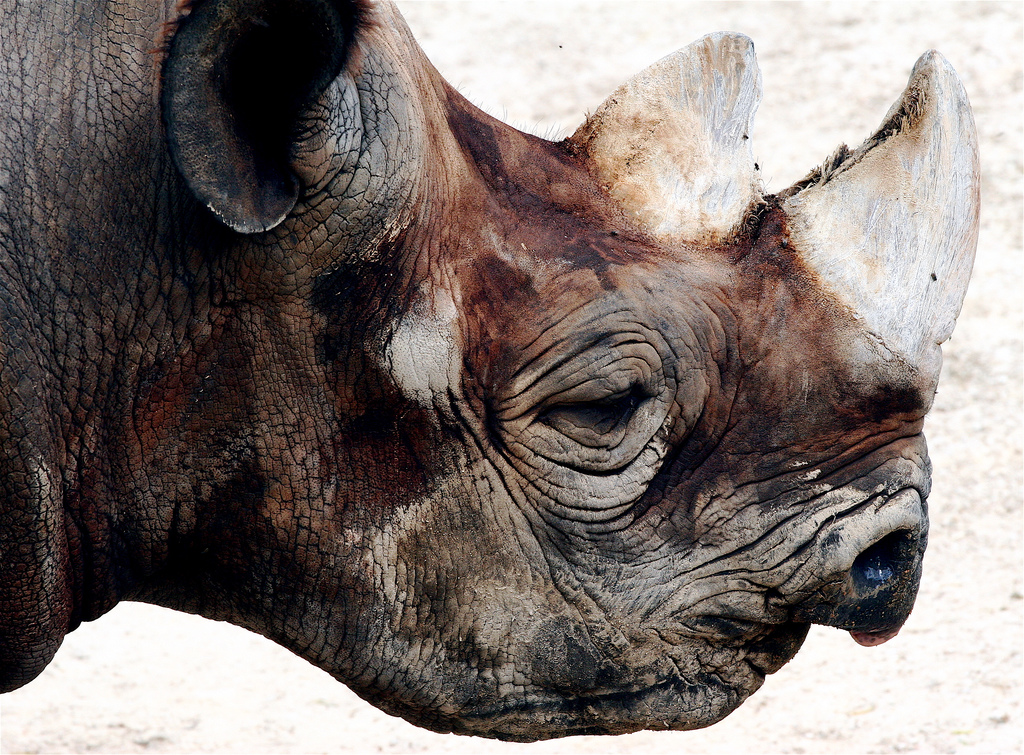
(Photo by Stephanie Carter)
 The Dish