Oliver Turner chides analysts for overstating the Chinese military threat while ignoring similar issues elsewhere in Asia:
India consistently devotes a larger proportion of its GDP to its military than does China; for the past five years it has been the world’s largest importer of weapons, and it is expected to be the fourth largest military spender by 2020. Yet a new Indian aircraft carrier is immediately considered a welcome development, while in the case of China we are grimly told it is “not time to panic. Yet.”
Importantly, the more we assume that China is a probable instigator of hostility and even war, the more we ready ourselves for that eventuality. Indeed, the “China factor” is used to justify efforts by India, as well as Japan, the Philippines, Taiwan and others, to bolster their defense capabilities, leading to increasing tensions across a highly sensitive region. The “China factor” has also been used to rationalize the United States’ recent “pivot” (or “rebalancing”) towards the Asia Pacific. China is becoming a bigger threat, the logic goes, so others should prepare.
Yet we should also recognize the potential effects of an “India factor” in China and that the actions of others will not go unnoticed in Beijing. In consequence we risk trapping ourselves in a self-fulfilling prophecy of Chinese aggression. We may, in other words, end up literally imagining a threatening China into existence and through our ideas and actions become faced by the fictional demon we feared all along.
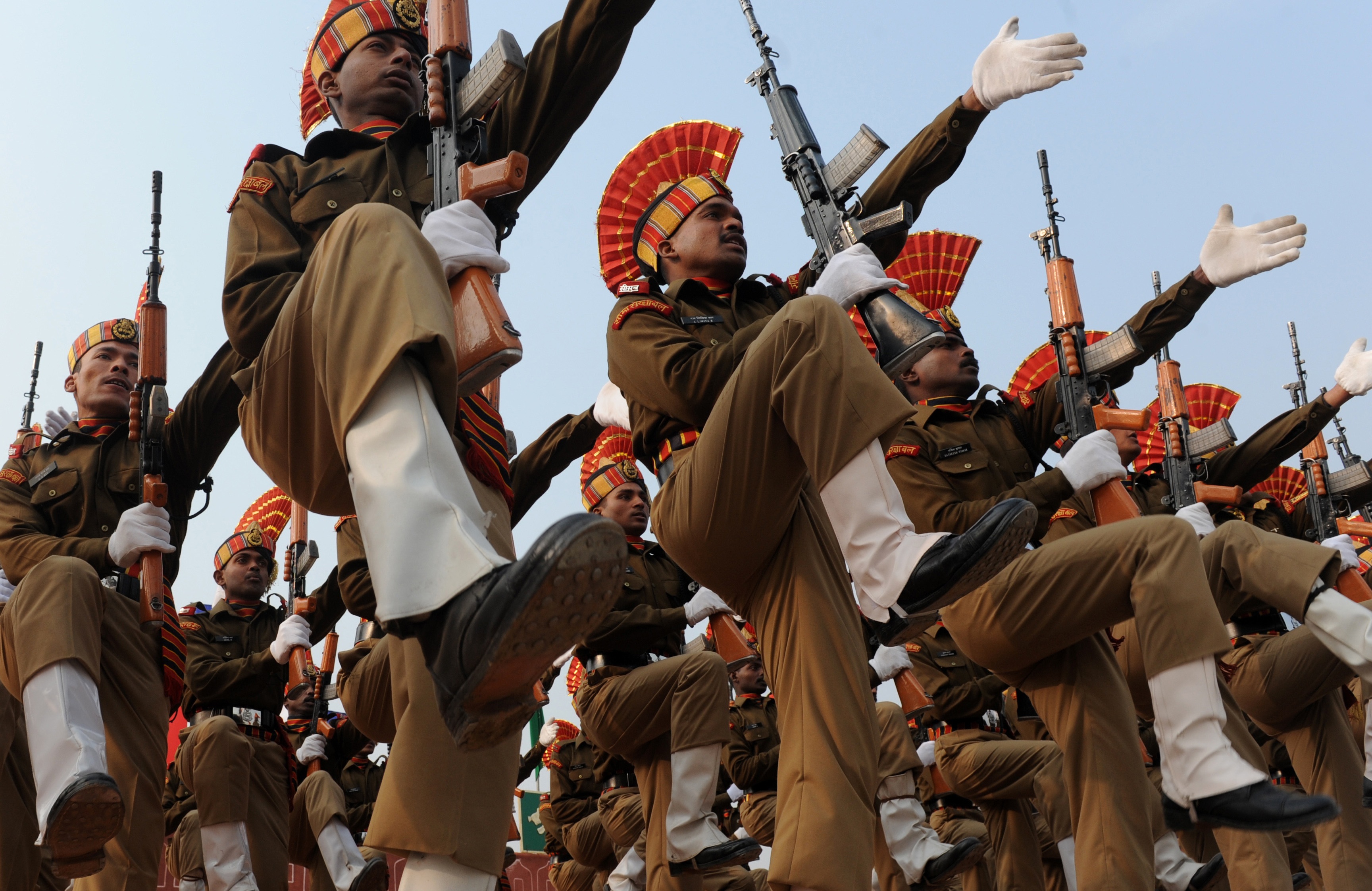
(Photo: Indian Border Security Force (BSF) recruits march during their passing out parade in Humhama, on the outskirts of Srinagar on December 6, 2013. Some 342 new recruits were inducted into the force which is fighting an insurgency in Kashmir. At least 47,000 people have died as a result of the insurgency in highly militarised Indian Kashmir, according to official count with separatists putting the toll twice as high. By Rouf Bhat/AFP/Getty Images)
 The Dish