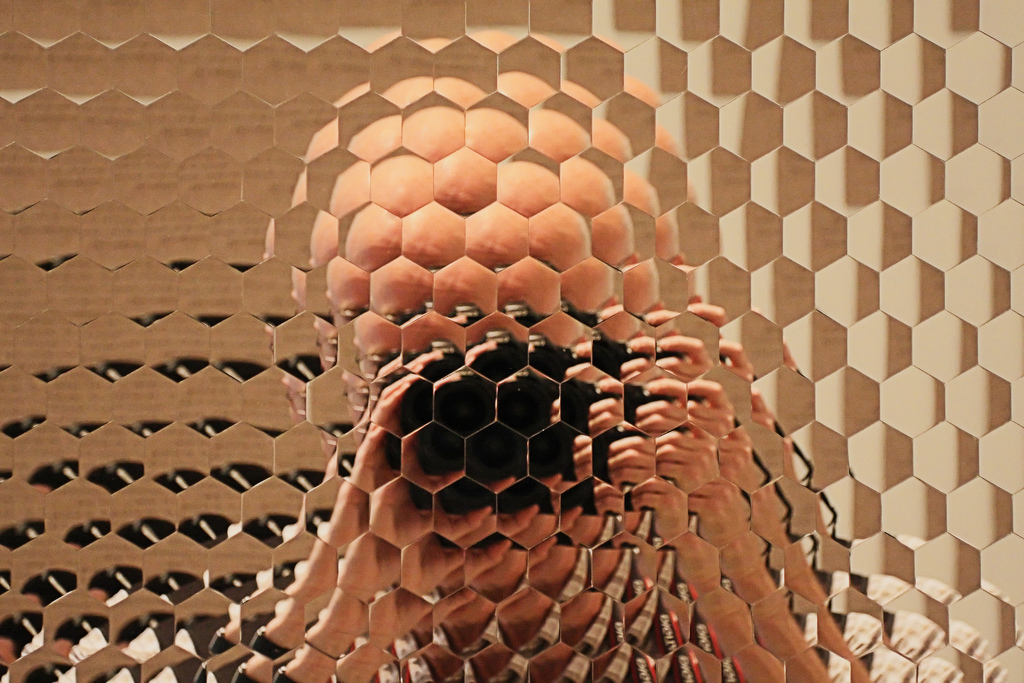
Eric Gibson thinks overzealous smartphone users are ruining the museum experience:
Rather than contemplating the works on view, visitors now pose next to them for their portrait. In pre-digital photography the subject was the work of art. Now it is the visitor; the artwork is secondary. Where previously the message of such images was “I have seen,” now it is “I was here.”
If visitors now regard a museum’s treasures as mere “sights,” they might come to regard the institution itself in a similar vein—not as a place offering a unique, one-of-a-kind experience but just another “stop” on a crowded itinerary, and as such interchangeable with any other. At the very least, it’s hard to see how this new culture of museum photography can fail to undermine the kind of long-term visitor loyalty to museums toward which so many of their public engagement efforts are directed. On the one hand, the visitor who makes an emotional connection with a work of art is likely to return. On the other hand, I can’t imagine there are many tourists who, having once had themselves snapped propping up the Leaning Tower, feel compelled to do so again.
Jillian Steinhauser begs to differ:
[T]he obvious point Gibson has missed is that people are often taking pictures because they’re excited about art. They came because they wanted to see it with their own eyes. And they’re using their cameras and smartphones as a form of interaction – we live, after all, in the age of mechanical reproduction, not the age of aura.
Did we lose something in the exchange? Probably. But that doesn’t mean we should throw up our hands completely. The way we understand and process art has changed – you can take it home with you, blow it up on your computer screen, remix it in Photoshop, Snapchat it to your friends – in part because the way we understand nearly all cultural production has changed.
(Photo of Anish Kapoor’s Untitled by Leo Reynolds)
 The Dish