A century-old mystery has finally been put to rest:
In 1908, two brothers who were also archeologists uncovered [a] 50,000-year-old Neanderthal
skeleton in the cave, and almost immediately they speculated that the remains were intentionally buried. But a lack of information about the excavation procedures used by the Bouyssonie brothers – as well as the fact that they were Catholic priests – caused many skeptics to wonder if the discovery had been misinterpreted.
In 1999, French researchers reexamined the site. Their excavations, which concluded in 2012, showed that the depression where the skeleton was found was at least partially modified to create a grave. Moreover, unlike reindeer and bison bones also present in the cave, the Neanderthal remains contained few cracks and showed no signs of weathering-related smoothing or disturbance by animals.
The idea that Neanderthals buried their dead fits with recent findings that they were capable of symbolic thought and of developing rich cultures. For example, findings show they likely decorated themselves using pigments, and wore jewelry made of feathers and colored shells.
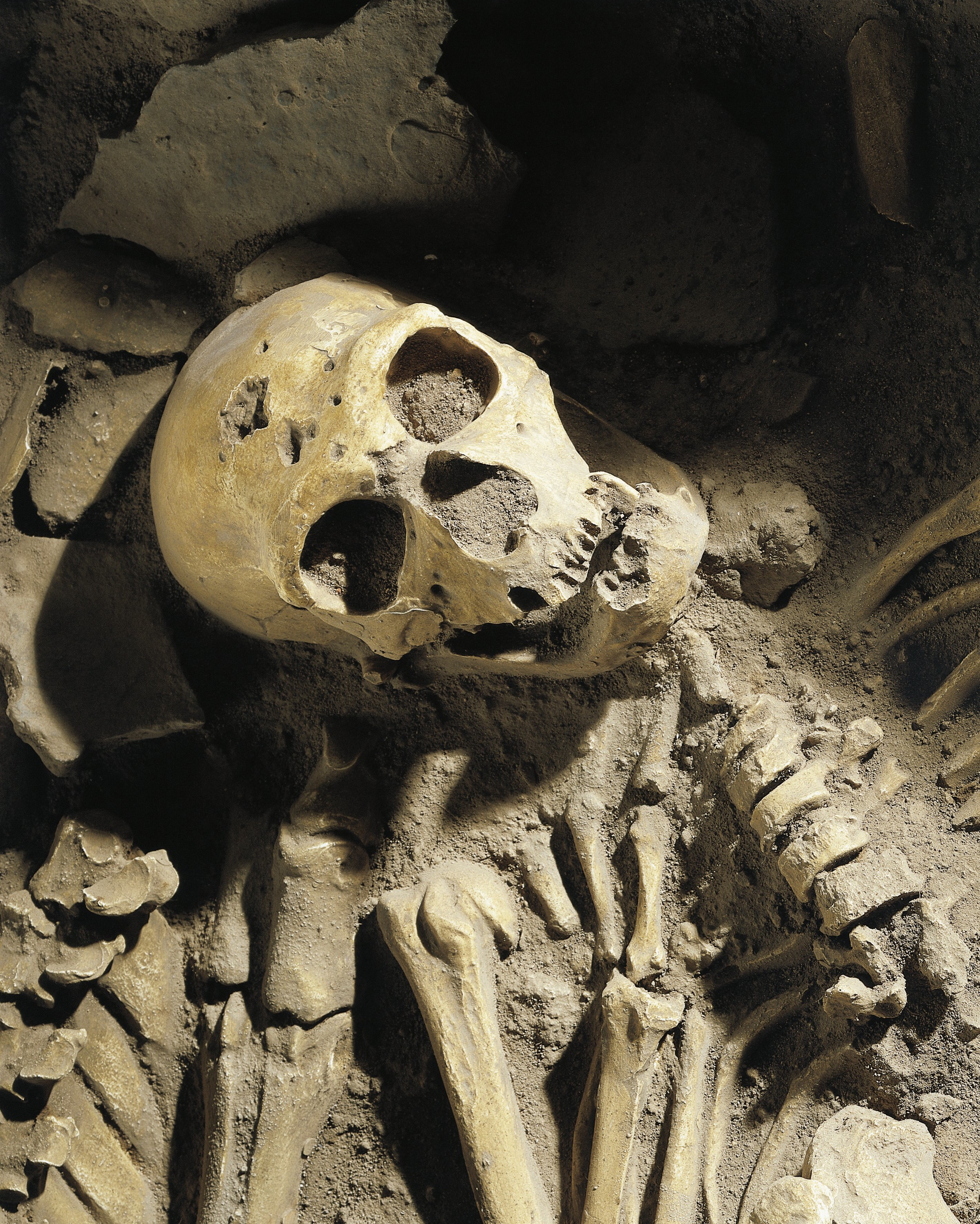
(Photo: The Neanderthal man (Homo neanderthalensis) buried at La Chapelle-aux-Saints, France, circa 1995. By DEA/A. Dagli Orti/De Agostini/Getty Images)
 The Dish