Obama’s Betrayal On Torture

It is one thing not to prosecute war crimes – even though failure to do so violates the core of the Geneva Conventions. It is another not even to allow the public airing of what actually happened in America during the Bush-Cheney era, even though the findings have been reached exhaustively, at vast public expense and under bipartisan auspices. What on earth is Obama afraid of? That the CIA will revolt and refuse to do its job? That John Brennan’s friends will squirm uncomfortably in the face of their own complicity in barbarism? W. Paul Smith calls on the administration to release the damn report already:

This week marks the one-year anniversary of the Senate Select Committee on Intelligence’s adoption of a sweeping 6,300-page study detailing the CIA’s post-9/11 detention, rendition, torture and interrogation program. But the public has yet to see one word of it. That’s because, even though it deals with some of the most important and contentious issues this country has grappled with in recent years, the entire report remains classified.

Here’s what we do know about the report:

First, it is almost certainly the most exhaustive, detailed investigation of the CIA torture program to date. The committee spent more than three years researching the program, including reviewing six million pages of documents.

Second, according to senators who have seen it, the report includes a damning indictment and repudiation of the longstanding claims that torture and ill treatment led to accurate and actionable intelligence.

Conor chimes in:

[T]he Obama Administration, which promised voters that it would be the most transparent in history, has bowed to pressure from a faction within the CIA to keep secret the most thorough accounting we have of the agency’s lawless, immoral behavior during the Bush years. In doing so, Team Obama makes it less likely that we learn the lessons of CIA torture, and more likely that America tortures again one day.

The Gun Deaths That Don’t Make the News

Since the Newtown shooting, Slate has tried to record every gun death in America:

Gun deaths

Why it failed:

Suicides, it turns out, are this project’s enormous blind spot. Most every homicide makes the local paper, even if in large cities these stories are sometimes relegated to a mere news brief. Accidental shootings are usually reported upon, as are shootings by law enforcement and incidents in which civilians kill in self-defense. But suicides are mostly invisible. And the fact is that suicides make up 60 percent or more of all deaths by gun in America. In our interactive, misleadingly, only about 10 percent of recorded deaths were deemed suicides by our crowdsourced categorizers.

Justin Briggs and Alex Tabarrok examine the connection between gun access and  suicide:

Suicide is a leading cause of death among adolescents and young adults, and limiting access to guns during those formative, sometimes unsteady years can have a real effect on suicides. In Israel most 18- to 21-year-olds are drafted into the Israeli Defense Forces and provided with military training—and weapons. Suicide among young IDF members is a serious problem. In an attempt to reduce suicides, the IDF tried a new policy in 2005, prohibiting most soldiers from bringing their weapons home over the weekends. Dr. Gad Lubin, the chief mental health officer for the IDF, and his co-authors estimate that this simple change reduced the total suicide rate among young IDF members by a stunning 40 percent. It’s worth noting that even though you might think that soldiers home for the weekend could easily delay suicide by a day or two, the authors did not find an increase in suicide rates during the weekdays. These results are consistent with interviews with near-fatal suicide survivors, who often say their decision was spontaneous and who typically go on to live long lives.

And the psychic, emotional and human pain of suicide is immense. Perhaps because it fits so easily into a libertarian rubric that no one is hurting anyone but themselves it evades scrutiny. But its toll remains a huge one – and one dramatically affected by the easy accessibility of guns.

How Anti-Christian Is Fox News?

It has been fascinating lately to watch Fox News go after the Pope for reiterating long-standing Catholic and Christian doctrine about the false god of materialism. By echoing Jesus’ insistence that you cannot know the kingdom of Heaven if you are bound up in wealth and possessions, the Pope drew charges of Marxism (which is anathema to Christians for the same reasons that unrestrained market capitalism is) and engaging in politics (from a channel that has long insisted that Christianity cannot and should not be relegated to the private sphere). Maybe it’s because they have not subjected their own views to anything passing as critical engagement for so long that they have forgotten that Christianity is deeply, profoundly opposed to any system of government that values human beings by the material wealth they create. The worship of money that you see in the incoherent rants of Stuart Varney or Larry Kudlow has no place whatever in Christian thought – and remains a daily assault upon it.

Now comes Megyn Kelly with a flat assertion that “Jesus was a white man, too.” Let’s go to the clip, which has now become famous in the world of Stewart and Colbert:

Now it’s clear this was an ad lib, not really thought through, so we should cut Kelly some slack. But she’s wrong on two levels – wrong because Jesus was not a Northern European white person, but a Middle Eastern Jew. And as a Middle Eastern Jew under the Roman empire, Jesus was at the bottom of the heap in the power-structure of his time. And that’s the point. The Messiah came from the lowest rung, not the highest. The comfort that white people feel when they are a majority in a democratic society is about as far away from Jesus’ experience of the world as it is possible to get.

She’s also wrong in even considering the color of Jesus’ skin – something unmentioned in the Gospels – as relevant. Of the great Pauline statements about Christianity, the following is among the most thrillingly liberating:

There is neither Jew nor Gentile, neither slave nor free, nor is there male and female, for you are all one in Christ Jesus.

The categories of race, of gender, and of social class are abolished in the Christian vision. This doesn’t mean they cease to exist as part of the world, for reasons of biology and social construction. But it does mean that Christians will never seek to underline these distinctions, to build a politics out of them, or to identify a nation according to them. Some on the left do this, as do some on the right. But Christians shouldn’t.

When you absorb the constant racial undertones on Fox, and its constant worship of the god of money, when you absorb their long list of fears about the “other”, whether immigrants or gays or the poor, when you recall their glee at the torture of human beings, or their passion for the death penalty, you can’t help but wonder if they are not one of the most powerful forces against Christianity in our culture. They have competitors out there, but Roger Ailes is never satisfied with being Number Two, is he?

Dissents Of The Day

A reader quotes me:

Let me place a bet with Friedman: Daley will never have a sexual relationship with a woman again, because his assertion that he still fancies girls is a classic bridging mechanism to ease the transition to his real sexual identity. I know this because I did it too.

Wow, Andrew, that’s strikingly arrogant of you. After all the conversations you’ve hosted on bisexuality, I’m amazed you would be so black-and-white and presumptuous about it. There’s no call to be so instantly dismissive of others’ own declarations of their sexual preferences. If and when Daley admits he’s in it for the cock only, then you can trumpet your own theories about bridges and men’s simpler sexuality.

Let me rephrase my bet with Friedman. Check in in ten years’ time. As for airing discussions in which male bisexuality is regarded as widespread as female bisexuality, of course we air such threads. Part of the point of this blog is to push back against my own views with those of readers and other writers, studies and stories and the irreplaceable role of human narrative. But it doesn’t mean I am totally persuaded. I absolutely believe in male bisexuality, its integrity as an identity, its total validity as a sexual orientation. I just believe it’s much less common than female bisexuality, for reasons to do with nature, rather than nurture. I know this enrages some liberals, just as other views of mine enrage conservatives. I didn’t mean to constrain Tom Daley’s future life in any way, and perhaps I was too glib in writing what I wrote. But it remains what I think. Another reader:

“I know this because I did it too.” That’s precisely the problem, Andrew. What you think of as a point of argumentative strength is actually analytical weakness. You’re extrapolating from your own experience, with no actual ability to live Tom Daley’s experience. Now I think that is a very natural response, as you came of age in a time when homosexuality was something to be ashamed of. The pain and frustration of that, I’m sure, colors your perception of any man who claims to have sexual attraction to both sexes. I have no doubt there have been many men who have claimed to be bisexual out of a desire to avoid the stigma of being gay. But insisting that any individual must necessarily be an example of that is a cruel thing – even if you turn out to be right.

I don’t think my overall response to Tom Daley could be fairly called cruel. Another:

You snappily respond to Ann Friedman: “Not much evidence of fluid sexuality among men there, is there?” Hmmm, why would that be?  After all, it’s not as if there’s any real COST to men admitting to fluid sexuality, is there?

And another:

Let me say first off that I appreciate the amount of coverage you’re giving to bisexuality, and that I’ve really enjoyed reading the “What’s A Bisexual Anyway?” thread. I know you get this a lot, but your willingness to have an ongoing discussion about a subject like bisexuality is why I’m a subscriber. But your latest post on Daley made me see red! In response, I’d like to quote from the chapter on bisexuality in Dan Savage’s most recent book, American Savage.

Savage has long been accused of biphobia because of his past statements that male bisexuality doesn’t exist, a belief he admits was based on a now-discredited study. (Discredited, I should add, by the same researcher who led the initial study). In a chapter called “Mistakes Were Made,” Savage makes the point that yes, “many gay men briefly identify as bisexual during their coming-out processes” but that “bisexuality is not a phase for bisexuals” (emphasis in original):

I can see now why this is all so enormously frustrating for bisexual men. Many gay men think all bisexual guys are lying because a lot of men who claim to be bisexual are lying. But it’s not bisexual guys who lie about being bisexual. It’s gay men like me … who lie about being bi. And what do we do after we stop lying about being bi? We insist that all bisexual guys are liars because we were liars.

I know you’re not accusing Daley of lying; I’m sure you think that he genuinely believes that he still fancies girls. But if you add “to themselves” to “lying,” the point still stands.

By the way, the reason that new study got different results? They made the participation criteria more stringent by restricting the sample only to men who actually exhibited bisexual behavior, i.e. excluding gay men, like you and Dan Savage, who were in a “transitional” phase.

Lastly, I’d like to add my perspective as an out bisexual woman in the LGBT community: I’ve encountered so much prejudice and disbelief surrounding bisexuality that I’m not surprised when bisexuals who are actually in same-sex relationships don’t feel safe identifying as bi, and prefer to allow everyone to assume they’re gay. Although this contributes to our invisibility, for some it might seem a better option than being rejected by the very community that is supposed to support us, especially if you’ve already been rejected by your family and straight friends. Also, I think this situation is probably worse for bisexual men, because while bi women may be accused of “experimenting,” bi men are actually accused of being cowards or liars.

By the way, Dan discussed that study and bisexuality in general for one of our Ask Anything videos. Another reader:

I love you, Andrew, but: bullshit. Daley is in love with this man, and there is a chance – a small chance, but a chance nonetheless – that he will spend the rest of his life with him. If that happens, and he does not ever have sex with another woman, and he still says he is bi, he is still bi. Likewise if he just never meets another woman he wants to have sex with before he finds the right person (who happens to be a man) to settle down with, which is also possible. Likewise if he is sexually bi but romantically oriented towards men and doesn’t enjoy casual sex outside of a committed relationship.

I could keep going, but my point is this: sexual orientation is not defined by behavior. There are straight men who have the occasional homosexual or even homoromantic experience. Those men aren’t straight, but they aren’t gay either. There are gay men who remain closeted their whole lives and sleep with and even marry women. Those men are still gay. There are straight and gay and bi men who remain celibate for whatever reasons. They are still who they are.

One more:

I’m a 37-year-old man, and in the past year, I’ve come out to many family members and friends as bisexual. I started incorporating men into my fantasies when I was 12 or 13, and they’ve been present there ever since. And sometimes, indeed, I feel such a strong desire for sex with another man that I do wonder if I’m just fooling myself; I’ve certainly still got some latent shame and self-directed homophobia. But other times, the urge to be with a man recedes considerably.

On the other hand, I almost always want to have sex with women, and my fantasies usually specifically focus on me going down on them. My sense is that eating pussy is about the least gay thing I could be jerking off about.

Of course, that’s just me. What’s more interesting to me is that in the past couple months, I’ve had conversations with two different guys around my age who are openly gay. Both expressed interest in having sex with a woman, especially as part of a three-way with another guy. One said most of the porn he watches is of straight sex. These are not men who are figuring out their orientation; these are guys who’ve been dating and in relationships consistently with other men for years. So their sexuality seems kinda surprisingly fluid to me.

I’m betting against your confident prediction. I think homophobia has done a far more pervasive and pernicious job of repressing a lot of men’s desires than even you give it credit for. In fact, I think that because male sexuality is, as you put it, “much cruder, simpler and more binary,” we could see a small explosion in the popularity of same-sex hookups among men in the not-that-far-out future. Not all men, of course. But dudes wanna get off, and as it increasingly becomes OK for them to get each other off, I think they’ll take advantage of that.

Finally, I’d be interested in seeing whether women’s reported reactions to man-on-man sex have changed at all. Whereas twenty years ago it seemed like women had no interest in such a thing, I’ve met a number of them lately with “watch two dudes getting it on” on their sexual bucket list. And I think for a lot of bi or curious guys, that sort of “permission” is also a big deal.

I’ll be as fascinated as my reader in seeing how things shake out. Or don’t.

Would You Like Some Shame With That?

Joshua Gans cites research supporting the idea that ordering food on the Internet increases sales by reducing customers’ embarrassment:

A group of four management professors—Avi Goldfarb, Ryan McDevitt, Sampsa Samila, and Brian Silverman—has undertaken a project to measure the effects of social embarrassment in retailing. In a paper—which they weren’t too embarrassed to subtitle “An Embarrassment of Niches?”—they examined situations in which a shift in retail practice reduced human interaction and observed consequent changes in purchasing behavior. Their findings are surprising: Even in situations where the potential for social embarrassment would appear to be low, fear of embarrassment led consumers to sublimate their true desires, whether for a rarefied French wine or a pizza with extra bacon. The first case the authors document was a late 1980s change in Swedish liquor retailing that led to stores being moved from an “ask a clerk to retrieve a bottle” model to a “self-service” format. It turned out that, not only did removing a layer of human interaction spike sales (by 20 percent) but it also led to a shift in those sales toward a large number of difficult-to-pronounce drinks…

Was this fear of embarrassment or just a matter of convenience in communication?

It is hard to know for sure in the Sweden example. But two decades later, when an undisclosed pizza chain (similar to Domino’s, but with a regional focus) offered a new way of ordering online, embarrassment was more clearly in play. Order online and you remove the need to talk to a human over the phone or at a counter. You might think that this change would merely be more convenient, but wouldn’t materially affect the food you order. Then I thought about what my typical “conversation” with a pizza website might sound like:

“Umm, ok I’d like one Margarita pizza and a BBQ Chicken with pineapple. Oh no scratch that, can I have half the BBQ Chicken with pineapple and the other half with peppers. And I’d like the Margarita pizza to have a thin crust and, wow, what is a four cheese mushroom pizza? I’ll have one of those but can you remove the goat’s cheese … wait, does that work with this coupon?”

Suffice it to say, something usually holds me back from making such a speech to a fellow human being.

Children Who Can’t Prove They Were Born

UNICEF reports (pdf) that one in three kids under five around the world – almost 230 million children – has no birth certificate. Ryan Jacobs explains the ramifications of growing up undocumented:

Living without any proof of your existence can be a major challenge. The associated paperwork is often necessary to secure healthcare, education, and other basic rights. And children who don’t have identification are also left at higher risk of displacement, exploitation, and human trafficking. In the chaos of war or disaster, reuniting children separated from their family can be difficult, if not impossible, without proper documentation. And with no formal proof of age, marriage, military service, and employment may all become a reality much sooner than appropriate.

The problem is particularly acute in India, where 71 million children under the age of five go undocumented by the government. Though India leads the world in sheer number of uncounted children, its rate of birth registration—at 41 percent—means that the civil administration there is actually outperforming the bureaucracies in many of the other countries mentioned in the report. Somalia, for example, does not record the existence of a staggering 97 percent of its young children.

Noah Rayman talks to a UNICEF official about what can be done to solve this problem:

Already, UNICEF is working with the Ugandan government to create a mobile system that lets newborns be registered in a matter of minutes and, in the eyes of authorities, brings the children into existence. In Kosovo, where the roughly 5% of unregistered newborns come from some of the country’s most marginalized communities, Kochi’s Innovation Unit developed a way to use mobile phones to allow social workers to report unregistered births. In Nigeria, similar technology allowed the government to register an additional 8 million previously unregistered children over a 15-month period.

Going Where The Winnable Seats Are

As Scott Brown prepares to ditch Massachusetts and challenge Jeanne Shaheen for her New Hampshire Senate seat, Kevin Mahnken defends the practice of carpetbagging:

There is a great deal that is silly about the politics in the United States, but nothing more fatuous and bizarre than the widely-held belief that an elected representative must somehow form a lasting relationship with a place, or embody its character and traditions, to ably work on behalf of its people. This expectation forced ex-senator Richard Lugar to go to extreme lengths to prove his residency in Indiana—a state that, in normal circumstances, no sane person would willingly claim as their home—and allowed his primary opponent to successfully paint him as absent and out of touch, costing him reelection and millions of Hoosiers a skilled and popular lawmaker. Even now, Mary [Liz] Cheney must dodge accusations of carpetbagging in her own Wyoming Senate race. But that (truthful) designation couldn’t possibly be more important than her manifest insanity. A candidate’s policy preferences matter infinitely more than which college football team he roots for. If Brown, like Robert Kennedy and Hillary Clinton before him, were to run and win in a state he hadn’t lived in, it would go a long way toward proving that point.

A Public Pet

Why are squirrels so common in American cities? You can thank those faddish Victorians:

[In the early 19th century], squirrels were just another animal running around the woods, mainly useful as a source of food for frontiersmen. If you saw a squirrel in the city, it was almost certainly Red Squirrelbeing kept as a pet. One escaped pet squirrel in New York City, circa 1856, drew a crowd of hundreds according to one of the city papers—which called the squirrel an “unusual visitor.”

Around the same time, a sea change in our relationship with squirrels was already underway in Philadelphia. The city had released three squirrels in Franklin Square in 1847 and had provided them with food and boxes for shelter – and the people loved it. One visitor is quoted as saying “it was a wonder that [squirrels] are not in the public parks of all great cities.” In the years that followed, the trend spread to Boston and New Haven, where squirrels soon grew so fat from humans feeding them that they were falling out of the trees. Cities even started planting nut-bearing trees so that the squirrels would have their own food source.

The squirrel fad really took off in the 1870s, thanks to Frederick Law Olmstead’s expansive parks. … A small number of squirrels planted in the park in 1877 soon grew into a sizable population. By the time it had reached an estimated 1,500 squirrels six years later, authorities even talked about culling the population so that it didn’t get out of control. At the same time, squirrel populations were growing around the country, with squirrels gracing the lawns of both Harvard Yard and Washington D.C.’s National Mall.

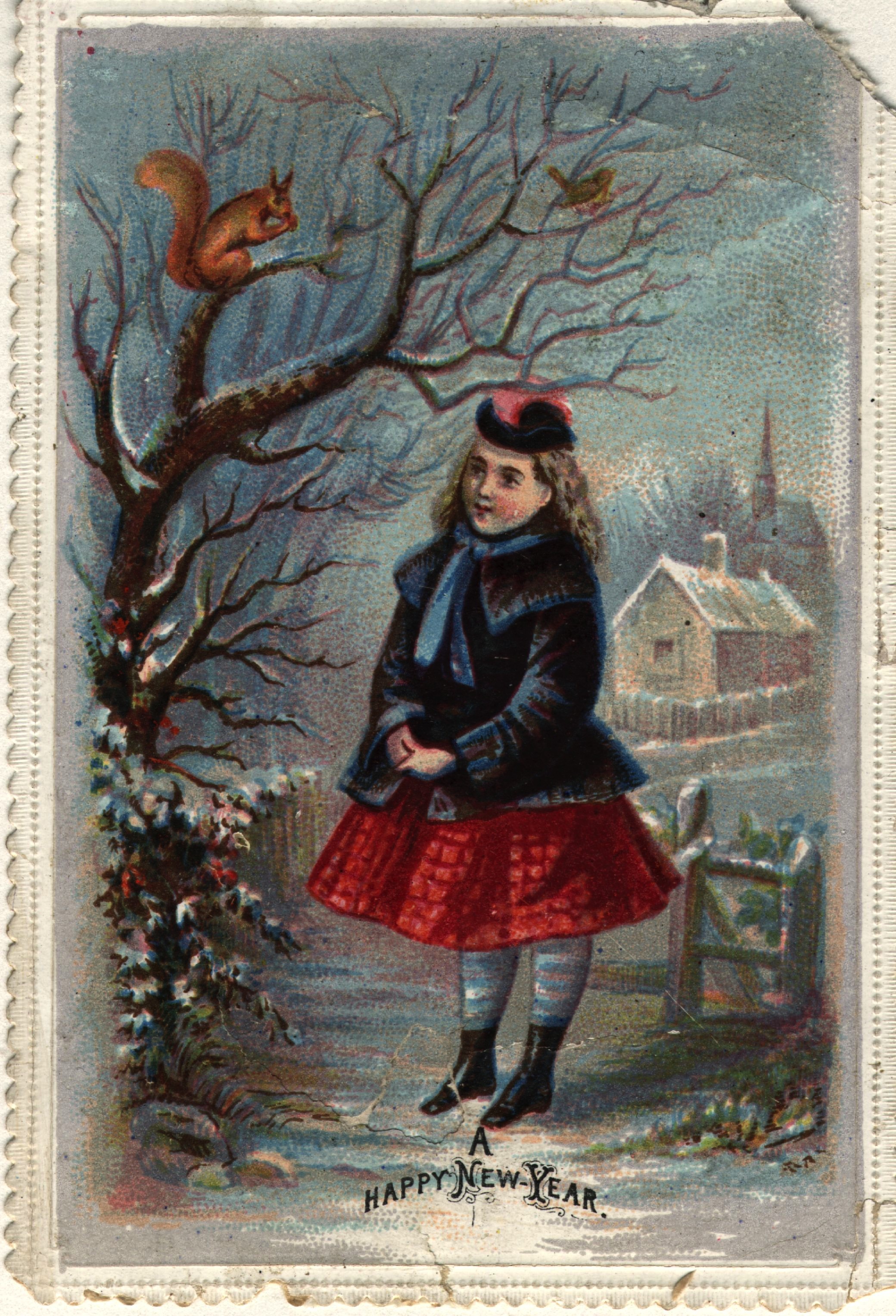
(Photo: A girl watches a red squirrel in a circa-1875 greeting card. By Hutton Archive)

Must We Defend Human Rights Everywhere?

John Allen Gay asks whether it makes strategic sense for the US foreign policy to concern itself with how other countries treat vulnerable minorities:

Those who advocate a prominent role for human rights in American foreign policy usually embrace a common argument—that disrespect for human rights at home is a warning sign that a country will promote instability beyond its borders, while countries pushed to respect human rights will behave more constructively. Thus, for instance, the Rwandan genocide was followed by a bloodletting throughout the African Great Lakes region, with the Rwandan government (drawn from the side of the victims) an active sponsor of violence in neighboring states. Thus, Saudi Arabia rules repressively at home and supports Islamic extremism abroad. Thus, Nazi Germany went from Kristallnacht to launching a continental war and an international campaign of genocide.

Yet human rights remain separable from international aggression.

Even a human-rights-free approach to international security is plausible—for example, if the United States were to ignore domestic human-rights violations altogether, but respond forcefully and resolutely to aggression across borders, the world would surely not come to an end. And human rights certainly deserve a role in U.S. foreign policy. Our closest allies share our values; relations with allies that don’t are testier and more reversible. We would like to think of ourselves as a force for good in the world, and our global leadership is strengthened when other states see us as a lawful, fair and generally benevolent power. Yet that doesn’t mean that we must make human rights a central priority, and it certainly doesn’t mean that we should be willing to put vital interests like stopping the spread of nuclear weapons on equal footing with them.