Ronald Bailey explains why libertarians should not support the right of vaccine refuseniks to put the rest of us at risk:
People who don’t wish to take responsibility for their contagious microbes will often try to justify their position by noting the fact that the mortality rates of many infectious diseases had declined significantly before vaccines came along. And it is certainly true that a lot of that decline in infectious disease mortality occurred as a result of improved sanitation and water chlorination. A 2004 study by the Harvard University economist David Cutler and the National Bureau of Economic Research economist Grant Miller estimated that the provision of clean water “was responsible for nearly half of the total mortality reduction in major cities, three-quarters of the infant mortality reduction, and nearly two-thirds of the child mortality reduction.” Improved nutrition also reduced mortality rates, enabling infants, children, and adults to fight off diseases that would have more likely killed their malnourished ancestors.
But vaccines have played a substantial role in reducing death rates too.
An article in the Journal of the American Medical Association compared the annual average number of cases and resulting deaths of various diseases before the advent of vaccines to those occurring in 2006. Before an effective diphtheria vaccine was developed, for example, there were about 21,000 cases of the disease each year, 1,800 of them leading to death. No cases or deaths from the disease were recorded in 2006. Measles averaged 530,000 cases and 440 deaths per year before the vaccine. In 2006, there were 55 cases and no deaths. Whooping cough saw around 200,000 cases and 4,000 deaths annually. In 2006, there were nearly 16,000 cases and 27 deaths. Polio once averaged around 16,000 cases and 1,900 deaths. No cases were recorded in 2006. The number of Rubella cases dropped from 48,000 to 17, and the number of deaths dropped from 17 to zero.
His bottom line:
Oliver Wendell Holmes articulated a good libertarian principle when he said, “The right to swing my fist ends where the other man’s nose begins”… To borrow Holmes’ metaphor, people who refuse vaccination are asserting that they have a right to “swing” their microbes at other people.
Last week, Alexandra Sifferlin slammed Katie Couric for lending credence to vaccine fear-mongering after she hosted opponents of the HPV vaccine on her daytime talk show:
The two HPV vaccines currently available, Gardasil and Cervarix, are both proven safe through clinical trials, independent studies, and post licensure monitoring. The CDC and FDA also continue to track the vaccines’ safety. And yet Couric has framed the issue as if there were a debate to be had about whether the HPV vaccines are good for the public’s health.
“This kind of coverage is so incredibly irresponsible,” says Seth Mnookin, author of The Panic Virus: The True Story Behind the Vaccine-Autism Controversy. “The danger of saying we are going to present both sides of an issue, when all of the facts line up on one side, is that as far as the audience is concerned, you are giving these sides equal weight. It presents a false impression that there is a legitimate debate here.”
Libbrecht’s process, developed over the past few years, is done in a cold chamber and takes about 45 minutes in total. He starts with a completely clean piece of glass, and scatters many microscopic ice crystals onto it. With a microscope, he isolates a particular crystal, then blows slightly warmer humid air onto the glass. The water vapor condenses on the seed crystal, just like in a real cloud, eventually forming a visible snowflake.
Working with this process, Libbrecht has determined the temperature and humidity levels that lead to each particular kind of snowflake. “I call them ‘designer snowflakes,’ because you can change the conditions as you grow them and predict what they’ll will look like,” he says. Among other things, he’s found that a snowflake with a thin edge grows faster, causing the edge to sharpen even further, ultimately leading to a relatively large flake. Snowflakes that begin with blunter edges, however, grow more slowly and remain blunt, leading to blocky prisms, rather than elegant plates.
Following severalreports on the wealth of Chinese leaders, the Communist Party has threatened to expel two dozen foreign correspondents. Evan Osnos calls it “the Chinese government’s most dramatic attempt to insulate itself from scrutiny in the thirty-five years since China began opening to the world”:
China is gradually losing interest in soft power. The Party spent much of the past decade seeking to project a more attractive and welcoming image to the world; it placed billboards in Times Square, expanded the reach of its news outlets to broadcast more of its views to Africa and Latin America, and built hospitals, roads, and soccer stadiums in developing countries. Those efforts will continue, but the leadership is signalling that it has concluded being liked is less important than simply surviving. I spent some time with a senior Chinese diplomat recently, and when I asked what motivated the threat of expulsion, the diplomat said that the Times and Bloomberg were seeking nothing short of removing the Communist Party from power, and that they must not be allowed to continue. That argument surprised me: I had expected a bland procedural defense—this was a blunt expression of fear.
Previous Dish on press censorship in China here, here and here.
One of the biggest victims of the Ukrainian protests has been Lenin:
Large protests continued in Kiev, Ukraine throughout the weekend in opposition to President Viktor Yanukovich and his government following the abandonment of a pact with the European Union. In the most visually impressive show of disdain for their leader, protesters tied electrical cable around a statue of Vladimir Lenin and toppled the statue, then broke it up into pieces with a sledgehammer (which had been blessed by an orthodox priest). The statue, first erected in 1946, was replaced on its plinth by a flag of the EU as well as a sign that read “Yanukovich, you are next!”
Uri Friedman chronicles the “remarkable history” behind the statue and its ilk:
What’s most surprising is that the statue withstood the collapse of the Soviet Union in 1991 and remained in Kiev’s Bessarabska Square until today (“Ukrainians are not very hotblooded people,” one man in the central city of Uman explained in 2004, when asked about the improbable staying power of Lenin statues in the country). You’d be forgiven if your first reaction to the news out of Ukraine was, ‘Wait, Kiev still had a Lenin statue?’
In recent years, however, the monument had become a fierce battleground between nationalists, who detest Lenin and Russian interference in Ukrainian affairs, and communists. In June 2009, a month after the pro-Western Ukrainian President Viktor Yushchenko called for the country to “cleanse itself” of communist symbols, nationalists chopped off the statue’s nose and arm, sparking skirmishes and even an effort by Communist Party supporters to volunteer as guards and defend the sculpture around the clock. With the statue looking increasingly imperiled, one art historian made a plea to preserve the monument.
The fight over the Lenin sculpture in Kiev mirrors a larger battle in Ukraine over monuments to the country’s communist past—one primarily waged between the traditionally nationalist west and pro-Russian east. In August, RIA Novosti noted that at least 12 Lenin statues had been defaced in Ukraine since 2009 as part of a “statue war” between communists and nationalists. In perhaps the most bizarre manifestation of this conflict, a promotional video for the Euro 2012 soccer championships in Kharkiv edited out a Lenin statue from a shot of the city’s main square to avoid showing “images of a commercial and political nature.
“The obvious question is: Code what? And the fact that it apparently isn’t being asked suggests that those pushing this are massively ignorant of the IT field they are trying to prepare their kids for.” This reader’s argument is awfully reductive. When I think of introducing “coding” to public education, it’s not the process of learning a programming language; it’s the process of learning computational thinking. There are questions that can be answered through computation. How many homework assignments can I skip without sacrificing my A? How much money will my husband and I have to save before we are ready to have a child? Teaching the methods of computational thinking is certainly worthwhile.
Being concerned that programming languages are different and new ones are being created is akin to cautioning a child from learning the flute because there are so many different instruments. It’s not the fluting that’s important; it’s the music.
Another:
I suspect that you’re going to get a lot of feedback about the reader who stated this:
In addition, there are new computer languages appearing every year. Some of them will catch on; others never will. And any language that is currently in use is subject to massive obsolescence as new ones come along – quite possibly before the kids are even out of school. So how do you decide which one to teach the kids? Until someone can answer that question sensibly, any argument for teaching coding is built on sand.
My mouth gaped open when I read this, because this statement is just quite simply completely backwards. I have a computer science degree and have been developing software for a dozen years and of course there are always new languages to learn, but the thing is, languages are tools. What you are really learning when you learn how to code is the art of molding an inanimate machine to do what you want. You have a computer that speaks only in 0s and 1s, and you need to get it to do extraordinarily complex tasks. Put the language aside; doing this requires a very different way of thinking than what a lot of people are used to.
To learn this art, you first need a tool – a programming language. Yes, you have to pick one, and I’m sure that there are better or worse choices for a first language, but in the scheme of things, which language you pick is far less important then getting going with the concepts that are involved in programming. Once you learn one of those tools and you start learning how to think like a computer and how to compose a program to instruct the computer, learning another language is like learning another tool, a tool that is still used to accomplish the same task of instructing an inanimate machine.
That doesn’t mean that learning another programming language is trivial (some languages are more alike than others, so it really depends on which ones you know and which ones you are trying to learn), but knowing any one language and having some experience using it is a massive step towards learning other languages in the future.
Another reader:
I’m sure your mailbox is overflowing with experts on the topic of teaching kids to code; here’s one more. Yes, kids should absolutely get some instruction in coding, but it should be around 8th grade, not college, and it will not lead to your kid coding for a living.
What you have to understand is that “coding” is a very vague term, like “math”. The hard stuff (assembly code, drivers, OSes, low-level C++, etc) is incredibly difficult, and it really doesn’t matter if you teach it in high schools because about 99% of the population simply can’t do it well, no matter how much instruction they get. However, that should not stop schools from teaching kids the easy stuff, like simple web design and scripting, which are no more difficult than algebra. They won’t get your kid a sweet job at Google, but the odds that she will go through life without ever having a need to tweak some code in a web page or manipulate the data in a textfile is vanishingly small.
Today’s teens should learn basic coding for the same reason our grandparents learned to balance a checkbook – it’s a useful skill that will help them in almost any profession. However, if your kid is destined to be a professional programmer, they’re very likely going to learn the skills they need in their bedroom at 2 AM, not from a high school teacher.
Another:
For teaching kids, I recommend just letting them have fun and try to imitate what they see on their computers and phones. Classes make learning boring. That’s how it was for me. I wanted to create those applications myself. There’s tons of environments for kids to play with, but if I was asked for one, I would recommend the Squeak language, which comes with an interactive programmable, graphical environment.
Another:
I’m teaching faculty in computer science at a state university. We do outreach to help K12 schools in the region that want to offer CS courses. One of the hurdles we encounter is that in our state, computer science doesn’t count as a science toward meeting state standards in the same way that chemistry or physics do. Likewise, while there’s mathematical reasoning involved, it’s not a math topic. There are teachers who want to teach it and students who want to learn it, but in the age of No Child Left Untested, it’s hard to add coursework that doesn’t directly meet the various mandates they’re under. Yes, this is essentially a problem of politics and finding the will to make it happen, but deciding everyone should have some exposure to the subject is only the first step.
One more:
I happened to watch “Steve Jobs: The Lost Interview” on Netflix last night. He’s is at once an endlessly fascinating man and a huge penis. But germane to the Dish, this quote:
[Writing computer programs] had nothing to do with using them for anything practical. It had to do with using them to be a mirror of your thought process. To actually learn how to think … I think everybody this country should learn how to program a computer, should learn a computer language because it teaches you how to think. It’s like going to law school. I don’t think anybody should be a lawyer but I think going to law school would actually be useful because it teaches you to think in a certain way, in the same way computer programming … teaches you to think.
(It should be noted I copied this text from the video using the voice recognition on my iPhone. It should also be noted that the only error the VR program made was translating “I don’t think anybody should be a lawyer” as “I don’t think anybody should be white”.)
Thought you might be interested in my ‘new reader experience’. Sorry if you have heard it all before. Some questions: What is the policy on reader comments – is it really e-mail? How quaint! Where are the bylines (or whatever equates to bylines in blog terms)? What is ‘Ctd’?
Yes, it’s quaint old email – where we get to edit out trolls and stupidity and focus on the sharpest arguments. There are no by-lines for anyone, including readers. We like to keep the conversation as free from ego and as packed with ideas and experience as possible. Think of the Dish like an Economist-style magazine: all in one voice (largely derivative of mine but spiced up and honed by staffers over the years). ‘Ctd.’ is an English abbreviation for “Continued …” and usually means that the post is continuing a conversation from a previous one with the same title. As for our awards, check this out. For more information about those of us listed on the masthead, looky here. The Bookstore is here. Deep Dish is here.
And thanks. Our plea for free-riders to join the experiment gave us another huge surge of subscriptions this past week:
That last spike is you. We’re now closing in on 33,000 subscribers for the year. If you haven’t yet joined and want to spread some holiday cheer to all of us, subscribe!
As for today, I’d like to plug Rick Doblin’s Ask Anythings. You won’t find much serious discussion of psychedelics in the mainstream media, and by serious, I mean coverage that isn’t crammed with bad puns, giggles and lazy stereotypes. Rick’s discussion of what psychedelics actually do is one of the best short takes on the subject I’ve heard or read.
(Photo: The Choristers rehearse for Advent services and concerts at St Paul’s Cathedral on December 9, 2013 in London, England. Each year nearly 20,000 people visit St Paul’s Cathedral for services and concerts in the run up to Christmas. By Bethany Clarke/Getty Images.)
A reader sends the above video for the thread tangent on the “shitting log”:
This short documentary explains the Catalan Christmas – and how the shitter has become an expression of political/cultural resistance.
Another adds:
Thanks to your reader for the info about caga tió. Also relevant is the French Easter tradition regarding les cloches de Pâques (is France in Spain’s “vicinity”?). In France church bells go silent on Jeudi saint (Maundy Thursday) and stay silent until Easter Sunday. The silence of the bells is rationalized by telling the children that the bells are off to Rome (to confer with the Pope?) and that they will return bearing colored eggs and candy and whatnot. I think pretty much the same story is told by Catholics in Holland, Belgium and parts of Germany. So both the French and their Catalan neighbors have invented “impossible narratives” involving the delivering of holiday goodies to kids. And these continental types go the Anglo tradition one better by having the gift givers be anthropomorphic versions of inanimate objects.
Another circles back:
Yesterday I told my 4-year-old daughter that there is no Santa Claus.
I realized I was uncomfortable lying about Santa prior to becoming a mother. I wasn’t naive enough to think that I would never lie to them, but I felt the Santa mythology did not justify actively lying to someone so dependent upon me. We made it through last Christmas without having to address the issue, though she clearly recognized him and knew the general story thanks to her school peers. Around May of this year she asked when Santa comes – as if she belatedly realized an expected guest never arrived.
This Christmas is different, as her understanding of the world has increased. Yesterday she asked when she could see Santa. I told her that we could go to a store and see someone dressed up like Santa but that there is no real Santa. My only hesitation was the risk that she would now “ruin” it for others, but ultimately I decided that was not a good enough reason to lie.
She cried and wanted to know why her friend gets to see Santa. I told her that the friend’s parents decided to tell the friend a story and pretend that there is a Santa. She asked why they lied and played a not-nice trick on her friend. I defended the other parents’ choice while also telling her that I wanted to tell her the truth.
The whole Santa myth seems contrary to the other lessons I am trying to teach my children. My kids are fortunate because they were lucky to be born to the parents they have (not bragging, but being born to two educated parents, in the U.S. and at this point in history, puts them ahead of most). And their material possessions are the result of their parents’ own luck and hard work and the efforts and generosity of family. I hope my kids will use their advantages wisely, work hard and share with others. This is all in addition to my initial reluctance to lie when not absolutely necessary.
In this world, being “good” is not enough. How would I explain that the coats we bought last week are going to kids who may be good but still didn’t make Santa’s list? What about the Heifer International donation she made from her piggy bank for a flock of chicks? If the recipients were good, couldn’t Santa just provide for them? These are small things, sure, but this is the reality of daily parenting. The emphasis on being good/writing a list to a benevolent god-like figure seems completely divorced from teaching our kids to be productive and to share their good fortune.
I admit some pettiness: as a white, working mother with a Chinese, stay-at-home husband, I kinda resent the fact that we are supposed to share gift-giving credit with an old, white guy. Additionally, perpetuating the Santa myth would emphasize the gift part of the holiday season instead of the more meaningful and joyous parts.
We shall see if there are any reports that she has ruined Christmas for all of her classmates. I asked her not to, but she is 4.
Another reader:
We homeschooled our children and never told them lies of the type described. Part of that was our homeschooling mentality; we believe that children learn by observing their parents and those around them, and how they react to life events. When my youngest was not yet three and my wife was having a miscarriage, he went with us to the midwife and we answered his questions accurately. Telling our kids the whole truth was actually helpful around Christmas (we’re Jews); we told our children that there is no Santa Claus but they had to keep the secret so that their Christian friends would not feel bad. When they were 5 or 6, we explained to each of them that I was infertile and that we used donor insemination. And when my youngest was diagnosed with Leukemia when he was 7, we were honest with all of the kids about everything that we knew throughout the next difficult three years. We’d get into arguments (or as a friend once described it, “developmentally appropriate power struggles”), but honesty was never at issue.
Another:
Enjoying the thread so far. Thought I’d throw in my story too, which is along the lines of the family that lied to their child about Fruit Loops being a cereal unique to Hawaii.
When I was a kid, about 6 years old or so, a television ad for the Ringling Brothers and Barnum and Bailey Circus came on television. Naturally, I thought this looked like the greatest show on Earth and wanted to go. My very quick-witted parents, aware of how much it cost to attend things like this, recognised that the ad was being aired on a cable television channel (WGN-TV, I think). They informed me nicely that, no, we couldn’t go because we lived in Texas and the circus was only happening in Chicago. I was disappointed, but understood and didn’t press the point. It wasn’t until years later, in my late teens that I found out it was all a lie. Now my parents and I share the joke any time we can’t afford or don’t want to do something: It’s only in Chicago.
For the record, I loved the Jimmy Kimmel prank. I also loved believing in Santa but still found ways to justify my doubt by analysing handwritten notes he left for me and counting the carrots I left out for his reindeer. I loved wondering how on earth the Tooth Fairy didn’t wake me up when she took my teeth and left a beautiful half-dollar under my pillow. I’m not having kids myself, but I encourage this kind of behaviour, so long as the motives are good or there’s opportunity for a good laugh after the ruse is over.
Another:
This is Miss Elf’s House on the busy bike/jogging path along Lake Harriet in Minneapolis:
We live in Chicago but spend Thanksgiving every year with family in Minneapolis. My daughters love to leave a little note for her each trip. Two years ago, they received a package at Christmas -return address Miss Elf, Lake Harriet, Minneapolis MN – with books for both kids. Their wonder and excitement at this mysterious delivery was a joy to see.
Reality reared its ugly head soon after. That spring break we took a road trip which included a stay at the Peabody Hotel in Memphis (famous for its resident duck population). As we walked to our room my way-too-perceptive younger daughter collapsed in sobs in the middle of the hallway. The old-fashioned locks on the hotel room doors were identical to Miss Elf’s – indicating to her that some mere mortal was behind the Miss Elf fairy tale. I can see how other parents might choose to tell the truth at such a moment, but I lied my ass off trying to persuade her that Miss Elf’s key hole was different and couldn’t possibly be picked up at a hardware store.
Another:
The great-granddaddy of pernicious and evil lies to children has to be the Australian father who convinced his young daughter that the tune played by the traveling ice-cream van (“Greensleaves” it is in Australia) was the signal to the public that the van was out of ice-cream!
One of the Parents.com bloggers offers his take here, which I thought you would enjoy. He compiles the biggest lies he’s found himself telling his kids. My favorite lie?
I’m in charge here. I wipe their butts, change their diapers, feed them appetizing meals according to their personal taste preferences like they’re czars….and I’m in charge?
A man is shouting religious slogans as Ultra-Orthodox Jews protest against their military conscription outside a military prison in Atlit, Israel on December 9, 2013. Hundreds of Ultra-Orthodox Jews protested outside the prison following the arrest of a young man who refused to serve in the Israeli army. By Uriel Sinai/Getty Images.
Anthropologist Natasha Dow Schull talks about her research on gambling addiction:
New kinds of machines are key. With multi-line slot machines, say you put in a hundred coins. If you’re betting on 100 lines of play, you’ll always ‘win’ something back. If you put in 40 coins and get 30 back, that’s a net loss, a ‘false win’, but the machine responds as if you’ve won: The lights go off, you get the same audiovisual feedback. Almost every hand, you get the same result— there are no dry spells.
On the attraction of slot machines, which account for 80 percent of casino revenue in Las Vegas:
Even though slot machines are considered to be a light form of gambling due to their relatively low stakes, ease of play and historical popularity with women, they are actually the most potent. There are three reasons why: Playing on slot machine is solitary, rapid, and continuous. You don’t have interruptions like you would in a live poker game, waiting for cards to be dealt or waiting for the other players. You can go directly from one hand to the next—there’s no clear stopping point built into the game. You don’t even have to stop to put bills in the machine; the machines take credit or barcoded tickets.
Beinart criticizes the media for glossing over it:
Mandela refused to grant legal absolution to the perpetrators of apartheid’s crimes until they publicly confessed their guilt. In the run-up to South Africa’s first free elections, de Klerk granted clemency to 4,000 members of the South African police and security services. But after winning those elections, the ANC overturned de Klerk’s action and created the Truth and Reconciliation Commission, which required detailed, public confessions by anyone seeking amnesty. In the words of Mandela ally Bishop Desmond Tutu, who ran the Truth and Reconciliation Commission, “True reconciliation exposes the awfulness, the abuse, the hurt, the truth…because in the end only an honest confrontation with reality can bring real healing. Superficial reconciliation can bring only superficial healing.”
Why, in recent days, has the American media focused so much more on Mandela’s capacity for reconciliation than his demand for truth? Perhaps it’s because, all too often, America wants reconciliation without truth itself. Americans want Iran to give up its nuclear weapons program, halt its support for terrorism, and embrace democracy, but when President Obama acknowledged America’s role in subverting Iranian democracy during the Cold War, conservatives flayed him for apologizing for America. In 1995, the Smithsonian was forced to cancel an exhibit on the bombing of Hiroshima when politicians and veterans’ groups called it unpatriotic. In 2010, Obama slipped an apology to Native Americans into that year’s Defense Appropriations Act but didn’t hold a public event to announce it or even issue a press release, presumably because he feared the political consequences of being accused of running down America again.
And let’s not even talk about the Bush-Cheney war crimes. Some truths have to be suppressed for generations.
 Libbrecht’s process, developed over the past few years, is done in a cold chamber and takes about 45 minutes in total. He starts with a completely clean piece of glass, and scatters many microscopic ice crystals onto it. With a microscope, he isolates a particular crystal, then blows slightly warmer humid air onto the glass. The water vapor condenses on the seed crystal, just like in a real cloud, eventually forming a visible snowflake.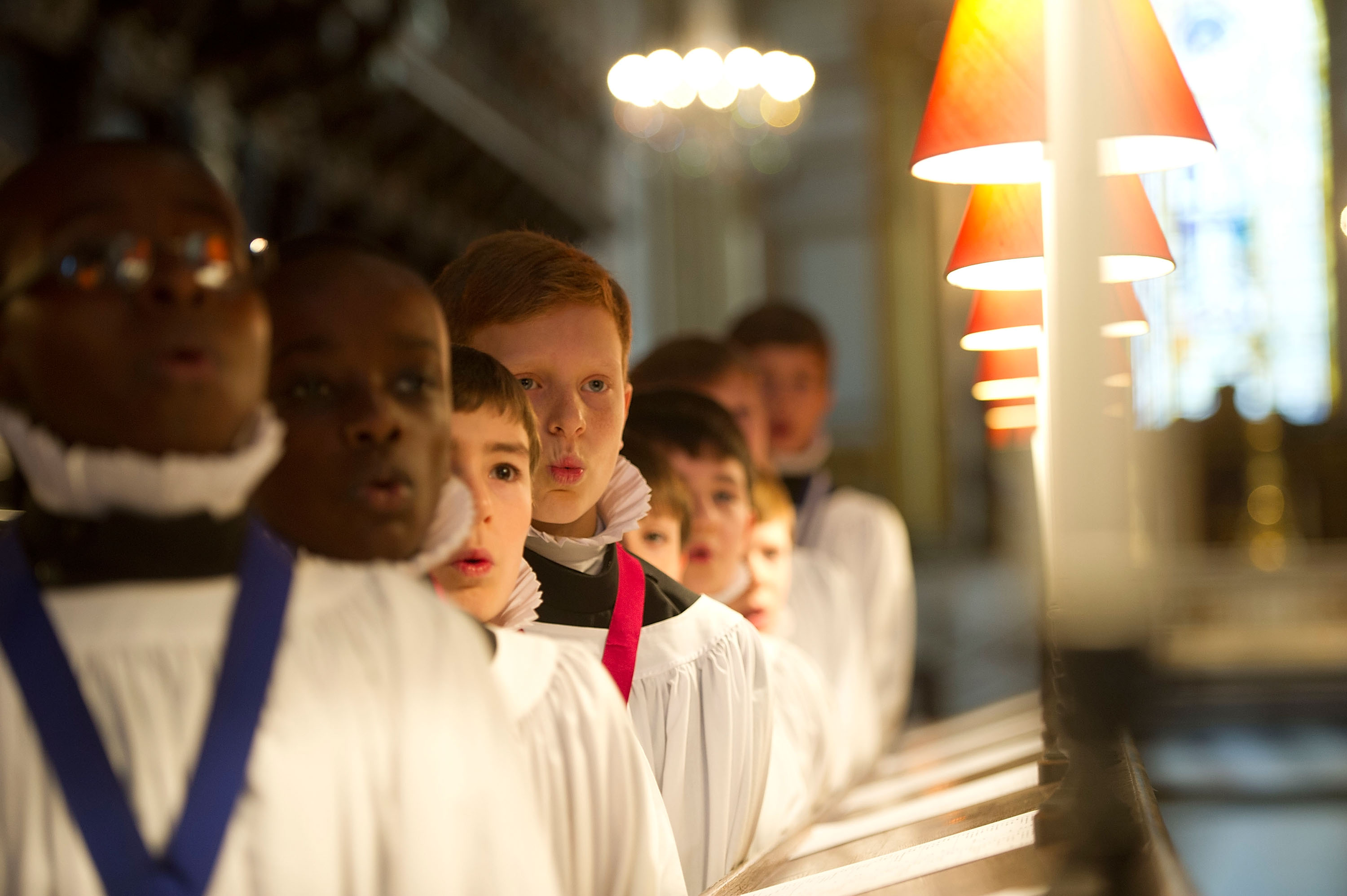




 The Dish