“I’m utterly committed to the idea that capitalism has to be the way we generate mass wealth in the coming century. That argument’s over. But the idea that it’s not going to be married to a social compact, that how you distribute the benefits of capitalism isn’t going to include everyone in the society to a reasonable extent, that’s astonishing to me. And so capitalism is about to seize defeat from the jaws of victory all by its own hand,” – David Simon.
Month: December 2013
In Mandela’s Shadow
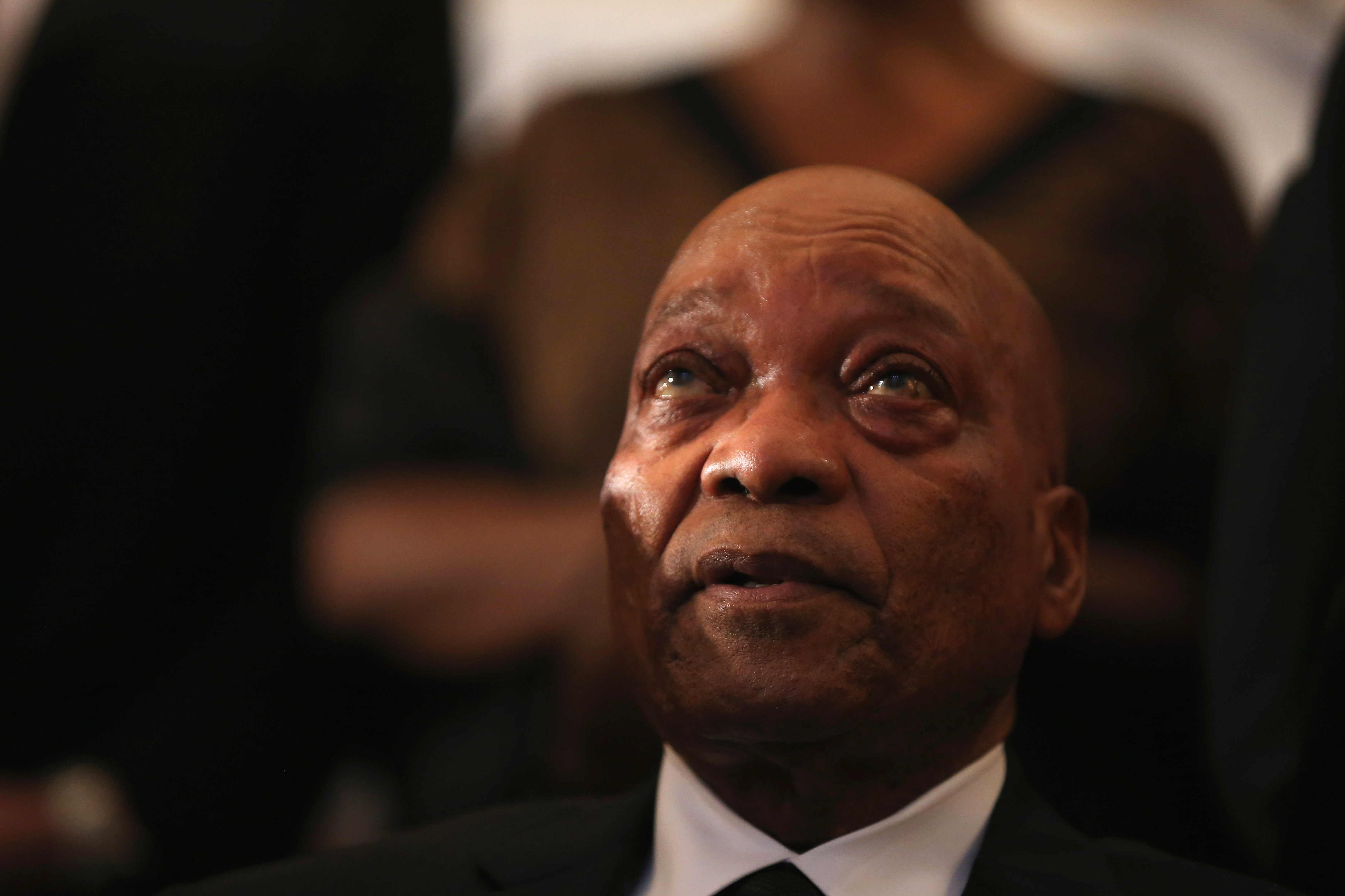
Eve Fairbanks sizes up Mandela’s successors:
People are deeply, deeply disillusioned with the leaders who’ve followed Mandela, both official African National Congress politicians and emotional leaders like Mandela’s offspring. Mandela’s relatives seem to have bucked his example entirely; some have banked millions in mining, an industry against which the apartheid-era ANC railed against as the heart of South Africa’s satanic injustice, while others have cashed in with a reality TV show.
The allegations against the politicians in actual office are more troubling. The country’s second democratically-elected president, Thabo Mbeki, was bitterly criticized for denying South Africa’s AIDS epidemic. Mbeki’s successor, President Jacob Zuma, was prosecuted for both rape and racketeering; he was acquitted of the former, and the latter charges were dropped on technicalities, but recently a huge scandal around taxpayer-funded upgrades to his massive home dominated the papers until Mandela’s—for Zuma, very propitiously timed—death. Daily, the whole black political class is accused in the media of corruption in the awarding of government contracts and greed in treating itself to swanky vacations and flashy vehicles.
“They were heroes,” one of the students standing beside me on the police line mused grimly, “but then they started buying cars.” As they buy cars, economic growth has slowed, basic education has fallen into disrepair, and inequality has deepened. This fall, The Economist concluded in a cover package pessimistically titled “Cry, the Beloved Country” that South Africa “is on the slide both economically and politically” and that the ANC’s “incompetence and outright corruption are the main causes.”
Applebaum argues that Mandela’s death should “should cause South Africans to look critically at the state he helped create and, above all, at the ANC, the party he led”:
There are reasons why the ANC continues to win elections, legitimately, even while failing to deliver much in the way of economic growth to its supporters. So far, rival parties have failed to capture the national imagination, even if some have done well in some regions. So far, the ANC has persuaded black voters that they would be “outsiders,” even traitors, if they voted for others. But Mandela’s aura—the patina of history and glamour he lent to the party—were also part of the explanation. During its last elections, in 2009, one South African journalist wrote that it felt as though the ANC were still “overseen by a pantheon of deities, including Mandela.” …
If South Africans really want to honor Mandela’s memory, they should deepen South Africa’s democracy, and vote for somebody else.
Reihan examines South Africa’s economy:
One of the key reasons for South Africa’s weak performance is that while high-growth countries saw large numbers of workers shift from low-productivity sectors, like subsistence farming, into high-productivity sectors like export-oriented manufacturing, South Africa’s high-productivity sectors have seen little growth. There are many theories as to why this has been the case. Some will attribute this to the rigidity of South Africa’s formal labor market while others will attribute it to a failure on the part of South Africa’s government to pursue a more ambitious industrial policy. Regardless of the answer, what is striking is that despite South Africa’s economic woes, the same political party keeps winning election after election.
He follows up in a later post:
[T]he ANC has made expansive commitments to its poorest citizens, which have often been cast in terms of racial justice. South Africa’s weak economic performance has thus engendered a great deal of bitterness, and a political and social climate that has led large numbers of educated young South Africans of all ethnicities to emigrate. The tragedy is that the South African economy had many advantages relative to other countries in its economic weight class, including a relative large English-speaking minority well-suited to thriving in a knowledge-intensive economy and relatively good infrastructure. Despite the ANC’s economic policy failures, it has not faced a serious political challenge, at least not yet.
(Photo: South African President Jacob Zuma attends a service at Bryanston Methodist Church during a national day of prayer, on December 8, 2013 in Johannesburg, South Africa. Mandela passed away on the evening of December 5th, 2013 at his home in Houghton at the age of 95. By Christopher Furlong/Getty)
Coming Out Of The Year
Andy Towle has a dizzyingly long list of what are mercifully becoming less news-worthy events. My vote goes to Ted Chalfen, a senior at Fairview High School in Boulder, Colorado, for this integrating, positive commencement speech, which managed to avoid all sense of victimology:
How can anyone not describe this as a moral advance for America?
Lies, Damned Lies, And Government Intelligence
Sy Hersh has some troubling details about the way the Obama administration explained its intelligence that Assad was solely responsible for the sarin gas attack last August 21. They also downplayed the distinct possibility – aired in their own intelligence – that the al Nusra front may have gotten access to the materials.
A History Of Sponsored Content
The always-worth-reading Jack Shafer digs up the long history of passing off advertizing as editorial:
Advertisements masquerading as editorial copy date back at least to the late 19th century, when they were called “reading notices,” according to the Encyclopedia of American Journalism. Publishers encouraged the placement of reading notices, which placed brand and company names in news stories without any disclaimers, because it was more profitable than conventional advertisements.
And the critics then sound uncannily like this blog today:
In his memoirs, Washington Gladden wrote about quitting his job as a reporter at the New York Independent in 1874 because he could not convince the paper to stop publishing reading notices and publisher’s notices that looked like news stories. “They seem to
be essentially evil, and a weakness to the paper,” Gladden wrote. “My scruple may be a foolish one, but I cannot overcome it.” (Hat tips to Prof. Ronald R. Rodgers for this and several other historical pointers.) Renowned journalist Charles A. Dana despised the form, too, writing in 1895, “Let every advertisement appear as an advertisement; no sailing under false colors.” His sentiment was shared by many colleagues, including Editor and Publisher, which editorialized against them, and Adolph S. Ochs, owner of the New York Times. Idealistic publisher E.W. Scripps, who founded an ad-free newspaper in Chicago in 1911, thought avoiding unlabeled reading notices made “good business sense.”
But reading notices were considered so effective that one 1908 book on advertising devoted an entire chapter to “Puffs, Reading Notices, Want Advertisements, Etc.” The key to writing a good reading notice, author Albert E. Edgar advised, was duplicity. “A reading notice of any kind has a certain amount of value because the public reads them as matters of news and not as items of advertising.”

The core business model of sponsored content is lying to readers in order to whore out more completely to advertizers. Call that what you will – “advanced advertorial techniques” or “partners” – the better the lie the more effective the ad. The small question is whether media sites whose fundamental goal is deceiving readers eventually render themselves obsolete. As the WSJ’s Gerard Baker puts it:
An advertiser wants to advertise in The Wall Street Journal to be seen and to be associated with a brand like The Wall Street Journal, or The Financial Times or Bloomberg, because those news organizations are respected. If [advertisers] manipulate the digital or print operations of those news organizations, it makes the reader confused as to what is news and what is advertising, and the reader’s trust, the very reason that those advertisers want to advertise in those news organizations, goes away.
Nate Silver gives it eighteen months, tops. I suspect that’s optimistic. By which time no one may be able to tell the difference between an ad and a piece.
Vermeer’s Dirty Little Secret
Curiosity turned into a major discovery in the art world when inventor Tim Jenison stumbled into proving that the celebrated, hyperrealistic paintings of 17th century master Johannes Vermeer were achieved not through pure genius but through the aid of the camera obscura, a device that projects a perfect image of its surroundings onto a screen:
[Jenison] traveled to Delft again and again, scouting the places where Vermeer had painted. He learned to read Dutch. He paid for translations of old Latin texts on optics and art. Much later, he did a computer analysis of a high-resolution scan of a Vermeer interior, and discovered “an exponential relationship in the light on the white wall.” The brightness of any surface becomes exponentially less bright the farther it is from a light source—but the unaided human eye doesn’t register that. According to Jenison, the painting he digitally deconstructed shows just such a diminution from light to dark.
But still, exactly how did Vermeer do it? One day, in the bathtub, Jenison had a eureka moment:
a mirror. If the lens focused its image onto a small, angled mirror, and the mirror was placed just between the painter’s eye and the canvas, by glancing back and forth he could copy that bit of image until the color and tone precisely matched the reflected bit of reality. Five years ago, Jenison tried it out on the kitchen table. He took a black-and-white photograph and mounted it upside down, since a lens would project an image upside down. He put a round two-inch mirror on a stand between the photo and his painting surface. He immediately found that “when the color is the same, the mirror edge disappears,” and you’re through with that bit. Five hours later, he had painted a perfect duplicate of the photo, an astounding proof of concept by someone who can’t draw and had never painted a thing. Then he used his mirror trick to copy a color photo. Again, perfect. “I couldn’t believe my eyes,” he says.
[Illusionist and entertainer] Teller, who with Penn Jillette made a documentary of Jenison’s project, doesn’t believe it spoils the legacy of Vermeer or any artist who made use of the method:
“One of the things I learned about the world of art,” Teller says, “is there are people who really want to believe in magic, that artists are supernatural beings—there was some guy who could walk up and do that. But art is work like anything else—concentration, physical pain. Part of the subject of this movie is that a great work of art should seem to have magically sprung like a miracle on the wall. But to get that miracle is an enormous, aggravating pain.” To see Vermeer as “a god” makes him “a discouraging bore,” Teller goes on. But if you think of him as a genius artist and an inventor, he becomes a hero: “Now he can inspire.”
Stop Giving Out Awards For Arrests
A recent Brennan Center report suggests reforming the Justice Assistance Grant (JAG) Program, which doles out money to states:
Current measures inadvertently incentivize unwise policy choices. Federal officials ask states to report the number of arrests, but not whether the crime rate dropped. They measure the amount of cocaine seized, but not whether arrestees were screened for drug addiction. They tally the number of cases prosecuted, but not whether prosecutors reduced the number of petty crime offenders sent to prison. In short, today’s JAG performance measures fail to show whether the programs it funds have achieved “success”: improving public safety without needless social costs.
Scott Lemieux wholeheartedly supports this idea:
Using the power of the purse to reduce incarceration rates would not necessarily find a hostile reception in state capitols. As the Prospect‘s Abby Rapoport reportede arlier this year, prison reform is not the sole province of the left. Several states controlled by conservative Republicans—including Texas and Kansas—have enacted salutary prison reforms. Indeed, state legislatures should consider using their own budgets to focus police and prosecutors on crime-reduction goals rather than rewarding incarceration as an end in itself.
Unpleasantville

The architecture of “unpleasant designs” shapes the behavior of urban-dwellers:
San Francisco, the birthplace of street skateboarding, was also the first city to design solutions such as “pig’s ears” – metal flanges added to the corner edges of pavements and low walls to deter skateboarders. These periodic bumps along the edge create a barrier that would send a skateboarder tumbling if they tried to jump and slide along.
Indeed, one of the main criticisms of such design is that it aims to exclude already marginalised populations such as youths or the homeless. Unpleasant design, [PhD student Selena] Savic says, “is there to make things pleasant, but for a very particular audience. So in the general case, it’s pleasant for families, but not pleasant for junkies.”
Preventing rough sleeping is a recurring theme. Any space that someone might lie down in, or even sit too long, is likely to see spikes, railings, stones or bollards added. In the Canadian city of Calgary, authorities covered the ground beneath the Louise Bridge with thousands of bowling ball-sized rocks. This unusual landscaping feature wasn’t for the aesthetic benefit of pedestrians walking along the nearby path, but part of a plan to displace the homeless population that took shelter under the bridge.
(Photo of rocks beneath Calgary’s Louise Bridge by Flickr user anarchitect)
MFAs Aren’t Worth It
Jerry Saltz urges all but the wealthiest young artists to stay away from MFA programs, which after two years are “hovering near a quarter-million dollars” in cost. And besides, students have to deal with “a lot of bullshit”:
Iffy artist-teachers wield enormous artistic and intellectual influence over students, favors are doled out in power cliques. Zealous theoreticians continue to scare the creativity and opinions out their third generation of young artists and critics. Too many students make highly derivative work (often like that of their teachers) and no one tells them so. A lot of artists in these programs learn how to talk a good game instead of being honestly self-critical about their own work.
… I’ve taught at institutions across the prestige spectrum. Truthfully? Students who go to high-profile schools get a subtle eighteen-month bump after they graduate, in part because dealers and collectors (oy) see their MFA shows. However, once this short-term advantage dissipates, the artist becomes one in a crowd, with a mountain of debt, and may need to have a full-time job indefinitely to pay it off. There’s no surer way to throw away that early advantage than getting a job that saps their art-making energy.
Saltz also recommends a new essay by artist Coco Fusco, who “pulls back the curtains on the risky business and chancy racket of the Master of Fine Arts degree.”
Dropping The E
Joshua David Stein chronicles how the letter is used less and less on the Internet:
[I]n 2004, Stewart Butterfield and Caterina Fake founded Flickr, a photograph-sharing
application, without the standard penultimate E. “The most compelling reason to remove the E,” explained Ms. Fake, “was that we were unable to acquire the domain Flicker.com … The rest of the team were more in favor of other options, such as ‘FlickerIt’ or ‘FlickerUp’ but somehow, through persuasion or arm-twisting, I prevailed.” It was good news for the company but bad news for the letter. A year later, the company was acquired by Yahoo for $35 million.
Soon many startups began jettisoning their Es like toxic assets. In 2009, Grindr, a geosocial network application for gay men, chose to make do without the letter E. Membership quickly swelled. Myriad other brands followed suit, including Blendr, Gathr, Pixlr, Readr, Timr, Viewr, Pushr.
And of course, there is the blogging platform Tumblr, whose launch in 2007 may have marked the true end of E. “There are a variety of reasons why Tumblr contains no E, from branding considerations to environmental factors (fewer letters mean lower power consumption by our servers),” said the company’s editorial director, Christopher Price. “At the end of the day, however, it all comes down to one simple, absolute truth: Tumbler.com looks fucking stupid.”
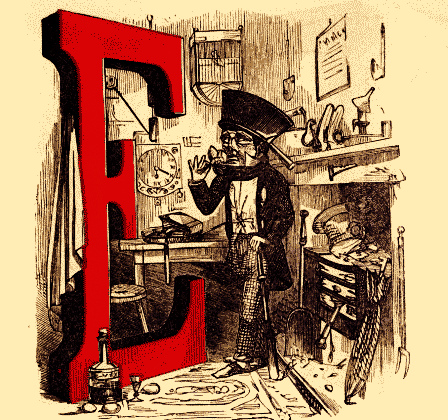
(Image via Flickr user Double–M)
 The Dish