A Poem For Saturday

Dish poetry editor Alice Quinn writes:

This week we’re featuring fragments or drafts of poems by Emily Dickinson, composed on envelopes or postal wrappers from the years 1864-1886. According to Jen Bervin and Marta Werner, the editors of the astonishingly dickinsononebeautiful book which gathers them together, The Gorgeous Nothings, they are culled  “from 1,414 contemporaneous drafts and 887 letter drafts.” Bervin writes, “Sometimes Dickinson’s writing fills the space of the envelope like water in a vessel or funnels into the triangular shape of the flap,” as is the case with the example we’re featuring today.

For those who live in or near New York City, there is a riveting exhibit at The Drawing Center of similar material, “sometimes referred to as ‘scraps’ within Dickinson scholarship,” as Bervin notes. Gazing at Dickinson’s  handwriting on the back of a Western Union telegram or a household memo or recipe is an experience not to be missed – truly breathtaking. The exhibit is up until January 10 at 35 Wooster Street.

The first selection:

In    this    short    life

that   only    lasts   an   hour

merely

How much-   how

little—is

within our

power

(From The Gorgeous Nothings by Emily Dickinson © 2013 by Christine Burgin and New Directions. Transcription images copyright © 2013 by Jen Bervin and Marta Werner. Reprinted by permission of New Directions Publishing Corp.)

Back Into The Wild

Eva Holland recounts her journey to the site where Christopher Johnson McCandless, the idealistic hiker depicted in Into The Wild, died in the Alaskan wilderness in 1992. Admirers of the young adventurer – some of whom Holland met in the above video – still retrace McCandless’s steps to see the abandoned bus where he spent his last days:

Fairbanks City Transit System Bus #142 has become a shrine, its rusting shell etched with motivational phrases left by visitors. But the pilgrimage is risky. One hiker died while crossing the Teklanika [River] in 2010, and dozens more – 12 in the summer of 2013 alone – have become lost, hurt or stranded by the rising river and have needed to be rescued by local authorities. …

The trail is nobody’s idea of a lovely hike – one of many things that mystify the Alaskans who watch the McCandless pilgrims set off each year. (“Of all the places you could hike in Alaska …” one local had said to me two nights earlier, shaking her head in disbelief.) The Stampede Trail is a boggy thoroughfare for motorized off-roaders. During the day that I spent on it, I counted seven bus-bound hikers, 22 four-wheeling moose hunters, two guided Jeep tours and one guided ATV [all-terrain vehicle] tour. Hiking there today is no way to capture the solitude and engagement with nature that McCandless was seeking. As I slogged back to my waiting car, I could not see the point of the pilgrimages. Nor could I fathom how the loss of more young lives honored his memory.

The pilgrims, of course, see the journey differently.

A spiral notebook left in the bus by the McCandless family when they visited by helicopter in 1993 has since been filled with handwritten entries, each praising McCandless and the impact his story has had on the writer’s life. One 2002 visitor left a poem: “I came up here to get away / It’s the last frontier they say / I came across this bus today / It’s gorgeous here I think I’ll stay.” Another entry, left by a man in 1999, reads: “I started my journey here hoping for two things, one that somewhere out here I would find myself, and two that I would find some hope for the future. Now I am here at the bus, and I am happy because the future looks up and I know who I am.”

One undated entry, written in pencil, is addressed directly to McCandless: “Christopher J McCandless, AKA Supertramp, I envy the ability you had to put this world aside and live out your dream, something so many of us lack. If your spirit still looms here, if this is your eternal paradise and you watch us come and go year by year season by season, I hope you help instill some of your awesome qualities in each of us that make the grueling trip to your resting place.”

Middle Class And On Food Stamps

vara_04

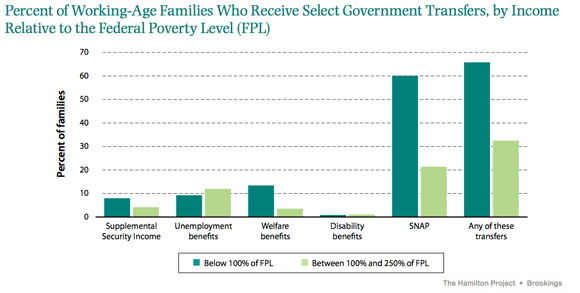
Vauhini Vara draws attention to the plight of the lower-middle class – families who make between $15,000 and $60,000 a year:

Compared with the poorest families, lower-middle-class families are more likely to be headed by married couples and to benefit from two incomes. They are also more likely to include a family head who has attended college. So far, so good: studies have shown that children who live with two parents are more likely to be more economically secure and to be healthy, as well as to graduate from high school; other studies show similarly positive effects for children of college-educated parents. And parents benefit, too.

And yet, many of these lower-middle-class families are still struggling to get by. About 60 percent of families below the poverty line receive food stamps (shown in the chart [above] as SNAP, for Supplemental Nutrition Assistance Program); so do more than 20 percent of lower-middle-class people. All told, more than 30 percent of lower-middle-class people receive food stamps, unemployment benefits, welfare, or other benefits.

This matters for a couple of reasons.

It reframes how we think about the people who access government benefits. Many of them, it turns out, are married, college-educated, and working – that is, people whose choices reflect traditional values and whose plight should inspire sympathy from both the political left and right. And it highlights the structural problems that make it difficult for lower-middle-class families to make ends meet and to rise into a higher income bracket. If you’re a married, stay-at-home mom who wants to work, for instance, you face a dilemma: if your husband’s salary is low enough to qualify your family for government benefits, getting a job could actually cost your family more in taxes and lost benefits than staying out of the workforce.

Hamilton Nolan comments:

The lower class is the most important class. But the lower class has the advantage of at least being obvious in its wretchedness. The lower middle class, by contrast, is easy to forget. On the one hand, it’s easy to assume that they are doing okay, because they’re working; on the other hand, they don’t make enough money to assert any real political influence. And all the time, they teeter on the edge of economic oblivion.

The Loss Of Alt-Weeklies

Reflecting on the demise of three alternative weekly papers in Connecticut – the New Haven Advocate, Hartford Advocate and Fairfield County Weekly – Brian LaRue laments “the loss of opportunity for journalists, particularly young journalists” it reflects:

Oh, sure — it’s 2013, and there’s no shortage of outlets for a young, loud, opinionated dish_altweekly2 writer to be loud and opinionated in media. But oftentimes — and I’ve written about this before, talking about the shift in media from the all-hands-on-deck newsroom to these networks of isolated bloggers — you lose the wisdom of the tribe that comes from being part of an editorial staff at a decades-old publication. And beyond that, working at an alt-weekly teaches a journalist so many important lessons. For reasons I’ve already laid out, when you report for an alt-weekly, you have to go deep. You have to figure out the not-obvious story. You have to become an engaging storyteller, not just a sharp transcriber. The editorial staff is small. (When I worked at the New Haven Advocate, the most full-time editorial staffers we ever had was seven, and that didn’t last long.) Your beat is broad. You need to learn your history, fast, so you know what to ask about and who to talk to. In general, you need to get really good. Really. Goddamned. Good.

He goes on to argue that alt-weeklies aren’t just important, “they’re also fun“:

They kind of have to be. The salaries are typically atrocious, the hours are long and the benefits are slim. … In his excellent appreciation of Boston Phoenix upon that esteemed alt-weekly’s shuttering, former Phoenix editor S.I. Rosenbaum pointed out how “the job itself had to be the reward.” You work for an alt-weekly because, every week, it feels like some combination of a public service and a tremendous prank you can’t believe you’re getting away with. You spend countless days in which you work from the moment you wake up to the moment you go to bed again because you know you’re helping to create an ongoing community institution, something thousands of people rely on for an experience they can’t get anywhere else, and you have to bring your A-game for them.

But there’s at least one state where the alt-weekly still thrives: Vermont.  In September, Jim Fallows spotlighted Burlington’s Seven Days, a print newspaper that:

  • Has a three-times-larger print distribution now than it did at its inception in the mid-1990s;
  • Has a healthy print-and-digital classified-ad section, including a robust set of recruitment ads and “help wanted” listings (400+ when I checked this afternoon, in a city of 40,000+ and a surrounding metro area several times that large);
  • Employs more people now than it ever has before; and
  • Is on pace for its best year ever in total revenue, up by more than 20% from its high before the crash of 2008.

Fallows offered “two comments from its publisher, co-founder, and co-editor Paula Routly”:

1) On the print business overall: “My biggest problem is the ‘death of print’ doom and gloom talk, which scares advertisers into thinking no one will see their ads. But as long as people keep picking up our paper, which they do, the ads get seen.”

2) On a reason why this paper is working, when many others aren’t (apart from the un-wired status of much of Vermont, which impedes online growth): “People look at our paper and it makes them happy and interested to be here. That motivates them to do something, and participate — which makes it more a community, and gives us something to cover. It’s a cycle that works.”

(Image of New Haven Advocate from March, 2008, via Aaron Gustafson)

Firefighters Who Commit Arson

Glendale_House_Destroyed_By_Arson_1990

Rachel Munroe investigates why they do it:

If the problem were that pyromaniacs were infiltrating our fire departments, that would be one thing. We would just need some way to identify them and weed them out – or, better yet, stop them from signing on in the first place, perhaps with some sort of complicated personality test – then the problem would be solved. But the truth is much more complicated than that. Most firefighter-arsonists have never even considered setting fires before they joined up. The idea comes later, after a few months or years of service. In other words, it’s not the evil arsonists who are ruining our fire departments; it’s our fire departments that are igniting something destructive in our firefighters.

For many years, most anyone who set fires for non-murderous or -financial reasons was, by definition, a pyromaniac. In 1951, Lewis and Yarnell published the first major, large-scale study on firesetters. Their overall conclusion, written in a tone of dripping, not-particularly-academic disdain, was that arsonists were fundamentally weak people who set fires to make themselves feel powerful:

“A craving to be the center of the stage and the recipient of public acclaim, even for once, is within the soul of every person – the smaller the man, the more he secretly wishes such type of recognition.” Firefighter-arsonists got an extra dose of contempt; they were “little men with grandiose social ambitions whose natural equipment dooms them to insignificance.” This characterization jibed nicely with Freud’s idea that the arsonist has childish fantasies of peeing on a fire to extinguish it – the drama of the fireman writ small and pathetic.

But even if pyromania is a real psychological problem – and in recent years, that’s been up for debate – it doesn’t help to explain why a significant number of firefighter arsonists are not “little men” or pathetic losers who want to wreak havoc on a society that’s rejected them, but rather overachievers, team players, firefighter-of-the-year types. The kind of guys who post firefighter memes to Facebook all day. “When a man becomes a fireman his greatest act of bravery has been accomplished. What he does after that is all in the line of work. Firemen never die, they just burn forever in the hearts of the people whose lives they saved,” Trent Bonner, his department’s top responder, posted on Facebook in 2011. A few days earlier, he’d helped put out a fire that he’d set himself.

They set fires to bone up on their training, or to preemptively eliminate hazardous buildings; they are, in the words of fire scholar Matt Hinds-Aldrich, “occupationally overzealous.” “We found that a lot of these young men didn’t have an awful lot in their lives to distinguish them except for their association with the fire service,” said Ken Cabe, who studied firefighter arsonists for the South Carolina State Forestry Commission. “They were highly motivated, they were highly trained and maybe the alarm didn’t go off often enough for them.”

In other words, a firefighter who sets fires may not be some entirely separate and deviant kind of person, but rather a good guy who goes to extremes.

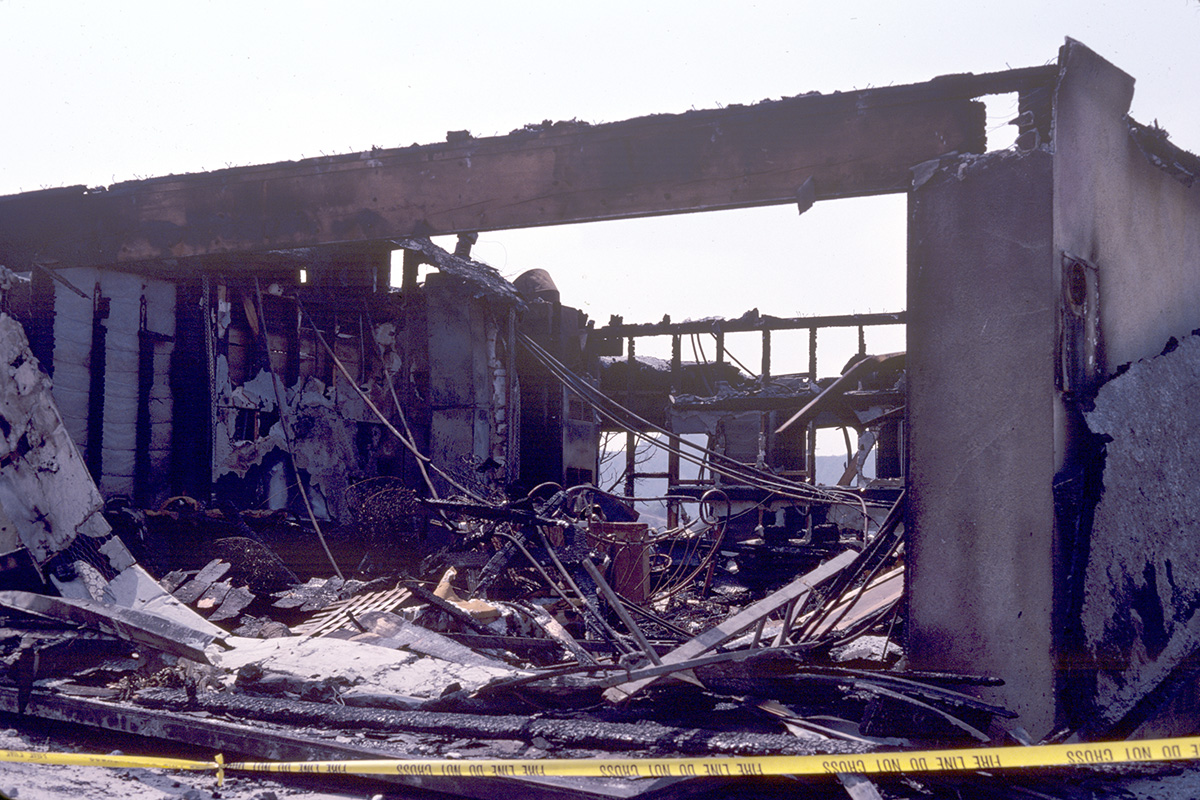
(Photo: A California home destroyed in a blaze set by the notorious fire captain John Orr in 1990.)

How Cats Can Control Us

James Hamblin digs into what’s really going on with Toxoplasmosis gondii, a parasite spread by cats, and its effect on the human mind:

Toxo has been all over the news in recent years, since it became known that the parasite manipulates people’s behavior. Maybe most interestingly and notoriously, it seems to make men more introverted, suspicious, unattractive to women, and oblivious to the way others see them. Infected women, inversely, have been shown to be more outgoing, trusting, sexually adventurous, attractive to men, and image-conscious. Infected men tend to break more rules than their uninfected peers, and infected women tend to pay them more heed. Infected men and women are 2.5 times more likely to have traffic accidents, more likely to develop schizophrenia, and more likely to engage in self-directed violence. …

Tyrosine hydroxylase is involved in production of the normally-occurring neurotransmitter dopamine. More of the enzyme means more dopamine. This changes behavior of mice, and Webster and Stock extrapolate, people. That explanation means that Toxo infection increases dopamine in our brains. It’s different, though, from the kind of dopamine boost we usually hear about in pop neuroscience likened to a runners’ high. “When you’re doing something rewarding—drinking a cup of coffee, talking to a friend, having sex, whatever—you have a boost of dopamine specifically in the limbic regions of your brain,” she said. “But Toxoplasmosis spreads all over your brain, infecting dopamine-producing neurons in many pathways. Given that the dopamine-based system is complex and influences many aspects of cognition and behavior, there is a plethora of effects that might be observed.”

How to avoid infection:

Indoor cats pose no threat, he says, because they don’t carry the parasite. As for outdoor cats, they shed the parasite for only three weeks of their life, typically when they’re young and have just begun hunting. During that brief period, Flegr simply recommends taking care to keep kitchen counters and tables wiped clean. (He practices what he preaches: he and his wife have two school-age children, and two outdoor cats that have free roam of their home.) Much more important for preventing exposure, he says, is to scrub vegetables thoroughly and avoid drinking water that has not been properly purified, especially in the developing world, where infection rates can reach 95 percent in some places. Also, he advises eating meat on the well-done side—or, if that’s not to your taste, freezing it before cooking, to kill the cysts.

Chart Of The Day

South African Pride

John Sides provides historical context:

In 1982, whites were nearly unanimous in expressing some degree of pride as South Africans (98%), but barely half of blacks (57%) did so. This gap is a stark reminder of how deeply the effects of apartheid were felt. It was not just a question of opposing a white-led government.  Among blacks, there was a profound alienation from the state itself.

But the release of Mandela from prison in February 1990 and the early signs of apartheid’s end — such as negotiations between the white-led government and the African National Congress that spring and summer — appeared to close this gap.  In the 1990 survey, which was fielded in October and November, 93% of whites and 90% of blacks expressed pride.

Mandela’s legacy may be even more visible in how little white and black South Africans’ patriotism has changed since then.  Although his leadership — indeed, any one person’s leadership — could never eliminate racism or racial tensions, whites and blacks continued to express high levels of pride.  The transition to a black-led government under Mandela and later Thabo Mbeki did not make white South Africans any less proud to be South African.  Blacks too remained similarly proud, despite the disappointments that they have experienced and the challenges they still face.

The New Sustainability

The green energy business is maturing as major players in the industry begin to see it as sustainable – financially:

[J]ust because the first round of modern environmental spending has been inefficient doesn’t mean the next round must be too. Today, institutions with unsentimental investors are ramping up strategies that could accelerate a shift toward an economy that uses natural resources more efficiently — a shift that will stick to the extent that it proves lucrative. Big electric utilities are buying into the renewable-energy business, often more aggressively than governmental clean-energy mandates require them to do. To be sure, they’re angling to look green, they’re still making most of their power profit from fossil fuel, and often they’re lobbying against tougher renewable-energy policies even as they make those investments. What’s changing, though, is that they’ve decided that renewable energy has grown too big to ignore. Utilities that set investment strategy for decades, not just for months or years, are concluding that the cost of renewable energy has declined to the point that, in some places, it’s competitive with conventional power.

Similarly, the World Bank has said it no longer will bankroll the construction of coal-fired power plants in the developing world except in “rare circumstances.” The bank’s primary mission is to facilitate economic development in poor countries, so it can’t justify purely bleeding-heart initiatives. The new stance is a bet that cleaner energy sources have gotten sufficiently economical to enter the mainstream.

Blogs That Cry “Click!”

Paul Waldman wonders about the moment when click-bait burnout sets in:

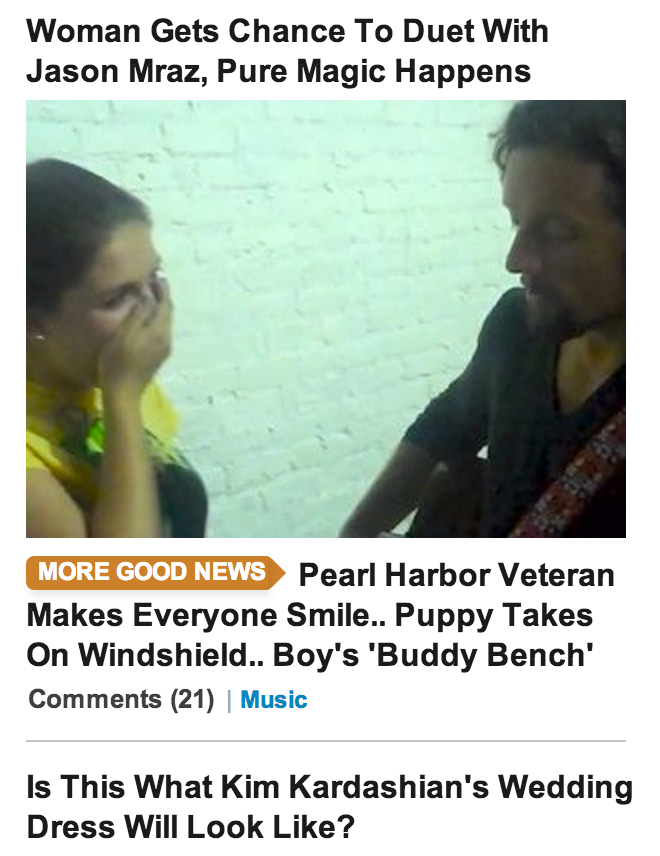
Once you’ve clicked on a few posts that promised to make you cry or change your view of the world forever but didn’t deliver, your default assumption will become that when you see Screen Shot 2013-12-05 at 4.53.34 PMsomething like that, it means somebody’s trying to get you to be a part of something artificial. It’s one thing to send something truly inspiring or outrageous to your friends or Twitter followers and brighten their day for a moment, but nobody wants to be a tool of someone else’s phony marketing campaign or mean-spirited hoax.

And I think that’s the danger for these ventures. The more conscious people become that by passing something along they’re not so much participants in a beautiful collective celebration of our shared humanity, but are instead part of an intentionally constructed attempt at content viralization, the less they’ll want to be a part of it. Because after all, one of the hallmarks of not just Millennials but the couple of older generations going back at least as far as Generation X is media savvy, or at least the desire for media savvy. We all want to think we’re immune to advertising’s manipulations and we don’t get suckered by even the cleverest marketing campaigns.

Rob Horning’s related musings:

The fact that virality can be “reverse engineered” without fear of shortages of viral-worthy content is interesting enough. “Amazing” and “heart-warming” or “surprising” content is a matter of form, not extraordinary incident. These words trigger likes the way old novels triggered tears – you didn’t want to seem unfeeling so you did it. But the fact that “everyone on the Internet” has become so good at “emulation” suggest the appeal of viral content is in the model it provides for self-memeification. Are we all starting to premise our self-worth on being as viral as Neetzan Zimmerman’s content? Is the pursuit of virality becoming hegemonic, as online “engagement” metrics that track viral content are taken also for reliable measures of self-esteem?

The point of viral content, in part, is not to learn about “little girls in Afghanistan who are better at skateboarding than you’ll ever be” or other such stories (which often turn out to be untrue) but to be the person who responds correctly to them and who tells someone else about them.

(Screenshot from Huffpo’s front-page)

Sanctioning Ourselves

Paul Pillar points out the costs to the US of applying sanctions to foreign countries, particularly countries like Iran:

The formidable, fear-inducing enforcement of U.S. sanctions against Iran entails substantial costs for U.S. companies. Not only are these companies excluded from some major opportunities for new business; they have to jump through additional hoops to make sure they do not run afoul of the enforcers in areas where they still are doing business. A Washington Post story concerns how this fear leads American companies to report to government regulators in excruciatingly minute detail anything they do that could conceivably brush up against the sanctions. Citibank, for example, felt it necessary to report that it made four dollars in profit from ATM transactions in Bahrain that involved a joint venture that included two Iranian-owned banks.

It is remarkable that some members of Congress who otherwise do not hesitate to preach that onerous government regulations and the administrative burdens they impose are bad for the American economy are also enthusiastic backers of the sanctions.

Earlier this week, Beinart railed against any new Iranian sanctions:

If today’s conservatives actually studied Reagan, instead of deifying him, they might find a useful model in the way he handled the Soviet Union.

Early in his presidency, Ronald Reagan brought massive pressure to bear on Moscow. But when that pressure helped bring to power Mikhail Gorbachev, a man genuinely interested in ending the Cold War, Reagan moved decisively to buttress Gorbachev at home. He did so even though it required American concessions in the 1987 Intermediate-Range Nuclear Forces Treaty that outraged Reagan’s hawkish base. And Reagan’s strategy of supporting Gorbachev worked. “If Reagan had stuck to his hard-line policies in 1985 and 1986,” wrote longtime Soviet ambassador to the U.S. Anatoly Dobrynin, “Gorbachev would have been accused by the rest of the Politburo of giving everything away to a fellow who does not want to negotiate. We would have been forced to tighten our belts and spend even more on defense.”

Today, America should make a similar investment in Hassan Rouhani, not because Rouhani will give America everything it wants, but because if he fails, America will get far less. Legislating new sanctions now, even if they don’t immediately take effect, could destroy Rouhani’s nuclear diplomacy. If that happens, we may have to wait years more for leaders willing to cap Iran’s nuclear program and end its cold war with the West. And by the time they come along, who knows how many centrifuges Iran will have?