Selling The Latest Sleeping Pill

Ian Parker reports at length on Suvorexant, an insomnia medication, and Merck’s efforts to get it FDA-approved:

The central nervous system is in an ever-adjusting balance between inhibition and excitation. Ambien, like alcohol or an anesthetic, triggers the brain’s main inhibitory system, which depends on binding between gaba—gamma-aminobutyric acid, a neurotransmitter—and gaba receptors on the surface of billions of neurons. gaba receptors can be found throughout the brain, and when they’re activated the brain slows. Ambien encourages the process by sticking to the receptors, holding open the door to the neurotransmitter.

Suvorexant, which Merck describes as “rationally designed”—rather than stumbled upon, like most drugs—influences a more precise set of neurotransmitters and receptors. Orexin neurotransmitters, first identified fifteen years ago, promote wakefulness. When suvorexant is in the brain, orexin is less likely to reach orexin receptors. Instead of promoting general, stupefying brain inactivity, suvorexant aims at standing in the way of a keep-awake signal. This difference may or may not come to mean a lot to insomniacs, but Merck’s marketing is likely to encourage the perception that suvorexant ends the dance by turning off the music, whereas a drug like Ambien knocks the dancer senseless.

But the FDA wants the drug’s recommended dosage to be lowered significantly:

The F.D.A.’s decision left Merck facing an unusual challenge. In the Phase II trial, this dose of suvorexant had helped to turn off the orexin system in the brains of insomniacs, and it had extended sleep, but its impact didn’t register with users. It worked, but who would notice? Still, suvorexant had a good story—the brain was being targeted in a genuinely innovative way—and pharmaceutical companies are very skilled at selling stories.

Merck has told investors that it intends to seek approval for the new doses next year. I recently asked John Renger how everyday insomniacs would respond to ten milligrams of suvorexant. He responded, “This is a great question.” After the approval process is finished, the marketing division of Merck—a company whose worldwide sales last year totalled forty-seven billion dollars—will conduct a different kind of public trial. The study will address this question: How successfully can a pharmaceutical giant—through advertising and sales visits to doctors’ offices—sell a drug at a dose that has been repeatedly described as ineffective by the scientists who developed it?

“The Highest-Luxury Goods Man Has Ever Known”

800px-Paul_Cézanne_222

Nick Paumgarten dives deep into the forces driving up the prices of fine art:

You meet a lot of people in the art world who are exhausted and dismayed by the focus on money, and by its dominance. It distracts from the work, they say. It distorts curatorial instincts, critical appraisals, and young artists’ careers. It scares away civilians, who begin to lump art in with other symptoms of excess and dismiss it as another garish plaything of the rich. Of course, many of those who complain—dealers, artists, curators—are complicit. The culture industry, which supports them in one way or another, and which hardly existed a generation ago, subsists on all that money—mostly on the largesse and folly of wealthy art lovers, whether their motivations are lofty or base.

Since the doldrums of the early nineties, the market for contemporary art, which has various definitions (work created after the Second World War, or during “our” lifetime, or post-1960, or post-1970), has rocketed up, year after year, flattening out briefly amid the financial crisis and global recession of 2008-09, before resuming its climb. Big annual returns have attracted more people to buying art, which has raised prices further. It is no coincidence that this steep rise, in recent decades, coincides with the increasing financialization of the world economy. The accumulation of greater wealth in the hands of a smaller percentage of the world’s population has created immense fortunes with a limitless capacity to pursue a limited supply of art work. The globalization of the art market—the interest in contemporary art among newly wealthy Asians, Latin Americans, Arabs, and Russians—has furnished it with scores of new buyers, and perhaps fresh supplies of greater fools. Once you have hundreds of millions of dollars, it’s hard to know where to put it all. Art is transportable, unregulated, glamorous, arcane, beautiful, difficult. It is easier to store than oil, more esoteric than diamonds, more durable than political influence. Its elusive valuation makes it conducive to extremely creative tax accounting.

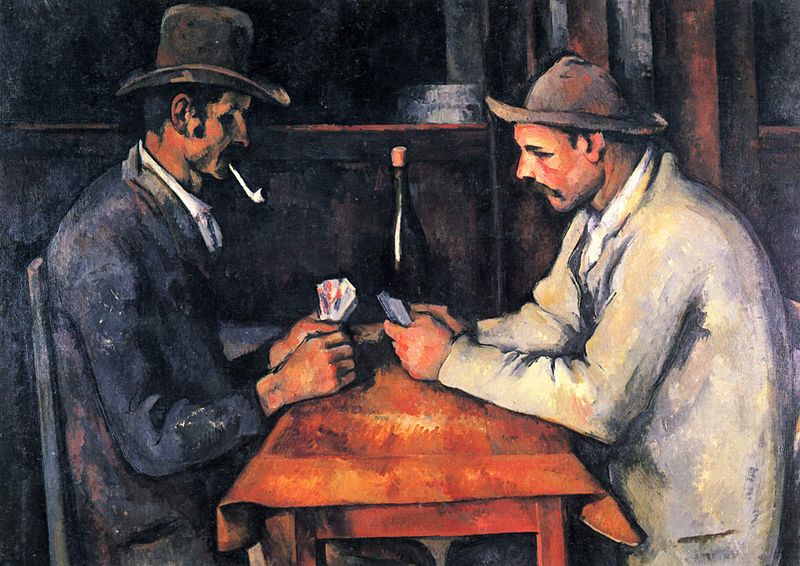
(Painting: The Card Players by Paul Cézanne, purchased for more than $250 million in 2011, making it the most expensive painting ever sold. A list here.)

Should Coding Be Part Of Kids’ Curriculum?

Jathan Sadowski disputes the emerging conventional wisdom that everyone should learn computer programming:

The problem is elevating coding to the level of a required or necessary ability. I believe that is a recipe for further technologically induced stratification. Before jumping on the everybody-must-code bandwagon, we have to look at the larger, societal effects — or else risk running headlong into an even wider inequality gap.

For instance, the burden of adding coding to curricula ignores the fact that the English literacy rate in America is still abysmal: 45 million U.S. adults are “functionally illiterate” and “read below a 5th grade level,” according to data gathered by the Literacy Project Foundation. Almost half of all Americans read “so poorly that they are unable to perform simple tasks such as reading prescription drug labels.” The reading proficiency of Americans is much lower than most other developed countries, and it’s declining. We have enough trouble raising English literacy rates, let alone increasing basic computer literacy: the ability to effectively use computers to, say, access programs or log onto the internet. Throwing coding literacy into the mix means further divvying up scarce resources. Teaching code is expensive. It requires more computers and trained teachers, which many cash-strapped schools don’t have the luxury of providing.

Jeff Wise explores the growing trend of parents hiring computer science tutors for their kids:

For most people, software programming’s social cachet falls somewhere between that of tax preparation and autism. But it’s catching fire among forward-thinking New York parents like Katie’s, who see it as endowing their children both with a strategically valuable skill and a habit for IQ-multiplying intellectual rigor. According to WyzAnt, an online tutoring marketplace, demand for computer-science tutors in New York City has doubled each of the past two years. And if one Silicon Alley–backed initiative pans out, within a decade every public-school kid in the city will have access to coding, up from a couple of thousand. …

Despite the moribund national jobs market, software positions go begging. By 2020, the industry expects to have a million more positions than it can fill. Nine out of ten U.S. high schools don’t offer computer programming, and fewer than one college student in 40 graduates with a degree in the field.

The Best Of The Dish Today

792px-Rembrandt_-_Der_reiche_Narr

So the ACA website is working more or less. And the chance of repeal seems increasingly remote. And the GOP has yet to offer any alternative to the core problems addressed by the ACA. And Obama is, we are told, going on the offensive to sell the law more aggressively.

It seems to me that we are entering a long, grueling process of adjustment to a new reality of nearly universal access to health insurance. And that’s not because the argument for Obamacare has been won on the merits. Far from it. It has only won by default so far, since the GOP has decided to offer no alternative except the mess of the status quo ante. It’s because the interests of so many – from insurance companies to drug companies – will resist repeal almost as much as those people who now have access to reliable health insurance for the first time. Michele Bachmann was right about one thing. The GOP had one chance to stop Obamacare and it was at the last election. The question now is simply what price the GOP will extract from the ACA’s survival.

Which could be one hell of a price. Change like this will roil the political waters for quite some time. It may be catastrophic for the Democrats next November … or not. When you remember the huge political surprises and mood-swings of just this fall, only a fool would predict anything. But it’s interesting to see if and how a two-term president can actually grind out a historic reform crafted in his first term. The long game is now. And it’s far from over.

I tackled the perhaps-too-easy clash between Pope Francis and the Pope of the Republican party, Rush Limbaugh. We wondered if the avocado should have ceased to exist by now (if only). I pondered how the church can truly harness the genius of women and the heroic tragedy of Dan Choi. The Window View contest this week was a real toughie (we need to keep you on your toes). And the Face of the Day was an angry beard.

The most popular post was Rush Limbaugh Knows Nothing About Christianity. Second up was The Pope and the American Right.

See you in the morning.

(Painting: The Parable Of The Rich Fool, by Rembrandt.)

Rush Limbaugh Knows Nothing About Christianity

756px-Hoffman-ChristAndTheRichYoungRuler

[Re-posted from earlier today]

Well, after Sarah Palin, another scholar of Catholicism has weighed in on Pope Francis. Rush Limbaugh has a truly gold-star hathos alert in a recent diatribe, brilliantly titled:

It’s Sad How Wrong Pope Francis Is (Unless It’s a Deliberate Mistranslation By Leftists)

Does it get more awesomely hathetic than that?

In some ways, of course, Limbaugh is onto something. The Pope of the Catholic Church really is offering a rebuttal to the Pope of the Republican party, which is what Limbaugh has largely become. In daily encyclicals, Rush is infallible in doctrine and not to be questioned in public. When he speaks on the airwaves, it is always ex cathedra. Callers can get an audience from him, but rarely a hearing. Dissent from his eternal doctrines means excommunication from the GOP and the designation of heretic. His is always the last word.

And in the Church of Limbaugh, market capitalism is an unqualified, eternal good. It is the ever-lasting truth about human beings. It is inextricable from any concept of human freedom. The fewer restrictions on it, the better. In that cocooned, infallible context, of course, Pope Francis is indeed a commie:

Listen to this.  This is an actual quote from what he wrote.  “The culture of prosperity deadens us.  We are thrilled if the market offers us something new to purchase.  In the meantime, all those lives stunted for lack of opportunity seem a mere spectacle.  They fail to move us.”  I mean, that’s pretty profound.  That’s going way beyond matters that are ethical.  This is almost a statement about who should control financial markets.  He says that the global economy needs government control.  I’m telling you, I’m not Catholic, but I know enough to know that this would have been unthinkable for a pope to believe or say just a few years ago.

Really? Limbaugh specifically invokes the great anti-Communist Pope, John Paul II, as an alleged contrast with this leftist gobbledegook. So let us look at John Paul II’s discussion of capitalism and communism in his 1987 Encyclical, Sollicitudo Rei Socialis:

The tension between East and West is an opposition … between two concepts of the development of individuals and peoples, both concepts being imperfect and in need of radical correction … This is one of the reasons why the Church’s social doctrine adopts a critical attitude towards both liberal capitalism and Marxist collectivism.

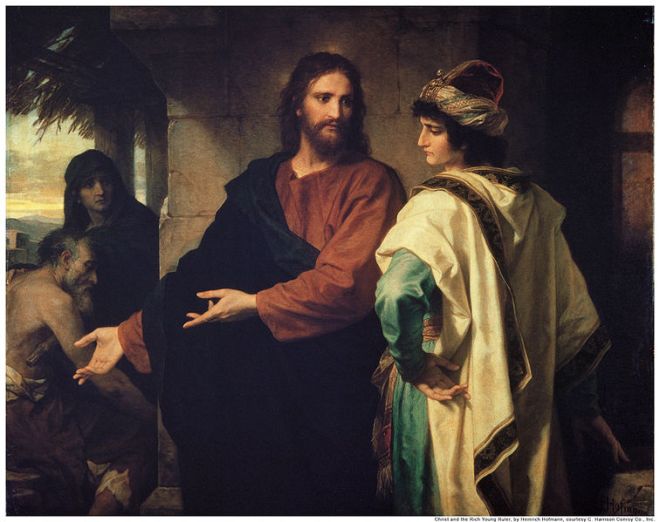
My italics. The church has long opposed market capitalism as the core measure of human well-being. Aquinas even taught that interest-bearing loans were inherently unjust in the most influential theological document in church history. The fundamental reason is that market capitalism measures human life by a materialist rubric. And Jesus radically taught us to give up all our possessions, to renounce everything except our “daily bread”, to spend our lives serving the poverty-stricken takers rather than aspiring to be the wealthy and powerful makers. He told the Mark Zuckerberg of his day to give everything away to the poor, if he really wanted to be happy.

Limbaugh has obviously never read the Gospels. He has never read the parables. His ideology is so extreme it even trashes, because it does not begin to understand, the core principles of capitalism, as laid out by Adam Smith. Market capitalism is and always has been a regulated construction of government, not some kind of state of nature without it. Indeed without proper regulation to maintain a proper and fair and transparent market, it is doomed to terrible corruption, inefficiency, injustice, and abuse.

But let us return to Limbaugh’s hero, John Paul II, this time in Centesimus Annus, written in the wake of Soviet Communism’s demise:

The Marxist solution has failed, but the realities of marginalization and exploitation remain in the world, especially the Third World, as does the reality of human alienation, especially in the more advanced countries. Against these phenomena the Church strongly raises her voice. Vast multitudes are still living in conditions of great material and moral poverty. The collapse of the Communist system in so many countries certainly removes an obstacle to facing these problems in an appropriate and realistic way, but it is not enough to bring about their solution.

Indeed, there is a risk that a radical capitalistic ideology could spread which refuses even to consider these problems, in the a priori belief that any attempt to solve them is doomed to failure and which blindly entrusts their solution to the free development of market forces.

My italics again. Could anyone have offered a more potent critique of current Republican ideology than John Paul II? Could anything better illustrate John Paul II’s critique of radical capitalist ideology than the GOP’s refusal to be concerned in any way about a fundamental question like access to basic healthcare for millions of citizens in the richest country on earth?

Sorry, Rush, but if you think this critique of capitalism is something dreamed up by the current Pope alone, you know nothing about Catholicism, nothing about John Paul II, and nothing about Christianity. But I guess we knew that already, even though the ditto-heads still believe, like that particularly dim bulb Paul Ryan, that Ayn Rand and Jesus Christ are somehow compatible, when they are, in fact, diametrically opposed in every single respect.

Notice, however, as I noted yesterday, that the Church in no way disputes the fact that market capitalism is by far the least worst means of raising standards of living and ending poverty and generating wealth that can be used to cure disease, feed the hungry, and protect the vulnerable. What the Church is disputing is that, beyond our daily bread, material well-being is a proper criterion for judging human morality or happiness. On a personal level, the Church teaches, as Jesus unambiguously did, that material goods beyond a certain point are actually pernicious and destructive of human flourishing. I hesitate to think, for example, what Limbaugh would have made of Saint Francis, the Pope’s namesake. Francis, after all, spurned the inheritance of his father’s flourishing business to wash the bodies of lepers, sleep in ditches, refuse all money for labor, and use begging as the only morally acceptable form of receiving any money at all. In the Church of Limbaugh, there is no greater heretic than Saint Francis. Francis even believed in the sanctity of the natural world, regarding animals as reflecting the pied beauty of a mysterious divinity. Sarah Palin, in contrast, sees them solely as dinner.

Which gets to the deeper issue of materialism.

Nothing better demonstrates the antipathy of the current Republican right to Christianity – indeed its constant, relentless war on Christianity – than the following refreshingly candid confession of spiritual barrenness from Limbaugh:

I want to go back to this quote from the pope again, from his — there’s the name for the document.  I can’t think of it and I don’t have it in front of me.  “The culture of prosperity deadens us.  We are thrilled in the market offers us something new to purchase.  In the meantime, all those lives stunted for lack of opportunity seem a mere spectacle.  They fail to move us.”  I’m not even sure what the connection there is.

We are thrilled if the market offers us something new to buy?  I guess there’s something wrong with that.  We’re not supposed to be thrilled if there’s something new to buy.  That’s how I interpret it.  Now, let me give you a fascinating stat I just learned today.  The iPhone 5S, which is the top-of-the-line iPhone, was announced way back in September, and has been in shortage ever since.

They have been unable to meet the demand, for whatever reason.  They have just recently caught up, and would you like to know how they did it?  They have put one million people on different assembly lines, 600 employees per assembly line at the factory in China at the one factory, where they are making 500,000 iPhones a day, and they still haven’t caught up to demand.

That’s a lot of people who are thrilled with something new to buy.

Er, yes, Rush. But the Pope is not making an empirical observation. In so far as he is, he agrees with you. What he’s saying is that this passion for material things is not what makes us good or happy. That’s all. And that’s a lot for Limbaugh to chew on. And if the mania for more and more materialist thrills distracts us from, say, the plight of a working American facing bankruptcy because of cancer, or the child of an illegal immigrant with no secure home, then it is a deeply immoral distraction. There’s something almost poignant in Limbaugh’s inability even to understand that material goods are not self-evidently the purpose of life and are usually (and in Jesus’ stern teachings always) paths away from God and our own good and our own happiness. Something poignant because it reveals a profound ignorance of one of the West’s deepest cultural inheritances in Christianity.

Limbaugh’s only recourse when faced with actual Christianity is to conspiracy theories about translations of the Pope’s words. Perhaps it’s the commies who have perpetrated a massive lie through their control of the media. That was Sarah Palin’s response to, when confronted with, you know, Christianity for apparently the first time. But you sense that even Rush is beginning to realize there is something more to this, something that could be very destructive to his sealed, cocooned, materialist ideology of one. Hang on a minute, you almost hear him saying to himself …

Yes, Rush, hang on a minute. Christianity is one of the most powerful critiques of radical market triumphalism. And it’s now coming – more plainly and unmistakably in our lifetimes – to a church near you.

(Painting: “Christ and the Rich Young Man” by Heinrich Hofmann.)
Standing Up For Lying Down

Arnold_Böcklin_Pan_che_fischia_a_un_merlo 2

A newly translated The Art of Lying Down offers a spirited defense of the recumbent life:

Lying down, German author Bernd Brunner writes, “spans the human condition, from complete passivity to the most passionate of activities.” It’s the position in which “we sleep and dream, make love, contemplate, give ourselves over to wistful moods, daydream, and suffer.” Almost every day begins and ends in a bed, and so does almost every human life. If Brunner has a big idea, it’s that lying down is due for a revival in the Western world, a culture too long obsessed with achievement and motion and noise and, therefore, uprightness. That makes rest a kind of rebellion. The book begins with reassurance: “If you’re lying down right now, there’s no need to defend yourself.” After all, life on the X axis is natural, enjoyable, and healthful. It’s good for the soul, the mind, and the body. By the end, Brunner is optimistically declaring that “the age of the New Horizontal has arrived.”

(Image: Detail from Arnold Böcklin’s Faun Blowing a Whistle to a Blackbird, 1964-65)

Making Greenpeace Walk The Plank

Sam Kleiner notes that environmental activists are more likely now than ever to face piracy charges for their high-seas hijinks:

Traditionally, piracy was carried out as a form of robbery to enrich the pirates. In the ‘golden age’ of piracy, pirates such as Blackbeard commanded large fleets of ships and amassed huge fortunes on the high seas. The pirate crews also profited from the raids and there were even systems of workman’s compensation for the crews.

Under international law, piracy prosecutions traditionally required that the alleged pirates were seeking private gains. The Harvard Draft Convention on Piracy from 1932 noted that, “If an attack by a ship manned by insurgents is inspired by a motive of private plunder, it may be piracy under the definitions of the draft convention.” Under the United Nations Convention on the Law of the Sea, piracy requires the use of violence against a ship when it is “committed for private ends.” The requirement fits with the traditional definition of a pirate as a businessman seeking to enrich himself and his crew. In the 1820 case of United States v. Smith, the U.S. Supreme Court defined piracy as “robbery on the high seas.”

But now that’s changing: Nations have begun to accept the idea that piracy can include politically motivated attacks on ships, even by environmentalists.

Are Human Rights For Chimps, Too?

HONDURAS-ZOO-MONKEY

We’ll soon see:

On Monday, the Nonhuman Rights Project filed papers suing the state of New York for the emancipation of a privately owned chimpanzee named Tommy. They plan to file two more suits on behalf of another privately owned chimp named Kiko, and a pair of research chimps called Hercules and Leo.

The group uses the legal argument of habeas corpus, which requires a person under detention to be brought before a court, especially to end unlawful imprisonment. It was notably used by the antislavery movement to define human beings as legal persons, not legal property. Chimpanzees, because of their awareness of self and of passing time, should also have rights to bodily liberty, the group argues.

Ben Richmond digs into the case:

The group’s essential argument is that a chimpanzee can be recognized as “legal person” without biologically being a person. Just as corporations can be people under the Fourteenth Amendment, “legal personality may be granted to entities other than individual human beings, e.g. a group of human beings, a fund, an idol.” The memorandum of law for Tommy’s case cites a case in New Zealand where the Whanganui River Iwi was designated as a legal person, as well as two separate examples from India where a mosque and an idol were granted legal personhood. If Tommy can be recognized as a legal person then, the case argues, he deserves to be set free under the common law writ of habeas corpus, unless the owner of Santa’s Hitching Post, a tourist attraction where Tommy is kept, can prove that “their imprisonment of Tommy is legally sufficient.”

Bryan Walsh calls the suit “potentially revolutionary” from a legal perspective:

Habeas corpus allows someone being held captive to seek relief by having a judge force his captors to explain why he is being held. It’s frequently used in cases alleging unlawful imprisonment, including those of detainees in Guantánamo. The lawsuit makes reference to a famous 1772 English case that dealt with an American slave named James Somerset, who had escaped from his owner in London, been recaptured and was set to be returned from slavery. … With testimonials from experts like Jane Goodall, [the suit] makes the case that chimpanzees have qualities that allow them to have the very basic legal right not to be imprisoned. It’s not that chimpanzees are the legal equivalent of human beings. Rather, the court filing – obtained by James Gorman at the New York Times – argues that chimpanzees are enslaved, and that the courts already recognize that slavery is wrong

Michael Todd adds:

“Personhood” is a big step beyond just calling for an end, say, to animal experimentation or pigeon shoots.

A lot of observers, including some in the animal rights movement itself, see it as quixotic or loaded with a raft of unintended, and potentially unwelcome, consequences. But we already know that corporations are people, possibly even having rights like freedom of religion, so what might have once seemed absurd now merely seems a stretch.

Elie Mystal sees the logic:

Whatever you think of the cognitive abilities and emotions of chimps, I think we can all agree that they are different from, say, chairs. They’re different from cars. Treating these animals as mere property is simply wrong. We do, of course, have a class of persons in this country who don’t have maximum rights but are more than mere property. They’re called “children,” and most of them have considerably less intelligence than a chimpanzee. So there is precedent for extending legal protection to “human-like” creatures who throw poop and change the channel during the last two minutes of a football game.

But Stephen Bainbridge isn’t buying it:

The problem, I believe, is that attempts to define the debate in moral or philosophical terms ignores the basic fact that the rationale for corporate personhood sounds in neither. Instead, it is based on practicality and utility. Put another way, we treat the corporation as a legal person because doing so has proven to be a highly efficient way for real people to organize their business activities and to vindicate their rights. Put yet another way, we treat the corporation as a legal person because it is a nexus of contracts between real persons. Which is something no animal can ever be.

Either way, the stakes are high:

If NhRP is successful in New York, it could be a significant step toward upending millennia of law defining animals as property and could set off a “chain reaction” that could bleed over to other jurisdictions, says Richard Cupp, a law professor at Pepperdine University in Malibu, California, and a proponent of focusing on animal welfare rather than animal rights. “But if they lose it could be a significant step backward for the movement. They’re playing with fire.”

(Photo: Orlando Sierra/AFP/Getty Images)

The Master Of The Viral Web

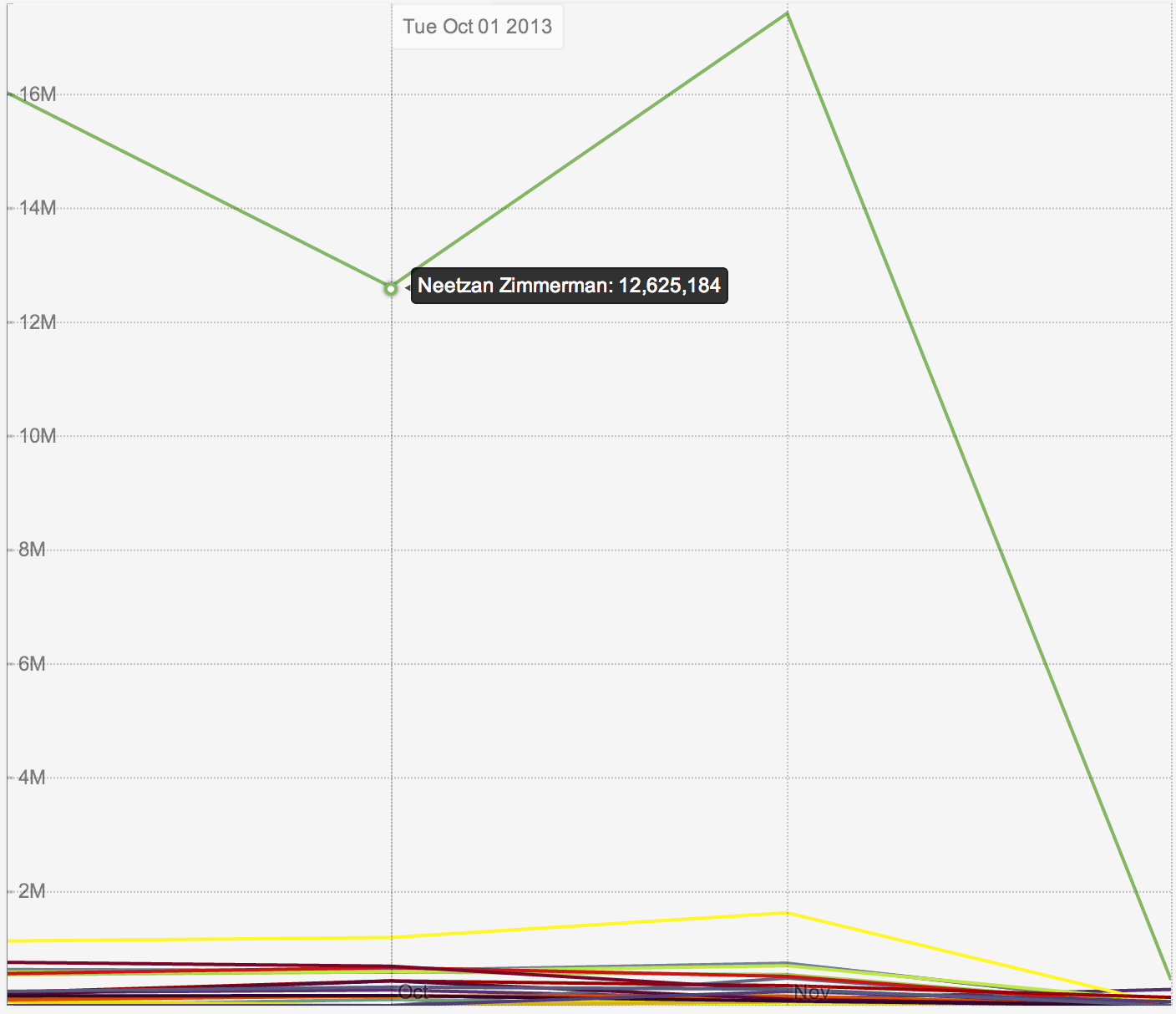
Neetzan Zimmerman, formerly of The Daily What, dwarfs the traffic of all other Gawker bloggers:

Zimmerman

Farhad Manjoo profiles the aficionado:

Mr. Zimmerman is a 32-year-old editor at the news-and-entertainment site Gawker, where he’s responsible for posting “viral” content—videos, photos, crazy local news stories—that readers can’t resist sharing with everyone they know. “Mom Fined $140 Every Day Until She Circumcises Her Child” or “Black Man Arrested Dozens of Times for ‘Trespassing’ While At Work.” With his posts generating more than 30 million page views a month, Mr. Zimmerman may be the most popular blogger working on the Web today.

Indeed, Mr. Zimmerman earns traffic so reliably that it’s tempting to dismiss him as an automaton who simply posts every sensational news story that comes along, or as a mere “aggregator” who doesn’t contribute anything original to journalism. But that take misses Mr. Zimmerman’s skill. He posts only about a dozen items a day. Almost every one becomes a big traffic hit—an astonishing rate of success. I’ve worked on the Web for years, and I still have trouble predicting which of my stories will be hits and which will appeal only to my mom. Mr. Zimmerman has somehow cracked the code.

His secret, he says, is a deep connection to his audience’s evolving, irreducibly human, primal sensibilities. Usually within a few seconds of seeing an item, Mr. Zimmerman can sense whether it’s destined to become a viral story. “I guess you could call it intuition,” he says.

Ezra draws lessons from Zimmerman’s success. Among them:

The traffic potential of the social Web is far beyond what most media sites recognize. We all might think we understand Facebook and Twitter’s power to drive traffic. But it turns out that when you actually create content specifically meant for those networks –particularly Facebook – they drive vastly more traffic than ever seemed possible.

Another:

Publishers need to spend a lot more time thinking about how to package non-social content to give it the best chance on the social Web. This is the one that I’m a bit obsessed with. Newspapers and magazines put tremendous effort into producing hard-hitting reports and beautiful long reads and then basically just hope that they take off socially. The tools they use are, for the most part, the same tools they’ve always used: Headlines and press releases, and nowadays they’ll push articles through their Facebook and Twitter accounts, too.

But they’re not routinely creating visual — much less video — promotions for their best content, even though that kind of content does much better socially.

But Facebook looks like it is going to make Zimmerman’s job harder:

Our surveys show that on average people prefer links to high quality articles about current events, their favorite sports team or shared interests, to the latest meme. Starting soon, we’ll be doing a better job of distinguishing between a high quality article on a website versus a meme photo hosted somewhere other than Facebook when people click on those stories on mobile. This means that high quality articles you or others read may show up a bit more prominently in your News Feed, and meme photos may show up a bit less prominently.

Ezra considers the implications of this development.

Should We Strive For A World Without Borders?

Joseph Carens, author of The Ethics of Immigration, questions the morality of deportation:

I ask people, “Do you think the way the world is organized is really fair?” Well, one of the ways in which it’s unfair is that states are given this right to control who gets in and who cannot get in. That’s key to the ability to have some very rich states and a lot of very poor states, because if the rich states didn’t have that control, then people would move from the poor states to the rich states. And that’s exactly what the people in the rich states are worried about.

So you have to ask, “How is this fair?” I think it’s not fair. I don’t think the solution to that is to have all these people moving, because most people would rather live in the society where they’re born. And they would stay there if the opportunities were adequate. The real point is that we have an obligation to make the world more equal, to lower the disparity. There are a variety of ways to do that, and immigration would be one component.

But I think in a just world there wouldn’t be any need for immigration controls.

There could be open borders, and it wouldn’t be a big threat, because most people don’t want to move. Europe has open borders within Europe, and there’s a very low rate of movement. Very few European citizens live outside the state where they’re citizens. Who wants to move to a place where they don’t know anybody or can’t speak the language? People in Greece or Spain might try to move now because things are so desperate, but normally people aren’t going to move for just a minor advantage.

Speaking of immigration within the EU, Massie wishes Brits were capable of a real conversation on the topic:

Almost no-one, not even the relative handful of people truly in favour of open borders, claims there is no downside – or potential downside – to immigration. Most people acknowledge that there are circumstances or places in which it can cause some difficulties. It is not daft to think that population growth can sometimes, in some places, place additional stress on public services. Nor is it reprehensible to think that some immigrants are better placed to thrive in Britain than others or that some are less likely to assimilate or make a valuable contribution to life in this country.

But it is possible to note that – even, if you prefer, to concede that – and still conclude that the right to move anywhere within the European Union is one of the greatest expansions of human liberty we – that is, Europeans –  have enjoyed in recent decades. It is an achievement that should not be cast aside lightly, far less with great force.