Really Suffering For Their Art

Olga Khazan reviewstheory by Julio Montes-Sontiago, an internist from Spain, who claims that the maladies of a number of famed artists – including Michelangelo, Goya, Portinari, and, possibly, Van Gogh – came from their repeated exposure to lead-based paints:

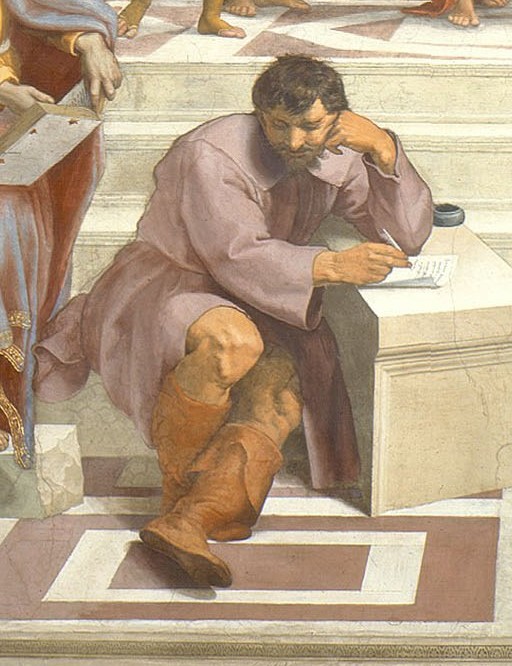
Michelangelo, for example, was painted into Raphael’s fresco, The School of Athens, with a Raphael_School_of_Athens_Michelangelodeformed, likely arthritic knee, according to the author. That, combined with letters from Michelangelo in which he complains of passing stones in his urine, suggests to Montes-Santiago that he might have suffered from paint- and wine-induced gout.
Many art historians think Van Gogh might have suffered from epilepsy and bipolar disorder, but Montes-Santiago argues that lead poisoning likely contributed to his delusions and hallucinations. The artist was known to have sucked on his brushes, possibly because lead has a sweet aftertaste…

Goya occasionally applied his paints directly to the canvas with his fingers, which Montes-Santiago argues is one reason he experienced problems like constipation, trembling hands, weakness of the limbs, blindness, vertigo, and tinnitus. In his famous 1820 self-portrait, Goya painted himself being embraced by his doctor.

(Image: Detail of Michaelangelo in Raphael’s School of Athens, via Wikimedia Commons)

A Dark Cloud Over Our Heads?

Tom Chatfield isn’t enamored with data cloud technology:

Rights – and content creators’ lack of them – lie at the heart of cloud storage’s worst dangers, something connected in turn to the underlying nature of cloud storage. … The moment you hit upload, you’ve given away almost every right you might expect to possess over what’s “yours”. Instead, the entitlements and obligations you’re left with will be spelled out in the terms of an almost-certainly-unread licensing agreement with the company who own a service – and who, in most cases, will award themselves the ability to do pretty much anything legal they see fit with your material.  Depending on the country that a company’s servers are located in, moreover, a government will also reserve certain privileges regarding your information: looking inside your old emails without a warrant, perhaps, in the case of US; or locking you up for insulting the monarch in Thailand.

Is there a way out? Maybe:

SocialSafe is a company founded on the belief that the dire warnings about cloud technologies really are true. In [company founder Julian] Ranger’s words, “lack of privacy through inadvertent self-harm (over-sharing) and through third-party data aggregation will cause greater and greater harm over the years as people cannot leave their past behind them” – and that’s before you get onto data loss, theft, fraud, and the wholesale shutting down of online services.

The service SocialSafe currently offers is the automatic copying of all your cloud content to your own computer – to be held by you no matter what happens online, and browsed or analysed at your own convenience. The service covers the gamut of social media, from Twitter to Facebook via Instagram and LinkedIn. But by the end of next year, it plans to cover categories of data ranging from purchase histories and utility bills to financial and health data – and, Ranger hopes, towards an eventual model where you yourself own your personal data library, and can “decide to make it available in parts you decide, for purposes you agree with.”

Previous Dish on cloud dominance here. Update from a reader:

It’s possible to build online systems that don’t allow tracking. Cryptographers have worked out schemes to do this. A guy named David Chaum invented a cryptographic protocol for making blind signatures that helps a lot, and he built an EZpass-like toll collection system that couldn’t track drivers.

We don’t make tracking hard or impossible for three reasons. First, for the people who build Internet services, it’s harder and it costs more. A lot of stuff we’ve already built – the web, email, chat services – would have to be rearchitected to foil tracking. That’s a really big, expensive job.

Second, tracking people is a big part of the business model of several important companies now. Google and Facebook wouldn’t have business models without tracking. Data collection is behind some of the biggest fortunes in the world now. Those folks aren’t going to just walk away from their incomes.

Third, the government really wants to track everyone. Because protecting privacy is expensive, difficult, and bad for business, it won’t happen without regulation, and the government has no interest in protecting people’s privacy.

I look at it like this. When the first wave of industrialization hit, it created really bad environmental and labor problems. We lived with them for a long time, then we started to push back through government regulations. Those problems have been mitigated in rich countries, but not everywhere.

This current wave of industrialization has bad side effects as well. It’s eating everyone’s privacy. Right now, we’re all blissed out on the benefits of the tech. I have a device in my pocket that lets me search through most of the world’s information. That’s pretty cool. And the screw hasn’t really turned yet on the problems – we haven’t had the inevitable wave of scandals that will come when some political party uses the security infrastructure to punish their opponents yet, we haven’t had corporations smearing their competitors by leaking personal info, etc. All of that will come.

When it does come, we’ll have big fights about taming the new industrial concerns like Google, certain business practices will be heavily regulated or banned, new tech will be deployed to solve these problems, etc. Eventually, the average voters will win out over the big money. But it’s way too much work, way too costly, and way too threatening to important business models to put any fixes in place until average people have begun to feel genuinely threatened. We’re still some distance from that point.

Powering A More Equal World

Charles Kenny looks at global energy consumption:

Some 1.3 billion people around the planet lack access to electricity, and twice that number still use such fuels as wood, dung, or coal for household cooking and heating.  That has a dismal impact on quality of life: Working under kerosene light is the health equivalent of smoking two packs of cigarettes a day. A recent report by the nonprofit group DARA (PDF) suggested that 3.1 million people died from the effects of indoor air pollution in 2010—and that on current trends, indoor air pollution will be killing five times as many people in 2030 as will die that year from the effects of greenhouse gas emissions.

Expanding modern energy in the developing world would boost public health. It’s also vital to increased productivity and better jobs. … The world’s poorest countries still need to produce a lot more electricity if they are to see sustainable poverty reduction and improved health. In the short term, that means the developed world should support the rollout of the cheapest, most reliable power available to meet Africa and South Asia’s needs—even if that comes from fossil fuels. In the longer term (one hopes not much longer), it means massive investment in research, development, and subsidies so that renewables become the cheapest, most reliable source of the power poor countries require.

Glimpsing Gehry

dish_gehry

Peter Aspden profiles the famed architect:

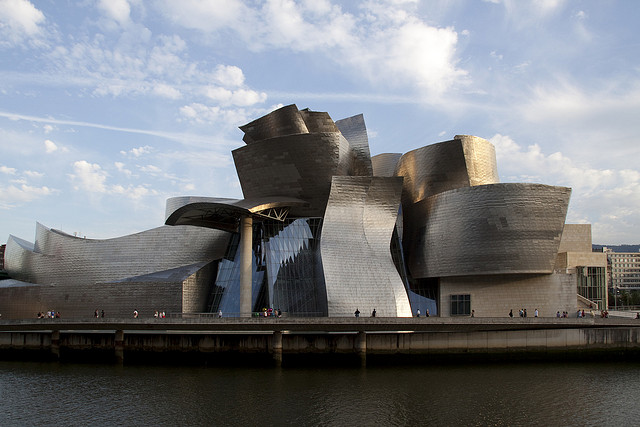
Gehry’s spectacular buildings – the most famous being the Guggenheim Museum in Bilbao and the Disney Concert Hall in Los Angeles – are said by his critics to overwhelm the environment in which they appear. His signature style – call it “metallic-sensual” for short – is, they say, repetitive and disrespectful of local context. He designs buildings by scrunching up pieces of paper. He enjoys his celebrity, and his patrons enjoy the association with what has become one of the world’s leading cultural brands. Need a new museum? Call Frank Owen Gehry on the Starchitect Hotline. Colour supplement coverage and urban regeneration guaranteed, cultural credibility cemented.

All of those criticisms have always struck me as misguided, or malicious, or just plain daft.

(The scrunching of the paper appeared as a joke in Gehry’s cameo on The Simpsons.) But that loaded epithet “starchitect” evidently stings. “You know, journalists invented it, and now they use it to damn us,” he continues in his defensive overture to our talk. I love his architecture, I say with honesty, and in the hope that the discordant theme will blow over. … Mention of the Guggenheim has a mellowing effect. “Somebody told me, a political type, that that building helped to change the political climate in the Basque country,” says Gehry. “They wanted me to do the same for their country!” he says with a little laugh. (He won’t reveal which country.) “Once it was built, this separatist movement that was trying to find its own identity suddenly had its own icon. There was something to be positive about that wasn’t there before. That’s what I was told.” He sounds slightly embarrassed by the magnitude of the claim. “I never thought of it like that.”

(Photo of Gehry’s Guggenheim Museum in Bilbao, Spain via Flickr user ahisgett)

Taking Control Of Your Dreams

Dorian Rolston visits a workshop run by Stephen LaBerge, one of the pioneering researchers of lucid dreaming:

The very existence of lucid dreams has been widely debated. According to prevailing theory, areas of the brain that generate self-reflection and govern rational thought throttle down as dreams start up. As our slumber deepens, we lose our short-term memory and self-awareness and, as a consequence, can’t spot the non sequiturs that fill our dreams, or even locate the actual position of our bodies. Only in the cold light of day, when executive functions come back online, do we realize how outlandish our dream plots are.

Lucid dreamers, by contrast, claim to be able to regain a host of daytime cognitive faculties while still dreaming. With enough practice, say proponents, people can redirect their dreams, and by so doing, at least according to LaBerge, transform their real-life narratives as well.

Rolston talks to retreat attendees about their hopes for the transformative power of lucid dreaming:

A 35-year-old software developer from Colorado Springs named Matt Winzenried says he came to [LaBerge’s workshop in] Hawaii to find the meaning of life.

About four years ago, he told me, he fell into a deep funk. He felt stifled by an overbearing boss and lackluster job. One night, while lying in bed, he heard a scuffling noise. As it drew closer, he reached under his bed for a gun but found nothing. Then something clambered up the nightstand, and Winzenried saw a furry blue creature gnashing its teeth. “That’s when I realized I was dreaming,” he says. Unexpectedly, the insight put him at ease. He felt a wave of “total acceptance and tranquility.” Winzenried was able to take control of his dream, grab the monster, and in one deep, long breath, inhale all but the creature’s skin deep into his own lungs. “There was nothing left except cloth,” he says. He awoke feeling “ready to tackle the world.”

Winzenried says that first lucid dream turned his life around. He enrolled in a personal development workshop. He got promoted. He began taking lessons in hockey and art. He started a small business. He joined Toastmasters to confront his debilitating shyness and soon became club president.

Racing Thoughts

http://youtu.be/6F7T1EGSoMQ

Matan Rochlitz and Ivo Gormley posed intimate questions – Are you in love? Who do you care about most? What do you want to do with your life? – to runners in London and captured their candid responses in the short documentary seen above. Gormley elaborates:

As we gained confidence we started to be able to delve deeper. We heard about people running with heads filled with the potential of love, the worries of knowing what to do next, the moment of realising that you won’t have children, about escaping depression, about how the world was created by god, and planning to have more sex. They opened up to us, again and again. Less and less, would they reject our requests for a conversation. In the meanwhile the seasons were rolling by; we kept going during the winter and the summer brought new waves of enthusiasts. After each trip we found ourselves exhausted but increasingly inspired. I became quite envious of this state of mind and the focus that the runners expressed. It made me excited about being human and about their sense of peace and understanding of the present. It made me want to be part of it.

(Hat tip: Aeon Films)

The Pope’s Economist

Despite Francis’s South American background, gestures toward liberation theology, and his new apostolic exhortation‘s critique of the “tyranny” of the market, Heather Horn argues that we shouldn’t look to Marx to understand the new pope’s approach to economics. Instead, she points us to Karl Polanyi, author of the classic counter-history of the rise of capitalism, The Great Transformation:

Economic activity, Polanyi says, started off as just one of many outgrowths of human activity. And so, economics originally served human needs. But over time, people (particularly, policy-making people) got the idea that markets regulated themselves if laws and regulations got out of their way. The free market converts told people that “only such policies and measures are in order which help to ensure the self-regulation of the market by creating the conditions which make the market the only organizing power in the economic sphere.” Gradually, as free market-based thinking was extended throughout society, humans and nature came to be seen as commodities called “labor” and “nature.” The “market economy” had turned human society into a “market society.”

In short (as social sciences professors prepare to slam their heads into their tables at my reductionism), instead of the market existing to help humans live better lives, humans were ordering their lives to fit into the economy.

How that connects to the vision of Pope Francis:

Where things get really interesting is when Pope Francis brings up the financial crisis. “One cause of this situation,” he writes, “is found in our relationship with money, since we calmly accept its dominion over ourselves and our societies. The current financial crisis can make us overlook the fact that it originated in a profound human crisis: the denial of the primacy of the human person!”

It’s nothing new to say the financial crisis came from a lack of regulation. That’s a fairly popular analysis. But what Pope Francis is saying is more Polanyan, hearkening back to the idea that the tipping point has to do with the relationship between the market and society/humanity, and which is subordinate to the other. Just as Polanyi argued that the extension of the market economy across the globe (through the gold standard) was the root cause of World War I (and you’ll have to go back to the original book for that, but it’s a beautifully, hilariously gutsy, Guns, Germs, and Steel kind of argument), Francis is arguing that failing to keep humanity at the center of our economic activity was the root cause of the financial crisis.

Because Linguistics

Stan Carey lays out an interpretation of the recent origin of using “because” as a preposition:

Neal Whitman agrees with Language Log commenters who think it could be from “Because hey”–type sentences (If life gives you lemons, keep them, because, hey, free WHY-Because-Racecar lemons), where hey functions “like an adaptor, letting you shift from the ordinary speech register to this casual and condensed register”. And then people started dropping the hey. It’s not always hey, either: take this line from the linguistically trend-setting Buffy, season 5 (January 2001): “I don’t even get how we made that guy, because, wow, advanced!” There may also be forerunners in child–parent exchanges like “Why? That’s the why” and “Why? Because.”; and in the popular insults “Because shut up” and “Because fuck you, that’s why.”

But Gretchen McCulloch isn’t so sure about Whitman’s explanation:

I’m skeptical about Neal’s “because, hey” explanation, because as I noted last year, we don’t see a lot of instances of “because noun” with any sort of additional modifier: the most canonical instances of “because noun” are with a bare noun, not a noun phrase. So, “my mouth is sore because lemons” sounds fine to me, but “my mouth is sore because free lemons” sounds a bit more marginal. Not totally unacceptable, maybe, but not the core upon which “because noun” was founded. (Stan Carey‘s examples have only 4/19 with more than a single word after “because”.)

In contrast, the modifier is crucial to the humour of the “because, hey” expression, and “because, hey” just doesn’t work in all the contexts where we find “because noun”. For example, something like “If life gives you lemons, keep them, because, hey, lemons” only works if the person you’re talking to already knows the joke or sees the value in lemons. And the example above, “my mouth is sore because, hey, lemons”, is just plain weird. The “hey” implies that the lemons are good, but the previous part of the sentence is saying that the lemons are bad, so I’m really not sure what someone could mean by saying this.

Megan Garber’s take:

However it originated … the usage of “because-noun” (and of “because-adjective” and “because-gerund”) is one of those distinctly of-the-Internet, by-the-Internet movements of language. It conveys focus (linguist Gretchen McCulloch: “It means something like ‘I’m so busy being totally absorbed by X that I don’t need to explain further, and you should know about this because it’s a completely valid incredibly important thing to be doing'”). It conveys brevity (Carey: “It has a snappy, jocular feel, with a syntactic jolt that allows long explanations to be forgone”).

But it also conveys a certain universality. When I say, for example, “The talks broke down because politics,” I’m not just describing a circumstance. I’m also describing a category. I’m making grand and yet ironized claims, announcing a situation and commenting on that situation at the same time. I’m offering an explanation and rolling my eyes—and I’m able to do it with one little word. Because variety. Because Internet. Because language.

(Image of “Because Racecar,” the inaugural “Because X” meme, via KnowYourMeme)

Denominational Diction

In an interview with The Millions, Irish author Kevin Barry discusses the distinction between “Catholic fucking prose” and “Protestant fucking prose”:

TM: Flannery O’Connor wrote — and I once heard [Barry] Hannah echo this — that the South is “Christ-haunted.” Is it the same for Ireland, with the huge Catholic and smaller Protestant presences?

KB: There’s no doubt. I don’t have a religious bone in my body, but there’s Catholic prose and Protestant prose. Flannery O’Connor’s prose is Catholic fucking prose. John Updike’s prose is Protestant fucking prose. And that’s fine. There’s also Jewish prose, which dominated my whole reading staples in my twenties. I wanted to be the next great Jewish writer, which was difficult, as I was a ginger-haired child in Cork, in the south of Ireland. That didn’t work out. Without being too reductive, I would say the Protestant strain is to strip down and to pare back, to reduce. Beckett is a Protestant writer. Joyce is a Catholic writer. Joyce piles it all on to the fucking page. And for a long time in the 20th century, Irish writers had a great difficulty. They had to go one of the two paths. But there was a third way, and the stream in Irish writing I really love is that mischievous, anarchic, and inventive one that goes back to writers like Flann O’Brien, back to the 1700s to Laurence Sterne and Dean Swift. It’s a kind of crazy, funny, nasty strain.