Lynch shakes his head at Egypt’s growing collection of political prisoners:
Egypt’s security services were able to tap into well-cultivated mistrust of the Muslim Brotherhood at home and abroad to justify its initial crackdown. But the intense animosity between the Brotherhood and many activists shouldn’t mask the reality that the campaign against the “terrorist” Muslim Brotherhood and the campaign against other political activists and independent voices are manifestations of the same political project. Both aim at crushing the culture of protest which overthrew former President Hosni Mubarak and restoring the “normality” of a carefully managed authoritarian regime. The arrests and public defamation campaigns aimed at restoring the fear and disengagement which has always been so vital to maintaining authoritarian regimes. The architects of the coup hoped to rebuild that barrier of fear which had been so famously shattered by the January 25 uprising.
He worries about where things are heading:
Right now, Egypt’s roadmap leads not towards anything resembling democracy or even stability but towards greater repression, escalating insurgency, and continuing political failure. Egypt’s current leadership may dream of becoming a something like a big United Arab Emirates, devoid of Muslim Brothers, street protests, or democratic politics. Instead, it is turning Egypt into a new Bahrain: dependent on Saudi Arabia, controlled by unaccountable security services, riven by increasingly irreconcilable polarization, and with political opponents branded as a vast international conspiracy of terrorists. Meanwhile, the military government seems to think that its problems are best met with public relations campaigns rather than genuine political engagement. Can a highly publicized visit by Kim Kardashian ogling the Pyramids be far behind?
Meanwhile, Mohammad Fadel thinks Egyptian liberals will ultimately regret calling in the military to oust the Muslim Brotherhood:
Responsibility for the revolution’s failure lies primarily with Egypt’s non-Islamist opposition. By appealing to the military to remove the country’s first elected parliament and to exclude the Muslim Brotherhood from political life, instead of organizing to defeat it in peaceful elections, they have sent two profoundly anti-democratic messages to the Egyptian people. First, that only the military is capable of solving Egyptians’ political differences. Second, that the Egyptian people cannot be trusted to elect responsible political leadership. Both of these messages, even more than Islamists’ attempts to impose limitations on rights and freedoms in the name of religion, represent a categorical repudiation of democracy’s fundamental premise: that people are capable of governing themselves, not perfectly, but adequately, and that the people, over time, manage their public life better than any authoritarian institution—military, civil, or religious. Rather than a celebration of democracy, the third anniversary of the January 25 Revolution will be a day for somber reflection.
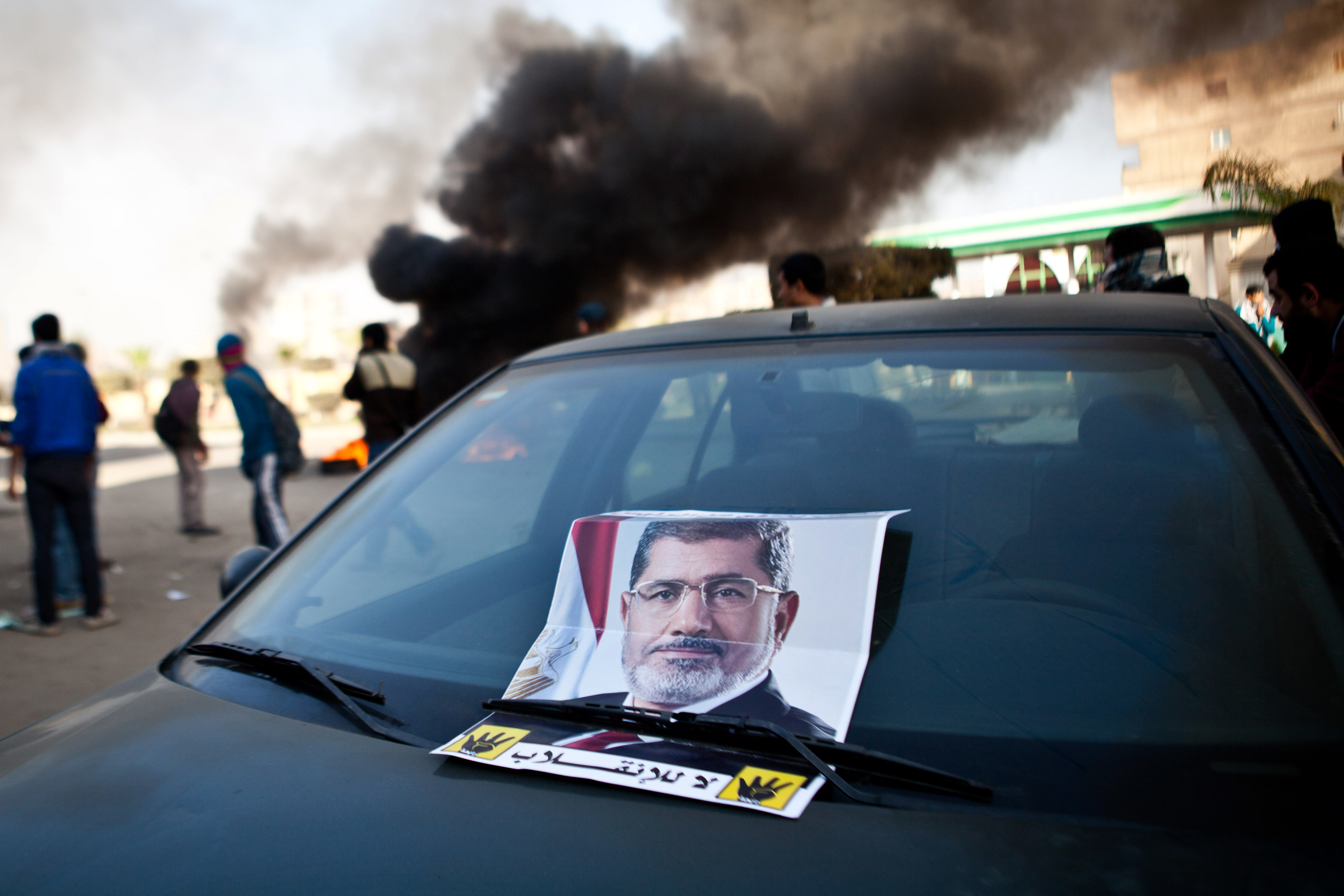
(Photo: A poster of ousted president Mohamed Morsi is seen on the windsheild of a car during clashes between his supporters and security forces in Nasr City, Cairo on January 8, 2014. An Egyptian court adjourned the murder trial of deposed president Morsi to February 1, citing ‘weather conditions’ that prevented his transport to court from prison. By Virginie Nguyen Hoang/AFP/Getty Images)
 The Dish