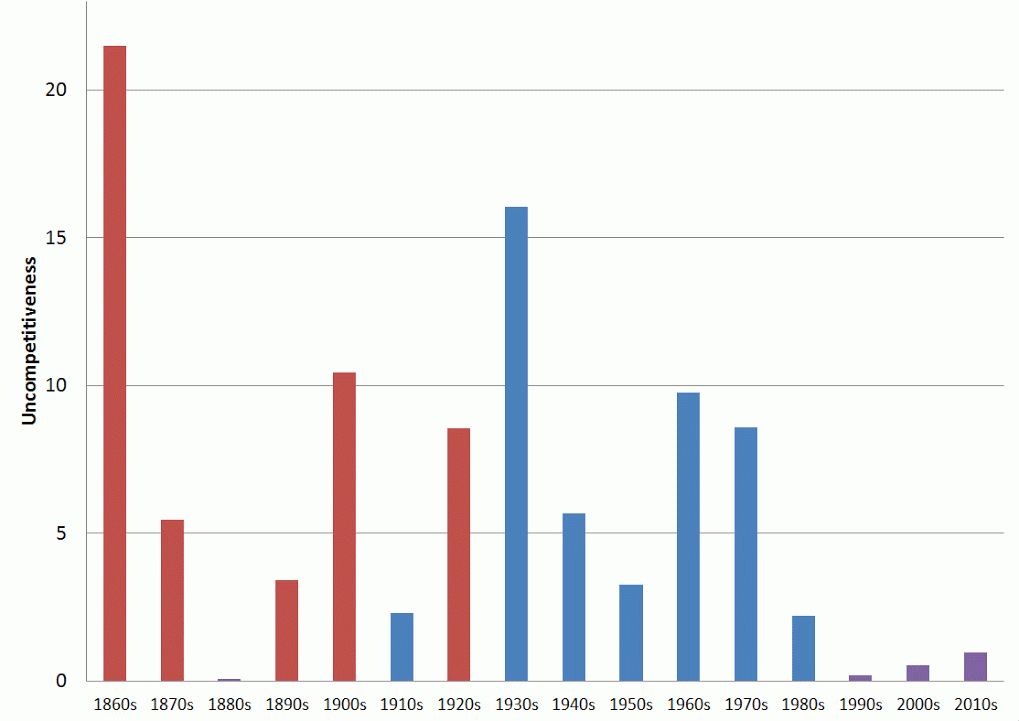
Frances Lee created the above chart, which “displays a simple index of two-party competition at the national level for every Congress between 1861 and the present”:
Competition fuels party conflict by raising the political stakes of every policy dispute. When control of national institutions hangs in the balance, no party wants to grant political legitimacy to its opposition by voting for the measures it champions. After all, how can a party wage an effective campaign after supporting or collaborating with its opposition on public policy? Instead, parties in a competitive environment will want to amplify the differences voters perceive between themselves and their opposition. They will continually strive to give voters an answer to the key question: “Why should you support us instead of them?” Even when the parties do not disagree in substantive terms, they still have political motivations to actively seek and find reasons to oppose one another. In an environment as closely competitive as the present, even small political advantages can be decisive in winning or losing institutional majorities.
Seth Masket welcomes the news:
Competitiveness is the key to democratic accountability. We generally want our politicians and parties to be responsive to voters and to be nervous about making mistakes. … Despite regular claims that one party or another has an electoral lock on the country or that demographic shifts are creating a permanent majority, we’re living in a golden age of competitiveness. If one party pushes its agenda too far or mismanages the country, that can cost it majority control. Political actions actually have consequences.
 The Dish