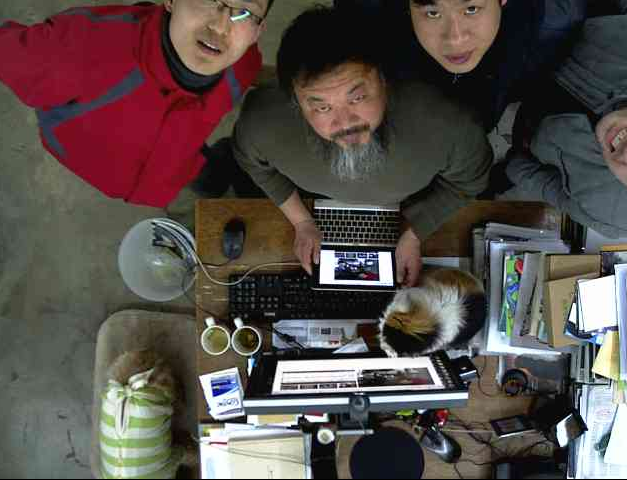
In an interview with Der Spiegel, Ai Weiwei discusses self-surveillance and the possibilities of the Internet:
Ai: When I counted that [the Chinese government] had installed 15 cameras around my house, I decided to install four further cameras inside my home – one in my bedroom, one at my desk and so on. I thought: If you want to know everything about me, then I’ll broadcast and show everything to you. Then I went live with the webcams.
SPIEGEL: Do you consider that to be art or politics?
Ai: Both. I applied their tactics in order to push them into another more philosophical light and to wait and see what happened.
It didn’t take long for them to call and ask me to please turn off the cameras. I said: “You want to know what I’m doing. Hundreds of thousands of others want to know as well and have been following me for days.” It became a big event. They said: “Please turn off the cameras.” I asked them if it was a suggestion or an order – it turned out it was an order. Then I switched them off.
SPIEGEL: The Internet is strictly censored in China, but it is still brimming with ideas and criticism.
Ai: That’s why the Internet is the best thing that ever happened to China. It turns us into individuals and also enables us to share our perceptions and feelings. It creates a culture of individualism and exchange even though the real society doesn’t promote it. There isn’t a single Chinese university that can invite me to give a talk. Even though I know there are many students who would like to hear what I have to say.
SPIEGEL: How do these limitations affect your work?
Ai: It doesn’t really affect me because I work and live in the Internet. My virtual life has become my real life.
(Screenshot from Ai’s now-defunct overhead webcam via Wikimedia)
 The Dish
