In the poem Poison, from his 1857 volume The Flowers of Evil, Baudelaire ranked
absinthe ahead of wine and opium: “None of which equals the poison welling up in your eyes that show me my poor soul reversed, my dreams throng to drink at those green distorting pools.” Rimbaud, who “saw poetry as alchemical, a way of changing reality,” Edmund White notes in his biography of the poet, saw absinthe as an artistic tool. Rimbaud’s manifesto was unambiguous: he declared that a poet “makes himself a seer through a long, prodigious and rational disordering of all the senses.” Absinthe, with its hallucinogenic effects, could achieve just that.
Guy de Maupassant imbibed, as did characters in many of his short stories. His A Queer Night in Paris features a provincial notary who wangles an invitation to a party in the studio of an acclaimed painter. He drinks so much absinthe he tries to waltz with his chair and then falls to the ground. From that moment he forgets everything, and wakes up naked in a strange bed.
Contemporaries cited absinthe as shortening the lives of Baudelaire, Jarry and poets Verlaine and Alfred de Musset, among others. It may even have precipitated Vincent Van Gogh cutting off his ear. Blamed for causing psychosis, even murder, by 1915 absinthe was banned in France, Switzerland, the US and most of Europe.
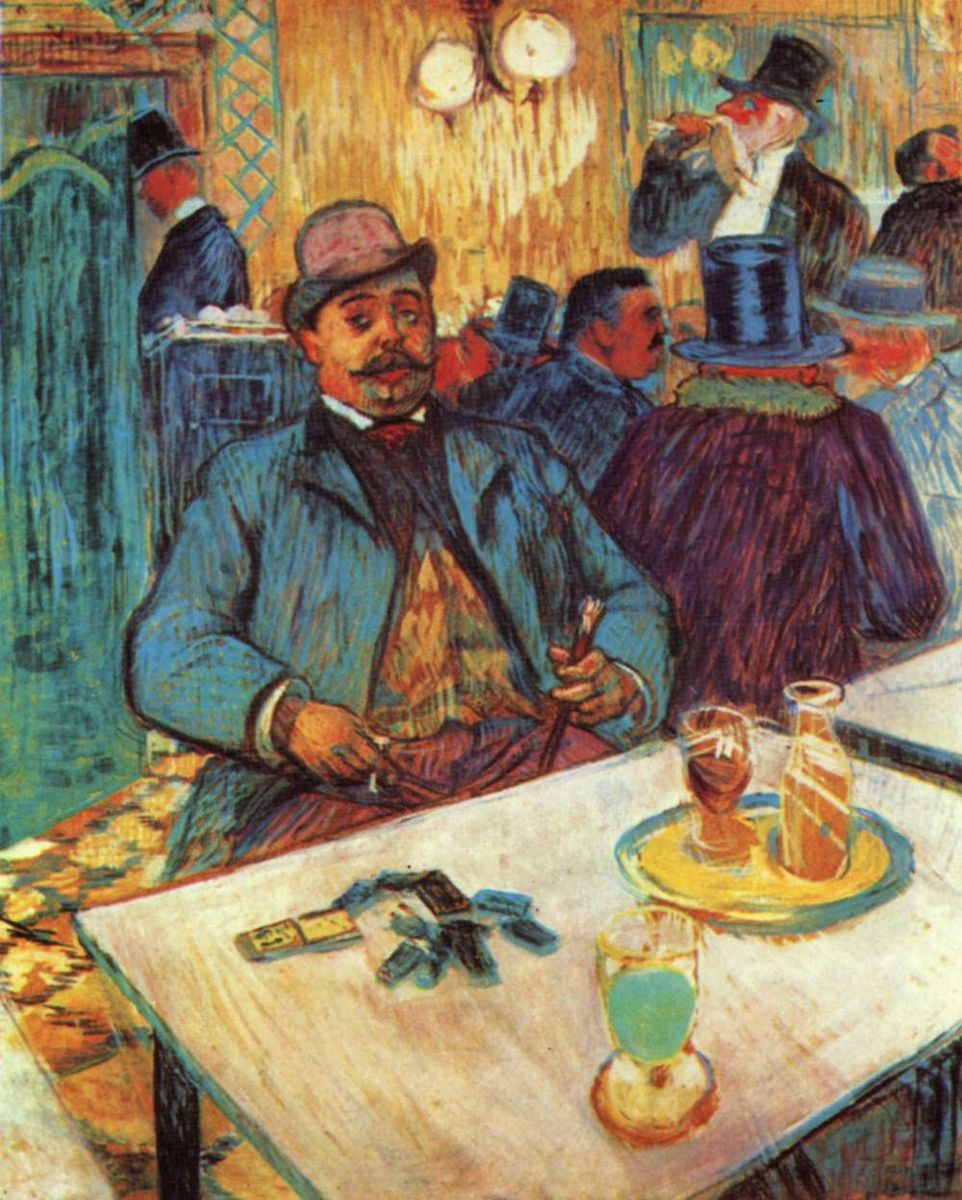
(Image of Monsieur Boileau by Henri Toulouse-Lautrec, 1893, via Wikimedia Commons)
 The Dish