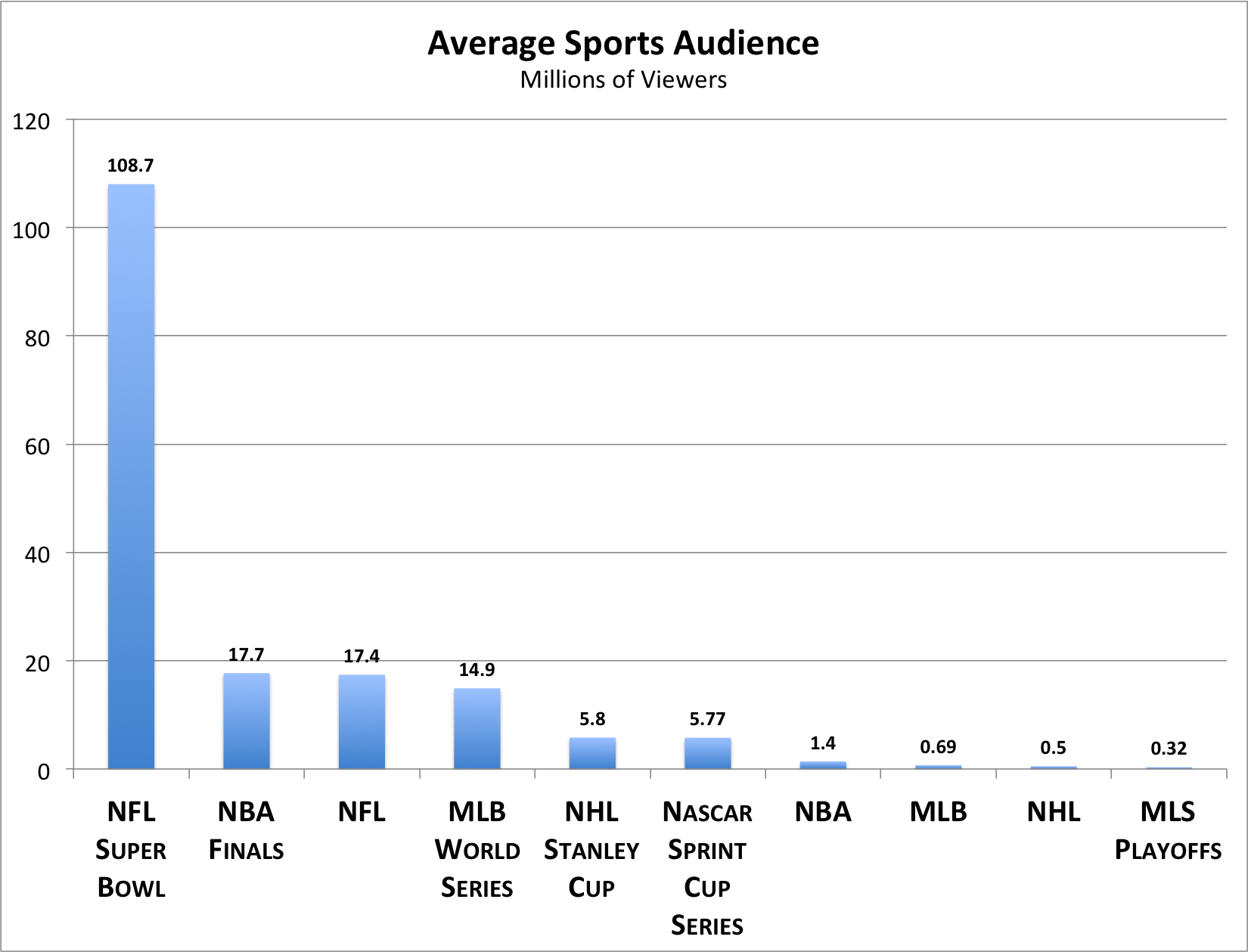
This chart from Derek Thompson helps explain why Michael Sam coming out is so significant:
Marc Tracy wonders who will draft Sam:
If you are an optimist … you believe that the 32 NFL franchises will be making their decision on Sam the same way they would any other player: analyzing his merits (his college play, his “measurables” at the upcoming combine, what their research says about his character) and then deciding how good a “system fit” he is for their rosters and defensive schemes. “I think that sports, at its best and purest, acts as a meritocracy,” NFL historian Michael MacCambridge emailed me Sunday night. “And what we’re seeing is simply another chapter in the realization that if someone can help you win, it doesn’t matter if that person is black or white… and ultimately, it won’t matter if the person is straight or gay.” …
“Much is made about football’s macho culture,” MacCambridge argued, “but you also have to remember that virtually every player in the NFL spent at least three years on a college campus, with the accompanying socialization and exposure to different lifestyles.” He added, “That heterogeneous college experience tends to supply people with lessons about diversity and tolerance, whether they’re conscious of it or not.”
Earlier thoughts from readers here. Nancy Goldstein tries to understand the squeamishness of NFL executives:
So what’s up with the tut-tutting from the NFL’s front office? It may be that the big difference between their panic and the NCAA College Football’s maturity is money—particularly the big money that corporate sponsors and advertisers bring to the NFL and don’t bring to the NCAA. When an anonymous official in Sports Illustrated says, “the league isn’t ready for this,” it’s likely code for “We’re afraid that having an openly gay player on board means that ticket sales will drop, or male viewers will be turned off, or that Bud Light and Marriott and Pepsi and GMC won’t want to pay top dollar to advertise with us.” In short, members of the NFL’s front office may be afraid that Sam will compromise their brand.
Lt. Col. Robert Bateman dismisses such concerns:
Really? Seriously? It has now been years — not weeks, not months, years — since gay men and lesbian women have openly laid down their lives for our nation in combat. And you, Mr. NFL executive who does not even have the slightest whiff of moral courage to even use your name, say that America is not ready for gay NFL players? Really? You think that the nation is cool with gay men dying in combat, in service to our nation, in desperate distant places, but you don’t think the country is cool with them playing in your game?
Are you on crack?
Kavitha Davidson joins the conversation:
As we saw with Branch Rickey and Jackie Robinson and baseball’s integration, management might be reluctant to progress, but eventually somebody will stop spitting in its face to open up a new pool of talent. Sam doesn’t need to be a Hall of Famer; he just needs to attract the eye of a team in need of a solid tackler and to work on translating his game from college to the pros. In the past decades, the conversation around homosexual athletes has shifted from whether gays can play sports in the first place to the slightly more palatable question of whether gays can be accepted in sports. Sam and his predecessors have already addressed the former — he just needs management to give him a chance to prove that the latter is no longer an issue.
Scott Shackford’s bottom line:
[A]ll eyes are on Sam because this is the final doorway in America for cultural acceptance. It marks the end of certain silly ideas about how masculinity informs sexuality that have had lasting impacts on the psyches of straights and gays alike for decades. It’s a huge deal, though the impact may not be fully grasped except in retrospect years from now.
 The Dish