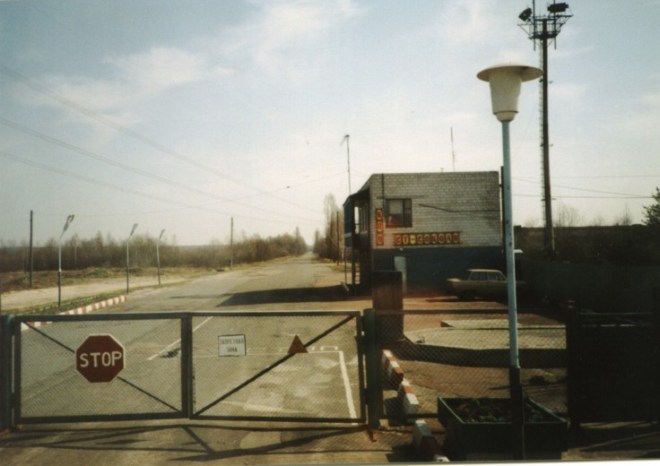
Sean O’Hagan wonders why we’re drawn to images of abandoned places:
[T]here are the images of cities or entire landscapes that have been deserted and left desolate, whether swaths of downtown Detroit or the modern ghost towns that border Chernobyl following the nuclear accident of 1986. In the former, the broader arc of history and commerce is suggested, not just in the decline of a great city, but possibly of a country, an empire. In the latter, our fear of nuclear disaster, and its apocalyptic aftermath, is summoned. Here, too, the precedents are fictional, but they tend to be darker, from the metaphysical chill of TS Eliot‘s epic poem The Waste Land to post-apocalyptic sci-fi novels, most notably the dystopian and oddly prescient stories of JG Ballard or, more recently, Cormac McCarthy‘s unremittingly bleak survival novel, The Road. …
Herein perhaps lies something of the true nature of our fascination with abandoned places: they allow us to look at, even surround ourselves, with the traces of decay and desolation, without actually experiencing the human cost. That there are no people in these photographs is, of course, part of their haunting power, their melancholic force. For the photographers, this is an aesthetic call.
Update from a reader:
You and your readers might be interested in the Japanese photographer Masataka Nakano, specifically his book Tokyo Nobody, which is a collection of images of Tokyo, sans people. Examples here.
(Image of the entrance to the zone of alienation around Chernobyl via Wikimedia Commons)
 The Dish
