Rob Ford (no, not the crack-smoking one) thinks the UK could use a dose of American-style polarization:
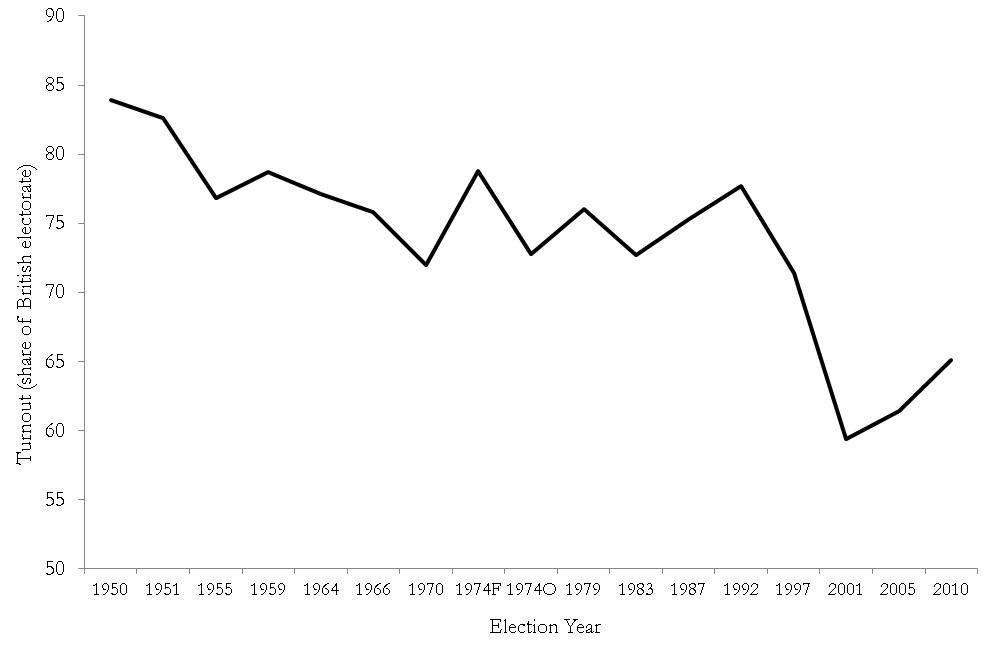
The British have been governed for 20 years by pragmatic parties, focused on the center and happy to steal each other’s ideas. Has this made for a contented electorate? Not at all. Turnout in British elections has slumped since this convergence began, as the figure below shows, leading to debate about a crisis in British democracy. Between 1992 and 2001, nearly one in five British voters stopped showing up on polling day, and most have not returned. Trust in politicians and satisfaction with politics have also fallen. Party identification and party memberships have collapsed to their lowest levels in modern history. Growing numbers of voters now either ignore politics entirely, or express their hostility to the mainstream parties by backing the radical new entrant, the United Kingdom Independence Party (UKIP). After 20 years of rising polarization, America’s voters hate their politicians. Yet, after 20 years of steady moderation, Britain’s voters seem to hate their politicians too. What is going on?
Polarization leaves moderate voters without a voice in politics; centrism leaves voters at the extremes without a voice, and similarly unhappy about it, as recent research illustrates. What’s more, centrism may be more of a problem for parties, because political activists tend to hold more extreme views. Moderation may bring parties closer to the average citizen, but it also hollows them out, starving them of the activists and funders they rely on to communicate with voters.
But there’s a lot of noise in this model. Two other factors, among many, to take into account: the exposure of corruption in the political classes in the last decade – from the MPs’ expenses scandal to the collusion of government, media and police in phone-hacking; and the general affluence and civil peace that was the norm from the early 1990s to 2001. When things are hunky-dorey, politics becomes blessedly less essential. Then look at the very peak of participation in the 1950s. This was an era of bipartisan consensus unlike any other before or since: it even had its own name – “Butskellism” – a combination of the moderate Tory grandee, Rab Butler, and the Labour leader, Hugh Gaitskill, whose views were pretty close to indistinguishable.
 The Dish