A Poem For Sunday

“The Lucky One” by Reginald Shepherd:

The middle-aged white man in a beat-up blue Pinto
who shouts “Hey man, what’s up?”, pulls up onto
the curb in front of me to ask the time, because
I am a young black man and who knows what he wants
from me: or my dream in which nothing works, not even the lights,
because it’s France under the Occupation, and Billie Holiday
sings “I Cried for You” with blue hair on the television
while men in drag fan-dance behind her and young people
grind together in Technicolor on the studio dance floor (when the camera
isn’t closing on her pancaked face, her one
gardenia pinned back like blue-rinsed hair), because the Nazis
still allow it and pleasure is such a pretty thing
to watch, and I am hiding in this house with air-conditioning, waiting
for the owners, whom I haven’t met, to come home, the lights
to come back on, waking up afraid (just after
they return, turn off a dead black woman’s tears)
in the second half of the twentieth century not knowing
the time of day, speaking French to myself, singing.

(From Some Are Drowning by Reginald Shepherd © 1995 Reginald Shepherd. Used by permission of the University of Pittsburgh Press. Video of Camille Rankine reading Reginald Shepherd at a Poetry Society of America event, “Yet Do I Marvel: Iconic Black Poets of the 20th Century“)

Is Consistency Overrated?

Emrys Westacott thinks so:

An advantage of not insisting on logical consistency as a sine qua non of any acceptable moral position or ethical theory is that we will be more likely to give due weight to pragmatic considerations. Consider the abortion debate again.

Much ink has been spilled constructing sophisticated arguments to show that allowing abortion is or is not consistent with certain other precepts we adhere to. But an alternative approach is to cut the Gordian knot by not worrying about that and simply asking instead: what are the likely consequences of allowing or prohibiting abortion? If prohibiting it is likely to produce more dangerous backstreet abortions, more unwanted children growing up in deprived circumstances, more single mothers mired in poverty, and so on, then these are reasons for ensuring that it be legal and available. If, on the other hand, its ready availability tends to put a heavy economic burden on the health care system, diminish our respect for human life, and foster less careful attitudes to sex which in turn increases the incidence of sexually transmitted diseases, then these are reasons for banning abortion.

To sum up: I’m not saying that we should stop caring at all about logical consistency in working out our positions on moral issues. But I think it is interesting and reasonable to ask why we do care. Moral philosophers, as theoreticians, naturally tend to focus on the theoretical coherence of statements and their implications. But morality isn’t mathematics. It is perfectly rational, in one sense of the term, to prioritize practical consequences over logical consistency. Once we accept this, we will perhaps be more comfortable taking a pragmatic approach to moral problems, and feel free to do so without dissimulation or apology.

Faces Of The Day

bedstuy

In a 2011 interview, photographer Russell Frederick described (NYT) the Brooklyn neighborhood he has been documenting since 1999:

Bed-Stuy is a great city of great people — a black metropolis rich in history, culture, food. Lots of soul. A place I would love to buy a house, a place where you can start your own business. A community that is evolving and changing. Brownstones that are just magnificent. People of so many different backgrounds. The people of Bed-Stuy are actually the gold of Bed-Stuy.

But the neighborhood is also undergoing a rapid transformation:

Frederick said that watching the Bedford-Stuyvesant real-estate market boom and many small businesses close down as a result has made him appreciate the value of documenting the neighborhood for as long as he has. “Whenever I pick up a camera, I’m trying to uplift,” he said. “I hope I have honored the community and the good people of Bed-Stuy who haven’t gotten a fair shake. The community needs to be honored, and the pioneers need to be honored.”

(Photo by Russell Frederick)

Quote For The Day

“[Y]ou can’t use reason to argue someone out of a position he didn’t get into by reason. Precisely because it is, at rock bottom, a visceral feeling rather than a rational position, antigay hostility both inside and outside the Christian church can not be overcome simply by appeal to history, theology, or logic.

There are, on the other hand, ways to communicate and enlighten not dependent on mere information that can overcome deeply embedded prejudices better than argument. A life can be an argument; being can be a reason. An idea can be embodied in a person, and in human form it may break down barriers and soften hardness of heart that words could not.

This is, at least in part, what John the Evangelist means when he refers to Christ as logos. Although translators often render it as ‘word,’ it is much more than that. It is Greek for ‘reason’ and ‘argument’: our word for ‘logic’ comes from it. Christ was God’s unanswerable ‘argument.’ His people had hardened their hearts against his spoken reasons, the arguments propounded – in words – for centuries by prophets and sages. So he sent an argument in the form of a human being, a life, a person. The argument became flesh and blood: so real that no one could refute or ignore it,” – John Boswell, “Logos and Biography,” in Theology and Sexuality: Classic and Contemporary Readings.

Saint Gilbert?

800px-G._K._Chesterton_at_work

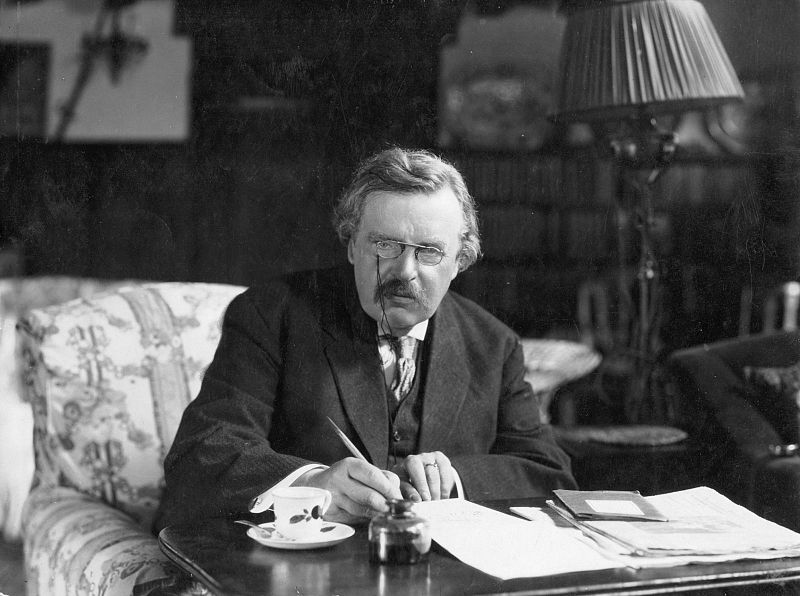
William Doino Jr. offers reasons why recent moves to explore sainthood for G.K. Chesterton, the portly, cigar-smoking Christian writer, might gain traction:

Evidence of Chesterton’s holiness begins with his lifelong resolve to heed Christ’s teaching: “Unless you be converted and become as little children, you shall not enter into the Kingdom of Heaven.” Throughout his life, Chesterton’s faith retained a child-like quality: Dorothy Collins, Chesterton’s secretary, said that “Chesterton was so excited by meeting the Pope [Pius XI], that he could not work for two days after,” writes biographer Ian Ker. “She also remembered vividly how distressed he was when he lost a medal of the Blessed Virgin Mary that he always wore.”

Another virtue of Chesterton was his remarkable ability to make friends with his intellectual opponents. No matter how heated his arguments became, he never lost sight of their common humanity; and proof of that is the emotional tributes his adversaries paid him upon his death.

Yet a third characteristic of Chesterton’s holiness was his recognition of sin—especially his own sins—and the urgency to have them forgiven to receive eternal life.

Theologian John Saward believes Chesterton’s autobiography is in the “same noble tradition” of Augustine’s Confessions, and represents a “search for absolution,” and above all a key to “unlock Divine Mercy.” Chesterton’s charity, humility, and passionate love for truth have also been highlighted by Italian scholar Paolo Gulisano, and in a recent anthology, The Holiness of G.K. Chesterton.

In an interview in December, Dale Ahlquist, founder of the American Chesterton Society, suggested that the writer might have a friend in Pope Francis:

I’m waiting for him to quote Chesterton. That’s what I’m waiting for the pope to do. One of the interviews with him describes his study and describes the Chesterton books on the shelf behind him. We know there’s that connection. …

Chesterton is very well-known in Argentina–you know why? Because the guy that always used to quote him in Argentina is Jorge Luis Borges, and Borges is the pope’s favorite writer, even though (Borges was not) a Christian, but because he’s an Argentine man of letters and truly a great social critic and observer of mankind. Pope Francis was always very attracted to Jorge Luis Borges, who quoted Chesterton in the 1970s, when people didn’t quote Chesterton.

(Image of Chesterton in his study via Wikimedia Commons)

Pondering The Prodigal Son

In a column on what the parable of the Prodigal Son can teach us about social policy, David Brooks expresses (NYT) a wish for more grace and forgiveness in American life:

The father … understands that the younger brothers of the world will not be reformed dish_spada and re-bound if they feel they are being lectured to by unpleasant people who consider themselves models of rectitude. Imagine if the older brother had gone out to greet the prodigal son instead of the father, giving him some patronizing lecture. Do we think the younger son would have reformed his life to become a productive member of the community? No. He would have gotten back up and found some bad-boy counterculture he could join to reassert his dignity.

The father teaches that rebinding and reordering society requires an aggressive assertion: You are accepted; you are accepted. It requires mutual confession and then a mutual turning toward some common project. Why does the father organize a feast? Because a feast is nominally about food, but, in Jewish life, it is really about membership. It reasserts your embedded role in the community project.

Dreher squirms at the idea of no-strings-attached love:

I mostly agree with Brooks’s point here, but would emphasize that the Prodigal Son repented in humility. In practical terms, that means he recognized the error of his ways and came back with firm intention of changing. As Brooks says, the reconciliation and redemption of the Prodigal Son requires mutuality. If the Father and the Older Brother do not make it possible for the Prodigal to find welcome and restoration, then it won’t happen. On the other hand, the Prodigal must make a decisive act of humility, which is to turn from his life-destroying ways. Notice the Prodigal doesn’t come back expecting his family to forgive and forget, and restore him to his former state. Having tasted the bitterness of his own waywardness, he just wants to do whatever he can to be part of their community again.

David Zahl and Will McDavid defend the radical message of the parable:

If [Dreher’s response] sounds reasonable, that’s because it is. But Christ’s parable is not about a reasonable son or a reasonable father or their reasonable relationship. Doubtless Dreher means well, but his line of thinking opens the door for forgiveness to be predicated on proper repentance, or what he calls “firm purpose of amendment” (a milder “desire and resolution” in his ex-tradition’s catechism). There may be other biblical passages you could use to defend such a framework, but this isn’t one–after all, the son isn’t even allowed to finish his speech or declare his intent. So if the phrase “firm purpose” makes you shiver, you’re in good company. It’s a reliable recipe for religious neurosis, one which thrusts a person into the kind of excruciating internal guessing game that drove Martin Luther to despair: How do I know I’ve really repented? What if I say I repent but don’t feel it? What if I feel repentant but don’t act on it? What if I only act on it for a while? What if there’s something I need to repent of that I can’t remember? What if my neighbor’s repentance looks a lot firmer than mine? What if I’m in a coma? You get the idea.

(Image of Return of the Prodigal Son by Leonella Spada via Wikimedia Commons)

When Love Bids You Welcome

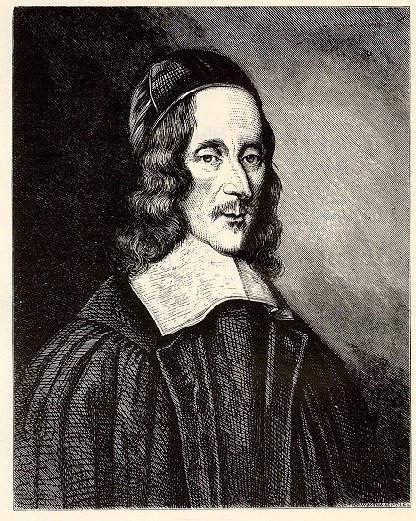
Miranda Threlfall-Holmes credits the 17th century poet and Anglican clergyman George Herbert for converting her to Christianity:

[Herbert’s] poems are, in effect, a spiritual autobiography. Although they are not individually dated and so cannot be directly related to different phases of Herbert’s life, dish_herbert many of them clearly describe his intensely personal struggles with faith and calling. Even those that are more formal explorations of particular religious doctrines or concepts have a similar air of spiritual authenticity. There are no mere statements of dogma. The poems record the poet’s own doubts and faith in a way that still rings true with many readers, even those with no explicit faith of their own. …

They are also full of genuine emotion. This makes them feel much more modern than their date would suggest. For Herbert, religion is never simply a set of dogmatic assertions, or a collection of cultural practices, as historical religion is sometimes caricatured. Nobody reading these poems can be left in any doubt as to Herbert’s emotional engagement with his subject matter. The question Herbert’s poetry raises is eternally contemporary. The poems don’t ask us “Is this true?” but “How do I feel about this?”

It is this question that slipped under my guard as a teenager. It was easy to dismiss the truth of the 20 impossible things that religion seemed to expect me to believe before breakfast. It was much harder to dismiss my own emotional reaction to these poems: the beauty, the yearning, the enticing danger. They left me with the sense that I was standing on a cliff, staring out to sea, hearing marvellous tales of lands beyond the horizon and wondering if they were, after all, just fairy tales or whether the intensity with which the tales were told was evidence that the teller had indeed seen a barely imagined kingdom.

Previous Dish on Herbert and his poetry here, here, and here.

(Image of portrait of George Herbert by Robert White, 1674, via Wikimedia Commons)

Thinking Inside The Box

confessionbox

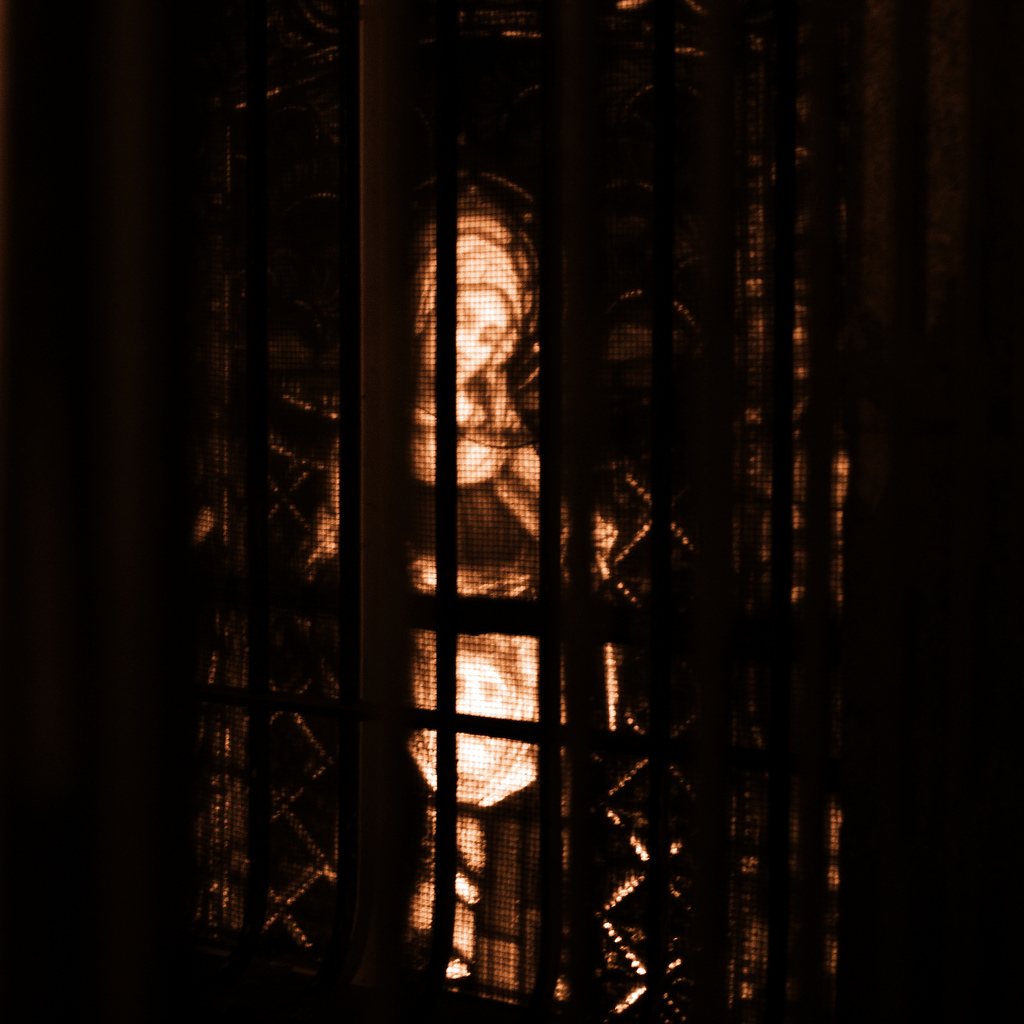
The confession box, in which Roman Catholics admit their sins to a priest, often separated by a screen or lattice, was an innovation of the 16th century Church. In an interview about his new book, The Dark Box: A Secret History of Confession, John Cornwell describes the impact it had on Western understandings of the self:

Confession in the box had an amazing shaping effect on the way that people thought about themselves. It helped foster a very private, and very modern, sense of interiority and guilt, and even new ways of articulating ideas about the body and sexuality. There’s a new focus on the idea of intention, too…. You go into the dark box, deep into your disembodied soul, and consider the degrees of intentionality in your actions. The emphasis is on the private rather than the public nature of sin.

He also highlights its connection to a more nefarious development – the Catholic sex abuse scandal:

Many priests in the wake of the scandal have admitted to using it as a way of grooming and testing children for their vulnerability.

This is something that the great John Jay Report, on pedophile priests, which was done in the US in the early part of the last decade, missed out on. They didn’t see the importance of confession. That’s why I think my book is important in an investigatory sense. I’m bringing that out. The statistics in the report show that a third of all of the crimes of abuse occurred in a confessional setting. … The interesting thing is that from the late 1950s, when all of this started to rise, to the mid 1980s—this was the period in which priests were going outside the box. So you get confession as something that takes place in the privacy of a priest’s room, or in the sacristy, or in his car. But something else happens that is very important: Many priests squared the circle of their offending lives and their pastoral lives by going to confession themselves. There you have the morally weak aspect of confession: this belief that you can commit terrible sins and then go and get them washed away…. There was a case in Australia not so long ago when a priest on trial admitted that he had confessed to sexually attacking children 1,500 times. He’d confessed it 1,500 times!

(Photo through screen of a confession box by Angie Chung)

Apathetic Atheism vs New Atheism

Thomas Wells explains why he rejects the atheism of Dawkins and Dennett:

The fundamental problem with all this is that the new atheists accept that religion is important enough that it matters whether one has the right or wrong beliefs about it, and have specific views about what religious beliefs one should hold. What separates them from me is that I don’t consider religion worthy of rational dissent, and I don’t consider that true freedom from religion would require me to rationally justify my lack of belief or interest in it. Of course god doesn’t exist. So what?

There are many supernatural things that some people believe in that I don’t, including Santa Claus, UFOs, crop circles, witches, ghosts, homeopathy, gods, fairies, and astrology. I see no particular reason to select out my non-belief in gods from that list of non-beliefs for special attention and justification. I see no no more reason to describe myself as an atheist, than as an afairieist, ahomeopathist, etc. To put it another way, my non-belief is apathetic: the nonexistence of God/Gods is a matter of great insignificance to me.

Update: Read the thread prompted by this post here.