Totalitarianism Is A Young Man’s Game

Christian Caryl notes that, while young people are often the drivers of modern revolutionary movements, “that doesn’t automatically make them ‘progressive,’ and it certainly doesn’t mean that they’re democrats”:

The radical political movements of the twentieth century understood this very well. Both the Fascists and the Bolsheviks placed young people squarely at the center of their deeply illiberal programs. These totalitarians, knowing that the young were their natural allies in the fight against the old order, offered them quick access to power and careers — and the young were generally happy to accept. (And yes, both the Soviet Communists and the Nazis were “tech-savvy,” avidly embracing new technologies like radio and the movies, and capable of ferocious innovation in the realms of social policy and warfare.)

If we were to pick the most influential youth movement of the twentieth century, measured by sheer numbers and actual political effect on the lives of others, the title surely belongs to the Red Guards of Mao Zedong’s Cultural Revolution. When the Great Helmsman gave them official sanction to take bloody revenge on teachers, bureaucrats, and in some cases their own parents, millions of young Chinese responded with enthusiasm, unleashing a mass paroxysm of violence that remains without equal.

Uploading The Past Into The Present

“The Internet has muddled the line between past and present,” argues Paul Ford:

Pick any historical subject and the Internet will bring it to life before your eyes. If you’re interested in vaudeville, you’ll find videos galore, while college football scholars can browse Penn State’s 1924 yearbook, complete with all the players’ names and positions. And every day, more history keeps washing up. Not long ago the news went out that a Philadelphia woman named Marion Stokes had recorded 140,000 VHS tapes of local and national news from 1977 to her death in 2012. Her collection has been acquired by the Internet Archive, and soon it will trickle onto the web. [A similar compilation of old network news bloopers is seen above.]

This omnipresence of the past has weird effects on contemporary culture.

Take any genre of music, from death metal to R&B to chillwave, and the cloud directs you not just to similar artists in the present but to deep wells of influence from the past. Yes, people still like new things. But the past gets as much preference as the present—Mozart, for example, has more than 100,000 followers on Spotify. In a history glut, the idea of fashionability in music erodes, because new songs sit on the same shelf as songs recorded five, 25, and 55 years ago, all of them waiting to be discovered. In this eternal present, everything can be made contemporary.

Relatedly, Ted Scheinman appreciates the vastness of online info:

Today we have at least three different ways to follow [Lord] Byron on Twitter and can access facsimiles of certain crucial manuscripts via the Morgan Library. Indeed, each day more and more manuscripts appear on library and university websites, a massive boon for both scholars without one of those blank-check fellowships and civilians curious to see a poet’s hand, and to compare it with unattributed parchment passed down in a commonplace book.

Beyond Byron, whole realms of databases and scholarly communities are making dissertations better, even as they make grad school less lonely. Peter Beal’s Catalogue of English Literary Manuscripts 1450-1700 is appearing in fits and starts, while the Orlando Project at the University of Alberta brings to light hitherto un(der)-read work by women writers whose importance the pre-digital humanities have overlooked. The British Library seems to unveil a new flight of high-resolution images each day, while stateside enterprises, including the William Blake Archive and the Beinecke’s Boswell project, add significant collections annually.

Putting Russia On The Couch

Ioffe psychoanalyzes the country:

There’s something deeply adolescent about modern Russia. Her behavior smacks of the kid with identity issues, who takes out her growing pains on those around her; who withers and bristles in the face of the slightest criticism; who feels superior precisely because she is misunderstood (Russians often quote the famous poem, “The mind cannot comprehend Russia“); who wants desperately to be liked yet cannot keep her advances steady enough before the violent, vocal resentment and fear of rejection come bursting through, killing her chances of acceptance; who angrily, hopelessly yearns for acceptance from those she perceives as the cool kids and resents those who would accept her because if they could accept her, how cool could they really be?

Michael Idov’s take:

For all its protestations of self-sufficiency, Russia is utterly obsessed with how it’s seen in the West. In fact, these two notions are linked in a charmingly adolescent way: The louder the exceptionalist talk about the country’s “special path,” the stronger the curiosity to check how it’s being received. Since the mid-aughts, the Kremlin has been quietly wasting millions on PR firms like Ketchum in order to improve its image abroad; a government-funded news portal exists solely to translate foreign articles about Russia into Russian; and any modicum of success a Russian actor, artist, or writer enjoys in the West is immediately blown out of proportion back home.

Could American Internment Camps Return?

760px-A_young_evacuee_of_Japanese_ancestry_waits_with_the_family_baggage_before_leaving_by_bus_for_an_assembly_center..._-_NARA_-_539959

Seventy-two years ago today, FDR signed an order that ultimately forced more than 100,000 Japanese-Americans to shutter their businesses and abandon their homes. Civil libertarians are observing the anniversary alongside Japanese-American communities across the country:

The Day of Remembrance marks not only the day in 1942 when President Franklin Roosevelt signed an executive order allowing the internment of 120,000 people of Japanese origin after Japan attacked Pearl Harbor; it also serves as “a reminder to our communities – our civil rights are still not protected,” said Karen Korematsu, whose father, Fred Korematsu, famously challenged his detention in the landmark Supreme Court case Korematsu v. United States in 1944. Karen Korematsu cited the NDAA’s indefinite detentions as one attack on civil rights now faced primarily by American Muslims. Among the other issues they say they face are the mass infiltration of mosque communities by law enforcement and harassment by Transportation Security Administration staff at US borders.

Carl Takei shares some family history:

During the war, my grandfather served in a racially segregated US Army artillery unit. Scouts from his battalion were among those who liberated survivors of the Nazi death camp at Dachau. But while my grandfather fought in Europe, my grandmother waited for him in an American concentration camp. With these stories, I grew up with a visceral sense not only of the fragility of our constitutional rights, but also how profound a deprivation of liberty it is to be taken from one’s home and encircled by guards and barbed wire. That awareness is a significant part of why I chose to fight for the rights of prisoners, immigration detainees, and other people deprived of their liberty in the United States.

(Photo: A young evacuee in California waits with family baggage before leaving for assembly center in the spring of 1942. By the Department of the Interior/War Relocation Authority)

Face Of The Day

Almost frozen bear cub under protection

An almost-frozen bear cub found in Alapli, Turkey is recuperating at the Celal Acar Wildlife Protection and Rehabilitation Center in Bursa on February 19, 2014. The young cub is putting on weight by drinking a formula containing milk, protein, honey, salt, and egg yolk. By Ugur Ulu/Anadolu Agency/Getty Images.

Evidence That Gun Control Works?

A new study on the effects of Missouri’s 2007 decision to repeal its background check requirement for gun purchases has found that it led to an increase in gun homicides:

“Coincident exactly with the policy change, there was an immediate upward trajectory to the homicide rates in Missouri,” the study’s lead author Daniel Webster, director of the Johns Hopkins Center for Gun Policy and Research, told the BBC. “That upward trajectory did not happen with homicides that did not involve guns; it did not occur to any neighboring state; the national trend was doing the opposite – it was trending downward; and it was not specific to one or two localities – it was, for the most part, state-wide.”

The analysis of data compiled from the FBI’s Uniform Crime Reporting system controlled for changes in policing, incarceration, burglaries, unemployment, poverty, and other state laws adopted during the study period that could affect violent crime. “This study provides compelling confirmation that weaknesses in firearm laws lead to deaths from gun violence,” said Webster in a release.

The research is not conclusive, but scholars expect it to bolster pro-gun control arguments:

Since this is only a single study, “it’s just suggestive,” warned David Hemenway of Harvard’s School of Public Health. It is “another piece of evidence that is consistent with the bulk of the literature, which shows where there are fewer guns, there are fewer problems… But you want eight more studies that say background checks really matter.”

And the study isn’t perfect:

Missouri also enacted a “stand your ground” law in 2007, creating some challenges in disentangling the effects. But [Duke University gun expert Philip] Cook said he is confident that background checks played a major role because the authors tracked an increase in guns that went directly from dealers to criminals—exactly the scenario background checks are designed to prevent. The study also notes an uptick in guns “purchased in Missouri that were subsequently recovered by police in border states that retained their [permit-to-purchase] laws.”

Gun rights advocate John Lott pushes back:

You can’t do a study like this on one state over time. There are 17 states with “universal background checks” … You can’t just pick one state. Let me give you an example. You flip a coin 20 times — ten heads and ten tails. If you specifically picked just five heads from the sample, could you conclude that the coin was biased? Presumably not. There is research on these universal background checks across all the states. Indeed, the third edition of More Guns, Less Crime provided one study on this, and, the Webster study, it show no benefit in terms of murder rates from these laws. The question the media should ask is: why pick one state when there are so many states with this law? …

The other question is why the paper only examines murder rates and not any other type of violent crime. Again, the answer is clear: none of the other violent crime rates, including robbery, showed the change that Webster desired.

North Korea’s Enabler

North Korea

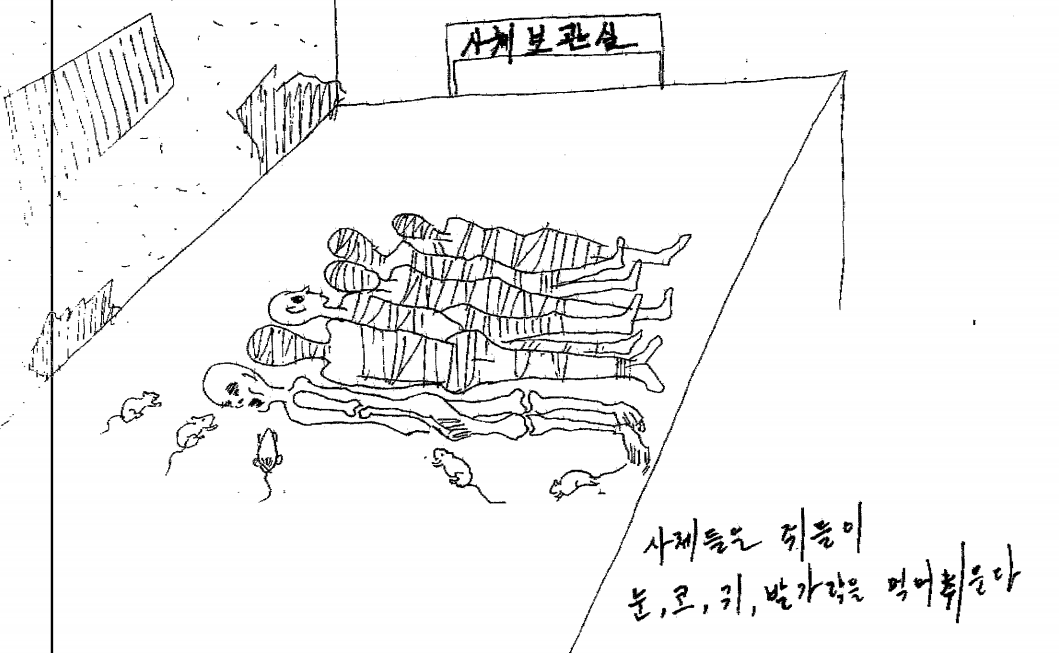
Kenneth Roth points out how China is complicit in North Korea’s crimes against humanity:

Beijing’s culpability is actually greater than the report states. No country has more influence over North Korea than China, which has long provided a lifeline of economic aid and political cover to the Kim dynasty of Kim Il Sung, Kim Jong Il, and, since Dec. 2011, Kim Jong Un, while refusing to do anything about the horrendous cruelty being committed next door. If it wanted to, Beijing could use its considerable influence to press Pyongyang to curb its atrocities. Or Beijing could simply begin welcoming North Koreans who manage to escape, instead of its current practice of treating them as “economic migrants” and forcibly repatriating them to their homeland, where they frequently face detention, torture and sometimes even execution. Instead, Beijing violates international law. Forcibly returning North Korean refugees in these circumstances is a blatant breach of the principle of non-refoulement — the most basic principle of international refugee law, which prohibits returning people against their will to face persecution.

(The illustration above is from the UN’s recent report on North Korea. It was drawn by a former North Korean prisoner Kim Kwang-il.)

Are Colleges Failing Their Mentally Ill Students? Ctd

Readers begin to share their stories:

I appreciate your most recent coverage of the ongoing issue of mentally ill students on college campuses. As a current first-year undergraduate at a Northeastern liberal arts college, I have seen countless cases in which students who needed help were met with harsh discipline. A few of these cases have hit close to home. A good friend revealed to our tight-knit group that he has suicidal thoughts. After he seemed hesitant to get help, our group made the decision to alert the Health Services Department on his behalf.

The campus response was, in my opinion, disturbing.

Two campus police officers – not trained medical professionals at the Health Services Department – came to my friend’s door at 3 AM, pulled him out of bed, gave him a full body search, hand-cuffed him and then brought him to the campus police detention facility. In other words, his mental and emotional issues were treated as criminal issues. After he was quickly examined by health services officials, the administration gave him a forced leave of absence for a semester. He was removed from a close, caring group of friends and many other support structures on campus. Keep in mind, this is an 18-year-old kid who’s living away from home for the first time in his life – your typical college freshman.

I think this anecdote reflects just how paranoid universities are about an on-campus death (especially a suicide). Their efforts to avoid the repercussions of a suicide completely miss the point. Their primary goal is not to stop their students from committing suicide; their goal is to make sure that students don’t commit suicide on their campus. It’s not about a commitment to making students healthy; it’s a strategic plan to remove any students who show the slightest signs of mental health needs. Of course, there are so many negative consequences to this approach – the most detrimental being that in criminalizing and punishing students with mental health problems, the university discourages students from seeking help for very serious issues (potentially suicide). This is a grim outlook, but from what I have seen so far this is a recurring pattern.

Again, I really do appreciate your coverage on this topic. I think it deserves much more attention and I think it is a conversation that college officials around the country are failing to have.

One college official would beg to differ:

In the case of my particular campus (a small local campus of a very large research university), I have to say that we most definitely are not failing our students.  We only have about 800 students on our campus, but we made the commitment to hire a full-time personal counselor (MS-level education in counseling with certifications in adolescent and personal counseling and years of experience at another university and in social work) even though that was a huge expense to our smallish budget.  We did it because we could see that more and more students needed the help and because more and more students are arriving on our doorstep diagnosed with some sort of mental illness and/or cognitive/learning disabilities.

Every front-line department, including faculty, has a representative (or several) on our Student Success Committee, including the personal counselor.  We meet several times a semester and we often discuss the students we know who are having problems or who have been reported to us as possibly not adjusting well in addition to trying to deal with all the other factors that go into student success.  We take a team approach to these situations, with everyone involved trying to get the students in question to get help for whatever issue they have.  We never abandon a student until the student abandons us by withdrawing or flunking out.

Perhaps it’s because our campus is so small that we are able to dedicate so many personnel to this issue.  It helps that almost every student on campus knows at least one of us well, if not all of us.  Perhaps it’s that our faculty and staff also know each other well and keep each other up to date on what is happening in their classes/offices.  Maybe it’s our campus’ leadership, who have funded the personal counselor position, created the Student Success Committee and made it a priority for every department and faculty member to keep student success first in our minds and to emphasize that success does not apply only to the most academically successful.

All I know is that we have plenty of students with major emotional problems, but very few of them have withdrawn or acted out.  I can only think of one instance that, despite everything we did to try to help, led a student to cause a major incident on our campus.  And even that was relatively minor in retrospect.  The student in question had flunked out after not taking advantage of the help he had been offered after threatening an ex-girlfriend who, like him, lived in the dorms.  When, the next semester, he started sending threatening messages to her again and this time saying he was coming to campus with a gun, she and other students contacted our campus police and the campus was closed until the young man was arrested that night.  He finally got diagnosed and hospitalized and is going to another school to which he can commute and continuing his therapy as an outpatient.

It’s only been that one in the fifteen years I’ve been here and in the eight years since we committed to the full-time counselor and Student Success Committee.  Some might think we do too much to intervene with our students, but I think that’s a pretty good track record.


The Christianist Florist

Rose_Amber_Flush_20070601

A reader writes:

A little story from my own life. Many years ago, I met a young man at a showing of the Rocky Horror Picture Show. I managed, despite my fear of rejection, to ask him out on a date and, miracle of miracles, he said yes. Just before our date, I stopped in a little neighborhood florist shop and bought him a single yellow rose. He loved it. From then on, we bought each other roses from this shop for every occasion, however little – we’re having hot dogs together! – or important – will you move in with me?

Finally the day came when I asked him to marry me and I went to buy him a single red rose from “our” florist.

In those days, we couldn’t legally marry, but my church, the Religious Society of Friends, would marry us anyway. When I told the florist how special and important this rose was, that I was asking my great love, a man, to marry me, she pulled back the rose and told me she was a good Christian and wouldn’t sell me the rose or roses ever again, not for something sick like that. We had been buying from this florist for five years and never happened to mention what they were for.

The place was always busy, we were in a hurry, so it never came up, but I was so bursting with pride and joy that I was asking the man I loved more than life itself to marry me, to be with me until death, I said something that day. I left empty-handed and broken-hearted. The joy in what I was about to do had a cold pail of hate thrown on it. I asked him to marry me without a rose from “our” shop. He said yes anyway and he was with me until he died from a fire in 1981.

I still bring a rose to his grave every year, but not from our florist.