The Photography Of Ghost Towns

dish_chernobyl

Sean O’Hagan wonders why we’re drawn to images of abandoned places:

[T]here are the images of cities or entire landscapes that have been deserted and left desolate, whether swaths of downtown Detroit or the modern ghost towns that border Chernobyl following the nuclear accident of 1986. In the former, the broader arc of history and commerce is suggested, not just in the decline of a great city, but possibly of a country, an empire. In the latter, our fear of nuclear disaster, and its apocalyptic aftermath, is summoned. Here, too, the precedents are fictional, but they tend to be darker, from the metaphysical chill of TS Eliot‘s epic poem The Waste Land to post-apocalyptic sci-fi novels, most notably the dystopian and oddly prescient stories of JG Ballard or, more recently, Cormac McCarthy‘s unremittingly bleak survival novel, The Road. …

Herein perhaps lies something of the true nature of our fascination with abandoned places: they allow us to look at, even surround ourselves, with the traces of decay and desolation, without actually experiencing the human cost. That there are no people in these photographs is, of course, part of their haunting power, their melancholic force. For the photographers, this is an aesthetic call.

Update from a reader:

You and your readers might be interested in the Japanese photographer Masataka Nakano, specifically his book Tokyo Nobody, which is a collection of images of Tokyo, sans people. Examples here.

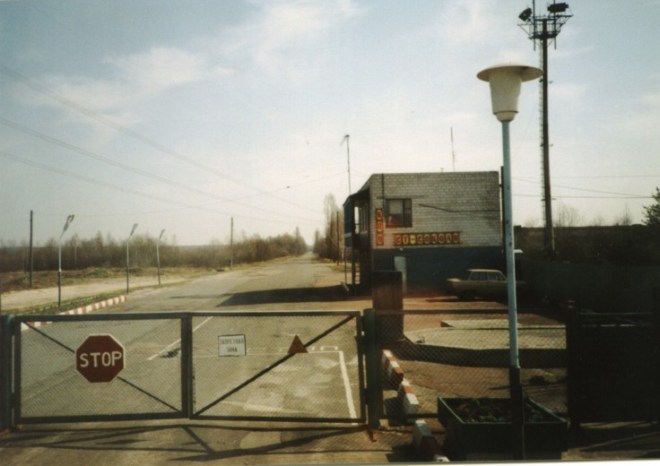
(Image of the entrance to the zone of alienation around Chernobyl via Wikimedia Commons)

A Short Story For Saturday

The opening paragraph of Nabokov’s “Signs and Symbols,” published in the May 15, 1948 issue of The New Yorker:

For the fourth time in as many years, they were confronted with the problem of what birthday present to take to a young man who was incurably deranged in his mind. Desires he had none. Man-made objects were to him either hives of evil, vibrant with a malignant activity that he alone could perceive, or gross comforts for which no use could be found in his abstract world. After eliminating a number of articles that might offend him or frighten him (anything in the gadget line, for instance, was taboo), his parents chose a dainty and innocent trifle—a basket with ten different fruit jellies in ten little jars.

Read the rest here. For more, check out The Stories of Vladimir Nabokov. Explore previous SSFSs here.

The View From Your Window Contest

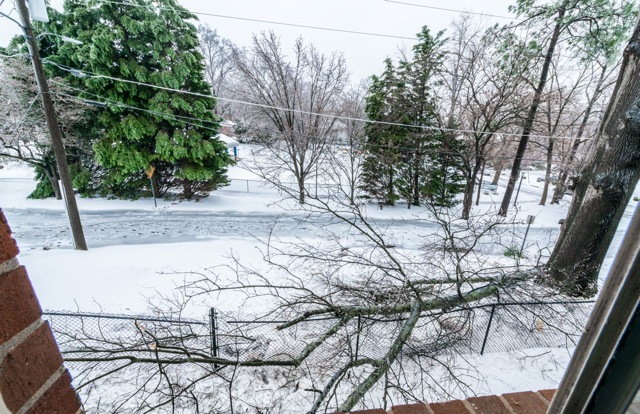
vfyw_2-15

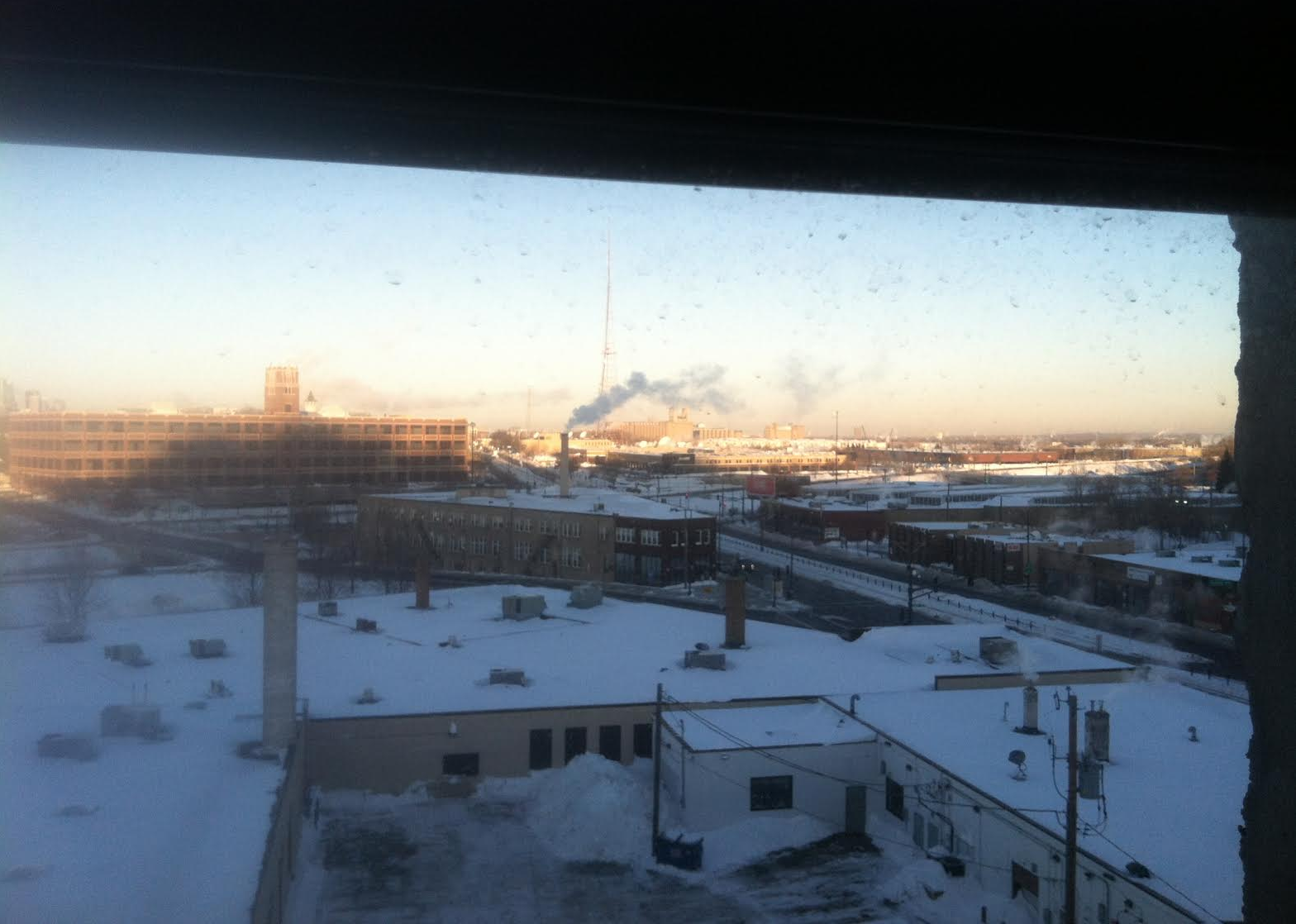
You have until noon on Tuesday to guess it. City and/or state first, then country. Please put the location in the subject heading, along with any description within the email. If no one guesses the exact location, proximity counts.  Be sure to email entries to contest@andrewsullivan.com. Winner gets a free The View From Your Window book or two free  gift subscriptions to the Dish. Have at it.

Our Amazonian Future

George Packer’s lengthy investigation into the company sheds light on its rise to global dominance:

Amazon employs or subcontracts tens of thousands of warehouse workers, with seasonal variation, often building its fulfillment centers in areas with high unemployment and low wages. Accounts from inside the centers describe the work of picking, boxing, and shipping books and dog food and beard trimmers as a high-tech version of the dehumanized factory floor satirized in Chaplin’s “Modern Times.” Pickers holding computerized handsets are perpetually timed and measured as they fast-walk up to eleven miles per shift around a million-square-foot warehouse, expected to collect orders in as little as thirty-three seconds. After watching footage taken by an undercover BBC reporter, a stress expert said, “The evidence shows increased risk of mental illness and physical illness.” The company says that its warehouse jobs are “similar to jobs in many other industries.” …

None of Amazon’s U.S. workers belong to unions, because the customer would suffer. A company executive told the Times that Amazon considers unions to be obstacles that would impede its ability to improve customer service. In 2011, the Allentown Morning Call published an investigative series with accounts of multiple ambulances being parked outside a warehouse during a heat wave, in order to ferry overcome workers to emergency rooms. Afterward, Amazon installed air-conditioners, although their arrival coincided with the expansion of grocery services. In any case, Amazon’s warehouse jobs are gradually being taken over by robots. [Amazon founder and chief executive Jeff] Bezos recently predicted to a gobsmacked Charlie Rose that, in five years, packages will be delivered by small drones. Then Amazon will have eliminated the human factor from shopping, and we will finally be all alone with our purchases.

Reihan questions Amazon’s labor practices:

[S]hould Bezos be celebrated for investing in automation despite the fact that there are large numbers of people living in the United States who are willing, and in some cases even eager, to take on such jobs? One interpretation is that what Bezos really ought to do is raise wages and improve conditions in his fulfillment centers, regardless of cost or impact on delivery times for consumers, as this is the humane thing to do. Such a policy would presumably improve the relative position of firms that instead subjected their employers to harsher terms and conditions, or indeed firms that replaced such workers with machines. Bezos might be in a position to unilaterally redistribute resources from Amazon consumers to Amazon workers if he achieves a durable near-monopoly. It is not obvious that this is an outcome that Packer would celebrate, or that those of us in the broader public ought to celebrate either.

Andrew Leonard suggests broader cultural shifts have done more damage to the book industry than Amazon specifically:

Maybe Jeff Bezos executes his business plan better than all of his competitors, but what’s been happening to culture is a consequence of the digitization of content. If you can copy it digitally, you can distribute it more cheaply than it costs to produce it. An almost throwaway line in Packer’s piece –”None of Amazon’s U.S. workers belong to unions, because the consumer would suffer” — emphasizes the same point. The consumer is driving the bus. Low prices and convenience have been pushing forward the evolution of technocapitalism for many decades (and maybe all the way back to the beginning of the Industrial Revolution). And while we know that consumers want low prices and easy access, we do not necessarily know that they want a lot of serious literary fiction, or biographies that require five years of research, or hard-hitting investigations of how Wall Street and Silicon Valley have broken the back of organized labor. The democratization of distribution has perversely inverted that classic Rolling Stones maxim: In the Amazonian future, the people get what they want, but not, maybe, what they need.

Lauren Collins maintains that Amazon is indispensible for readers who lack a neighborhood bookstore:

George Packer is right to question Amazon’s effect on the publishing and book-selling industries, and those with a Three Lives or a Bonnie Slotnick or a Tattered Cover around the corner—or even across town—should peruse them or lose them. But for those of us who live in places where the books we want are not available—Packer touches on the point, writing, “Readers, especially isolated ones, adored Amazon”—the importance of Amazon cannot be understated. I live in Switzerland, and Amazon is a lifeline. No one else is coming to give us “French Lessons,” Alice Kaplan’s 1994 memoir of language assimilation, or Rebecca Mead’s “My Life in Middlemarch,” the day it comes out. I know I’m late to the Kindle game, but one showed up under the tree at Christmas, and, since then, I’ve been on a tear. Already I’ve bought, read, and been moved by more books than I did at the bookstore all of last year.

Carolyn Kellogg talked to Packer about his own consumer preferences:

Although Packer shines a critical light on Amazon, he said he believes that the company has provided a seductive level of customer satisfaction; he himself is a customer. “I try not to use it for books more than I have to,” he said, “because I see a real value in walking into a bookstore and seeing things jump off the shelves.”
A Poem For Saturday

ukvillage

In honor of Black History month, we are posting poems by black poets past and present all month long. Previous selections are here, here, and here. This weekend’s first poem is “The Ravine” by Cyrus Cassells:

“The Holocaust by Bullets,” Ukraine, 1941-1944,
Nina Roufimovna Lisitsina

In my fifth
holy year on earth,

undeterred,
I climbed out of a corpse-filled,

breakspirit ravine,
clutching the roots of trees

(so beautiful,
the god-tall cypresses,

the grandfather pines
in that part of the Crimea),

and groped my way, gingerly,
toward my twilit village,

the lone, itinerant survivor.
The pull, the rose light

of home
is unkillable.

(From The Crossed-Out Swastika © 2012 by Cyrus Cassells. Reprinted with the permission of The Permissions Company, Inc., on behalf of Copper Canyon Press. Photo of a Ukrainian cemetery by Kyle Taylor)

The First African In America

The Root interviewed Henry Louis Gates Jr. about his recent PBS series African Americans: Many Rivers to Cross:

The Root: What about the series will be most surprising to viewers?

Henry Louis Gates Jr.: I think the most surprising thing to many viewers will be that [the first] African Americans did not arrive in 1619, when … 20 Africans arrived at Point Comfort, Virginia, and were transported to Jamestown. Rather, it was a century before that, in Florida, when the first black man whose name we actually knew arrived, in 1513.

Juan Garrido was a free black man, not a slave. He was a conquistador, and like the others, he was looking for the fountain of youth. He went to Baja California, Mexico, looking for the black Amazons. We even have a petition he filed to [the] king of Spain asking for a pension. He claims he was the first person ever to sow wheat in the New World. [In the series] we trace the arc of black history from Juan Garrido’s riveting story to, half a millennium later, another black man who happens to be president of the United States.

What It Feels Like To Be An Astronaut

In an interview about his book Extreme Medicine, Dr. Kevin Fong discusses how life in space is far from cozy:

When you see space men and women on television you get this impression that it’s sort of like a slightly more fun version of a super long-haul passenger flight that, you know, it’s a quite comfortable experience and they’re just floating around there having quite a lot of fun while engaging in quite a serious task. But when you get down into it, you realize that these expeditions are true expeditions — expeditions really in the same sense that walking into the deserts or climbing our highest mountains, or exploring our polar regions are — that you go into this environment and you learn the same lessons from it that you learn everywhere else in exploration, and that is that we can exist there, but not forever and not without penalty.

[Due to lack of gravity] they experience [the] wasting of their bones, wasting of their muscles, deconditioning of their heart … They have problems with their hand-eye coordination. It seems that the apparatus in your inner ear that detects acceleration — that helps you with your day-to-day hand-eye coordination — also gets pretty messed up up there, and so they have problems tracking moving objects with their eyes, and … they feel pretty sick. In fact, most rookie astronauts feel sick or are sick in the first 24-48 hours of flight. So when you see them up there on-camera, waving and smiling at you, you have to know that underneath that is a lot of discomfort for lots of them.

Does Brand Loyalty Exist Anymore?

Or has the Internet rendered it irrelevant?

It’s been argued that the welter of information will actually make brands more valuable. As the influential consultancy Interbrand puts it, “In a world where consumers are oftentimes overwhelmed with information, the role a brand plays in people’s lives has become all the more important.” But information overload is largely a myth. “Most consumers learn very quickly how to get a great deal of information efficiently and effectively,” [Absolute Value author Itamar] Simonson says. “Most of us figure out how to find what we’re looking for without spending huge amounts of time online.” And this has made customer loyalty pretty much a thing of the past. Only twenty-five per cent of American respondents in a recent Ernst & Young study said that brand loyalty affected how they shopped.

For established brands, this is a nightmare. You can never coast on past performance—the percentage of brand-loyal car buyers has plummeted in the past twenty years—and the price premium that a recognized brand can charge has shrunk. If you’re making a better product, you can still charge more, but, if your product is much like that of your competitors, your price needs to be similar, too. That’s the clearest indication that the economic value of brands—traditionally assessed by the premium a company could charge—is waning. This isn’t true across the board: brands retain value where the brand association is integral to the experience of a product (Coca-Cola, say), or where they confer status, as with luxury goods. But even here the information deluge is transformative; luxury travel, for instance, has been profoundly affected by sites like TripAdvisor.