Profiting From Less Pollution

Cleaner air correlates with greater cashflow:

new paper suggests [one] measure to curb pollution that may have had beneficial long-term economic impacts for individuals. The paper’s authors, Adam Isen, Maya Rossin-Slater and Reed Walker, compared the adult labour-market outcomes of those born in counties in America where air pollution decreased as the result of the 1970 Clean Air Act to those born in areas where pollution did not fall in this period. They found that those who were born in counties that were forced to cut air pollution as a result of the legislation earned more by their thirties than they would have otherwise: gaining approximately $4,300 each in extra income over their lives.

At first, this result may seem a little strange. As dirty industries closed in many affected areas as a result of the Clean Air Act, one would expect incomes to fall as the result of increased unemployment. Yet the authors of the paper found the opposite: the long-term benefits of better childhood health on adult incomes outweighed the other negative immediate economic effects that may have resulted from the legislation.


Our Online Afterlives

In a recently unlocked essay, Alexander Landfair traces the history of Facebook’s policies on deceased users. He contemplates the digital afterlife more broadly:

Death is a problem not only for Facebook but also for all the major landmarks of the Internet landscape: Google, Twitter, Amazon and Yahoo, the last of these being the only company in that list to include a death clause in its “terms of service.” Though the U.S. government encourages every citizen to create a “social media will,” the concept of digital executors is a legal gray area generally not recognized by law. Only one state, Oklahoma, has passed legislation allowing one’s legal executor to lawfully access one’s online accounts. And even for Oklahomans, to bequeath your Flickr password to your next of kin, for example, is technically illegal—as it violates Yahoo’s terms of service contract. Though criminal, it is currently the only way to preserve your online photo albums after death. Across the pond, Europe’s highest courts are currently hearing important cases regarding le droit à l’oubli—or the “right of oblivion”—that will decide the extent to which individuals determine the fate of their online identities. More broadly, the legislation will help the world determine what it means to “be online” and whether one can ever leave the Internet once one steps foot inside.

Previous Dish on the subject here.

(Hat tip: Tess Malone)

The Best Of The Dish This Weekend

IMG_1311

Philip Roth is not a Jewish writer. Meditation for prisoners. Primates through the looking glass. How Richard Dawkins is more utterly certain about his beliefs than Sean Hannity. Hotter cyclists win. And Cinderella on Tinder (genius).

Oh, and the habits of straight guys on dating and hook-up apps:

With a lot of guys I could just, I wrote gibberish, just pounded on keyboard for a minute and sent it and the vast majority of them responded with that sounds great, what are you doing on Friday?

Not that gay guys are any better.

The most popular post of the weekend was The Language Of Certainty In Atheism, followed by “With My Daddy In The Attic.

See you in the morning.

Quote For The Day II

Missouri v Mississippi

 
“Once I became official to my teammates, I knew who I was. I knew that I was gay. And I knew that I was Michael Sam, who’s a Mizzou football player who happens to be gay. I was so proud of myself and I just didn’t care who knew. If someone on the street would have asked me, ‘Hey, Mike, I heard you were gay. Is that true?’ I would have said yes. But no one asked. I guess they don’t want to ask a 6-3, 260-pound defensive lineman if he was gay or not,” – Michael Sam, New York Times. There’s a great video interview with him here.

What’s so encouraging here is not just that he’s African-American but that he was already out among his team-mates. So there’s no shock in the team, and what seems like a really adjusted, virtually normal life. He’s also really good – and yes, I infer that solely from the fact that the AP named him their SEC Defensive Player of the Year.

This is the next gay generation. You cannot stop their self-esteem. And you cannot pigeon-hole them into any category. You just have to get out the way.

(Photo: Michael Sam #52 of the Missouri Tigers celebrates with fans following a game against the Ole Miss Rebels at Vaught-Hemingway Stadium on November 23, 2013 in Oxford, Mississippi. Missouri defeated Ole Miss 24-10. By Stacy Revere/Getty Images.)

A Poem For Sunday

Bob_Kaufman

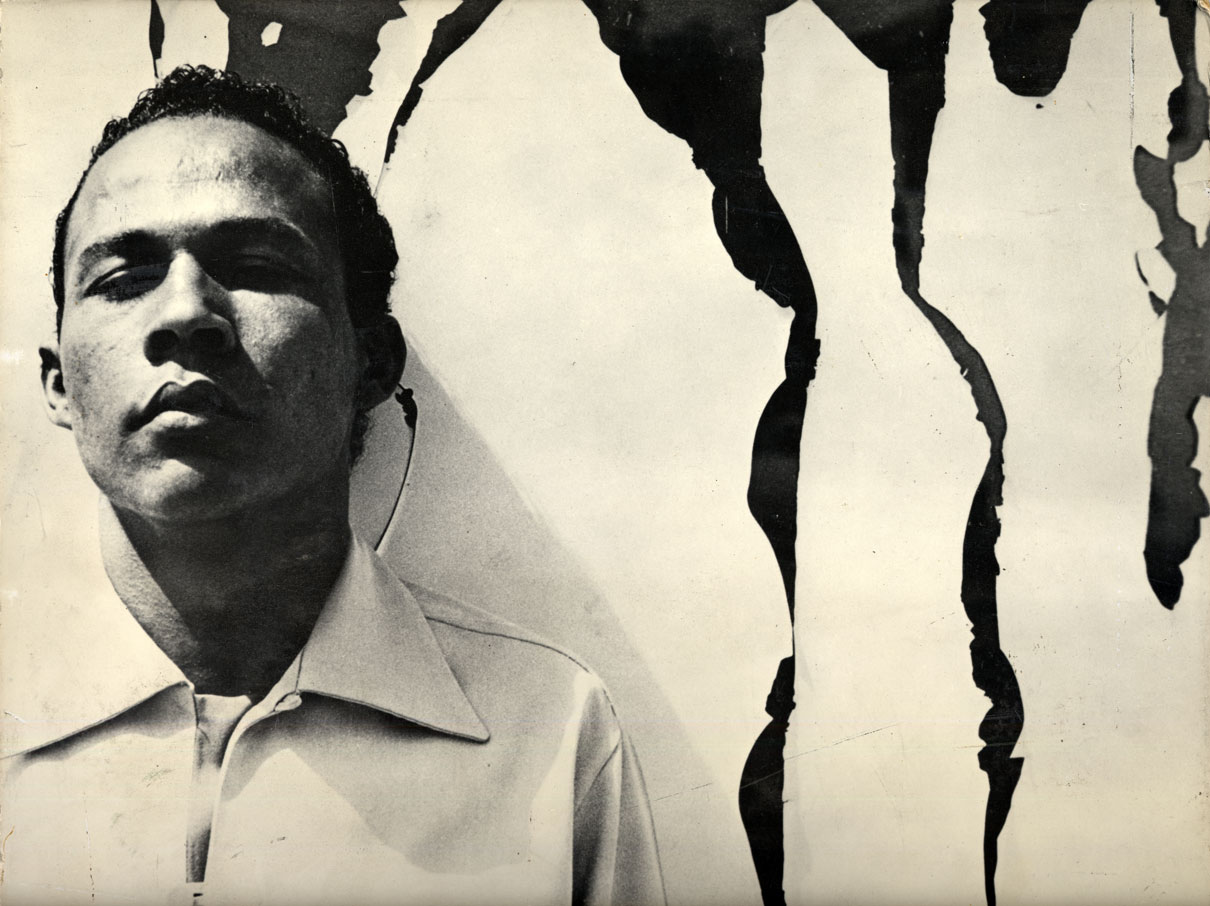
From “Jail Poems” by Bob Kaufman (1925-1986):

I am sitting in a cell with a view of evil parallels,
Waiting thunder to splinter me into a thousand me’s.
It is not enough to be in one cage with one self;
I want to sit opposite every prisoner in every hole.
Doors roll and bang, every slam a finality, bang!
The junkie disappeared into a red noise, stoning out his hell.
The odored wino congratulates himself on not smoking,
Fingerprints left lying on black inky gravestones,
Noises of pain seeping through steel walls crashing
Reach my own hurt. I become part of someone forever.
Wild accents of criminals are sweeter to me than hum of cops,
Busy battening down hatches of human souls; cargo
Destined for ports of accusations, harbors of guilt.
What do policemen eat, Socrates, still prisoner, old one?

(Reprinted from Angles of Ascent: A Norton Anthology of Contemporary African American Poetry, edited by Charles Henry Rowell © 2013 by Charles Henry Rowell. Used by kind permission of New Directions Publishing Corporation. Photo of Kaufman in San Francisco, circa the 1950s, via the City Lights blog)

Overdosing On Technology

Tim Wu describes the Oji-Cree, “a people, numbering about thirty thousand, who inhabit a cold and desolate land roughly the size of Germany.” Though the Oji-Cree lived healthful and relatively and tech-free lives until the 1960s, they have since rapidly adapted to modern advances like electricity:

[I]n the main, the Oji-Cree’s story is not a happy one. Since the arrival of new technologies, the population has suffered a massive increase in morbid obesity, heart disease, and Type 2 diabetes. Social problems are rampant: idleness, alcoholism, drug addiction, and suicide have reached some of the highest levels on earth. Diabetes, in particular, has become so common (affecting forty per cent of the population) that researchers think that many children, after exposure in the womb, are born with an increased predisposition to the disease. Childhood obesity is widespread, and ten-year-olds sometimes appear middle-aged. Recently, the Chief of a small Oji-Cree community estimated that half of his adult population was addicted to OxyContin or other painkillers.

Technology is not the only cause of these changes, but scientists have made clear that it is a driving factor. In previous times, the Oji-Cree lifestyle required daily workouts that rivalled those of a professional athlete. “In the early 20th century,” writes one researcher, “walking up to 100 km/day was not uncommon.” But those days are over, replaced by modern comforts. Despite the introduction of modern medicine, the health outcomes of the Oji-Cree have declined in ways that will not be easy to reverse. The Oji-Cree are literally being killed by technological advances.

Finding Peace In Prison

Emmanuel Vaughan-Lee’s short documentary “Path of Freedom,” above, shows us how inmates at the John J. Moran Prison in Rhode Island have embraced meditation. Producer Dorothée Royal-Hedinger wrote about what she saw while filming behind bars:

The hour-long meditation class was a place many prisoners felt they could be themselves. Their mindfulness practice, they stressed, was not an escape, but rather a tool that helped them come to terms with the reality of their situation. One prisoner explained, “Once you come to prison, your life keeps tumbling and tumbling and it’s like a never-ending wall that won’t stop building…unless you find a way to get over that wall, or at least in front of it.”

The meditation course gives the prisoners the space to confront their guilt, remorse, grief, and anger; it also opens up the possibilities of making positive choices, no matter how small. As one prisoner expressed, “Someone has given us an opportunity to meditate and connect ourselves. That’s golden.”

(Hat tip: Paul Rosenfeld)