The Spirit Of Springsteen

Bruce Springsteen recently talked about the “religious impulse” that shapes his music:

Without overusing the word, you know, there’s a Christian element that runs through it because I grew up Catholic and so I was indoctrinated in religious language between eight o’clock and nine o’clock every single morning for the first eight years of my schooling. Five days a week, every single morning, the first thing you did was religion. And so you grew up with that language and it was, of course, distorted, and screwed me up terribly, but at the same time, it made for good writing. And it was a wonderful source of metaphor when you went to write about the world and about your inner life and it served me. I suppose looking back on it, I would like to change some things but I wouldn’t have had that any other way in that it’s served me very, very well and continues to do so. I have a very deep connection to gospel music. I understand the language — I feel I understand the essence of the music itself.

Citing the above, Tim Hoiland makes a connection:

This reminds me a bit of the time the “militant atheist” Richard Dawkins told a reporter for the Spectator that he has a certain love for the Anglican tradition in his native land, and specifically its aesthetics, even if he doesn’t for one moment believe any of its theology. Would he feel deprived if church buildings were to disappear from the English landscape? “Yes, I would feel a loss there,” Dawkins said. “I would feel an aesthetic loss. I would miss church bells, that kind of thing.”

These comments from Springsteen and Dawkins beg the question: What should Christians make of such (unexpected?) appreciation for the aesthetics, sensibilities, and cultural contributions of our faith, while the substance behind those contributions is largely or wholly dismissed? Is this good, to an extent?

For those interested, one of the classic essays on the topic remains Andrew Greeley’s 1988 piece in America,  “The Catholic Imagination of Bruce Springsteen.” Previous Dish on Springsteen herehere, and here.

(Video: title track from Springsteen’s new album, High Hopes)
Religion’s Degree Of Difficulty, Ctd

Earlier this month Tom Ehrich argued that religion ”shouldn’t be this hard,” leading Rod Dreher to warn against “the siren song of easy religion.” Readers join the debate:

Responding to Tom Ehrich, Dreher neatly sidesteps the point by changing the subject, and politicizing the argument. As I understood it, Ehrich was commenting on how faith’s original role – to ease the suffering of guilt so we might have a closer relationship with God – has been flipped to a kind of Big Brother approach to guilt, where, instead of having Jesus help you carry the weight (“my yoke is easy and my burden is light”), a supposedly loving community pushes down harder. It’s a “hospital for sinners” where the sick are made to feel worse.

A few readers think Dreher made a category error:

Rod Dreher either misses the point of Tom Ehrich’s article or is deliberately obfuscating things to project his own biases onto the debate. ”Church,” “faith,” and “religion” don’t all mean the same thing, yet Dreher equates them. In the original article, Ehrich specifically makes this distinction:

Faith should be difficult, yes, because it inevitably entails self-sacrifice and renewal. Life, too, is difficult. Dealing with Mammon is difficult. Speaking truth to power is difficult. Confronting our own weakness and capacity for sin is difficult. But the institution whose sole justifiable purpose is to help us deal with those difficulties shouldn’t be making matters worse.

Another tries to reconcile Ehrich’s and Dreher’s views:

When you quote Ehrich saying religion should not be so hard and Dreher saying religion should challenge the believer, the opposition of ideas is interesting but omits a discussion of the bridge between the two. Dreher is right that Christian believers should question their behavior and confront sin, but when they do that they should do so with the glad news of the gospel – that grace will offer them forgiveness and acceptance.

Grace is something we can be sure of receiving because it is promised and is the assurance Ehrich wants to provide to the uncertain, but grace is something we cannot know we have in hand and the desire to seek grace is what can compel Christians to do the hard work Dreher favors. Grace is a practice that should infuse our behavior, and Pope Francis has demonstrated the basics of grace when he talked about being a sinner and downplayed rules of the church to emphasize the value of every person. Grace is a gift of God, and believers cannot decide how and when and where God will grant it.

A serious, thoughtful reading of What’s So Amazing About Grace? by Philip Yancey was a revelation to me.

A Poem For Sunday

William_wordsworth

“Nuns fret not at their Convent’s narrow room” by William Wordsworth (1770-1850):

Nuns fret not at their Convent’s narrow room;
And Hermits are contented with their Cells;
And Students with their pensive Citadels:
Maids at the Wheel, the Weaver at his Loom,
Sit blithe and happy; Bees that soar for bloom,
High as the highest Peak of Furness Fells,
Will murmur by the hour in Foxglove bells:
In truth, the prison, unto which we doom
Ourselves, no prison is: and hence to me,
In sundry moods, ‘twas pastime to be bound
Within the Sonnet’s scanty plot of ground:
Pleased if some Souls (for such there needs must be)
Who have felt the weight of too much liberty,
Should find short solace there, as I have found.

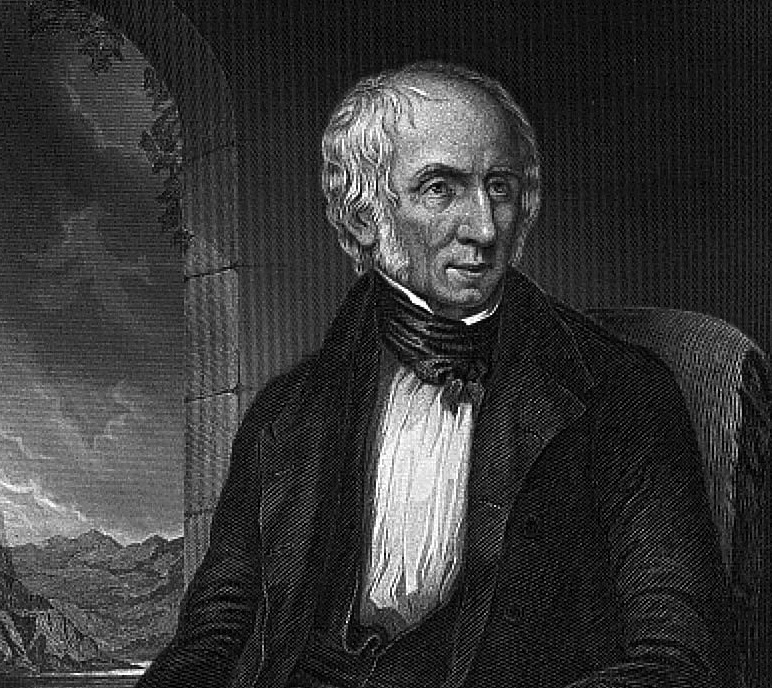
(Wordsworth, circa 1839, via Wikimedia Commons)

The View From Your Window

tower

Jerusalem, Israel, 11 am. The reader adds:

I took this picture on January 20 from the highest level on the minaret that spikes above the Tower of David at Jaffa Gate. This level is unstable and not usually accessible. Today, exceptionally, a few people were permitted access in the morning.

Literature That’s Left Faith Behind

Last Sunday, we pointed to an interview with the Catholic poet Dana Gioia, in which he mused that there “is a great essay waiting to be written on the differences between observant and cultural Catholic writers.” Dreher picks up the question:

From the outside, my guess is that culturally Catholic writers are more likely to be reacting against something. Their imaginations were formed by the culture and rituals of Catholicism, even if they’ve rejected the religion. I am skeptical, though, about whether there is anything identifiably or meaningfully Catholic about any culturally Catholic writer whose imagination was formed after the postconciliar dissolution of that strong and distinct American Catholic culture. I could be wrong about that; there is certainly something distinctly Jewish about culturally (but not religiously) Jewish writers. Then again, Jews are a minority in America, whereas Catholics are members of the largest church in the country — though an increasingly assimilated one.

Noah Millman offers an explanation for the distinctiveness of such Jewish writing:

Judaism is simply less theology-centric than Catholicism, and as a consequence you can be a religiously observant Jew who writes books about religiously observant Jews and your fiction may still be Jewish primarily in the sociological sense. Take, as an example, Kaaterskill Falls, by Allegra Goodman. This is a very good novel to read if you want to get a feel for the dynamics of an ultra-Orthodox Jewish community. It’s also a good novel qua novel. But it isn’t god-haunted in the way that, say, Graham Greene’s or Flannery O’Connor’s work is. Or, for that matter, Isaac Bashevis Singer’s – even though Singer was less observant than Goodman is. I’d say similar things about Nathan Englander: that he’s interested in Jews and Judaism, but if he’s haunted by anything, it isn’t by God. History, maybe.

An interesting phenomenon to end on is Jewish writers who, in search of a spiritual inspiration, wandering into foreign fields precisely because that’s the best way to find their way home. Tony Kushner’s play, Angels in America, for example, is fascinated by Mormonism precisely because of its link to archaic Judaism, which (though politically very problematic) appears more spiritually nourishing than the Judaism that actually exists in the contemporary world.

Previous Dish on faith and literature here, here, and here.

Drug-Free Tripping

Ethan Siegel presents a visualization that aims to induce temporary hallucination (warning: not for the photosensitive or epileptic):

Siegel explains:

Thanks to the combined power of technology and our understanding of neuroscience (and perception), you don’t need drugs or to provoke your brain into releasing DMT. Rather, a simple visual pattern can induce temporary (lasting under a minute) hallucinations, safely and temporarily.

Visit this site for a fuller hallucinatory experience, or watch the above video:

To get the most out of your experience, just full-screen it, move your face close to the screen and stare at the center, trying not to blink and trying not to look away. When the video ends (it’s only 40 seconds long), look anyplace else and enjoy your distorted, hallucinatory vision for under a minute!

Faces Of The Day

The uncanny valley gets really, really dark:

Sara Barnes cautions:

If you aren’t careful, the video Milkyeyes by Donato Sansone might give you nightmares. The piece describes itself as “A slow and surreal video slideshow of nightmarish, grotesque and apparently static characters.” The video clocks in at just over 2 minutes and features 26 different characters, and is accompanied by music you’d hear in an old, abandoned warehouse or horror film. Some characters have faces that have been mutilated and warped to the point where they are nearly unrecognizable. Milkeyes is a name that conjures an unpleasant visual. So, it’s not surprising that this video is a visceral journey into a world of unfortunate humans. We see steam coming from their heads, stuff bubbling from their lips, and eyes floating of their head. While they are affected, the environment behind them remains static and untouched. The juxtaposition between calm and a surreal chaos makes this video both puzzling and trippy. (ViaArtnau)

Barely Legal Highs

Mike Power investigates the world of designer drugs, or “controlled substance analogs,” described as “version[s] of a banned compound that [have] been created with the aim of making it legal”:

[H]ow easy is it to design and commission a new legal drug based on a banned one?

For the most part you cannot simply tweak cocaine, add a molecule and dodge the law—most countries are wise to this, and their rules are tightly-written, expert affairs focused on well-known narcotics. But outside of headline drugs … it is simple enough to scan medical literature and look for new compounds that could intoxicate. The resulting drug will, most likely, be legal—though whether the result will be pleasant or not will only be discovered by a process of human trial and error.

I passed my drug along to [clinical toxicologist] John Ramsey at St. George’s [Hospital in London] to be logged into TICTAC, a database that is used by law enforcement and healthcare professionals. We do not know precisely what my legal drug will do: It may be incredibly unpleasant—but it will be active and, with the right marketing, could potentially sell by the truckload.

And here lies the problem. We can ban drugs. But we can’t ban chemistry, and we can’t ban medical research. There are an almost infinite number of different drugs and substitutions that are possible, and a combination of circumstances have radically increased the public’s ability to access and alter them. The openness of the Web, China’s prominence as both a manufacturer and exporter, the ability of laypeople to study organic chemistry, the availability of research, improved technology and falling prices—these have all come together to create an unusual, explosive, effect.

STIs Without Stigma

A.V. Flox calls Andrea Brough’s series Perilous Transmission “a painstaking work of humanity that transcends the easy message of most sexual health awareness campaigns”:

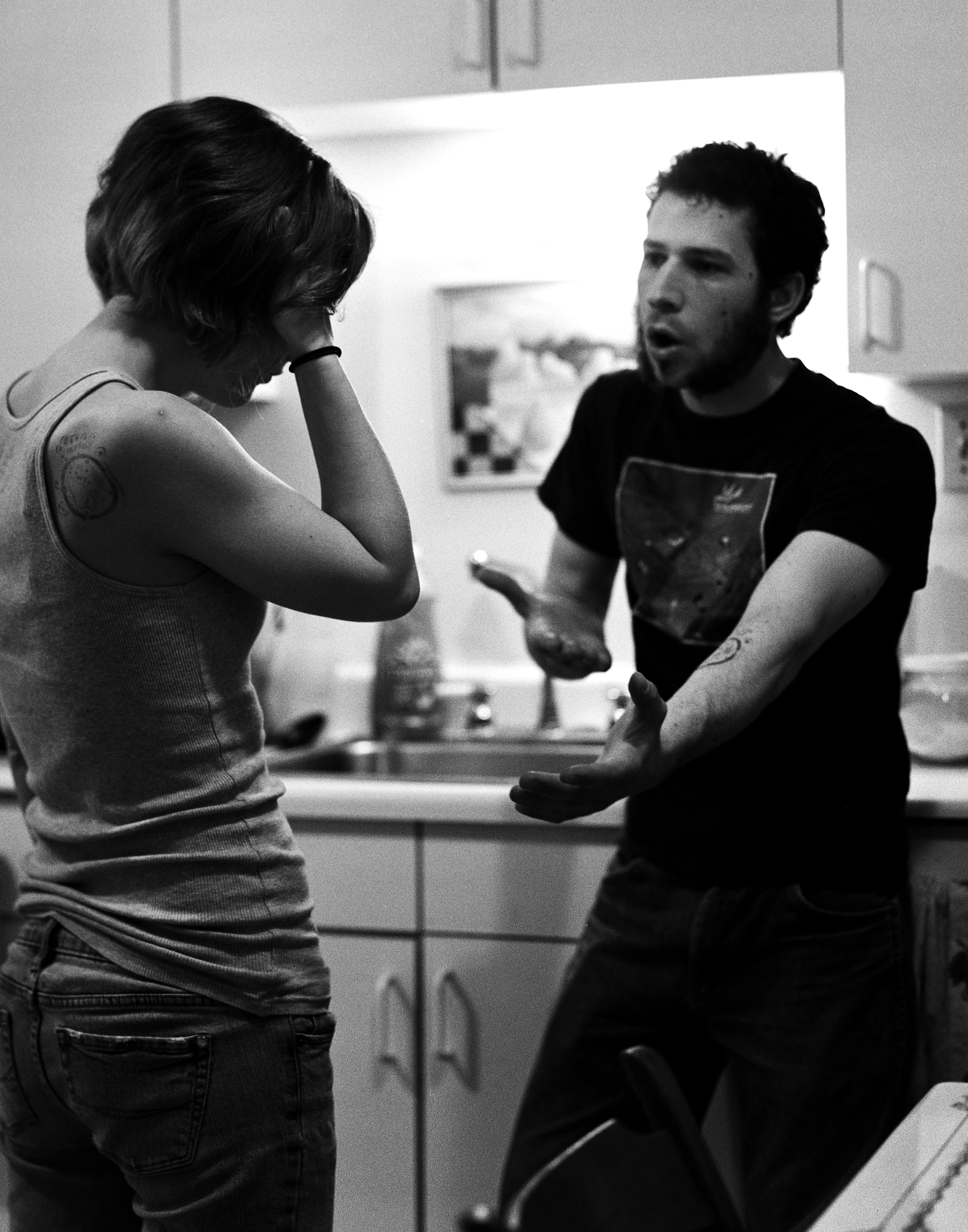
The series shows a couple as they work out their emotions following infection, as well as dish_periloustransmission a cast of other characters going about their daily lives, showing the viewer that there is life after a positive test result. To visually illustrate what is so often invisible, Brough used her models’ skins as a canvas. She thought a long time about how she was going to show positive status, conscious of the possible stigma that easy solutions — such as the biohazard symbol — would convey.

“I was trying to think of some kind of symbol that would help people see what was going on but also question what was going on,” she told me. “The markings ultimately were made with a rubber stamp that I found at a craft store. The stamp is actually supposed to be an image of a water ring – you know how you put your glass of water down on a coffee table and it leaves a mark? That’s what it is.”

The water ring gives the impression of a cell – but it’s a neutral image. While some of the shots inspire very emotional reactions in viewers, the imagery used to portray the models’ status retains its neutrality, making all the images depicting life with STIs all the more poignant. Without the stigma, a viewer is capable of seeing beyond disease to the people themselves – the young woman putting on makeup, the couple cuddling, the woman playing pool.

(Photo by Andrea Brough. See more of her work here and here. Her images are available for purchase here.)

Is Marriage Enough To Protect Same-Sex Parents?

No, many fear:

A Brooklyn judge, citing some complications that have arisen from the legalization of gay marriage in New York State, halted the adoption of a child by the wife of the mother. Brooklyn Surrogate Judge Margarita Lopez Torres ruled that the adoption “is neither necessary nor available” because New York State marriage law already grants custody to both spouses.

Still, the anonymous couple wished to cement the adoption in case of a change in law, or if they separate, or if they have a medical emergency in another state. While the judge was sympathetic to their request, she ultimately ruled that “no such action is warranted or permitted by this court to affirm an existing, recognized and protected parent-child relationship.” Essentially, the judge ruled, you can’t offer guardianship to someone who already has it.

Diana Adams weighs in:

“States have the right to define their own family policy, in spite of Windsor,” Adams, an attorney specializing in non-traditional family law, explained. “Adoption however, is something that is a nationwide standardized system, and you do not need to get into the issue as to whether the marriage is valid” … If, for example, Adams explained, a married same-sex couple gets into a car accident in a state that does not recognize gay marriage, the non-biological parent may be denied the ability to assist in making medical decisions for her child or even be prevented from visiting the child in the hospital.  “There is a strong risk against the non-biological parent,” counseled Adams.

For more Adams, she recently appeared on the Savage Lovecast to discuss non-traditional family law with Dan.